



惯性聚合 高效追踪和阅读你感兴趣的博客、新闻、科技资讯
阅读原文 在惯性聚合中打开

推荐订阅源

让小产品的独立变现更简单 - ezindie.com
V
V2EX
WordPress大学
WordPress大学
U
Unit 42
I
InfoQ
A
About on SuperTechFans
宝玉的分享
宝玉的分享
J
Java Code Geeks
博客园 - 司徒正美
爱范儿
爱范儿
Engineering at Meta
Engineering at Meta
G
Google Developers Blog
人人都是产品经理
人人都是产品经理
小众软件
小众软件
Microsoft Security Blog
L
LangChain Blog
奇客Solidot–传递最新科技情报
奇客Solidot–传递最新科技情报
Hugging Face - Blog
Hugging Face - Blog
H
Hackread – Cybersecurity News, Data Breaches, AI and More
aimingoo的专栏
aimingoo的专栏
OSCHINA 社区最新新闻
OSCHINA 社区最新新闻
Last Week in AI
Last Week in AI
腾讯CDC
Recent Announcements

The Guardian

New Zealand’s North Island braces for Cyclone Vaianu with thousands ordered to evacuate Artemis II splashdown – in pictures Swalwell denies allegations of sexual assault as calls grow for him to withdraw from California governor race Trump news at a glance: Epstein survivors have words for Melania Trump after surprise statement Multiple people face charges, including murder, in California fireworks blast Rory McIlroy surges into six-shot Masters lead with stunning second-round flourish Roberto De Zerbi targets ‘Ange-ball’ revival to save Spurs from relegation Bath hit back to reach semi-final after stunning Northampton in 11-try epic Australia crash out of BJK Cup after Britain secure upset with doubles win Zebras, wealth and power: Hungary’s election tests Orbán’s grip on power ‘TikTok effect’ brings sellout crowds and younger fans to Grand National meeting King signs up David Beckham to his Chelsea flower show team The war over Omagh’s gold: the £21bn mine plan tearing a community apart Britain’s shadow workforce is paid as little as 65p an hour. Who cares for the carers? Tim Dowling: my wife is on a quest to restore my thinning hair SUVs are making Britain’s potholes worse, say scientists Blind date: ‘She claimed she was usually shy. I wouldn’t have guessed’ I’m a sauna person now: the Becky Barnicoat cartoon ‘I got everything I dreamed of – when I had no ability to handle it’: Lena Dunham on toxic fame, broken friendships and her ‘lost decade’ Six great reads: the man who let snakes bite him, masked heavy metal and the brutal reality for foreign students in the UK Meera Sodha’s recipe for noodles with rose beancurd, spring greens and egg Cuba’s doctors were a lifeline for the world. Now the Caribbean is shamefully complicit in the US drive to expel them An environmental disaster in Moldova has Russia’s fingerprints all over it ‘This is as important as your teeth’: are you skipping this key part of mouth hygiene? Man arrested after four die trying to cross Channel in small boat Ukraine war briefing: doubts linger in Kyiv over Moscow’s promise to uphold Orthodox Easter ceasefire Ichiro Suzuki statue unveiling goes awry as bronze bat snaps during ceremony Arrest of national war hero Ben Roberts-Smith cuts deeply to core of Australian psyche European football: Real Madrid held at home by Girona to extend winless run ‘You come back different’: how rugby players change after motherhood
Lubaina Himid’s British pavilion at the Venice Biennale r...
Eddy Frankel · 2026-05-05 · via The Guardian

Home comforts aren’t always all that comfortable. Here at the Venice Biennale, Lubaina Himid paints an awkward, tense, uncomfortable portrait of our damp old home nation. Her installation of monumental paintings and a wall of painted oars at the British pavilion is full of tailors and cooks and architects, the people who shape the country, keeping it fed, clothed and sheltered.

An audio piece burbles through the space with the sound of bucolic country life: seagulls, rigging slapping on masts, bird calls and buzzing flies. How lovely Great Britain is, how welcoming and kind and accepting.
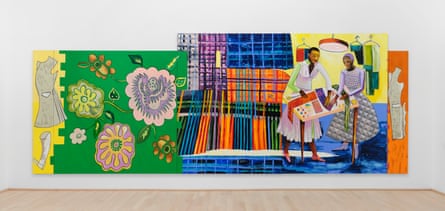
They exchange sideways glances … Tailors by Lubaina Himid.
They exchange sideways glances … Tailors by Lubaina Himid. Photograph: Eva Herzog

But is it? The black figures at the heart of each painting don’t look as if they feel particularly welcomed and accepted. They exchange sideways glances as they cook and sew; they pause in moments of shared discomfort. The tailors – dressed in clothes they have made, clothes worn to fit in – are frozen in a shared look that asks: “What the hell are we doing here?”

The architects – standing next to plans for a mosque, a church and a factory – do the same. So do the two gardeners, and the sailors. Himid is asking, over and over again, whether you can ever truly belong, whether somewhere can ever be home if your roots are somewhere else.
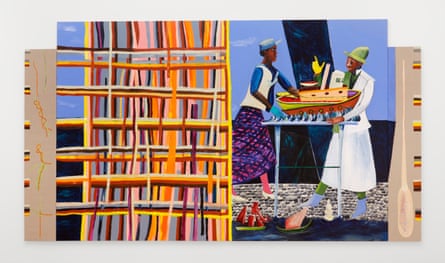
Boatbuilders by Lubaina Himid.
The show is specifically about migration … Boatbuilders by Lubaina Himid. Photograph: Eva Herzog

The exhibition is anchored around 26 questions pasted on the wall, such as: “Can flies settle here?” and “Can poison taste delicious?” It’s the kind of soft philosophical musing that artists think sounds profound, but isn’t. The answer to both, obviously, is yes. Nevertheless, the questions lay bare the existential angst of the show, this feeling that if you’re different, you’ll never truly feel part of anything.

The basis of that idea seems to be that the feeling of not belonging is exclusive to people from elsewhere. But is that really the case? The show is specifically about migration and the emotional, societal status of people who move to Britain, but belonging is a lot more complicated than this exhibition wants to believe. It’s not just about migration or race. It’s about gender, sexuality, class; it’s about social discomfort, societal unease. Millions of people in Britain feel as if they don’t belong.

Visually, I don’t think this is Himid’s best work: she has executed this idea more successfully in the past. I’d also add that a painting show by one of Britain’s leading and most celebrated artists is not the most exciting thing that could have been done with the pavilion space.

But what does work here is the sense of anxiety that courses through the installation, the feeling of abject discomfort and frustration at a world that will never fully accept you. Despite all the bright colours, despite the calming sounds of lapping waves and cooing birds, Himid sees a darker truth to Britain: it might be green and pleasant, but for a lot of people, it’ll never feel like home.