


Microbial slime and a side helping of sand doesn’t sound like much of a meal, but a startling amount of the food we eat today contains ingredients that are, at the very least, unexpected – and, at worst, dangerous, such as heavy metals from polluted soils.
Then there is the thorny question of what ultra‑processed foods in our diets might be doing to us. “While each food additive, so‑called processing aid, fortificant and unrecognisably modified ingredient has been tested individually and declared safe, are they really?” asks Chris Young, who runs the Real Bread Campaign for Sustain, the alliance for better food and farming, and was named joint winner of Slow Food In The UK’s 2025 person of the year award. “The studies are relatively small and short, leaving history littered with additives that we were once promised would not harm us but were later withdrawn or banned on health grounds. What might the long-term effect be of eating such substances, individually or in the cocktails created for each product and across our shopping baskets?”
Processing isn’t necessarily always bad – newly invented fermented fats and proteins could change how we feed the world. But processing and labelling can obscure exactly what it is we’re eating. Here are 16 surprising ingredients that almost all of us consume without realising.
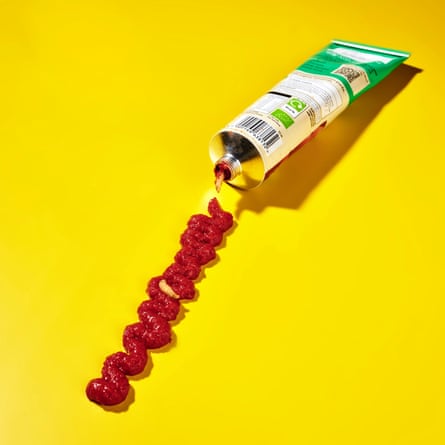
A small amount of insect contamination is practically unavoidable in the fruit and veg chain. In the US, there is precise guidance on how many “fragments”, and of what, are allowed in food, which makes for stomach-churning reading. US consumers may have to put up with 30 insect fragments per 100g of peanut butter, 60 fragments per 100g of chocolate, 225 per 225g of pasta, two maggots per 100g of tomato paste, one maggot per 250ml of citrus juice and up to 35 fruit fly eggs in one cup of raisins. Fortunately, the rules are tighter here. “Food placed on the market must be free from visible insect contamination … there are no permitted tolerance levels for insect fragments,” says a spokesperson for the Food Standards Agency (FSA). “While minor, unavoidable contamination can occur in natural products, visible contamination, or anything that could compromise safety or quality, will generally trigger enforcement action.”
Estimates suggest people in the US unintentionally eat around 450g of insects every year, but in many countries insects are a normal ingredient and a staple source of protein. The UK’s edible insect trend of the mid-2000s has abated somewhat (yellow mealworms, house crickets, banded crickets and black soldier flies can be legally sold as food under UK law), but if you eat icing, ice-cream, drinks, cake or sweets dyed red or pink with carmine (E120), you’re eating food colouring made from dried and powdered cochineal bugs, also widely used in lipstick.
It has long been claimed that up to 10% of US coffee can be cockroach, but this is putting it a bit strongly: in the US, up to 10% of green coffee beans can be infested with bugs before the whole lot has to be thrown away, and it’s fairly easy to tell cockroaches and unroasted coffee beans apart and pick out any “beans” that are moving, have been nibbled, or are full of eggs (ugh). Fragments of cockroach and other bugs can still make it as far as the packet – to a lesser extent in the UK and EU than in the US – but coffee growers tend to worry more about coffee berry borer: a beetle that lays eggs inside the berries, before hatching and eating them from the inside out.
Eating fish containing dead parasitic worms sounds disgusting, but is – unfortunately – quite normal. According to the FSA, fish sold in the UK has to be inspected for visible evidence of parasites, and most fish or seafood that is going to be eaten raw or lightly cooked – such as cold smoked fish, pickled fish and any molluscs destined to become sashimi – has to be frozen at -20C (-4F) for at least 24 hours to kill any parasites or larvae that remain after gutting and washing. Some worms and larvae are immune to being salted or marinated, but all die after one minute’s cooking at 60C. Eating live parasites or larvae can cause serious illness and even allergic reactions, which is why you should never make sushi or ceviche with fish that is not explicitly labelled “sushi grade”. There are some exceptions: certain kinds of farmed fish are certified parasite free, as are a few types of freshwater fish.
Although lots of minerals occur naturally in food, many are added during processing, to fortify or as additives to give structure or colour, and that means digging them out of the ground. Calcium carbonate, a dough conditioner, is basically chalk, mined from pure chalk, limestone or dolomite, and both food-grade phosphoric acid, a preservative, flavour enhancer and acidity regulator, and monocalcium phosphate, which is used in baking powder, are made from phosphate, which also has to be mined, mainly in Morocco and China.
Titanium dioxide, a bright white food colouring, is extracted from ilmenite, rutile or anatase ores. Small amounts of silicon dioxide occur naturally in our bodies, but when it is used to keep powdery foods, such as drinking chocolate, powdery, it is made from silica-rich sand and rocks. Both titanium dioxide and silicon dioxide are also used in toothpaste. There are concerns about whether nanoparticles of both might build up in the body and pose health risks. Titanium dioxide has been banned in the EU since 2022, and in 2024 the FSA and the Committee on Toxicity investigated claims that titanium dioxide might be able to cause DNA damage or affect the immune system; they concluded that more research is needed.
Gypsum is used to make plaster for walls, but it is also added to packaged breads and baked goods as calcium sulphate to stop dough becoming sticky, and is used to firm up tofu. It’s generally considered safe, but eating a lot of it can cause bloating and gas.
More obviously, rock salt comes from salty deposits laid down by receding oceans millions of years ago, which is why it’s amusing to see it with a use-by date.
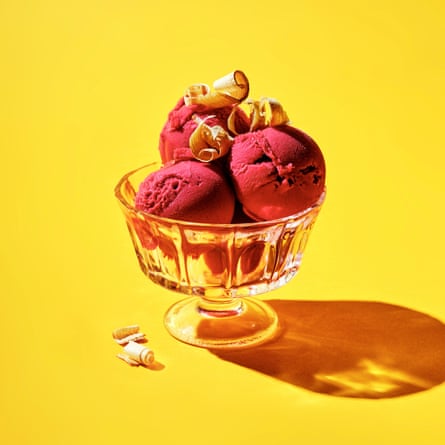
Carboxymethyl cellulose and methyl cellulose, or cellulose gum, are used as thickeners, stabilisers and emulsifiers in everything from ice-cream and gluten-free pastries to low-fat desserts and chewing gum (they are also used in medicines, detergents and to make paper). Often described rather obliquely as coming from the cell walls of plants, they are usually made as a byproduct of the wood pulp industry. (Carboxymethyl cellulose is odourless and tasteless, and fish processors and traders are occasionally caught surreptitiously injecting it into prawns and other seafood to make them heavier and therefore more valuable. This is harmless to human health but counts as food fraud.)
Things such as egg and mustard have been safely used for centuries to blend fats into liquids and to moisten food, but whether it is safe to eat the amount of modern emulsifiers that most of us currently consume is up for debate. A small study published in 2022 suggested that carboxymethyl cellulose can cause stomach pain after eating and, in the longer term, may destabilise the balance of useful microbes in the gut.
Methyl cellulose is thermoreversible, meaning it forms a gel when heated but can melt when cold. It can help burgers and sausages made with pea or soy hold together when cooked, and it makes foods juicy, like meat. “When you eat these things, they’re pretty convincing,” says Prof Barry Smith, co-director of the Centre for the Study of the Senses at University College London and a researcher into the interactions between flavour, taste and smell. “They have the texture of meat and some contain a plant-based heme [iron-containing molecule] that smells of blood. But the fibre that makes them like meat is so tough, our gut can’t deal with it, so they put methyl cellulose in, which is a laxative.” Some contain psyllium husk, too, also a bulk-forming laxative.
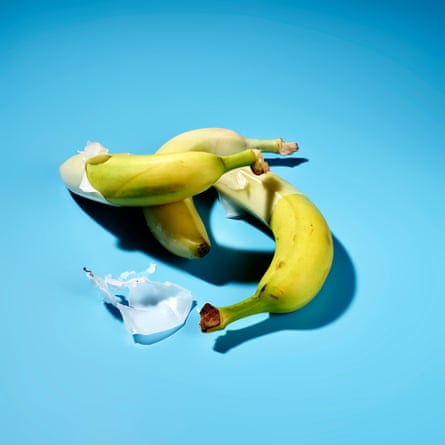
Recipes often call for unwaxed lemons if the zest is going to be used, but it’s not just citrus fruit that is given a coating to prevent moisture loss – in some countries, bananas are sprayed with chitosan, a preservative made from shellfish shells, and melons, avocados and grapes are often coated, too. Some coatings are synthetic, while others are made from fruit peel; Tesco made headlines in 2022 when it flagged that some of its fruit was coated in shellac, a wax secreted by the lac beetle, making it unsuitable for vegans, while other brands use equally non‑vegan beeswax to keep their apples gleaming. Carnauba wax, which comes from the Brazilian palm’s leaves, is a less buggy alternative. (It’s legal to wax organic fruit, but the wax cannot be synthetic.) Fruit waxes are considered food safe, but the wax sometimes contains fungicides and can also trap dirt, fungi and traces of pesticides, so it’s worth scrubbing fruit well in hot water if you’re going to eat the peel.
A lot of food additives are now made via microbial fermentation, and xanthan gum, a widely used thickener and stabiliser, was one of the first to be discovered, back in the 1950s. If you’ve ever left a cabbage in your salad crisper long enough for it go slimy, you’ve made your own xanthan gum, the result of bacteria called Xanthomonas campestris fermenting the plant’s sugars and secreting a polysaccharide ooze (yum). It’s used in everything from gluten-free breads and cakes to dairy-based and dairy-free desserts. Researchers recently found our gut bacteria can break down xanthan gum and that eating it encourages particular groups of bacteria to thrive. What isn’t clear yet is whether that is a good, bad or neutral thing.
Understandably, most of the companies using waste to make new foods prefer to say they’re using “food industry side streams” to repurpose some of the vast quantity of potentially edible food that gets lost in the supply chain. Wellness addicts might be surprised to learn that byproducts from the meat industry are turned into peptides and other so-called functional ingredients to be used in supplements, while fruit and vegetable waste is turned into powdered fibre and added to prebiotics (non-digestible food ingredients), or made into dyes and antioxidants. Crushed grapes left behind after wine making are particularly useful, as is the pomace (pulpy residue) left after making juices. Whey protein powder is a byproduct of dairy processing, bovine collagen is made from cow skin and bones, marine collagen is made from fish skin and bones, and some omega 3 is taken from fish heads and viscera.
If a flavouring is described as “natural”, it just means it’s not synthetic. (Legally, there are “natural flavourings” and “flavourings”, which are made using synthetic ingredients and chemical processes.) Natural flavour sources include citrus oil from discarded peel, which can be turned into terpineol or perillyl alcohol, both floral flavourings, and carvone, which can taste of spearmint or caraway. Sugarcane pulp gives us coconutty 6-pentyl-2 pyrone. Isoamyl alcohol, AKA banana flavour, can be extracted from used coffee husks, and 1-phenylethanol, rose flavour, can be made from grape pomace. Even synthetic flavours are often chemically identical to those found in the original food – for example, methyl anthranilate, which is grape flavour and now mostly mass produced from petrochemicals for sweets and puddings.
None of this is necessarily a bad thing, says Jane Parker, professor of flavour chemistry at the University of Reading. “ We can’t have it both ways: sustainable and natural. Take vanillin. Growing vanilla is so labour intensive – the plants take years to come to maturity, have to be hand-pollinated and are susceptible to drought, pestilence and disease. It’s a hugely unsustainable practice.” The quest for a cheap way to make vanilla flavour started in the 1870s, when vanillin was first synthesised from pine bark. The food industry’s argument for using petrochemical or industrial byproducts to make things such as vanillin, benzaldehyde (almond essence) or menthol is that they are usually chemically identical and easier to produce at scale than, say, growing acres of real mint to flavour toothpaste.
Flavours such as ethyl butyrate, which tastes of ripe pineapple, can now be made using microbes rather than from petrochemicals, which means they can be described as “natural”. “Biotech is making good inroads into making things that are technically natural,” Parker says. “ And the food industry is moving from chemical to biochemical synthesis. You end up with the same molecules, and safety‑wise, there’s no difference. We can use microorganisms and enzymes to carry out the same reactions as in the chemical industry, and it’s more sustainable than using fossil fuels as long as you give them something sustainable to live on, and you can do it at scale because you only need a tiny quantity of the aroma compounds.” There is no requirement for labels to tell us where a flavour has come from.
Precision fermentation means feeding carefully chosen or genetically modified microbes in bioreactors specific foods so they produce oils or proteins that are chemically identical to an original food or ingredient. “It has been used for decades to produce ingredients such as rennet for cheesemaking,” says Dr Stella Child, senior research funding adviser at the Good Food Institute Europe thinktank, which champions the development of alternative proteins. “But it’s now being used to develop animal-free fats and proteins that can bring the flavour of meat and dairy to plant-based foods.”
Some campaigners say these processes obfuscate what is really in our food, or how it has been made. “For example, if certain bacteria are used to generate propionic acid [a preservative and mould inhibitor] which is then separated from its growth medium – flour and water, say – food law deems propionic acid to be an additive and it must be listed on the label by name or the code E280,” Young says. “But if the propionic acid is not separated from the flour and water, food law does not consider it an additive, so a manufacturer can list it as ‘fermented wheat flour’, leading some people to believe it’s a normal part of any breadmaking process.”
Legally, the packet has to say if water has been added to meat or fish to make it seem juicier (or heavier) and the water makes up more than 5% of the product’s weight. But even when it’s on the packet, we often don’t notice. A quick check in my local supermarket showed that sausages, bacon, paté and several roast chicken products (especially budget options) all had water listed as the second or third ingredient. We don’t have current data, but in 2013 British consumers were found to be paying about 65p a kilo of meat for added water.
Peat bogs are carbon sinks, and digging them up is environmentally ill‑advised, so there’s been a big push to move gardeners away from peat‑based compost in the last few years. But most supermarket mushrooms and some herbs and salad are still grown on beds of peat, meaning when you brush the soil off your punnet of portobellos, it could easily contain flecks of 7,000-year-old bog. A company called Monaghan has developed a peat-free base for mushrooms to grow on, using sterilised manure, straw and gypsum, but as most growers still rely on peat, the industry is responsible for about a ninth of all peat lost in the UK each year, and has released about 31m tonnes of carbon dioxide since 1990 (that’s still a lot less than the meat industry). The government is funding a research project looking at alternatives made from coir, a byproduct of the coconut industry, bark or grasses.
No, not the kind you find wrapped around your maki rolls; carrageenan invisibly and tastelessly acts as a stabiliser, thickener and emulsifier. Made from red seaweed, it is used in non-dairy milks, ice-cream, cheeses, sauces and puddings. “ Do we really need emulsifiers so we can buy chocolate milk that doesn’t separate, though?” Smith asks. “Is it too much for us to shake a bottle of sauce or chocolate milk before we use it? People think there’s something wrong with a food where the solids have sunk and the liquid is at the top of the jar or bottle, so emulsifiers are added to make sure foods have the same consistency all the way through. Sometimes they’re also preservatives, or are there to add bulk to foods that have had other ingredients taken out.” There is a small amount of evidence that carrageenan might worsen existing gut inflammation. Sodium alginate is made from brown seaweed and used in cheese sauces, baked goods and frozen desserts, and to make vegetarian sausage casings and sometimes the bubbles in boba tea. Kelp is used to make vegan caviar.
“Plants don’t just take up nutrients from soil; they can also take up trace contaminants, some of which are natural,” says Prof Jack Gilbert, microbiome scientist and faculty director of the UC San Diego Soil Health Center. “Rice is the standout example because flooded paddy soils can make inorganic arsenic more available to the plant, which is why UK advice is that rice drinks shouldn’t be used as a milk substitute for under‑fives.” Other potential toxins in soil are there because of us: cadmium is a poisonous but natural part of some soils, but fertilisers, pollution and sewage push levels higher in some areas; highly toxic lead can linger in soils near busy roads due to vehicle exhaust, and both can end up in the plants and vegetables we eat.
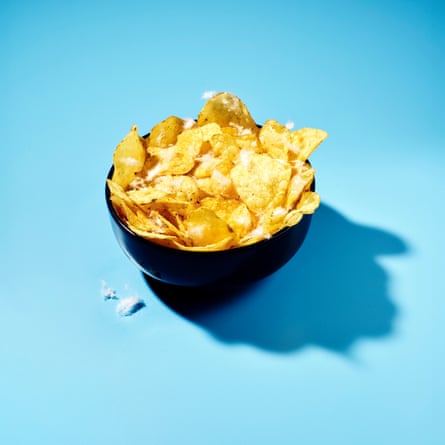
Some of the leftovers from cotton processing are used to make methyl cellulose, but the main cotton industry byproduct used by the food industry is cottonseed oil, which the US brand Crisco first transformed into vegetable shortening in 1911. In the UK, cottonseed oil is mostly used in industrial deep-fat fryers to cook fast food, but it’s sometimes used to make crisps as part of a blend of vegetable oils. As it’s not a common allergen, it doesn’t have to be named on food labels. Emulsifiers such as mono- and diglycerides and polyglycerol esters are sometimes made from cottonseed, too. “The idea of the food chain containing industrially processed ingredients made from other industries’ non-edible byproducts seems environmentally sound, but should give us pause,” Smith says. “Our physiology did not evolve to digest anomalous ingredients.”
此内容由惯性聚合(RSS阅读器)自动聚合整理,仅供阅读参考。 原文来自 — 版权归原作者所有。