



惯性聚合 高效追踪和阅读你感兴趣的博客、新闻、科技资讯
阅读原文 在惯性聚合中打开

推荐订阅源

Last Week in AI
Last Week in AI
C
CERT Recently Published Vulnerability Notes
博客园 - 叶小钗
大猫的无限游戏
大猫的无限游戏
OSCHINA 社区最新新闻
OSCHINA 社区最新新闻
月光博客
月光博客
T
Tailwind CSS Blog
博客园 - 三生石上(FineUI控件)
Jina AI
Jina AI
S
SegmentFault 最新的问题
人人都是产品经理
人人都是产品经理
Hugging Face - Blog
Hugging Face - Blog
freeCodeCamp Programming Tutorials: Python, JavaScript, Git & More
WordPress大学
WordPress大学
J
Java Code Geeks
V
Visual Studio Blog
腾讯CDC
博客园 - 【当耐特】
博客园 - 司徒正美
小众软件
小众软件
宝玉的分享
宝玉的分享
博客园 - Franky
量子位
有赞技术团队
有赞技术团队
The Cloudflare Blog
Apple Machine Learning Research
让小产品的独立变现更简单 - ezindie.com
雷峰网
雷峰网
美团技术团队
阮一峰的网络日志
阮一峰的网络日志
酷 壳 – CoolShell
酷 壳 – CoolShell
N
News | PayPal Newsroom
D
Docker
Google Online Security Blog
博客园 - 聂微东
A
About on SuperTechFans
S
Security Affairs
N
News and Events Feed by Topic
K
KPMG report finds enterprise disconnect between AI and its ROI | CIO
S
Securelist
T
The Exploit Database - CXSecurity.com
爱范儿
爱范儿
MyScale Blog
MyScale Blog
V
Vulnerabilities – Threatpost
S
Security @ Cisco Blogs
T
Threatpost
Scott Helme
Scott Helme
钛媒体:引领未来商业与生活新知
钛媒体:引领未来商业与生活新知
Application and Cybersecurity Blog
P
Palo Alto Networks Blog

The Guardian

New Zealand’s North Island braces for Cyclone Vaianu with thousands ordered to evacuate Artemis II splashdown – in pictures Swalwell denies allegations of sexual assault as calls grow for him to withdraw from California governor race Trump news at a glance: Epstein survivors have words for Melania Trump after surprise statement Multiple people face charges, including murder, in California fireworks blast Rory McIlroy surges into six-shot Masters lead with stunning second-round flourish Roberto De Zerbi targets ‘Ange-ball’ revival to save Spurs from relegation Bath hit back to reach semi-final after stunning Northampton in 11-try epic Australia crash out of BJK Cup after Britain secure upset with doubles win Zebras, wealth and power: Hungary’s election tests Orbán’s grip on power ‘TikTok effect’ brings sellout crowds and younger fans to Grand National meeting King signs up David Beckham to his Chelsea flower show team The war over Omagh’s gold: the £21bn mine plan tearing a community apart Britain’s shadow workforce is paid as little as 65p an hour. Who cares for the carers? Tim Dowling: my wife is on a quest to restore my thinning hair SUVs are making Britain’s potholes worse, say scientists Blind date: ‘She claimed she was usually shy. I wouldn’t have guessed’ I’m a sauna person now: the Becky Barnicoat cartoon ‘I got everything I dreamed of – when I had no ability to handle it’: Lena Dunham on toxic fame, broken friendships and her ‘lost decade’ Six great reads: the man who let snakes bite him, masked heavy metal and the brutal reality for foreign students in the UK Meera Sodha’s recipe for noodles with rose beancurd, spring greens and egg Cuba’s doctors were a lifeline for the world. Now the Caribbean is shamefully complicit in the US drive to expel them An environmental disaster in Moldova has Russia’s fingerprints all over it ‘This is as important as your teeth’: are you skipping this key part of mouth hygiene? Man arrested after four die trying to cross Channel in small boat Ukraine war briefing: doubts linger in Kyiv over Moscow’s promise to uphold Orthodox Easter ceasefire Ichiro Suzuki statue unveiling goes awry as bronze bat snaps during ceremony Arrest of national war hero Ben Roberts-Smith cuts deeply to core of Australian psyche European football: Real Madrid held at home by Girona to extend winless run ‘You come back different’: how rugby players change after motherhood Human rights groups decry US plan for Guantánamo camp for Cuban migrants Potential US host cities for 2031 Women’s World Cup games mull withdrawal over Fifa concerns Arne Slot insists he is ‘aligned’ with Liverpool board and fans as squad is rebuilt Kamala Harris ‘thinking about’ running for president again in 2028 JD Vance warns Iran against trying to ‘play’ the US in peace talks West Ham double up twice to thrash Wolves and put Spurs in relegation zone Trump administration releases new renderings of so-called ‘Arc de Trump’ Bafta apologises for events surrounding John Davidson’s Tourette’s outburst Cocktail of the week: Bar Shrimp’s la rosita – recipe New drug may extend survival in aggressive ovarian cancer, trial shows One dead and 27 injured after bus with British passengers crashes in Canary Islands OpenAI CEO Sam Altman’s home targeted with molotov cocktail Alarm as acting CDC director delays report showing Covid vaccine benefits Argentina just ripped up its pioneering glacier law. What does this mean for millions of people’s drinking water? ‘Illegal’ forest service overhaul risks causing ‘chaos’ across US public lands, union claims Prince Harry sued for defamation by charity he co-founded Anthropic’s new AI tool has implications for us all – whether we can use it or not Concerns raised about motorbike tourist trail after death of British teenager in Vietnam The Guardian view on Trump’s civilisational threats: the words that fuel war must be condemned The Guardian view on dystopias for our times: the American nightmare Weather tracker: Cyclone Maila batters Solomon Islands with 115mph winds Doctors’ leader claims new reduced pay offer killed chances of ending strikes in England Netanyahu-ism has achieved nothing for Israelis – and come at a monstrously high price Deborah Levy: ‘CS Lewis’s White Witch terrified me – but I wanted to meet her’ How I Shop with Michelle Ogundehin: ‘We grownups have enough stuff already’ ‘Butter Birkin’: popcorn plastic It bag in demand by Devil Wears Prada fans Trump’s war and Melania’s Epstein statement, with US editor Betsy Reed – The Latest Orbán and Magyar trade accusations in last days of Hungary election campaign Reckonwrong: How Long Has It Been? review | Safi Bugel's experimental album of the month Martin Rowson on Middle East peace talks – cartoon Fears of UK and EU flight cancellations as airports warn of jet fuel shortages Peers vote to ban pornography depicting sex acts between stepfamily members Week in wildlife: an ostrich on the lam, a tortoise crossing a road and surfing seals ‘There’s no shortage of terrifying technology’: how AI became TV drama’s new go-to villain Texas court overturns sentence for man on death row for nearly 50 years Power up! Could force be the secret to supercharging your fitness? ‘Irresponsible failure’: Google, Meta, Snap and Microsoft slam EU over child sexual abuse law lapse Blank canvas: what to wear with white trousers Critics assemble! Here’s my list of the greatest superhero movies of all time Amazon to finally launch Leo satellite internet in ‘mid-2026’, says CEO Pete Hegseth’s holy war: the militant Christian theology animating the US attack on Iran Toxic putdowns, brutal zingers ... and an unexpected love story – inside the joyful climax to brilliant sitcom Hacks Add to playlist: the beautifully dazed, countrified indie-rock of Tracey Nelson and the week’s best new tracks ‘I’m worried there’s too much of me,’ says a birch: inside the interspecies council giving nature a voice Dolce & Gabbana says co-founder Stefano Gabbana has quit as chair Why is anyone surprised by the US and Israel’s latest war? It’s only what the world allowed them to do in Gaza Super Mario what?! The seven best obscure Mario games Holly Humberstone: Cruel World review – Taylor Swift fave trades gothic melancholy for pop glow-up Thrash review – cursed shark thriller sinks like a stone on Netflix ‘The biggest, baddest, saltiest chick you would ever see’: why no one sang the blues like Big Mama Thornton Go Gentle by Maria Semple review – a joyfully clever New York romcom ‘Tranquil, natural and barely a tourist in sight’: readers’ favourite hidden gems in Spain Benjamina Ebuehi’s sweet and salty chocolate chip cookies recipe ‘I’m not a commercial director – I’m not even a professional film-maker’: Jim Jarmusch on the seven-year journey to make his new film Malcolm in the Middle: Life’s Still Unfair review – the TV magic they’ve created here is absolutely miraculous The Miniature Wife review – Matthew Macfadyen is wasted in this pointless comedy From soups and greens to roots, how to survive the ‘hungry gap’ From fat transplants to LED mittens: how the fear of ‘old lady hands’ mobilised the beauty industry Anna Wintour’s Vogue cover is more than a cameo – it’s a power play ‘They’re gonna make me cry’: I competed at a speed puzzling championship You be the judge: should my girlfriend stop mixing gold and silver jewellery? Maritime and port workers: how is the Middle East conflict affecting you? How games capture the awe and terror of cosmic isolation Why does alcohol make us both happy and miserable – and what else does it do to our minds and bodies? I never text back – and it’s ruining my relationships The pet I’ll never forget: Beau, the labrador who saved my life Life Is Strange: Reunion review – a decade-long story comes to an impassioned close Why is gaming becoming so expensive? The answer is found in AI Sign up for the First Edition newsletter: our free daily news email Sign up for the Feast newsletter: our free Guardian food email
Oil-based products are everywhere, from fertiliser to fashion. What are the alternatives?
Petra Stock · 2026-05-10 · via The Guardian

The standoff in the strait of Hormuz has shown just how dependent the world’s economy is on fossil fuels. From petrochemicals to plastics and fertiliser, they all begin life as oil or gas – but are there alternatives? Can we loosen the grip that fossil fuels have on our lives?

While solutions to wean the transport system off imported oil are well understood – albeit not fully implemented – substituting the plethora of petrochemicals that underpin everyday life is a much more challenging task.

Chemicals produced from oil and gas make up 90% of all raw materials, according to the International Energy Agency, which says they are “intimately engrained in our daily routines: toothbrushes, carrier bags, food packaging, mobile phones, computers, carpets, clothes, furniture… and these are just the items we see every day.”

Petrochemicals account for 14% of oil demand and 8% of fossil gas, the IEA says, but remain a “blind spot” in the global energy debate.

Assoc Prof Stuart Walsh, a resources engineer at Monash University, says crude oil and petrochemicals can be found in “just about everything we interact with every day”. “It’s almost hard to enumerate them because they’re so ubiquitous.”

Among the largest consumers of petrochemicals are fertilisers, plastics and textiles – making up 70% of total demand.

With conflict in the Middle East disrupting supplies, increasing prices and casting a spotlight on alternatives, what are our options?


Can we grow food without fossil fuels?

About half the world’s food production relies on synthetic nitrogen fertiliser, or urea. It’s a product made using ammonia – a chemical derived from gas via the Haber-Bosch process.

Walsh describes Haber-Bosch as “kind of the miracle of the last century”. “It basically meant that we could continue to feed all of the people on the planet and also convert methane into other types of chemicals.” 
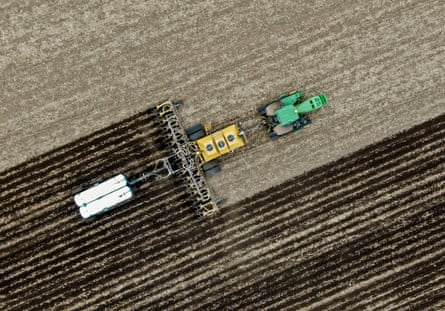
An aerial photo shows a farmer preparing his field for spring planting near Marengo, Illinois, US, April 2022
A lot of fertiliser currently applied on crops is wasted, with more than half lost via leaching into water or air. Photograph: Tannen Maury/EPA

The first step involves turning gas into hydrogen. Amandine Denis-Ryan, chief executive of the Australian branch of the Institute for Energy Economics and Financial Analysis (IEEFA), says that makes ammonia a good candidate for using green hydrogen – made by splitting water into hydrogen and oxygen using a process powered by renewable energy.

Globally 80% of ammonia is used to make fertiliser. But Denis-Ryan says that in Australia the split is roughly 50/50 – half is used to make explosives (for mining), and half for fertilisers to grow food. Explosives are probably the “most prospective application” for green ammonia, she says.

Ammonia is a logical place to kickstart a local hydrogen industry, she says, as up to 30% of existing ammonia feedstock can be swapped for green hydrogen without requiring major plant upgrades. 

The costs are higher, but the benefits are reducing reliance on gas and cutting emissions, Denis-Ryan says.

“We already have the technology to be able to do this,” says Walsh, including Australian technology like Jupiter Ionics.

When it comes to growing food, Prof Kadambot Siddique, director of the Institute of Agriculture at the University of Western Australia, says optimising fertiliser use, crop rotation and substituting organics are all strategies to reduce reliance on imported products.

A lot of the fertiliser currently applied on crops is wasted, he says. “The best efficiency is up to 30 or 40%,” Siddique says. The rest is lost from the system via leaching into water or air. 

“We cannot completely replace Australian fertiliser requirements by organics simply because we don’t have sufficient quantity,” he says, but his recent research shows mixing in small amounts could benefit soil quality and crop performance, while easing reliance on supplies passing through the strait of Hormuz.


What about all that plastic?

More than 90% of the plastic that comes into Australia is imported, either as plastic resin, or in the form of products or packaging. Most are derived from fossil fuels, and only about 14% are recycled.

Dr Eddie Attenborough, a chemical engineer at Monash University, says bioplastics, made from renewable materials like corn, sugarcane, seaweed and food waste, could provide an alternative. 

Their share of the market is currently tiny. A CSIRO report estimates global production at 2m tonnes, compared to 380m tonnes of plastics from petrochemicals.

A promising option is “polyhydroxyalkanoates” (or PHAs), Attenborough says, a polyester produced by bacteria when you feed them sugars, oils or fats – the resulting product is both home compostable and marine biodegradable. 

Australia could scale up its bioplastics manufacturing, he says. It has the science and engineering expertise to do so, early-stage companies like Uluu (which makes plastic from seaweed sugars) and Ecopha, and access to feedstocks like agricultural waste, sugarcane and seaweed.

Another obvious solution is to produce and use less.

Cip Hamilton, the plastics campaign manager at the Australian Marine Conservation Society, says the problem begins with producing too much plastic and other materials.

“We cannot recycle our way out of a crisis driven by overproduction.”


What to wear? Can we switch to natural fibres?

Synthetic fibres overtook cotton in the mid-1990s and now make up about 73% of global textile production. They are much cheaper to produce, costing about half as much per kilo as cotton, and don’t depend on environmental conditions like soil and water, leading to an explosion in production and consumption.

Dr Rebecca Van Amber, a senior lecturer in fashion and textiles at RMIT University, says as well as fabrics, petrochemicals are also used in synthetic dyes and coatings, and in fertilisers for growing natural fibres. 
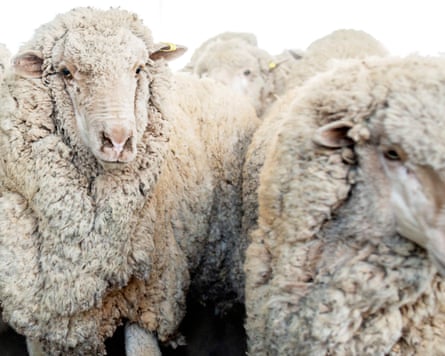
Merino sheep
Natural textile alternatives – like merino wool – are usually more expensive than synthetic fibres and produced in smaller quantities. Photograph: Jenny Evans/Getty Images

The uses for synthetic fibres extend well beyond fashion and furnishings. They are used in nappies, insulation and flooring, seatbelts and airbags in vehicles, and medical gowns, masks, sutures and plasters, to name a few.

But uncertainty due to the war in Iran has caused prices to rise, with reports in Reuters that some polyester producers are paying 30% more for fossil fuel feedstocks.

There are natural alternatives – like cotton, wool, linen, silk and hemp – but these materials are usually more expensive and produced in smaller quantities, Van Amber says. However, Australia has an advantage as a huge grower of cotton and the world’s largest producer of merino wool.

Some synthetics like elastane – which is added to stretchy materials used in athleisure, socks and underwear – are particularly hard to substitute. Natural rubber is an option, but limited in quantity.

Swapping some petrochemical fibres for organic ones would be possible, Van Amber says. The barriers to doing so at scale are largely systemic: the quantity of goods that are produced and sold, the volumes people are purchasing and the price they are willing to pay.

“There are definitely a lot of small brands out there doing really innovative things,” she says. An example is the New Zealand label Kowtow, which has eliminated plastics and petrochemicals from its garments.

Julie Boulton, a sustainable fashion consultant, says organic cotton currently makes up about 1% of the market – nowhere near enough to switch over at current rates of production.

Reducing dependence on fossil-fuelled fibres requires a “whole-of-system change”, she says, to become a society that values durable fabrics, quality garments and craftsmanship along with reuse, repair and recycling.

“We’ve become used to this cycle of cheap and fast fashion, of having the shops completely full of stuff. Is that really what we should be aiming for?”