


In Harriet Clark’s debut novel, The Hill, a nun explains what it’s like for babies born in prison. “They don’t know that they are in prison,” she says, “but they know when we force them to leave.”
The book’s child protagonist is Suzanna, whose mother has been serving a life sentence for as long as she can remember. There is no expectation that Suzanna and her mother will have a relationship outside the prison’s walls. And yet, they do have a sustained relationship within them.
The same was true for Harriet and her mother, Judith Clark, who she visited in prison for the better part of almost 40 years. Freedom, Harriet tells me, “never existed on the horizon for me and my mother. I didn’t hope for it. I didn’t treat it as the great dream for her and for me. I knew that as long as I knew my mother, I would just know her in that room.”
Judith Clark was sentenced to a minimum of 75 years in 1983 for her involvement in a robbery of a Brink’s armored truck that resulted in the death of three men: a guard and two police officers. A member of the 60s radical group the Weather Underground and its offshoot the May 19th Communist Organization, which worked in conjunction with the Black Liberation Army, Clark was driving the getaway truck. The botched robbery was meant to fund revolutionary struggle more than a decade after the “Days of Rage” protests in Chicago.
Harriet, born in 1980, was 11 months old when her mother was arrested. In a 2012 New York Times profile, written when she was still in prison, Judith Clark described how her toddler would cry at not being able to touch her mother during prison visits – physical contact was against the rules. “Every time she started toddling toward me, the person watching would say, ‘If she touches you, this visit is terminated.’”
When she was young, Harriet’s father, a physician named Alan Berkman, was also in prison for crimes related to his involvement with militant radical groups, including the armed robbery of a supermarket. Berkman treated injured prisoners in the Attica prison riot as well as members of the American Indian Movement who occupied the village of Wounded Knee on the Pine Ridge Indian reservation.
As a young infant, Harriet was cared for by her mother’s comrades in a New York commune. But when she was nearly five years old, Harriet’s maternal grandparents, once devoted and prominent members of the Communist party themselves, sued for custody.
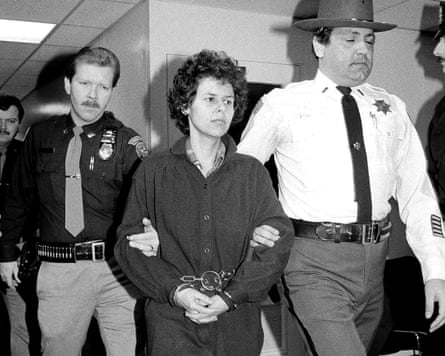
In 2016, Andrew Cuomo, then governor of New York, commuted Judith Clark’s sentence to 35 years and made her eligible for parole. In 2017, after lobbying by law enforcement groups and Republican state senators, as well as some family members of the men killed in the robbery, she was denied it, the parole board declaring: “You are still a symbol of terroristic crime.” In 2019, she was finally granted it, and released after 37 years in prison.
“When my mother was finally going to get out,” Harriet Clark tells me in her sunny Brooklyn home in April, “I had always assumed we would pick her up at the prison.” That was true of what she had seen time and time again with other families. But in her mother’s case, they dropped her off where she would be living. “It was so harrowing to me,” says Clark. “Because I thought, ‘When will I say goodbye to the prison?’ I couldn’t believe that I would never go back there. It had been my home my whole life. That is part of what is painful about institutionalizing people’s lives. I do think a child is willing to make an institution their home.”
Many will notice the similarities between Clark’s life and that of Suzanna’s. Suzanna is being raised by her grandparents, once members of the Communist party who grew disillusioned after their time spent living in the Soviet Union. Her mother is in prison for a crime that resembles Judith Clark’s. But the novel that Clark has written is not a thinly veiled work of autofiction nor a memoir. “No one knows more than my mother that the mother in the book is not her,” Clark says.
“The truth is the political setup is what I know for how people arrive at these situations,” says Clark. “And so that part did have to be pulled from life.” The fact that Suzanna’s story was close to her own paradoxically allowed her to make things up, to have different registers, to be irreverent and funny at times, and reverent where reverence was needed. “ What I have familiarity with is people arriving at causing or experiencing harm from political commitment,” she says.
As someone who thinks a lot about harm, both in terms of how prisons harm the people inside them, and how many of those same individuals have caused real and irreversible harm in the lives of others, Clark says it was important that she develop an ethic around what she included and what she left out. “I didn’t pull anything from my mother’s prison,” she says. “Because if I did I felt like I was at risk of taking things that weren’t mine.” But The Hill is about a child making a prison a home, because that’s where her mother lives, and that’s where her life with her mother exists.
Every week, Suzanna makes the long trip from her grandparents’ Manhattan apartment to the fictional women’s prison Hillcrest. The prison is atop a hill, a hill that Suzanna must ascend to see her mother, and then later descend when she leaves her mother behind. This is the journey of Suzanna’s life: ascending, descending. The mythic effort required to return to those we have been separated from. “My mother and I lived on the timeless peak of a time-bound hill,” says Suzanna. She vows herself to this hill: to the guard tower and to the prison full of other mothers.
“[The prison] is like the great holding container of her life,” Clark says. We are sitting in her home office, surrounded by the novels that were pivotal in informing her own. “She knows that everything will go away, but she believes this one thing won’t … I think it’s why we’re drawn to forms of authoritarianism. They seem so sturdy.”
Reading the book, I found myself being lulled into a sense of connection to the prison itself, its eternal promise of containment. Early on in the novel, Suzanna’s grandfather, one of her primary caretakers, dies before she turns 10. Her indomitable grandmother, robust in spirit, is increasingly unwell, and soon we are aware that death will also claim her, leaving a young Suzanna to fend for herself. The prison seems to be the one thing that is reliably permanent in Suzanna’s precarious existence. She believes her mother will always be there, and this, disturbingly, becomes a kind of comfort to protagonist and reader alike. We begin to acclimate to Suzanna’s weekly visits, and her mother tries to protect her as best she can from the knowledge of what she and the other women inside are experiencing.
But like all good literature, something sneaks up on you: a rocking chair and two cribs in a trailer meant for family visits are chained to the wall. A woman emerging from 10 months in solitary confinement asks not what time is it but “what time is this”.
“I wanted very much to avoid the horrors of prison we’ve become adjusted to,” Clark says. “But I did want it to still to be extraordinary that this is what we do to people. I do think it’s a very strange adaptation we’ve made culturally to make prisons seem normal.”
To be gently rocked into a state of complacency around the existence of mass incarceration is an experience fundamental to being an American. All across our sprawling cities and small towns, we’ve managed to live alongside structures that carry the knowledge that we have an unparalleled number of people in prisons and jails, and a singular relationship to using solitary confinement as a means of punishment.
Clark’s storytelling awakens us to that same knowledge through a child’s bewildered and indifferent acceptance of her fate. In the novel, another mother in the visiting room emits a terrible scream when she unexpectedly sees her daughter. Suzanna tells us that the sound “tore the room in half. It was like nothing I’d heard before, that scream, and I heard it while the mother held her daughter and my mother held me and all around the room people watched and knew what we all knew and what my mother said into my hair: that this was a very big deal.”
Despite the loss Suzanna experiences, she wants for little. Her mother’s life sentence entirely reorders her sense of time. She’s not interested in the future, and she’s not particularly interested in freedom, as both have been already determined as impossibilities. Her life is organized by the climb: up the hill, and down again. “I think children, especially in the choice between would you rather be free or would you rather be held,” says Clark, “would rather be held.”
“By the time I was 19,” she says. “My grandparents were dead and all their friends were dead.” Growing up, she explains, “people often thought that the political realities of my life or my parents being imprisoned were the shaping forces of my upbringing. But I really feel like the most shaping aspects of my life were being raised by the old, and then having them all go away.”
Suzanna also spends most of her time among elderly people, caring for or being cared for by her grandmother and her grandmother’s friends – old comrades straight out of a Grace Paley story who snipe bitterly to and about one another while somehow still looking after each other. “The air in our apartment was old; it was our breath,” Suzanna describes in the novel. “Pieces of my grandmother’s skin floated around us.” This is the world of the free, but still haunted; there is the busy sound of neighbors, the chatter of gossip, the blare of the TV as it accompanies a person whose mobility is increasingly limited. An apartment building, like a prison, contains all the noises of collective living. The book, Clark says, had to be about loneliness and companionship, and dignify “all the forms of care that people have tried to offer you”.
In her real life, Clark’s grandmother dying was a turning point for her. “From that moment on,” Clark says, she felt herself become “a fairly reality-adjacent person”.
Books became an incredible portal to experiencing the world of feelings without looking at them straight on. “I think that [books are] my primary experiences of companionship in life,” says Clark. Writing The Hill took Clark nearly two decades. For a long time she resisted writing about the things in her life that were most obviously interesting to other people. Privacy was an important value for a person who had never had a conversation with her own parent that wasn’t in earshot of someone else. In the meantime, she read and read and read. Books, she says, “revealed me to myself”. They gave shape and tone to her dormant sense of loneliness. “I used to joke that my parents went to prison, my grandparents died, and then 20 years later I read Marilynne Robinson’s Housekeeping and discovered I had feelings about all these things.”
During the first Trump administration, Clark watched the mass outcry at family separation policies at the border. “On the one hand, I was thrilled to see people say ‘I resist this’ … On the other hand, I think that if you grew up every weekend in prisons then you know that every day, all over this country, at the end of visiting hours, the state pull parents away from their children.” She saw an image on the news of migrant families carrying their children up a hill and she understood something about what Suzanna was doing. “She’s trying to keep her family together,” said Clark. “She’s trying to resist the great forces of separation.” That clarity helped her finish her book.
While the conditions around Judith Clark’s crime and sentencing are unique and high profile, having incarcerated parents is not. Millions of children in the US either have, or will have during their lifetime, at least one incarcerated parent. Millions of children are being raised by their elderly grandparents, a number that’s only increased since the rise of America’s devastating opioid crisis. And now that the country has embarked on a revamped process of punitive deportation and detainment – disappearing undocumented parents from their children with citizenship in newly created detention centers with little transparency or recourse to get them out, or in some cases incarcerating children alongside them – more children are rapidly experiencing their family at the mercy of the state. If the US is to have the highest known incarcerated population in the world, then we have to consider what it does to the families of the people who live out that punishment alongside them. A work of fiction is rarely in the business of doling out didactic answers. But it does provide the texture and feeling of a life spent asking these questions.
Harriet Clark always understood having a parent in prison was a shared identity, because every week when she saw her mother in prison she was surrounded by other children doing the same. As she grew older, it was hard not to notice the way family separation played into the country’s most brutal and inhumane legacies: slavery, the Native American boarding school system, our current immigration policies. “We have always used family separation to destabilize both these populations – to destabilize the parents by making them impotent and to destabilize the kids by making them unprotected,” says Clark. One of the existential quandaries of the book, Clark explains, is: what is a parent who can’t protect you? “I think our prisons exist to force that reality on to so many families,” says Clark.
How are parents able to parent their children when they are not in a position to protect them is one question the novel asks. How do children live with the knowledge that they cannot protect their parents from suffering is another. “Every time you leave a prison, you feel in your body everyone you’ve left there,” Clark says. “Not just your mother, all the other women too. And then the worst part you feel it, you feel it, you feel it until you don’t, meaning until finally you forget to think of them.” During the part where we spoke about the current regime of deportations and detentions, Clark and I were quiet, thinking of the children in this current moment who do not even know where their parents are, if they are safe, if they are still in the country or where they had gone. We thought about them until we didn’t. “Choose a new mountain, the world kept insisting,” Suzanna tells us in the novel. “But this was my mountain. I didn’t want to leave it – I only wanted to go up and down.”
-
The Hill by Harriet Clark is out Tuesday by Farrar, Straus and Giroux