
惯性聚合 高效追踪和阅读你感兴趣的博客、新闻、科技资讯
阅读原文 在惯性聚合中打开

推荐订阅源

T
The Exploit Database - CXSecurity.com
J
Java Code Geeks
H
Help Net Security
B
Blog RSS Feed
G
Google Developers Blog
博客园 - 司徒正美
MongoDB | Blog
MongoDB | Blog
量子位
博客园 - 三生石上(FineUI控件)
The Cloudflare Blog
P
Proofpoint News Feed
小众软件
小众软件
人人都是产品经理
人人都是产品经理
云风的 BLOG
云风的 BLOG
V
V2EX
月光博客
月光博客
C
Check Point Blog
cs.AI updates on arXiv.org
A
Arctic Wolf
Help Net Security
Help Net Security
Schneier on Security
D
DataBreaches.Net
酷 壳 – CoolShell
酷 壳 – CoolShell
博客园_首页
钛媒体:引领未来商业与生活新知
钛媒体:引领未来商业与生活新知
P
Palo Alto Networks Blog
T
Tenable Blog
L
LangChain Blog
Attack and Defense Labs
Google DeepMind News
N
News and Events Feed by Topic
Forbes - Security
Forbes - Security
F
Fortinet All Blogs
Recent Announcements
Cyber Security Advisories - MS-ISAC
大猫的无限游戏
大猫的无限游戏
www.infosecurity-magazine.com
Y
Y Combinator Blog
WordPress大学
WordPress大学
Stack Overflow Blog
Stack Overflow Blog
V
Visual Studio Blog
OSCHINA 社区最新新闻
OSCHINA 社区最新新闻
Engineering at Meta
Engineering at Meta
NISL@THU
NISL@THU
GbyAI
GbyAI
博客园 - Franky
S
Secure Thoughts
有赞技术团队
有赞技术团队
PCI Perspectives
PCI Perspectives
U
Unit 42

The Guardian

New Zealand’s North Island braces for Cyclone Vaianu with thousands ordered to evacuate Artemis II splashdown – in pictures Swalwell denies allegations of sexual assault as calls grow for him to withdraw from California governor race Trump news at a glance: Epstein survivors have words for Melania Trump after surprise statement Multiple people face charges, including murder, in California fireworks blast Rory McIlroy surges into six-shot Masters lead with stunning second-round flourish Roberto De Zerbi targets ‘Ange-ball’ revival to save Spurs from relegation Bath hit back to reach semi-final after stunning Northampton in 11-try epic Australia crash out of BJK Cup after Britain secure upset with doubles win Zebras, wealth and power: Hungary’s election tests Orbán’s grip on power ‘TikTok effect’ brings sellout crowds and younger fans to Grand National meeting King signs up David Beckham to his Chelsea flower show team The war over Omagh’s gold: the £21bn mine plan tearing a community apart Britain’s shadow workforce is paid as little as 65p an hour. Who cares for the carers? Tim Dowling: my wife is on a quest to restore my thinning hair SUVs are making Britain’s potholes worse, say scientists Blind date: ‘She claimed she was usually shy. I wouldn’t have guessed’ I’m a sauna person now: the Becky Barnicoat cartoon ‘I got everything I dreamed of – when I had no ability to handle it’: Lena Dunham on toxic fame, broken friendships and her ‘lost decade’ Six great reads: the man who let snakes bite him, masked heavy metal and the brutal reality for foreign students in the UK Meera Sodha’s recipe for noodles with rose beancurd, spring greens and egg Cuba’s doctors were a lifeline for the world. Now the Caribbean is shamefully complicit in the US drive to expel them An environmental disaster in Moldova has Russia’s fingerprints all over it ‘This is as important as your teeth’: are you skipping this key part of mouth hygiene? Man arrested after four die trying to cross Channel in small boat Ukraine war briefing: doubts linger in Kyiv over Moscow’s promise to uphold Orthodox Easter ceasefire Ichiro Suzuki statue unveiling goes awry as bronze bat snaps during ceremony Arrest of national war hero Ben Roberts-Smith cuts deeply to core of Australian psyche European football: Real Madrid held at home by Girona to extend winless run ‘You come back different’: how rugby players change after motherhood Human rights groups decry US plan for Guantánamo camp for Cuban migrants Potential US host cities for 2031 Women’s World Cup games mull withdrawal over Fifa concerns Arne Slot insists he is ‘aligned’ with Liverpool board and fans as squad is rebuilt Kamala Harris ‘thinking about’ running for president again in 2028 JD Vance warns Iran against trying to ‘play’ the US in peace talks West Ham double up twice to thrash Wolves and put Spurs in relegation zone Trump administration releases new renderings of so-called ‘Arc de Trump’ Bafta apologises for events surrounding John Davidson’s Tourette’s outburst Cocktail of the week: Bar Shrimp’s la rosita – recipe New drug may extend survival in aggressive ovarian cancer, trial shows One dead and 27 injured after bus with British passengers crashes in Canary Islands OpenAI CEO Sam Altman’s home targeted with molotov cocktail Alarm as acting CDC director delays report showing Covid vaccine benefits Argentina just ripped up its pioneering glacier law. What does this mean for millions of people’s drinking water? ‘Illegal’ forest service overhaul risks causing ‘chaos’ across US public lands, union claims Prince Harry sued for defamation by charity he co-founded Anthropic’s new AI tool has implications for us all – whether we can use it or not Concerns raised about motorbike tourist trail after death of British teenager in Vietnam The Guardian view on Trump’s civilisational threats: the words that fuel war must be condemned The Guardian view on dystopias for our times: the American nightmare Weather tracker: Cyclone Maila batters Solomon Islands with 115mph winds Doctors’ leader claims new reduced pay offer killed chances of ending strikes in England Netanyahu-ism has achieved nothing for Israelis – and come at a monstrously high price Deborah Levy: ‘CS Lewis’s White Witch terrified me – but I wanted to meet her’ How I Shop with Michelle Ogundehin: ‘We grownups have enough stuff already’ ‘Butter Birkin’: popcorn plastic It bag in demand by Devil Wears Prada fans Trump’s war and Melania’s Epstein statement, with US editor Betsy Reed – The Latest Orbán and Magyar trade accusations in last days of Hungary election campaign Reckonwrong: How Long Has It Been? review | Safi Bugel's experimental album of the month Martin Rowson on Middle East peace talks – cartoon Fears of UK and EU flight cancellations as airports warn of jet fuel shortages Peers vote to ban pornography depicting sex acts between stepfamily members Week in wildlife: an ostrich on the lam, a tortoise crossing a road and surfing seals ‘There’s no shortage of terrifying technology’: how AI became TV drama’s new go-to villain Texas court overturns sentence for man on death row for nearly 50 years Power up! Could force be the secret to supercharging your fitness? ‘Irresponsible failure’: Google, Meta, Snap and Microsoft slam EU over child sexual abuse law lapse Blank canvas: what to wear with white trousers Critics assemble! Here’s my list of the greatest superhero movies of all time Amazon to finally launch Leo satellite internet in ‘mid-2026’, says CEO Pete Hegseth’s holy war: the militant Christian theology animating the US attack on Iran Toxic putdowns, brutal zingers ... and an unexpected love story – inside the joyful climax to brilliant sitcom Hacks Add to playlist: the beautifully dazed, countrified indie-rock of Tracey Nelson and the week’s best new tracks ‘I’m worried there’s too much of me,’ says a birch: inside the interspecies council giving nature a voice Dolce & Gabbana says co-founder Stefano Gabbana has quit as chair Why is anyone surprised by the US and Israel’s latest war? It’s only what the world allowed them to do in Gaza Super Mario what?! The seven best obscure Mario games Holly Humberstone: Cruel World review – Taylor Swift fave trades gothic melancholy for pop glow-up Thrash review – cursed shark thriller sinks like a stone on Netflix ‘The biggest, baddest, saltiest chick you would ever see’: why no one sang the blues like Big Mama Thornton Go Gentle by Maria Semple review – a joyfully clever New York romcom ‘Tranquil, natural and barely a tourist in sight’: readers’ favourite hidden gems in Spain Benjamina Ebuehi’s sweet and salty chocolate chip cookies recipe ‘I’m not a commercial director – I’m not even a professional film-maker’: Jim Jarmusch on the seven-year journey to make his new film Malcolm in the Middle: Life’s Still Unfair review – the TV magic they’ve created here is absolutely miraculous The Miniature Wife review – Matthew Macfadyen is wasted in this pointless comedy From soups and greens to roots, how to survive the ‘hungry gap’ From fat transplants to LED mittens: how the fear of ‘old lady hands’ mobilised the beauty industry Anna Wintour’s Vogue cover is more than a cameo – it’s a power play ‘They’re gonna make me cry’: I competed at a speed puzzling championship You be the judge: should my girlfriend stop mixing gold and silver jewellery? Maritime and port workers: how is the Middle East conflict affecting you? How games capture the awe and terror of cosmic isolation Why does alcohol make us both happy and miserable – and what else does it do to our minds and bodies? I never text back – and it’s ruining my relationships The pet I’ll never forget: Beau, the labrador who saved my life Life Is Strange: Reunion review – a decade-long story comes to an impassioned close Why is gaming becoming so expensive? The answer is found in AI Sign up for the First Edition newsletter: our free daily news email Sign up for the Feast newsletter: our free Guardian food email
How Bolivia’s cacao farmers took on the gold mining industry – and won
Benjamin Swi · 2026-04-22 · via The Guardian

Mahogany trees tower above Herminio Mamani as he tends his cacao farm in Bolivia’s biodiverse north-west. A former president of El Ceibo, the country’s largest organic cacao co-operative, he says the agroforestry model used by its 1,300 members is vital not only to maintain the quality of the cacao they produce, but also for keeping gold mining at bay.

“We cacao producers would never kill an animal here,” he says, parrots squawking nearby. “The parcels [of land] can never be monocultures – all the crops grow together.”
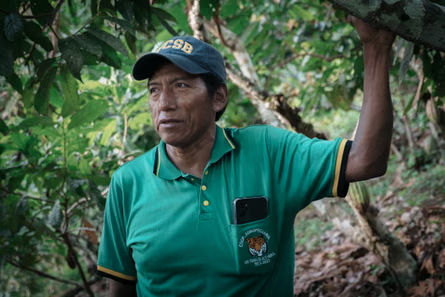
A man in a green t-shirt rests a hand on a tree branch.
Herminio Mamani, former president of the El Ceibo organic cacao cooperative, at his cacao farm in Bolivia’s Palos Blancos municipality. Photograph: Emmanuel Escobar

About 20 miles away, dredging boats and excavators operate relentlessly along the Kaka River, part of a gold rush that has rerouted waterways and encroached on forests in some of the world’s most biodiverse national parks. Mamani’s land remains protected thanks to local laws passed in 2021 banning mining in Palos Blancos and Alto Beni.

He was among those who pushed for the local ordinance declaring Palos Blancos mining-free, a move framed as essential for safeguarding agriculture and food security. Alto Beni, a neighbouring town, followed suit with a similar measure months later.
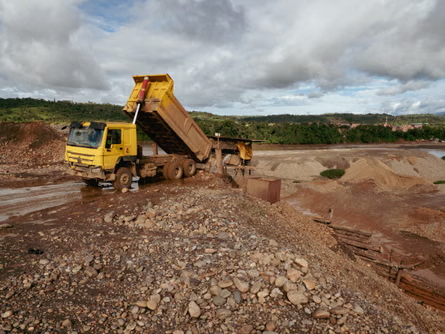
A truck tips its load into a pit.
Gold mining operations near Mayaya. Photograph: Benjamin Swift

As gold prices surged by more than 64% in 2025, from about $2,000 (£1,465) an ounce in 2020 to record highs above $5,100 (£3,762) an ounce in January amid rising geopolitical uncertainties, other Bolivian cities are looking to these towns as models for protecting their land.

The initiative began in 2017, when a mining dredge appeared on the nearby Boopi River, which borders Alto Beni and Palos Blancos. Both municipalities, reliant on organic agriculture, had avoided mining but witnessed its devastation elsewhere.

“I’ve known Mayaya since I was young, and the river used to be deep and full of fish,” says Roberto Gutierrez, a farmer in Alto Beni, referring to a nearby town where mining dominates. “Now the water levels have dropped, pollution has seeped in, and the fish are disappearing.”

Communities reacted swiftly. “People gathered in mass protest and issued a warning: ‘Leave, or we burn your machinery,’” recalls Nancy Chambi, a farmer and Alto Beni councillor. The miners left.

El Ceibo and other co-operatives opposed mining, fearing mercury contamination could strip them of international certifications. “Even if small-scale mining were permitted, it’s a slippery slope,” Mamani says. “Contamination would be unavoidable, and if we lost our certifications, the price of our cacao would plummet.”
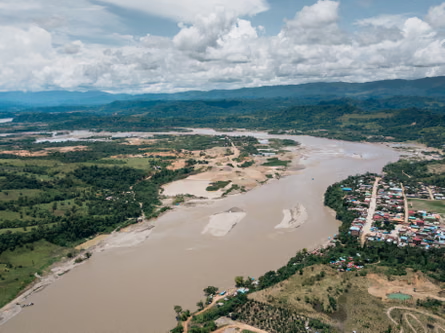
An aerial shot of a wide, muddy river passing through a town.
The Kaka River near Mayaya, in Bolivia’s Teoponte municipality, which shares a border with Alto Beni and Palos Blancos. Mining dominates Teoponte, the environmental effects inspired Palos Blancos and Alto Beni’s new laws. Photograph: Emmanuel Escobar

After four years of grassroots pressure, Palos Blancos and Alto Beni passed mining bans in 2021. A 2024 departmental law further legitimised their stance against the national government’s will.

“We showed people that mining does more harm than good,” says Ulises Ariñez, former environment secretary for Palos Blancos. “People have realised that gold is temporary, but agriculture and conservation are for life.”

The laws have secured farmers’ organic status. In 2025, El Ceibo exported 2,000 tonnes of cacao, mostly to Europe and the US, providing some resilience amid Bolivia’s economic crisis. “With the country’s economy in such bad shape, people here are a bit more at ease,” says Jesús Tapia, an El Ceibo producer.
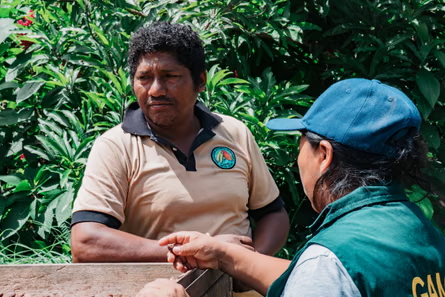
Two people stand by a wooden trough.
Roberto Gutierrez and Nancy Chambi taste cacao on Gutierrez’s farm. Photograph: Emmanuel Escobar

For Chambi and Gutierrez, who sell crops such as cacao, bananas and papaya through a smaller co-operative, the laws have been transformative. “If Mayaya has yellow gold, we have purple gold,” Gutierrez says of their cacao pods.

But record gold prices have fuelled illegal mining globally, driving deforestation, mercury poisoning, armed conflict and human and animal trafficking. In Bolivia, legal and illegal mining has spread into protected areas, unhindered by lax regulations. Severe flooding in Tipuani and Guanay has forced potential town relocations.

At least 10 other municipalities and Indigenous territories are now pursuing similar bans. “This is the beginning of the fight,” says Pablo Solón, an environmental activist and former Bolivian UN ambassador who has supported municipalities seeking alternatives to mining. “We have to build a wall to prevent mining from coming down the river.”

He sees the most potential for resistance in municipalities such as Rurrenabaque, which already has a strong tourism sector, and Indigenous territories like Pilón Lajas, while acknowledging that mining will continue elsewhere. “It will be a wall to prevent the cancer from spreading,” he says. “But the cancer exists.”
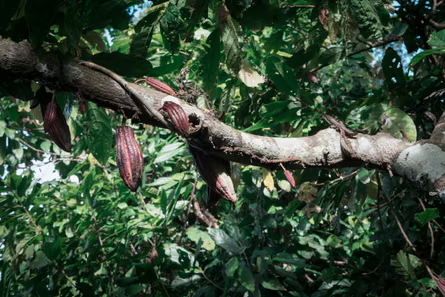
Purple-red pods hang from a tree branch.
Cacao pods, which he refers to as ‘purple gold’, growing on Mamani’s agroforestry farm. Photograph: Emmanuel Escobar

Cacao producers in Palos Blancos and Alto Beni access international markets, but elsewhere, farmers struggle. “We have produce, but lack access to markets,” says Karen Coata, vice-president of the Organisation of Indigenous Leco Women.

In her territory, Pilcol, people report mercury-related illnesses, such as headaches and lung pain, yet many mine to supplement their incomes. “How else will we make ends meet?” she asks.

Franklin Quequesana, a Guanay councillor, advocates regulated mining rather than outright bans. “Guanay is a mining municipality – it’s about 80% of our economy,” he says. “It would be impossible to pass a municipal law here, but we can prohibit mining in certain sectors.”

Ariñez, now a municipal coordinator for the nonprofit Fundación Natura, is working with Quequesana to pass a law designating the area of Uyapi as mining-free to protect its agriculture. The goal is feasible: in 2024, the municipalities of Guanay and Teoponte – both reliant on mining – created adjoining conservation areas. “Five years ago, no one would have talked about a protected area here,” says Ariñez.
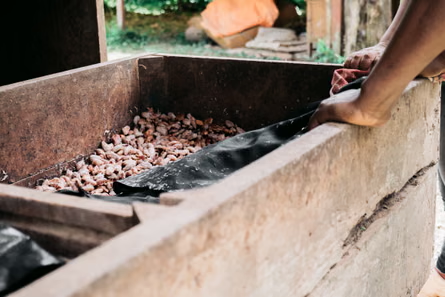
A person leans on a wooden trough holding cacao beans.
Cacao fermenting on Roberto Gutierrez’s farm. Photograph: Emmanuel Escobar

With gold prices expected to keep rising, mining will expand. “Mining could be done responsibly, but that would mean managing waste correctly – I don’t think that will happen,” Quequesana says. “The central government keeps authorising projects, and we’re the ones affected.”

Alfredo Zaconeta, a mining researcher at nonprofit Cedla, argues that national policy is needed. “Unless the government clearly defines which areas are open to mining, it won’t have the impact people hope for.”

Solón doubts national reform is likely, citing conflicts of interest that span the political spectrum.
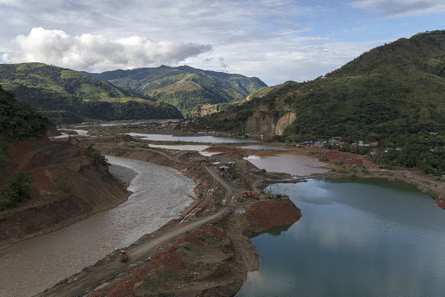
A pool of water and the riverbank surrounded by hills.
Gold mining operations in Tipuani in 2025. The increase in gold prices in the past decade has accelerated a shift from centuries-old panning practices to industrial operations that are reshaping the riverbank, contributing to flooding. Photograph: Bloomberg/Getty Images

The Ministry of Mining and Metallurgy and the Bolivian mining authority declined interview requests. In January, the minister of mining told local media that high gold prices represent an “opportunity” for Bolivia to export up to $5bn (£3.65bn) of the metal annually. He also stressed the need to curb smuggling and improve traceability.

In February, Bolivia’s new administration considered a decree to fast-track the regularisation of non-compliant mining operations. If approved, it would reduce legal requirements for 3,982 mining projects that have failed to comply with a 2014 law, including exemptions from environmental permit requirements.

For Solón, local bans are “one of the few possibilities to protect the Amazon”. Its supporters remain hopeful. In 2025, Peru’s side of Lake Titicaca gained legal recognition, and a court suspended mining outside authorised areas along Bolivia’s Madre de Dios River. Four new protected areas were also created.

“We in Alto Beni are living harmoniously and peacefully,” Chambi says. “All we ask is that it continues.”