






Campaigners in Jamaica are heading to court next week to try to prevent the government from cutting off access to more of their beaches.
They argue that ceding their shorelines to big hotel chains enriches private investors and benefits tourists and outsiders while depriving Jamaicans who depend on the sea for their livelihoods, leisure and health.
The legal battle is being led by the Jamaica Beach Birthright Environmental Movement (Jabbem), created in 2020 after community members clashed with police in violent protests over the closure of Mammee Bay, in the popular tourist parish of St Ann.
Five court cases will begin later this month to try to prevent the privatisation of Mammee Bay and Little Dunn’s River in St Ann, the Blue Lagoon in the north-eastern coastal parish of Portland, Bob Marley beach in St Andrew, and Flankers/Providence beach in the tourism capital of Montego Bay.
Jabbem’s founder, Devon Taylor, described the cases as a fight for survival. “The sea is the only source of wild food in Jamaica. And when you cut us off from the sea by denying us access, you are actually setting us up to starve,” he said.
Roseroy Gay, 64, who has fished the waters of the Blue Lagoon since 1979, said fishing zone changes and beach closures had resulted in him needing support from children and other family members abroad.
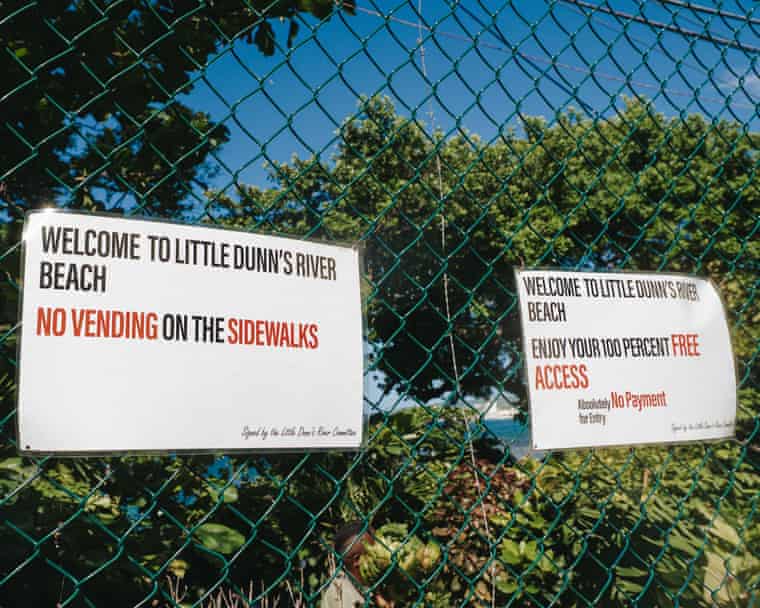
Other livelihoods are also at risk. Clive “Up Up” Ivy, who sells painted woodcarvings and bead necklaces in Little Dunn’s River, said the uncertainty and closures of the beach were having a marked impact on his ability to earn a living.
Jabbem and other community groups hope the cases will end the 1956 Beach Control Act, which gave the state ownership of the island’s foreshore and seabed, meaning anyone wanting to use or develop a beach needed government permission.
The campaigners say the law, which dates back to when Jamaica was a British colony, props up a multibillion-dollar all-inclusive tourism industry that funnels profits out of the country or into the hands of an elite minority.
Taylor said the system perpetuated landlessness and inequity. “The prime minister has the power, through his cabinet, to address these issues. It’s a political unwillingness and it does not start with this prime minister, because the Beach Control Act has been in place since 1956 and Jamaica has had successive governments who did not attempt to repeal it,” he said.
Matthew Samuda, the minister of environment and climate change, said that while the “idea of access needs to be explored”, the government had to consider how it could convert Jamaica’s natural assets into “economic benefit that helps you, me, every single citizen, the poorest among us, the richest among us”.
He said between 112,000 and 116,000 Jamaicans were employed in the tourism sector, and an estimated 300,000 to 350,000 – more than 10% of the population – benefited through connected industries such as farming, transportation, craft vending and electrical engineering.
“Recent approvals for new developments … especially where public land was involved in the development, have insisted that developers carve out corridors to the sea,” Samuda said. “Jamaica has the commitment of its government to ensure that its natural assets also benefit its citizens.”
In March the prime minister, Andrew Holness, proposed a beach access and management policy, which promises to modernise the legislation and increase access. But campaigners say the policy still allows unacceptable restrictions.
Taylor said: “What that policy is trying to say is that Jamaicans will not have fundamental rights. They will have only qualified rights. And that qualified right will be set by a licence that a developer will have for the beach.”
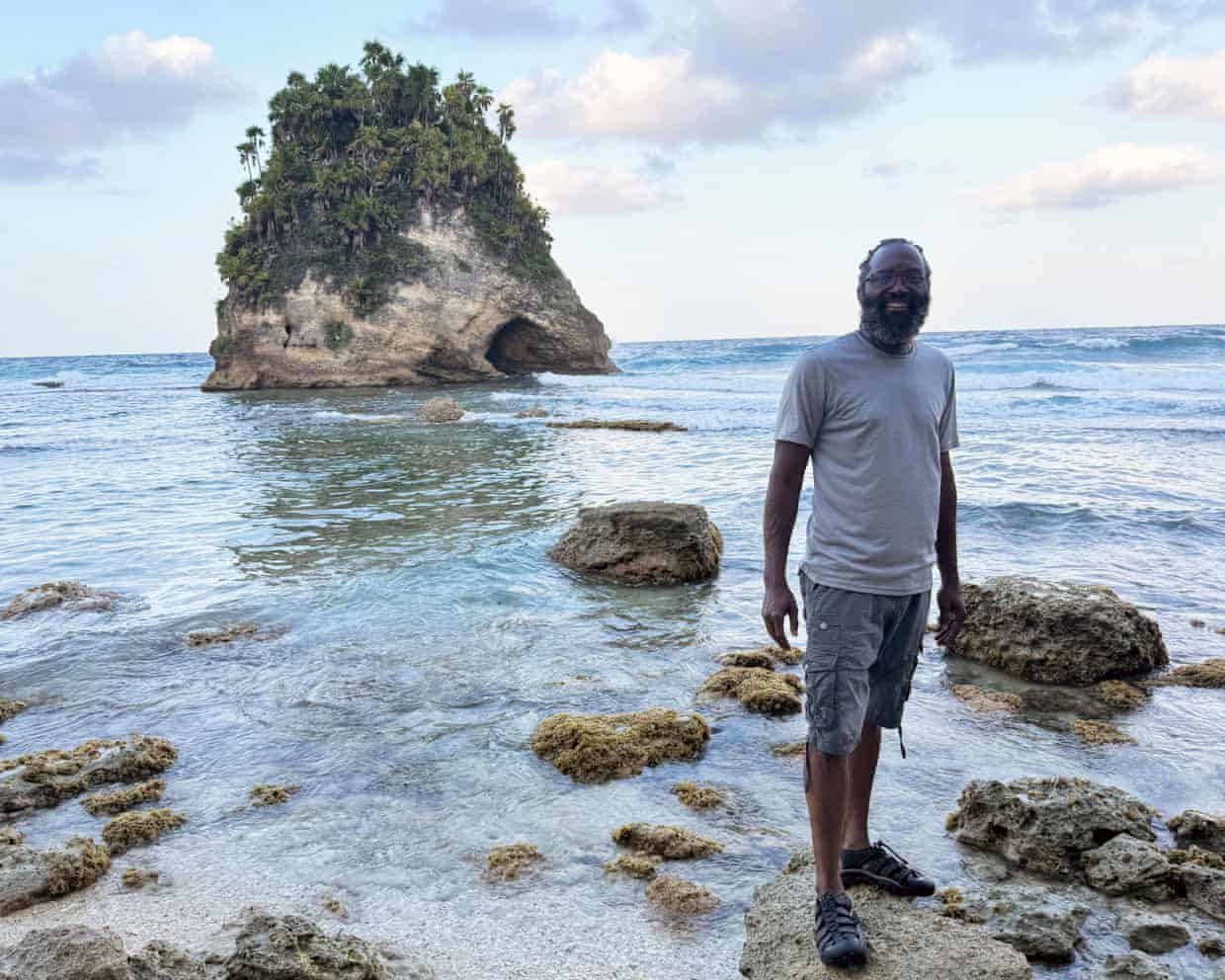
Jabbem’s director of community engagement, Damion Coombs, echoed his concerns. “We are still talking about ‘qualified rights’, meaning somebody can decide if you come in – and maybe charge a fee. What we are fighting for is free, legal, unfettered, forever rights,” he said.
Campaigners have also raised concerns about another law, the National Reconstruction and Resilience Authority (Narra) Act, passed in March this year to fast-track rebuilding after Hurricane Melissa. They argue this will weaken the 1882 Prescription Act, which protects the legal right to land or pathways that have been continuously used as a public access route for at least 20 years.
“The Narra Act is going to interfere with the last remaining tool that we use to fight for beaches in Jamaica, which is the Prescription Act,” Taylor said. “And it’s doing so because it will interrupt the continuous use of beaches, restrict access to information under a secrecy clause and concentrate power in the office of the prime minister.”
He said the act removed crucial checks and balances that ensured transparency and accountability, making the prime minister “a supreme leader”.
Omar Newell, the shadow environment minister, had similar concerns. “Narra concentrates a ridiculous amount of power in the hands of one minister, the prime minister,” he said. He also questioned whether the act was designed to consider long-term environmental impacts.
Samuda defended the act, insisting that it facilitated the “large-scale, urgent procurement … required to build in resilience before the next storm”. He said: “There’s no weakening of oversight. You still have to come to the parliament. You still require the necessary permits. What it does is it guarantees a timely response to delivery of projects.”