





Andy Warhol sent Paul a Brillo box. Fran Lebowitz called Peter “a genius about sex”. The ending of Susan Sontag’s second novel was inspired by a bunch of Peter’s photographs. Sontag dedicated two books to Paul, and went to bed with him. The two men’s long list of admirers in the second half of the 20th century included Cy Twombly, Tennessee Williams, Gore Vidal and Alex Katz. The question, then, as with any once celebrated artist largely ignored by the history books – who were they, and what happened?
In this intimate and vibrant double biography, the author and critic Andrew Durbin reveals how the painter and sculptor Paul Thek and the photographer Peter Hujar slipped from the centre of the New York creative scene to obscurity. It begins in 1954 (a few years before they met as soul-searching twentysomethings) and ends in 1975 (a decade before they died of Aids). It tells the story of friends and lovers who, together, matured as artists and men; exceptionally talented, charming, sometimes cruel. They pushed the possibilities of what a gay relationship looked like – “open, and unapologetic” – and helped to define the New York art scene’s “cool”.
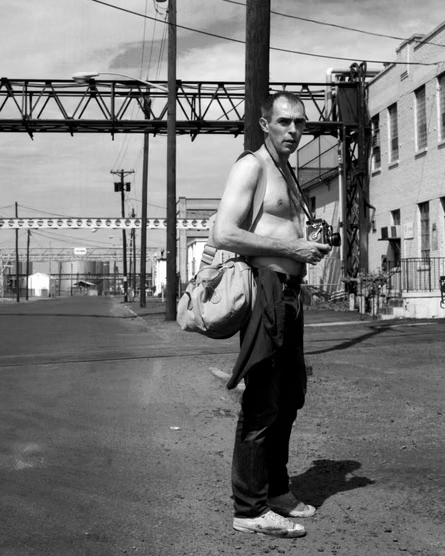
When we meet them, they’re seeing other people; only a quarter of the way through the book do they get together. No letters tell of how it happened, but Durbin, who’s also a novelist, niftily plugs the gaps of that fateful night in 1960: “the look in Peter’s eyes when he saw Paul at a bar on Washington Square, the way Thek minded whether Hujar laughed at his jokes, how Peter squeezed close when there was plenty of room on the couch”.
Durbin writes of bodies tilting towards each other and love making a person feel light. At times, it’s corny – boys kiss under “lavender skies” and dance until dawn. He’s at his best when describing the inner lives of his subjects, who were, in many ways, opposites: Hujar “dignified and remote”, Thek “cuddly and sensual”. While Hujar immersed himself in the gay scene, Thek occasionally fooled himself into thinking he should find a wife (in his notebooks he remarked that bisexuality was “BLAND”). Neither was interested in the cocktail circuit. “They cared more for integrity – for authenticity of vision – than to be wooed and feted,” writes Durbin. “They would sooner go hungry than compromise, and often did.”
Thek shot to stardom in the mid-1960s with his meat pieces, beeswax replicas of hunks of flesh housed in sculptural vitrines that appalled and amazed. That Brillo box Warhol sent him? He used it as packaging. If you only know one photograph by Hujar, it’s probably Orgasmic Man (1969), a closeup of a young man’s face as he climaxes, eyes squeezed shut, hand pressed to cheek, used as the cover art for Hanya Yanagihara’s novel A Little Life. At first, Hujar, who’d been drawn to photographing the people surrounding him since he was a boy, resisted homosexuality as a subject. By the 1960s he was regularly photographing his flings and friends naked. He photographed Thek masturbating on a mattress. He also turned the lens on himself, capturing his nude body mid-dance. In 1967, Thek made a replica of his own body, eyes closed, tongue poking out. Hujar photographed that too.
Early on, Durbin informs us that, unlike many stories of artists who died of Aids – which are often “read backward, through the lens of the disease” – this is the tale of Thek and Hujar’s lives before their deaths. Instead of presenting them as “tragic, twilight figures”, he offers a tender yet unflinching view of their choices, thoughts, feelings, what made them lovable, and what made them difficult to be with.
He isn’t the only one telling their story: a new book of photographs and letters was published last year; a biopic starring Ben Whishaw came out in January. History may have forgotten them, but there is always the possibility of revival. As Thek wrote in his notebook, “The tremendous event is still on the way!”