






Intermezzo, the most recent book by Irish novelist Sally Rooney, will be published in Hebrew this month by the Israeli publisher November Books, in collaboration with +972 Magazine and Local Call. The announcement comes more than four years after Rooney, citing the global boycott movement against Israel, turned down a translation offer by a different Israeli publisher for an earlier book.
Below, Rooney talks to the Irish Palestinian activist Samir Eskanda about her decision to work with November Books, which has been deemed to be in compliance with the Boycott, Divestment and Sanctions (BDS) movement. They discuss what first brought her to the boycott, the movement’s aims and targets and the role of the artist in bringing about radical change.
The discussion, which took place over email, has been condensed and edited for clarity.
Samir Eskanda: Before getting to the specifics of this new release, I thought we could start with the wider context. Palestinians have called since 2004 for the boycott of complicit Israeli cultural institutions. Since then, many thousands of artists, writers, cultural workers and arts institutions have publicly endorsed this call.
The Palestinian Campaign for the Academic and Cultural Boycott of Israel (PACBI) leads and guides this work. It’s a founding member of the nonviolent BDS movement, which launched in 2005 and is led by the broadest Palestinian civil society coalition. The boycott targets institutions rather than individuals, and complicity, not identity. Israeli cultural organisations, companies and institutions are overwhelmingly complicit in whitewashing and justifying Israel’s ongoing genocide against Palestinians in Gaza, its wider regional wars of aggression and expansionism, and its decades-old regime of military occupation and settler-colonial apartheid, which must be isolated and entirely dismantled.

Sally, when did you first become aware of the Palestinian call for the cultural boycott of Israel? Was supporting it a difficult decision to make?
Sally Rooney: In Dublin in 2014, I was involved in the protest movement against Israel’s illegal military campaign in Gaza. For readers who aren’t aware, I should say that Israeli forces killed more than 2,000 people in Gaza that year, including hundreds of children. That moment of horror and outrage was a formative experience for me, as a person and as a writer. My second novel, Normal People, includes a scene set at those same protests. I couldn’t write about life in Dublin at that time without acknowledging the centrality of that political moment.
I was certainly aware of the boycott, divestment and sanctions movement then, and I tried to comply with the boycott in my role as a consumer. And yet I sold the translation rights to both my first two novels to an Israeli publisher, which I later discovered had links to the Israeli military. How could my actions be so inconsistent with my beliefs?
I remember trying at the time to find BDS guidance on the publishing industry. Of course, the information available online was targeted at consumers, not at literary novelists, who do not make up a big constituency of the general public (!). It seems so obvious now that I should have reached out and contacted PACBI. In truth I think I felt too awkward, or I felt as if it would be attention-seeking. I had never published a book before and no one had ever heard of me. From what I could see online, most of the authors I admired seemed to have translation deals in Israel. I wrongly assumed that the complicit institutions targeted by BDS did not include literary publishers.

By the time it came to selling the rights for my third book in 2021, things had changed in a few ways. An increasing number of international human rights organisations were confirming what Palestinians had long said: that the Israeli system of racial domination met the legal definition of apartheid. I had come to a better understanding of the complicity of the Israeli culture sector in that apartheid system. And meanwhile, I had also become something of a public figure, and I felt a greater sense of responsibility in making decisions around my work.
But I still didn’t reach out to anyone for advice. With what I knew, I decided that I couldn’t in good conscience sell translation rights to a mainstream Israeli publisher and still comply with the boycott – but I didn’t even really tell anyone what I was doing. I just turned down the specific deal that I was offered. Looking back, I obviously should have contacted PACBI from the very start and asked for guidance.
Samir, you’ve long been involved in the cultural boycott of Israel. Can you tell us a little bit about the roots of that call, how it relates to the broader BDS movement and how you came to be involved?
SE: I grew up in Britain, where I came to understand the state’s hypocrisy and complicity in enabling, while obscuring, Israel’s colonial oppression against Indigenous Palestinians. But it was the emergence of the BDS movement that provided a principled and strategic way to actually do something about international complicity, and spurred me on to take sustained action. I’ve been involved for a decade, but I joined a movement that was already thriving.
Since the onset of Israel’s genocide and the unspeakable crimes committed by Israeli forces against Palestinians in Gaza, tens of thousands of artists have demanded justice and liberation for Palestinians, accountability for the perpetrators, and refused to allow their work to “artwash” these atrocities.
At heart, the authoritative Palestinian call on artists and all others is about ending complicity. As Martin Luther King Jr said of the Montgomery bus boycott, we are “withdrawing our cooperation from an evil system”. In the colonial west, this ethical obligation is especially profound, given its centuries of domination and oppression. In the context of genocide – and given the rulings by the international court of justice (ICJ) that Israel must “prevent” any and all genocidal acts, that it is guilty of apartheid, and its occupation is illegal and must end – this is also a legal responsibility for states, corporations and institutions.
You said in 2021 that you would be happy to work with an Israeli publisher that is not complicit in Israel’s regime of oppression, and that recognises the comprehensive rights of the Palestinian people under international law, including the right of return of Palestinian refugees. This is now happening almost five years later. What was the process that led to this release?
SR: In a way, it wasn’t so different from any other process around the sale of translation rights. The publisher November Books approached my agent with a proposal to translate one of my novels into Hebrew. Because the team at November is based in Israel, they were careful to explain how the publication would meet the requirements of the cultural boycott. For instance, November Books does not operate in illegal Israeli settlements, receives no state funding and explicitly recognises the international legal rights of the Palestinian people, including the right of return. I also kept in touch with PACBI along the way to try to ensure that I was upholding both the letter and the spirit of the institutional boycott.
For me, the act of translation is in itself a beautiful ideal. Though my refusal to work with complicit Israeli publishing houses made the contractual side of things more complex, I was, of course, never boycotting the Hebrew language or any language. I’m very pleased that Intermezzo will soon be available in Hebrew with November Books. I am a devoted admirer of literary translators and the work they do. It means a great deal to me that my books are available in languages other than my own and I’m very grateful. I’m also delighted that the novel is published in Arabic with the Palestinian publishing house Tibaq.
What do you think is the role of radical – or if you like, dissident – Israeli institutions such as November Books in the academic and cultural boycott?
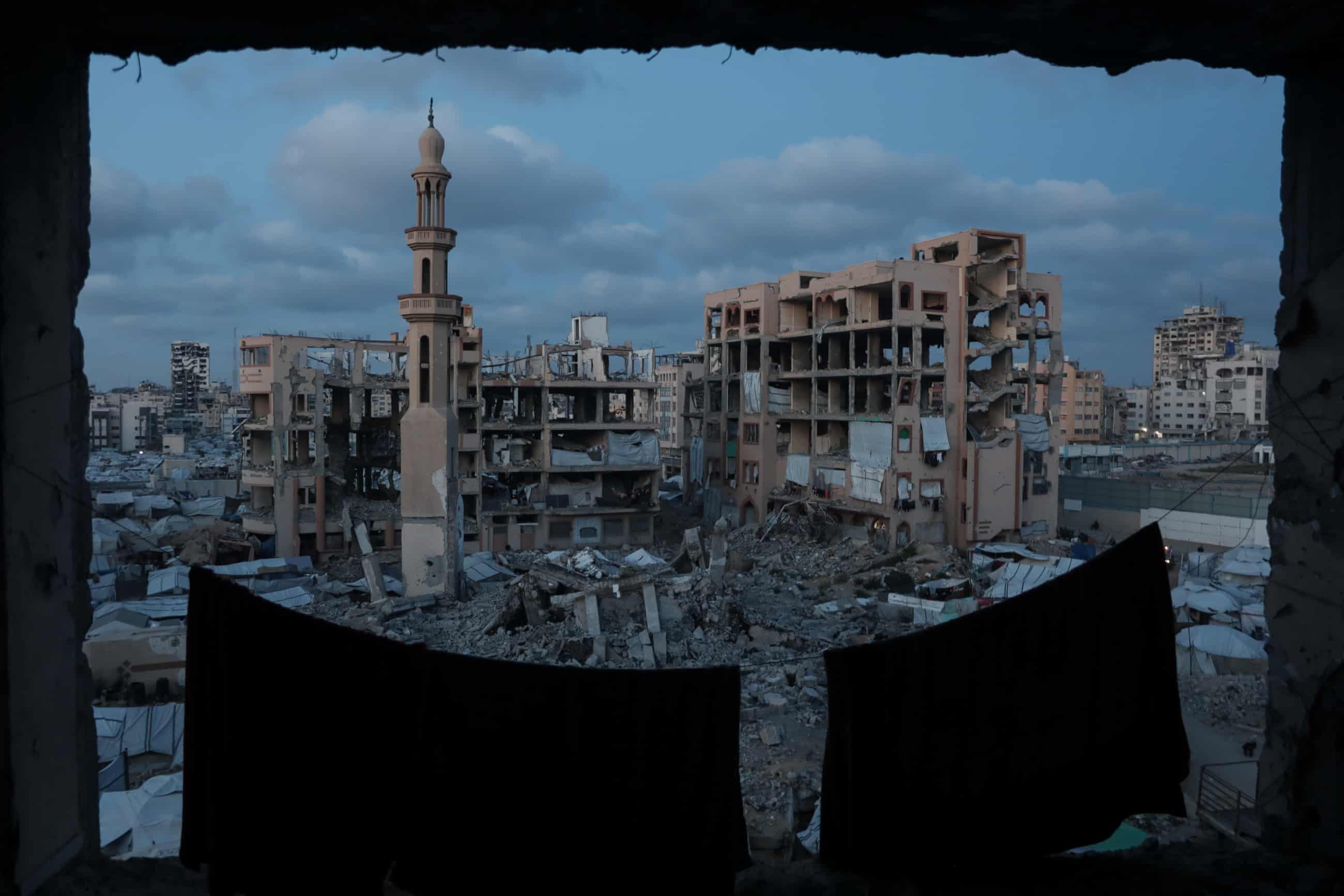
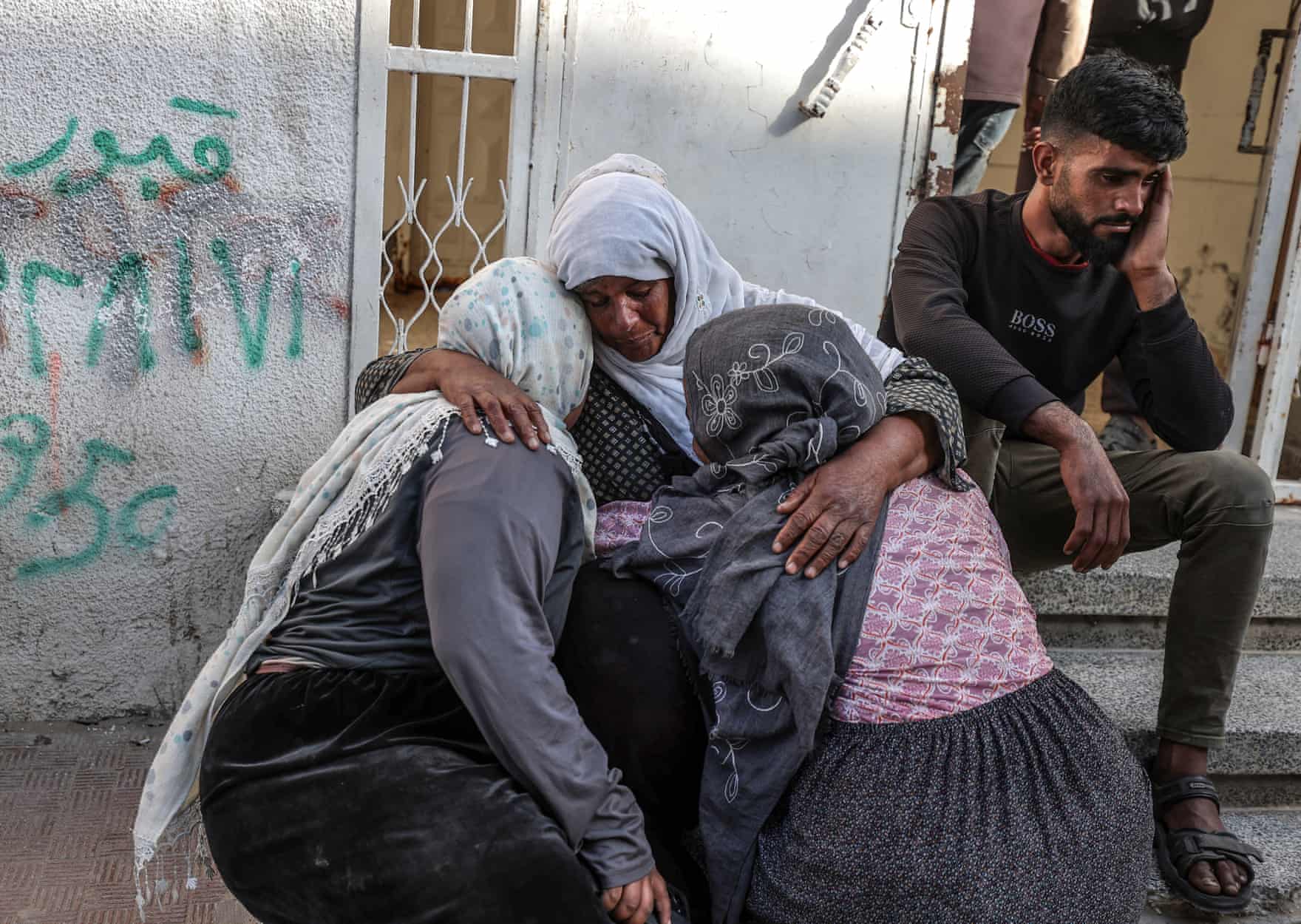
SE: According to an Israeli poll published in November 2023, when Israeli forces had already murdered at least 10,000 Palestinians in Gaza, 94% of Jewish Israelis supported Israel’s genocide. Most agreed that Israel should use even more deadly force. Clearly, many Israelis have also participated in the genocide, which has killed at least 80,000 Palestinians and likely far more, with the toll still rising since Israel has systematically annihilated the necessary conditions for sustaining life. Israel has also destroyed every university in Gaza and obliterated its educational and cultural infrastructure. It has targeted and murdered at least 242 journalists. It has filled mass graves, including outside hospitals. It has killed tens of thousands of Palestinian children, including premature babies. It has targeted IVF facilities and destroyed thousands of embryos. It has executed well over 1,000 starving Palestinians at “aid distribution points”. All this depravity has been done with the support of the overwhelming majority of the Israeli public, which includes cultural workers, academics, athletes and others.
So it is perhaps unsurprising that very few Israeli cultural institutions have met the conditions that the BDS movement has set for exemption from the boycott: end diverse forms of complicity, and publicly endorse the full, UN-stipulated rights of the Palestinian people. Working with complicit Israeli publishers that have failed to take these basic steps can only harm the Palestinian struggle, as you and at least 7,000 other writers, including winners of the Nobel prize, Booker prize, Pulitzer prize, and National Book Award have publicly recognised.
Ta-Nehisi Coates is also publishing a translation with November Books, since it is the only Israeli publisher that has met these conditions, which are grounded in international law – or what remains of it. Beyond publishing, the tiny minority of Jewish Israelis who sincerely support Palestinian liberation can and do play a part in the movement, as the historic 2005 BDS call affirms.
SR: What do you say to artists who approach you for guidance in complying with the boycott?
SE: I think that artists can sometimes struggle to see themselves as a potentially important part of a much larger collective. I’ve seen talks you gave recently in which you encouraged other cultural workers to basically drop the ego and participate in the movement. That’s rare. It’s also essential, if we’re going to effectively resist this time of rising fascism. Seeing ourselves as a small yet significant part of a wider struggle frees us from the trap of toxic hyperindividualism, and this means we can fully participate in the cultural boycott, which is fundamentally a strategic, power-building tactic. Rather than seeing it as an individual purity test or an exercise in sloganeering, it positions our collective efforts as ever-evolving and highly attuned to specific contexts.
What does that actually look like in practice? I think it means asking, as you did: is that publisher, festival, label or platform implicated in grave violations of international law? Does it benefit from and thereby perpetuate Israel’s regime of apartheid and ethnic cleansing against Palestinians? Has it taken any meaningful stance to end its complicity? Do I have influence over this institution to compel it to do so, and to enshrine this in policy? What steps can I reasonably take to prevent my work from reaching it, if not? Have others taken such steps and what can I learn from them? Do these steps represent a strategic benefit to the movement? Does not taking them represent a harm?
Our task as a movement is to channel anger at Israel’s genocide in Gaza into the most meaningful initiatives. Raising awareness is an important first step. Making individual ethical choices to resist complicity can be the next. But joining with hundreds, thousands or millions of others and demanding accountability and pledging to uphold the demands of Palestinian civil society have to follow. Virtually everyone has influence, leverage or connection to some organisation or company. Use your relative freedoms and privilege. If you can’t do it loudly – perhaps because you are in a precarious or professionally vulnerable situation – then do it quietly at first. Seek your community, and work together.
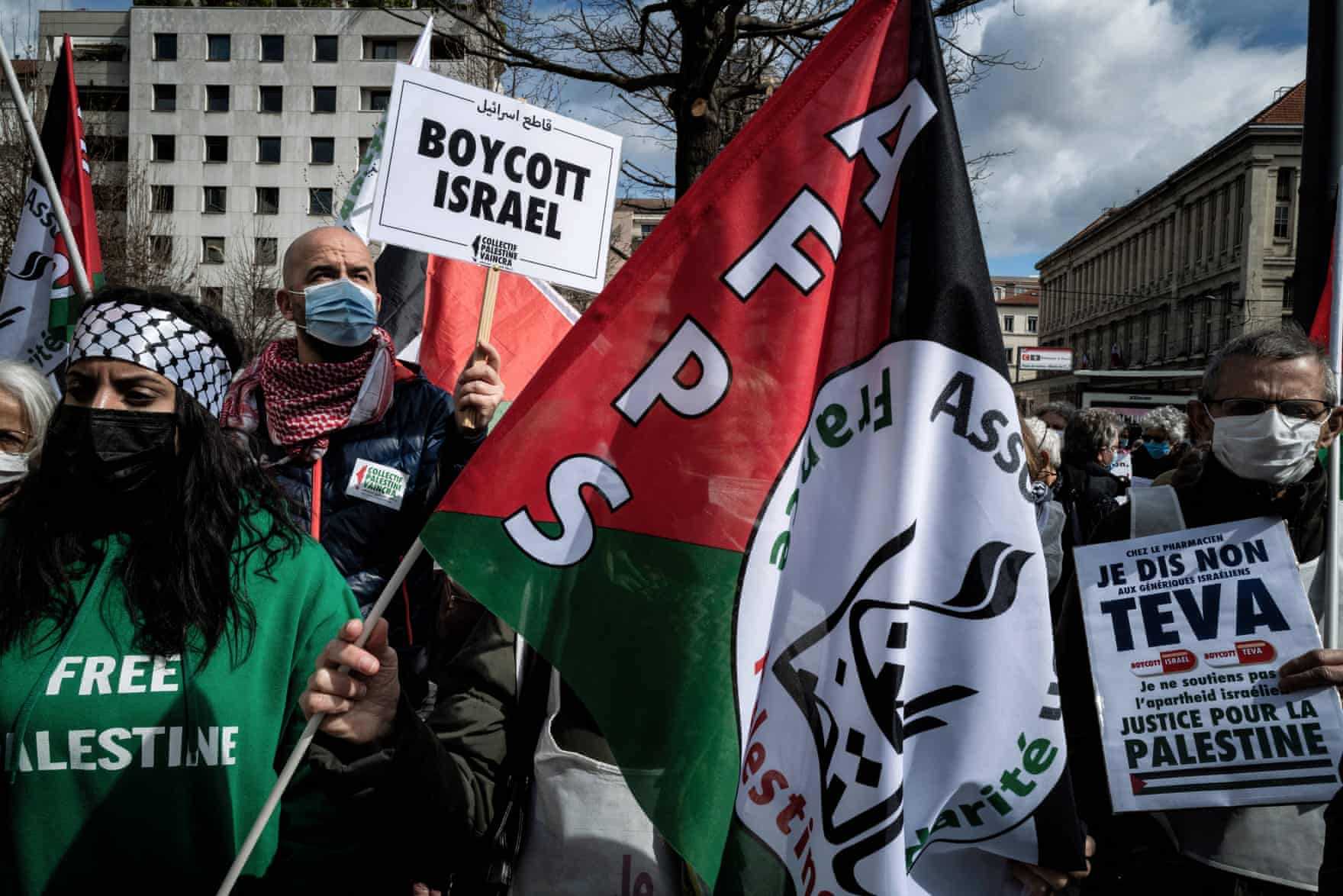
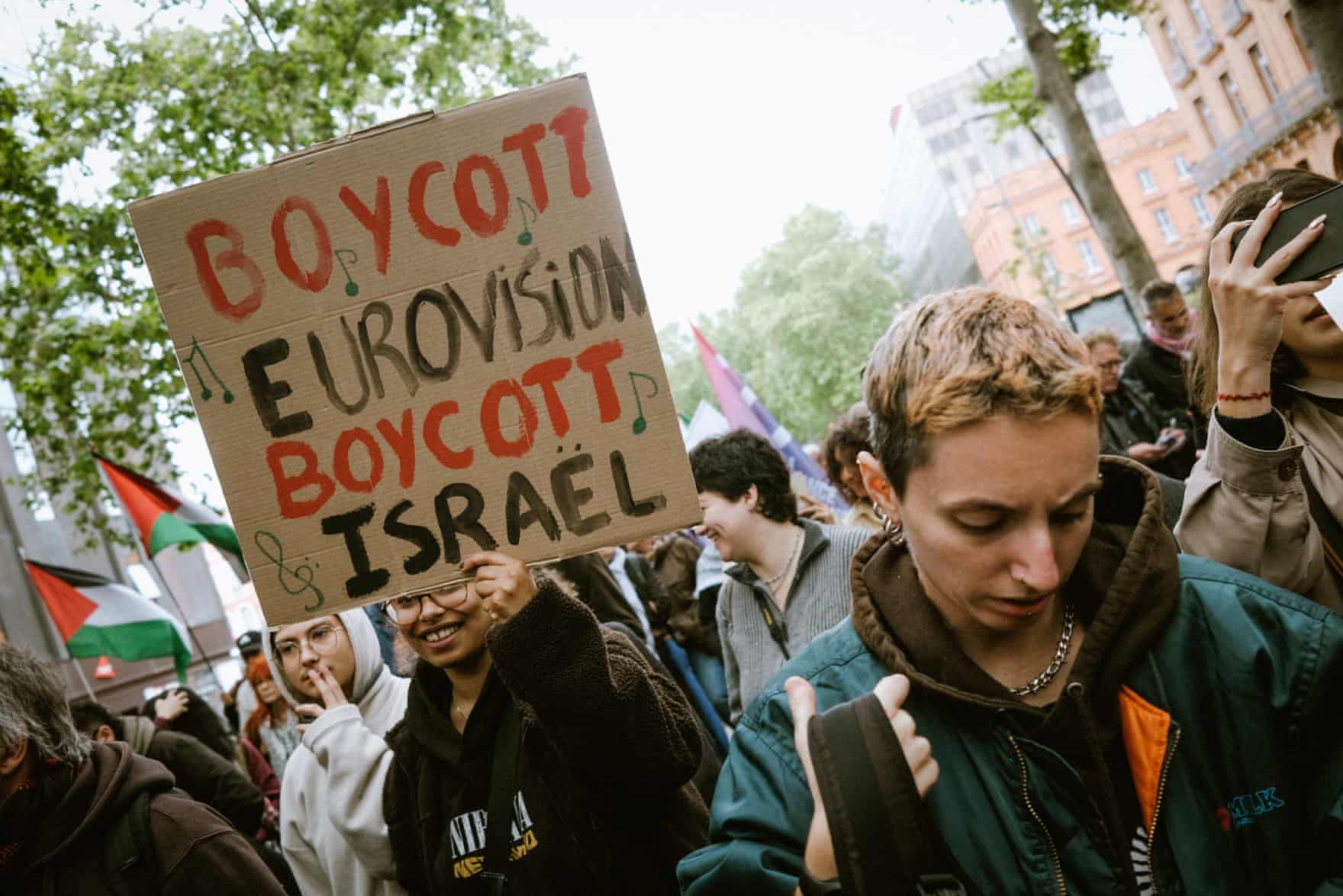
Thousands of the world’s leading musicians, writers and film workers, including hundreds of Hollywood celebrities, have conditioned the supply of their work on ethical grounds. Dozens of states have introduced policies of military, energy or trade embargos against Israel, though more pressure is needed to enforce them. At least 2,000 arts organisations have joined the cultural boycott of Israel, including major film festivals, theatres and museums. Five European broadcasters boycotted Eurovision, the world’s biggest live music event, rather than share a stage with apartheid Israel. Millions of people are boycotting the products of complicit Israeli and international companies. This is a dynamic, growing movement, rooted in universal, ethically consistent, intersectional and antiracist principles. Ultimately, we will measure the success of the movement not by the numbers in our ranks but by the freedom of our people. But to get there we need to keep building grassroots and civil society power that can sever the links of complicity sustaining Israel’s entire regime of oppression.
In the current era of might-makes-right, relentlessly pursuing accountability for the perpetrators of genocide and all those complicit in it is an essential priority for humanity, in my view. If Israel gets away with genocide, no one will be safe in future. I think we’re already seeing that now with the expansion of unmasked US-Israeli aggression across the region. So don’t just speak out, urgently act to end complicity. We in the west cannot afford to lapse into hopelessness or despair, despite how utterly bleak things may appear. Even Trump admitted that Israel can’t fight the world, because the world will win. That world is us.
To go back to your experience – your commitment to boycott complicit Israeli publishers made headlines around the world in 2021, and Israel’s two main bookstore chains responded by pulling your books from their shelves. These chains actually have branches in illegal settlements. A number of writers came out in support of your decision. What was your reaction at that time?
SR: At first, I was a little rattled by the degree of public condemnation. Had I accidentally done something to undermine rather than support the Palestinian cause? But I quickly started getting messages of encouragement from people within the movement, and after that, I felt confident that I had done the right thing.
Of course, it’s important not to get complacent about that feeling of righteousness. I always have to check in with myself – and with others – to make sure I really am being consistent about my principles, or as consistent as I can be in practice. But when I do feel that I’m right, I’m not much bothered by criticism. Who has ever stood up against injustice without being criticised? If that’s all I have to endure, then it’s very little.
I do remember people saying at the time that by joining the boycott, I had in effect ended my career. And it wasn’t just critics and adversaries making that point: even people who sympathised with the cause were murmuring that I had no idea what I was up against. Of course I did face some backlash, as I knew I would. But I think we have to be careful not to exaggerate in a way that drives people away from the movement and induces self-censorship and fear. In reality, I have gone on writing and publishing happily since 2021. I have not had to sacrifice my role in public life. I think I can say I have not even lost the respect of anyone whose respect I cared to keep. Joining the boycott would have been worthwhile no matter the consequences, but for me the consequences have really been very positive and life-affirming.
SE: Do you think it’s possible to truly subvert power through the written word, or can almost anything you write be co-opted? If the latter, what choices are we left with?
SR: I remember thinking very early in my publishing career: if anything I had to say was truly radical, I wouldn’t be allowed to say it. The very fact that my novels were widely reviewed – and that institutions like the BBC and the New York Times wanted to work with me – showed me that my political commitments were perceived as manageable and non-threatening. And, as I’ve said, perhaps to my discredit, I wasn’t part of any broader movement or coalition from which I could draw support. I was on my own, trying to make the right decisions according to my own principles, and I often made mistakes.
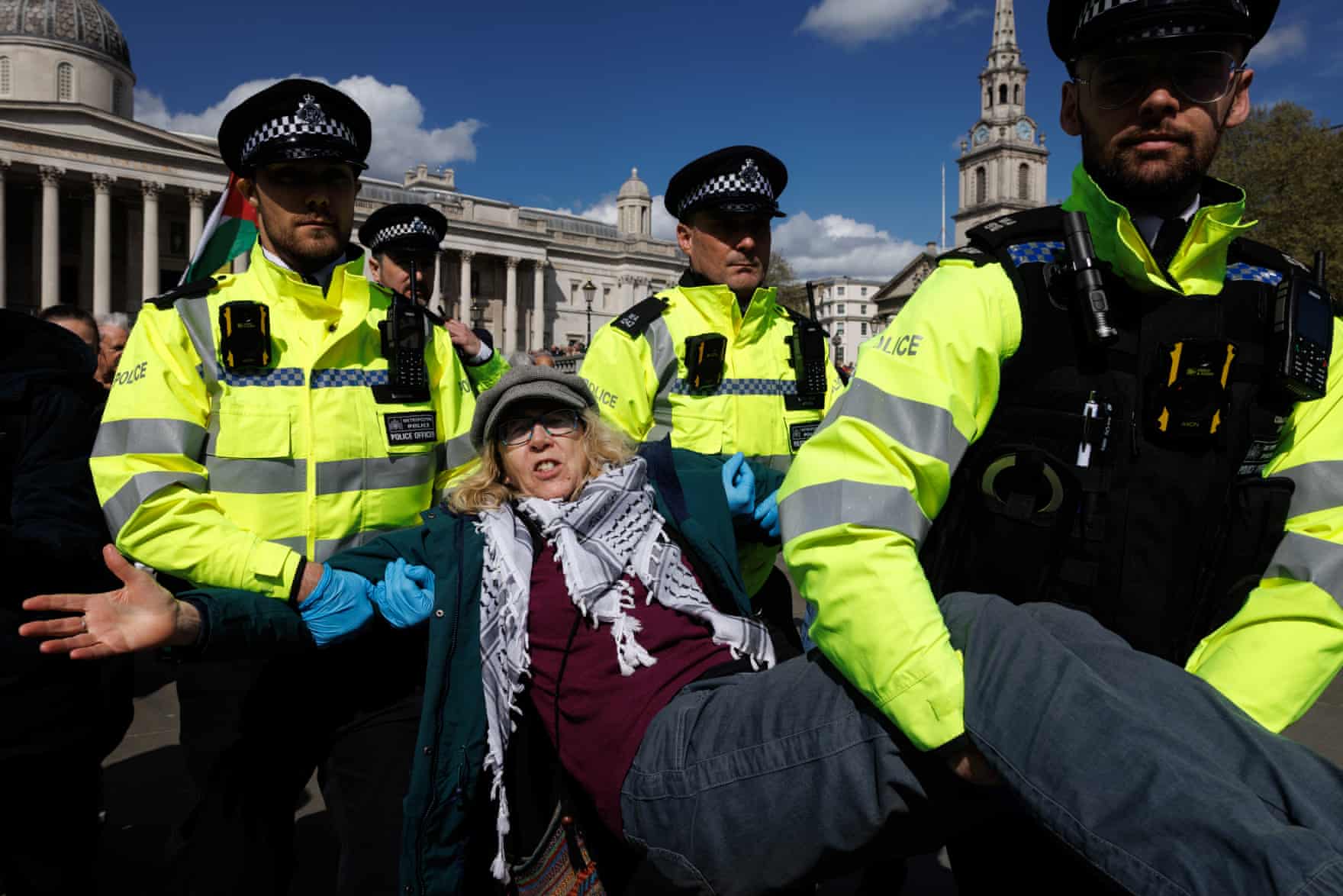
But in this last year, some of my intuitions about radicalism and public life have, I think, been proven right. Since the UK government unlawfully proscribed the protest group Palestine Action as a “terrorist” organisation last summer, it has been against the law for me even to express my political beliefs in Britain. And because I have expressed those beliefs anyway, I have in effect lost the right to travel to the UK, and my contracts with British companies have in practice been suspended. Needless to say, that is nothing compared with the prolonged state persecution of Palestine Action activists themselves.
The proscription of Palestine Action has already been challenged successfully in the high court and I hope and expect it will ultimately be struck down for good. But whatever happens, I know I will never regret standing by my beliefs. And whereas once I worried that the mainstream popularity of my work was in itself politically limiting, now I can feel purely proud and happy that my books continue to be popular among a mass readership. That same popularity heightens the stakes for the UK government in trying to criminalise the publication of my work.
In all, I think my entanglement with the literary and cultural establishment means I have been able, in some respects, to be more politically useful.
-
Sally Rooney is an Irish novelist. She is the author of Conversations with Friends, Normal People, Beautiful World, Where Are You and Intermezzo
-
Samir Eskanda is a Palestinian Irish artist, organiser and human rights activist. He has provided strategic guidance and played a key role in many high-profile solidarity campaigns that have contributed to the cultural boycott of Israel