


When Gen Blades set out to hike South Korea’s Namsan Dulle-gil trail, she didn’t expect to be slipping her boots off halfway along the track.
An outdoor education lecturer and researcher based in Castlemaine, Victoria, Blades was tackling the 147km trail in Seoul when the terrain abruptly changed. Ahead lay a damp stretch of clay – known as “hwangto” – designed for barefoot walking. Naturally, she dived in feetfirst.
“There’s something about that direct contact of the sole of your foot in the clay. It almost feels like mud,” she says. “But then you realise, ‘Oh yeah, it’s oozing up between my toes!’”
“It’s sort of enlivening, like getting a massage,” she continues. “Your dominant sense becomes the texture of the ground on your feet.”
Luckily for Blades, the slippery clay stretch was fitted with foot-washing stations, as well as shoe lockers and a safety handrail. Trails like this are common across South Korea, where barefoot walking is widely embraced for its health benefits. In Seoul alone, more than 150 parks feature designated barefoot walking areas. “The trails were often right in the busy part of town where people were out exercising after work,” says Blades.
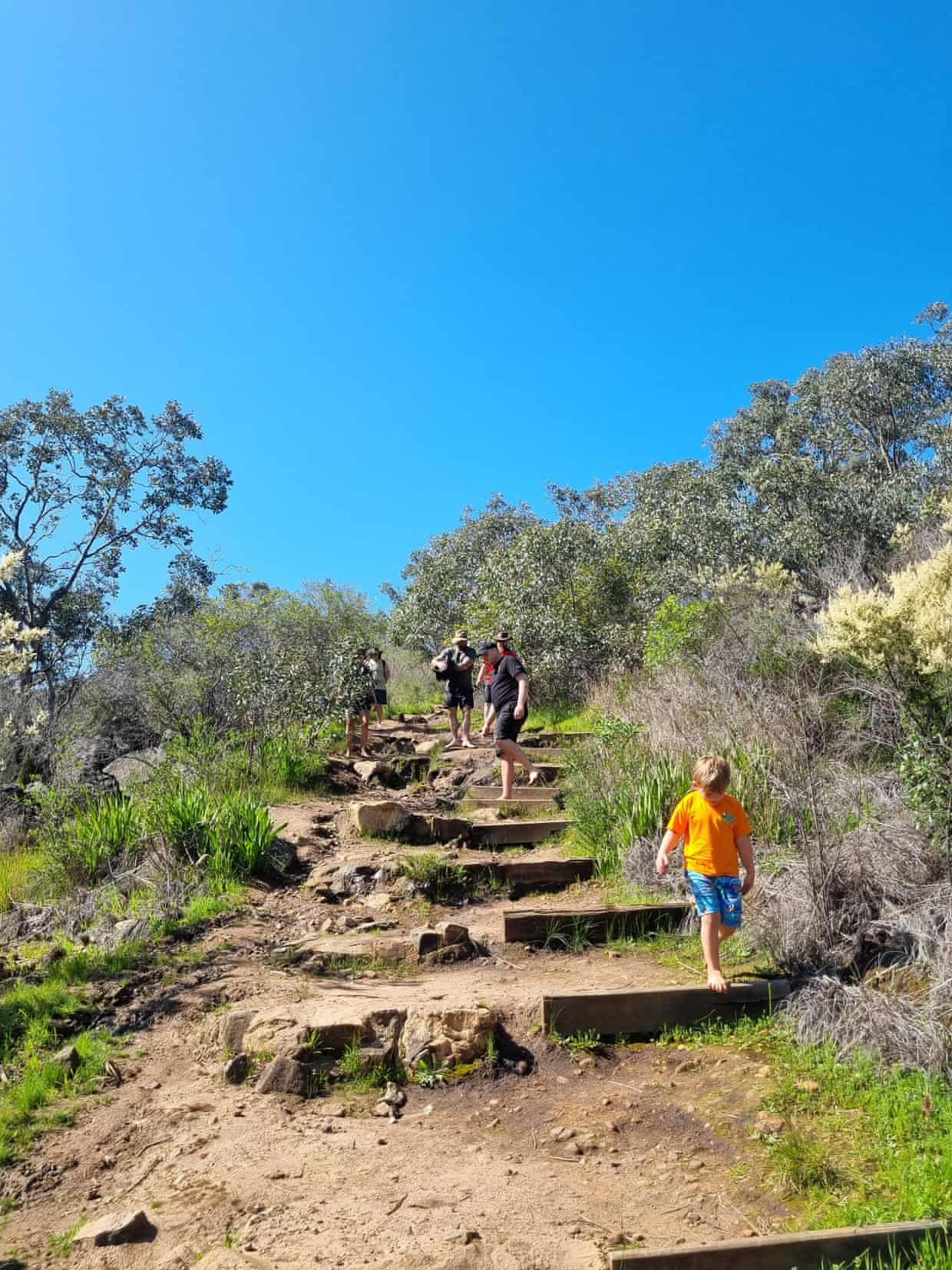
In Australia, however, anyone keen to try it is more likely to be forging their own path. Dale Noppers, a 37-year-old health and safety superintendent from Perth, has been barefoot hiking for about seven years. What began as a curiosity linked to bush survival skills has since become a regular hobby. “It makes you feel quite primal,” he says, “being in nature and slowing everything down.”
His early barefoot hikes lasted little more than half an hour. These days, he can go for up to seven hours – on trails like the 14km Kitty’s Gorge trail at Serpentine national park, featuring steep, rocky inclines, uneven ground, mud and, his least favourite surface, pea gravel. Despite the rough terrain, Noppers says his feet have adapted well. “The bottom of my feet are nice and soft and supple … it’s almost like they’ve had a pedicure,” he says, laughing.
He now organises group barefoot hikes on bush trails around Perth. Turnout is modest, Noppers says – most walks attract just three or four others, though occasionally as many as 10 people show up. The group spans a wide mix of ages, including his five-year-old son Achille, who sometimes joins the gentler outings (named after the Greek hero, not the tendon, he explains).
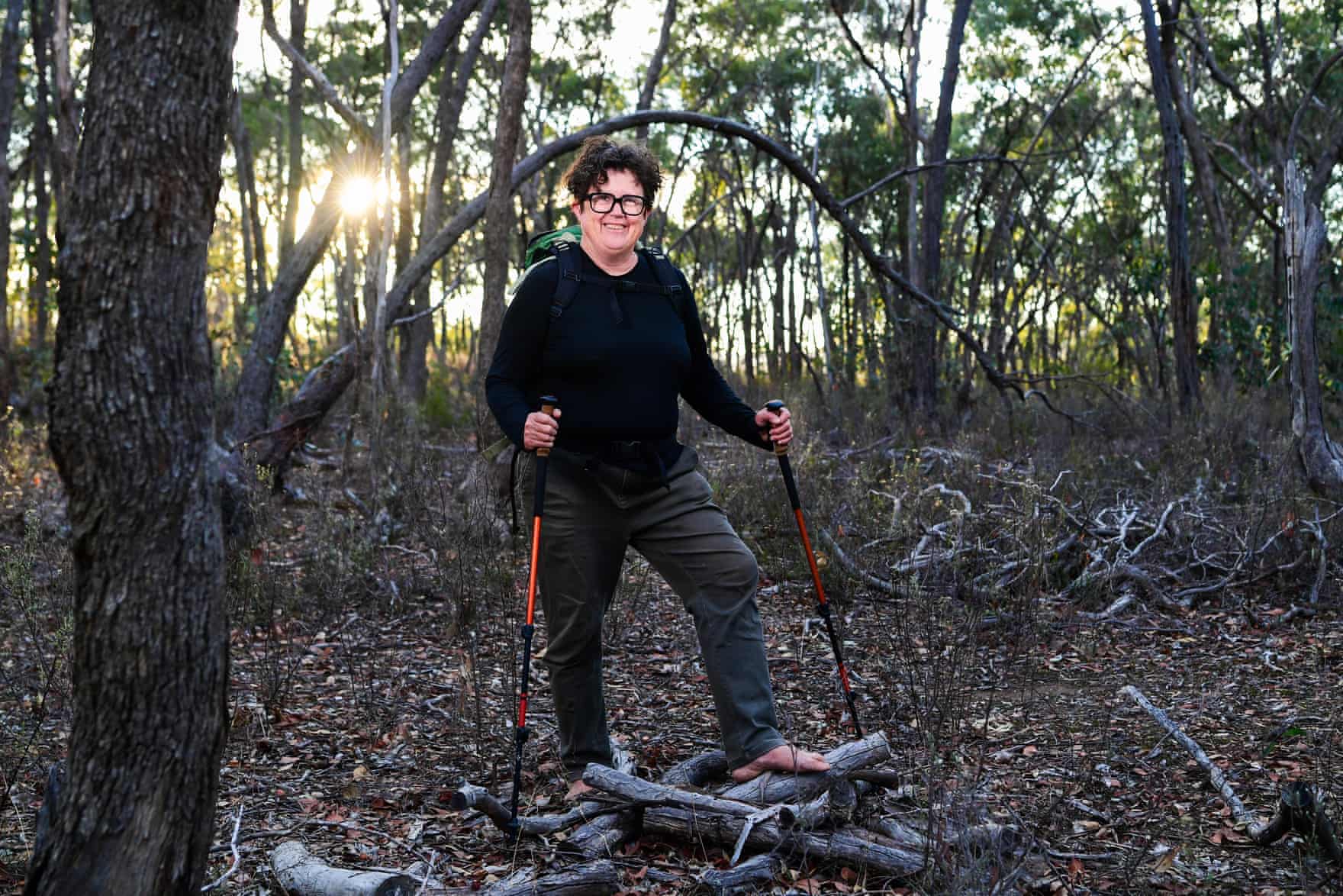
While barefoot walking can feel liberating for some, podiatrist Dr George Murley says the science is mixed. “It’s really person-specific,” he says, noting that both overly cushioned footwear and going barefoot without conditioning can lead to injury.
However, walking unshod can improve balance and coordination, Murley says: “Our feet are one of the most sensitive parts of the body. If you place an interface like a shoe with soft cushioning between your skin and the ground, you reduce the neural input into the body.” He also notes that many common foot problems, such as calluses and pressure lesions, are caused by footwear.
For those curious about barefoot hiking, Murley suggests easing in gradually. “You’ve got to be slow and progressive,” he says. “Almost like treating it as a gym session for your feet.”
Of course, walking without shoes requires a certain level of vigilance. Ants, spiders, snakes and the occasional shard of glass are among the hazards to watch for. “Bugs are one of those things that come with the territory,” says Noppers, who adds he hasn’t encountered snakes on a barefoot walk. He has had one mishap: “I’ve been cut badly by a broken bottle once when getting into the river after a walk, but no issues other than that.”
For Blades, that heightened attention is part of the appeal. “When walking barefoot, awareness of the ground opens up. I notice the ants and step aside,” she says.
For Uralla Luscombe-Pedro, barefoot walking began long before it became a deliberate practice. The 32-year-old conservation researcher grew up on a farm near Walpole on Western Australia’s south coast. “Walking around barefoot was probably quite accessible to me,” she says. “More so than if I grew up in the city and had to walk on cement all the time.”
As an adult, Luscombe-Pedro has taken the habit further, walking hundreds of kilometres of wild coastline barefoot. In 2020 she spent two weeks walking from Batemans Bay to Mallacoota on Australia’s east coast, camping on beaches along the way. More recently, she spent a week tracing Western Australia’s south coast from Bremer Bay towards Albany.
Unlike traditional hiking trails, these coastal routes have no signposts or track markers. Luscombe-Pedro simply follows the shoreline, navigating sand, granite outcrops and scrub, detouring inland when cliffs or headlands block the way. “Your feet are sensory organs,” she says. “You can feel with your feet as you can with your hands.”
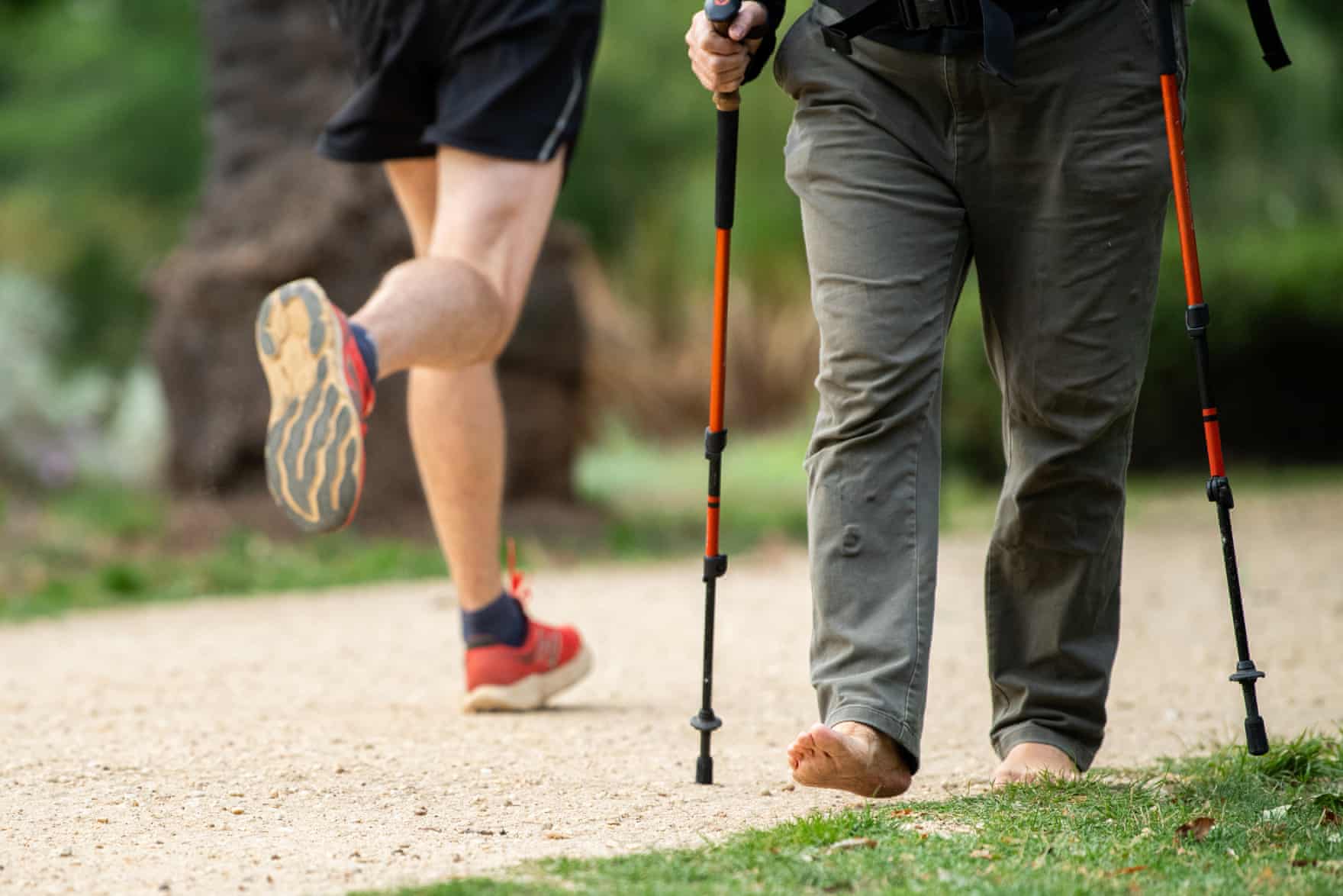
The appeal, she says, is the solitude and the landscape itself: blue water stretching to the horizon, empty beaches and sheltered bays where you can swim whenever you like. After weeks walking this way, she can feel her body change. “You definitely feel like a more lean animal,” she says. “Your body feels more capable.”
The experience has also reshaped how she thinks about modern environments. “Our human habitat is strangely boring compared with the environments we could be interacting with.”
For Blades, the barefoot stretch on Seoul’s Dulle-gil trail resonated with ideas she has explored for years in her research on walking and outdoor education.
Her PhD examined the “embodied” experience of walking – paying attention to what the body actually feels while moving through a landscape. She has experimented with barefoot walking in different settings, including sections of the Lurujarri heritage trail north of Broome, a 80km coastal route led by Goolarabooloo elders.
For Blades, the appeal lies partly in how barefoot walking disrupts the pace of modern life. “Walking is already a radical act in our modern world,” she says. “You choose to slow down – going barefoot slows things down further still. Your senses become more attuned to what’s around you.”
Walking barefoot near her home in Castlemaine, she says, the slower pace often reveals small details she might otherwise miss: tiny orchids pushing through the grass, a delicate cobweb stretched across a path, subtle shifts in the texture of the ground. In a time of climate crisis and species loss, she believes that kind of attention to the living world matters.
“Walking barefoot allows you to sink into country. You’re perceiving not just with your eyes, but with your body.”