


The UK has been in a state of political crisis for months, but recent local elections have resulted in the most serious challenge yet to the country’s prime minister and ruling elites, with experts predicting the UK could be facing its sixth regime change in 10 years amid “tribal disputes and separatist movements.”
To make sense of it all, I spoke to the Nairobi-based British affairs satirist Patrick Gathara about the future of the “island Kingdom of Britain”.
Inside the island Kingdom of Britain
Hi Patrick, can you give readers a summary of the political crisis unfolding in the UK?
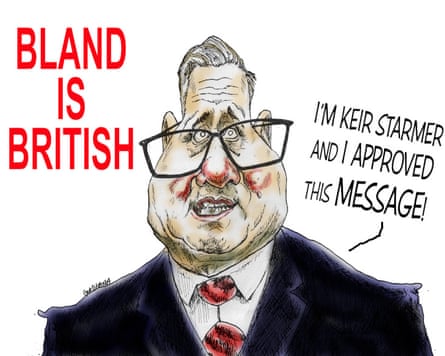
The current political crisis is the culmination of years of corruption and poor governance. To understand it, one has to remember that the small, overpopulated island kingdom of Britain is mostly cold, staggeringly bland, produces no flavour of its own and is thus forced to import all of it from Africa and Asia. These imports usually come via ports on the European pseudo-continent, but since 2020, a so-called “Brexit” blockade has meant that little flavour gets through. The entire population of the UK has thus been forced to survive on a traditional boiled diet, exacerbating a pre-existing dental health epidemic and prompting hundreds of thousands to flee the country. The crisis has reignited ancient tribal hatreds, supercharged separatist movements, and led to tribal violence in 2024, and heightened instability with five regime changes in the last 10 years. The current prime minister, Keir Starmer, an English, initially survived a traditional test of outlasting a vegetable but may be forced to undergo the ritual again as elders lose confidence in him. Despite being hand-picked by the island’s supreme ruler and spiritual leader, King Charles III, Starmer’s regime may not survive.
It seems that Starmer’s fate is sealed, and he will certainly not be leading Labour into the next election. This makes Starmer the country’s fifth prime minister since Brexit in 2016. What does this tell us about British democracy?
Starmer is actually the sixth PM since 2016. If he is deposed, this will just be further confirmation of the chronic political instability that has made the UK such hostile ground for democracy. Political scientists say the instability and tribal tensions have left it stuck at a rudimentary First World level of democratic development, unable to progress to a higher Third World plane. We must also keep in mind that the supreme ruler is not elected. He belongs to a family that has reigned unchallenged for centuries and whose members avoid using their surnames to hide their German heritage. Thus British elections, while symbolically important, do not tend to produce any fundamental change but rather serve to entrench a small but powerful, corrupt ruling elite.
The recent local elections resulted in wins for the Green party and Reform, challenging the two-party system in the UK – what do you make of this splintering
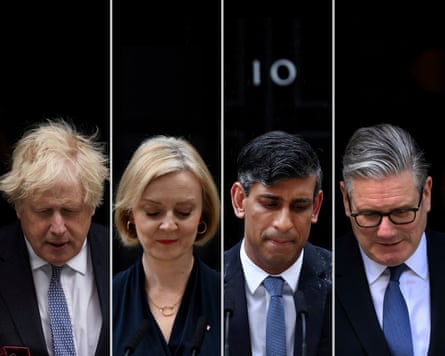
As we have seen, these votes are largely symbolic. The ruling elite – 1% of the population own half the land, and just 157 people own the equivalent of one-fifth of the country’s GDP – have never allowed real democracy to take root. Reform UK, which represents white-winged Christianist extremists, are a reaction to tribal feelings of anger at the traditionalist Conservative party after the ascent to power of billionaire Hindu strongman, Rishi Sunak, a few years ago. Similarly, the Greens have benefited from the white-wing shift in the workers’ Labour party and the ascent of Starmer. Fundamentally, however, the political fervour at the bottom has had little influence on the corrupt governance structures. In fact, the elections serve mainly as a way for the public to vent steam, obviating calls for real reform.
Is there a problem with sponsors and corruption in British politics?
Corruption has sadly long been a feature of British politics and governance, and has held the country back from achieving its full potential. Sections of the capital, London, are controlled by vicious banker gangs that have worked in cahoots with the retinue of ruling regimes to turn the UK into the world’s largest hub for money laundering and tax evasion. This dirty money has proven useful in turning politics into a reality show.
All of this is unfolding during a historic cost-of-living crisis and fuel inflation due to the Middle East wars, so why does it seem as if British politicians cannot deliver for their public?
The cost-of-living crisis is not really about the conflict in the Near North, although the Starmer regime would understandably want the public to believe that since it distracts from the real issue – the Brexit blockade. The flavour shortage and the dental epidemic it has worsened, are at the root of higher prices.
How much has Brexit broken British politics, and why do you think people voted for it?
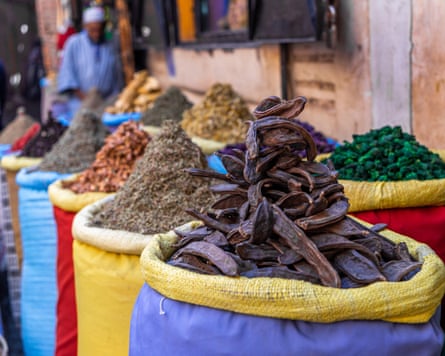
The Brexit vote and subsequent blockade was sparked by the far-white traditionalist movements dislike of foreign imports of flavour, and demands for a return to traditional boiling. Blinded by this argument, a majority of Britons, especially among the English tribe where anti-flavour sentiment was strongest, voted to restrict imports, with the rest of sub-Scandinavian Europe responding with an outright ban. This episode has introduced greater volatility into British politics and emboldened separatists in the tribal regions of Scotland, Wales and occupied Northern Ireland. However, the supreme ruler, Charles III, who for over seven decades watched as his incompetent mother frittered away his inheritance, her reign witnessing the loss of most of the UK’s foreign empire, has adopted a hardline stance against further fracturing. On the contrary, the regime has sought to build a cult of personality around him, changing the national anthem into a prayer for his salvation and plastering his face all over the currency.
Immigration remains a hugely toxic issue, with Labour moving right on the issue. Why has this topic dominated the agenda?
“Immigration” is how successive UK regimes have described international humanitarian efforts to send flavour to the archipelago. Reluctant to admit to the world that the flavour crisis exists, they have refused all international offers of help. Meanwhile, activists have launched numerous flotillas of small boats with the goal of breaking the Brexit blockade, but with limited success. The regimes and far-white groups have smeared the attempts as threatening national unity and accuse the humanitarians, many of whom are from Africa, of radicalising UK youth into challenging traditional British values of blandness.
The future looks increasingly uncertain for the entire country, what do you think are the fundamental problems, and potential solutions to usher the UK into stability?
Clearly the immediate issue facing the UK (and other countries across Caucasia and especially in sub-Scandinavian Europe) is the flavour crisis. It is imperative that humanitarian supplies of flavour are allowed in and scaled up. The international community also needs to urgently send dentists to finally address the long-running epidemic. Further, the British need trade, not aid. Lifting the Brexit blockade should be the main priority in the medium-term, and in the long term, there is need for the international community to support local efforts to push for genuine democratic reform and accountability.