







The conflict in the Middle East has claimed Opec as the latest casualty of war. The United Arab Emirates’ shock exit from the oil cartel on Tuesday after 60 years is expected to weaken the alliance, which under the leadership of Saudi Arabia has helped to soothe volatility in the global oil market for decades.
Global oil prices reached the highest level in four years on Thursday, rising above $126 a barrel. But as the region grapples with the continuing conflict, a fresh war may be brewing in the international oil markets, which could lead to greater market volatility for years to come.
For now, the UAE’s intention to ignore Opec production quotas and pump as much crude as it wants is notional, owing to Iran’s blockade on the strait of Hormuz. So too is Riyadh’s ability to weaponise its vast oil reserves in response.
But in a postwar standoff between the two Gulf oil heavyweights, there lies the real risk of a price war in which global energy markets could plunge, with unpredictable economic consequences.
“Saudi Arabia will fight back with a vengeance,” said Michael Tamvakis, a commodities professor at Bayes Business School in London. “This decision flies in the face of the kingdom’s authority, and the Saudis will want to teach them a lesson.
“In a world where oil starts flowing again through Hormuz and oil prices start deflating, there will be a race to maximise oil export volumes to keep revenues.”
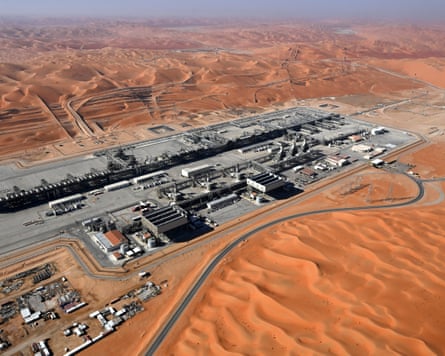
In this race, the Saudi kingdom is expected to “aggressively market” its oil to Asian buyers, which also rely on the UAE, by offering discounts on its crude and fuels. While the UAE had typically held the upper hand in marketing refined oil products to Europe, Saudi Arabia may “fight back and try to capture market share”, Tamvakis said.
Saudi Arabia is the world’s largest oil exporter, but in the UAE it has a formidable market rival. The cartel’s third-largest producer held its production at below 3m barrels a day in 2024 at the behest of Opec, but it could raise its production to between 4.5m to 6m barrels a day once flows resume through the strait of Hormuz.
Both countries have some of the lowest production costs in the world, and a fiscal imperative to generate the state revenues needed to prepare their economies for a low-carbon future.
Dieter Helm, a professor of economic policy at the University of Oxford, likened the looming price war to the oil market crashes in the 1980s and 2014, which led to hundreds of thousands of job losses and political instability in oil-rich economies.
“Oil prices are likely to fall further and faster as the war ends,” Helm said. “Higher prices encourage more output and the world is awash with both oil and gas reserves.”
The surge in market prices triggered by the war in Iran is expected to fuel the rise of new oil market challengers in the Americas. The longer the Gulf’s exports are throttled by the conflict, the greater the opportunity for the US, Brazil and Guyana to increase their share of the global market at the expense of the Middle East.
Meanwhile, economies are accelerating plans to reduce their reliance on fossil fuels, which could hasten the start of the market’s decline.
A postwar market defined by new oil supplies and uncertain demand would be less than ideal for Gulf states as they resume exports. They are likely to pump as much crude as possible to help repair the war-ravaged economies in the region and reclaim their place in the market, so lower prices over the long term are likely.
The scenario represents the antithesis of Opec’s stated agenda. Since the 1960s the cartel’s power has rested in its ability to respond as a united group to the ebb and flow of the oil market to help stabilise prices.
When oil supplies become tight, Saudi Arabia and its allies have been able to open their taps to cool rising prices. When an oversupply of crude causes prices to plunge, Opec stands ready to curtail its output to prevent a market crash.
But signs that the alliance was beginning to fray had become more apparent in recent years as upheavals in the global market challenged Saudi Arabia’s grip and led to bitter price wars in retaliation.
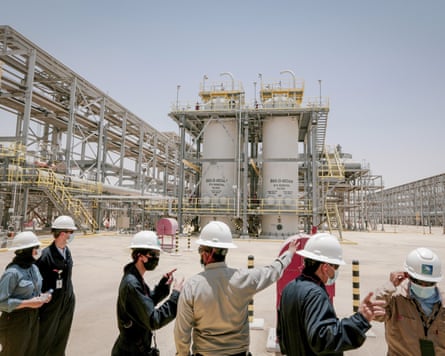
In 2020, Opec executed its deepest production cuts months after the Covid-19 pandemic forced the global economy into an unprecedented shutdown that erased millions of barrels of oil demand in a matter of weeks.
The group’s decision to withhold 9.7m barrels of oil a day represented a 10% cut to global oil demand. But the deal was struck only after Saudi Arabia waged a short-lived price war in response to Russia’s refusal to trim its own output, causing prices to collapse to a 20-year low and compounding the economic pain of the pandemic.
It was not the first time that Riyadh had sacrificed market prices to restore its market dominance. In 2014, as the unrestrained flow of oil from the US shale boom threatened to overwhelm the market, Saudi ministers became increasingly frustrated with Opec members that flouted the agreement to hold production in check to steady the market price.
The kingdom responded by increasing its own production, triggering one of the deepest and longest oil price routs in history to drive its higher-cost rivals to the edges of the market. Smaller members of the Opec cartel were collateral damage, and the economic scars could mean some are wary of any postwar limits on their output.
Kim Fustier, a senior analyst at HSBC Investment, said: “The loss of a core Gulf member weakens Opec’s credibility. If the remaining group is unable to compensate for UAE volumes through collective discipline, price management could become harder to enforce.”