Fiona Pardington’s portraits of the lost birds of Aotearo...
Dee Jefferso·2026-05-03·via The Guardian
For more than two decades, Pardington has been photographing taonga (Māori cultural treasures) and natural history specimens in museums around the world. In the South Canterbury museum, she was struck by a collection of stuffed native birds which had been subject to taxidermy – many of them now extinct or endangered. They inspired a new human-scale portrait series of these manu (birds), revered within Māori culture as intermediaries between human and divine worlds. The resulting works will be exhibited at the 2026 Venice Biennale.
Pardington invites viewers to reconsider how they think of birds, and how we might better protect them
Fiona Pardington: Taharaki Skyside will be exhibited at the Aotearoa New Zealand pavilion at the Venice Biennale from 9 May – 22 November 2026
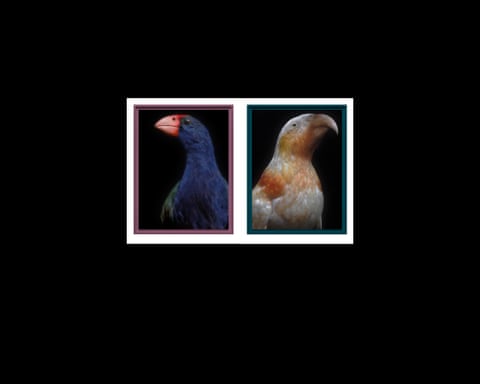
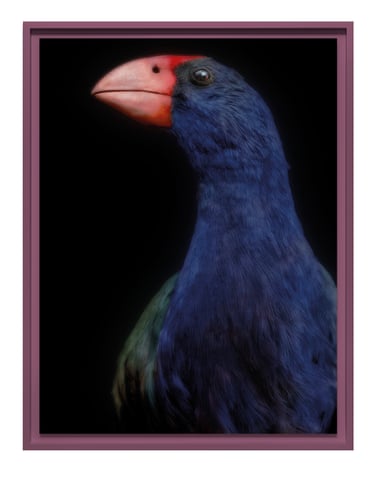
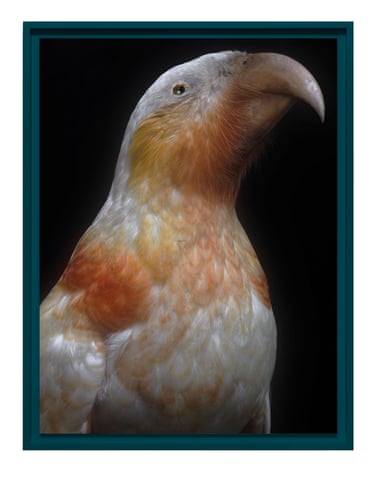
A framed Takahē (L) and Kākā Kura (R), both endangered birds. Composite: Fiona Pardington
Sun 3 May 2026 16.00 BST
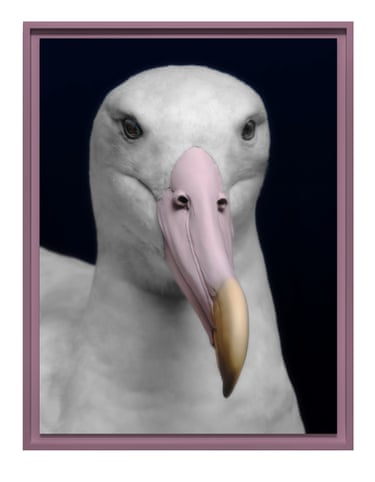
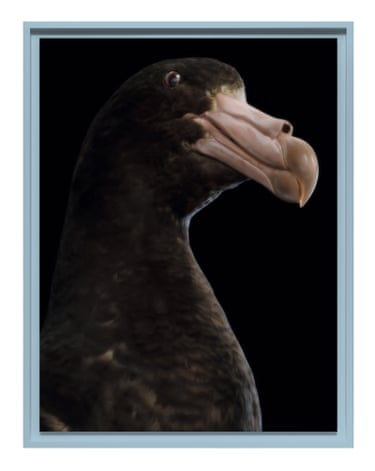
Toroa, southern royal albatross, Diomedea epomophora (2024). South Canterbury museum
‘The Taharaki Skyside project started with this toroa,’ Pardington says. ‘I saw it in the South Canterbury museum … I just fell in love with it – and that set the ball rolling. They’re such beautiful birds. They’re so big. But … they can slice open animals with that beak. ‘It’s really important to me that small regional museums and the passion of the collectors are represented [in this series].’Photograph: Fiona Pardington
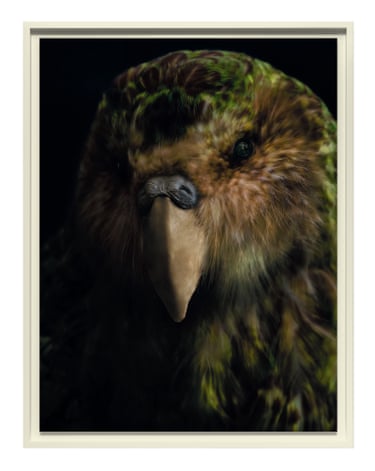
Kākāpō (Rhys), Strigops habroptilus (2025), Museum of New Zealand Te Papa Tongarewa.
Pardington has Maori (Ngāi Tahu, Kāti Māmoe, Ngāti Kahungunu) and Scottish (Clan Cameron of Erracht) ancestry. Kākāpō (night parrots) are significant to the Ngāi Tahu tribe of Aotearoa’s south island: ‘They’re our taonga; they’re part of our culture,’ she says. These days, kākāpō are critically endangered and protected in sanctuaries. Photograph: Museum of New Zealand Te Papa Tongarewa
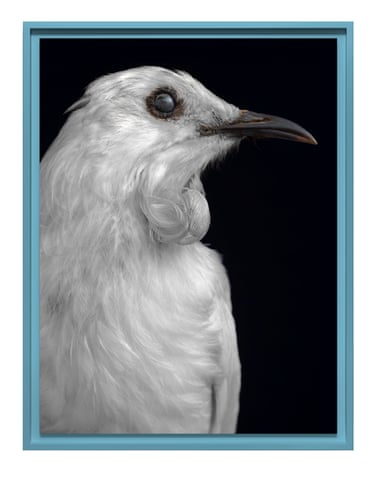
North Island kōkako, Callaeas wilsoni, albino, from Remutaka range (2025). Museum of New Zealand Te Papa Tongarewa
The portraits in the Aotearoa New Zealand Pavilion will be presented at human scale. ‘So suddenly you lose that idea of what you think a bird is and what your relationship is with them,’ Pardington explains. ‘I wanted to scale them up spiritually as well. The world over, something we have in common is a relationship to birds within our mythological systems and storytelling. Birds are often psychopomps: they move between the heavens and the underworld. They’re messengers.’Photograph: Fiona Pardington
Pāngurunguru, Southern giant petrel, Macronectes giganteus (2025). Australian Museum
Within each giant portrait, the bird’s eyes are also supersized. In each eye, Pardington has superimposed images of the landscapes in which that species lived, drawn from a trove of high-quality old black and white photographic postcards. ‘You get a reflection of where the bird is situated in time and place, in nature,’ she says. Photograph: Fiona Pardington
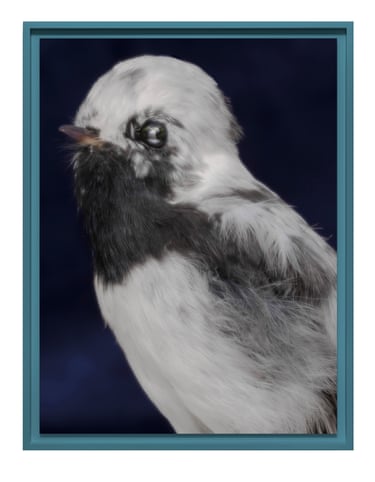
Kōmiromiro, Tomtit, Petroica macrocephala, from Whakatū Nelson (2025). Canterbury museum, Ōtautahi Christchurch
Pardington began photographing birds in the early 2000s after reading letters from the Deans family, prominent settlers in 19th-century Canterbury. ‘The kids would take their guns and their dogs and go off into the bush and shoot birds – and I thought, which birds were in that area at the time? So I went to Canterbury Museum and … decided to make portraits of the birds. I call them portraits because animals, to me, have a personhood.’Photograph: Fiona Pardington
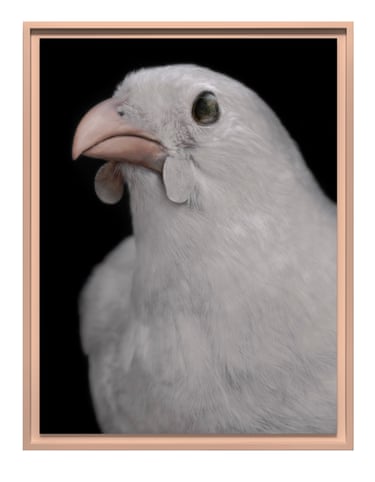
Tūī, Prosthemadera novaeseelandiae, albino (2025). Museum of New Zealand Te Papa Tongarewa
Pardington tries to capture the wairua (spirit) of each bird she photographs: ‘I’m looking for that life force that was already there. I’m thinking of that bird when it was alive in the past, before it was killed - or assassinated. Because they’re just like any other individual.’ Photographing the birds ‘feels like bearing witness,’ she says. ‘That’s the power of photography.’Photograph: Fiona Pardington
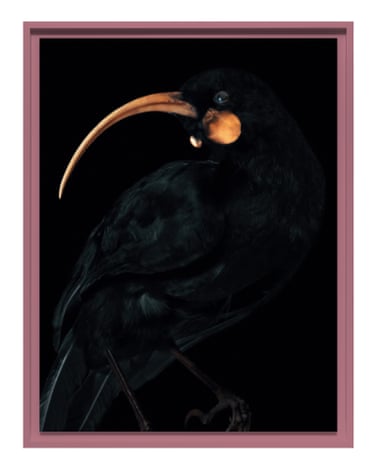
Huia, Heteralocha acutirostris (2025). Canterbury museum
One of the first birds Pardington photographed was a huia, which was hunted to extinction. ‘I have a karakia [incantation] that I use before working with each bird, which addresses it with respect. It’s a very quiet process. I’m acutely aware of it being in a museum. It’s been killed. It’s been stuffed – and sometimes it’s extinct. There’s levels of grief that you feel.’ Pardington’s portraits say: ‘Look what we have done. We’ve taken something alive, and in order to keep it, we’ve killed it. Why didn’t they put money into sanctuaries?’Photograph: Fiona Pardington
Moho, South Island takahē, Porphyrio hochstetteri (2025). Museum of New Zealand Te Papa Tongarewa
’This is quite an important bird. It was at the British museum for 100 years before it was returned to New Zealand, and I think it might have been the second native bird ever sent out of the country for a museum. It’s a sub-adult, hunted in Deas Cove in the Fiordland region in 1851. And big ups to the taxidermist, who did a brilliant job of presenting the bird: the way its body and head are sitting. It’s quite charismatic. It was quite easy to photograph, and many of them aren’t.’Photograph: Fiona Pardington
Kākā kura, Nestor meridionalis septentrionalis (2025). Museum of New Zealand Te Papa Tongarewa
’Kākā kura aren’t usually that colour; this is a “colour morph” – the genes just kind of went crazy and presented themselves like that. It’s quite beautiful, and very bright for New Zealand. Our birds aren’t flagrantly beautiful, compared to what you see in birds overseas. They can be quite relentlessly unglamorous, as far as feathers go.’Photograph: Fiona Pardington
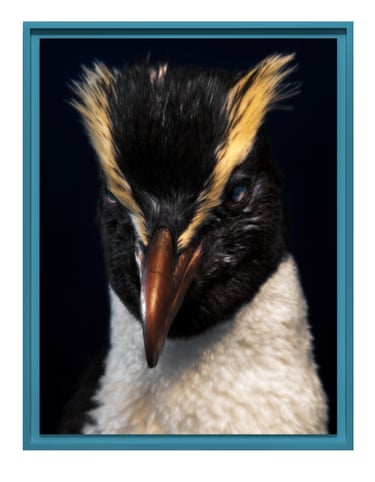
Tawaki, Fiordland crested penguin, Eudyptes pachyrhynchus (2024). South Canterbury museum
Pardington photographs the birds against black velvet, which ‘consumes the light’, and uses a 102-megapixel medium-format camera with long exposures: ‘I want it to look like the light is emanating from the animal.’ She counts herself lucky to have seen many tawaki in their natural habitat in the Fiordland region of southern Aotearoa. ‘It’s one of the wonders of the world down there, and being around dolphins and the penguin populations – for me, it doesn’t get better than that.’Photograph: Fiona Pardington