


Six months ago, 16-year-old Valentina was watching TV with her cousin and younger brother at her home in Quito, Ecuador’s capital, when she received a call from her mother, Ivonne. She had been arrested again, and was in prison. She wouldn’t be coming home for a while.
The pair had been living together since Ivonne’s last prison sentence ended in 2023, and the thought of being separated again was devastating.
“I had gotten used to being with her,” says Valentina. Over the next few months she regularly burst into tears, at home, with her friends, even during school lessons. “I cried a lot,” she says. “I dreaded going to school.”
-
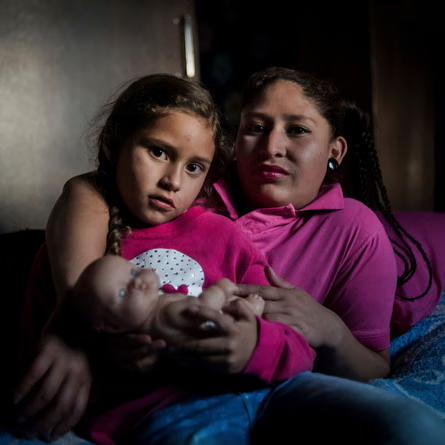
Valentina, aged seven, with her mother, Ivonne, at home in Quito, Ecuador in 2016. After Ivonne was jailed for marijuana possession she was unable to be with her daughter for three years
Ivonne, 33, was equally heartbroken. She was arrested in the street in the south of Quito in possession of 500 grams of marijuana, and taken to the police station where she was placed in a small holding cell with a concrete bed, and allowed to make a call.
“I felt horrible. I cried and I cried,” she says by phone from Ambato women’s prison, 150km (90 miles) south of Quito. More than 500 women are held here, mostly for drug offences. Many of them also have children on the outside.
According to the Institute for Crime and Justice Policy Research (ICPR)’s World Female Imprisonment List, the incarceration of women across Latin America increased by 186% between 2000 and 2024. In Ecuador the number of women in prison stands at around 2,660, a rise of about 290% since 2002. The resultant family separations can have long-term effects on mothers and children, say experts, from struggles with mental health and feeling ostracised from society, to increasing cycles of poverty.
Silvana Tapia Tapia, an Ecuadorian lawyer and professor at Birmingham Law School in the UK, says Ivonne’s situation is typical. Women represent 7.2% of the total prison population in Ecuador, while the majority are there for drug-related offences.
-
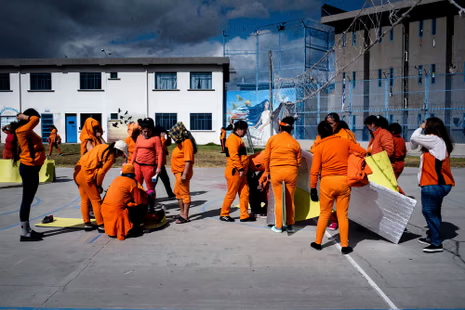
Women take part in recreational activities at Latacunga social rehabilitation center, where Valentina’s mother served part of her sentence
Of this population, 75% have children under the age of 18, according to a 2023 Ecuador state census. Tapia, says very often these women are single mothers and come from marginalised and impoverished backgrounds.
They are seldom selling drugs to make a profit, but rather are working alongside other informal trades such as street vending or sex work in order to support their families, says Tapia.
“Incarceration will inevitably worsen those circumstances,” she adds. These women rarely have adequate legal counsel, knowledge of how to navigate the legal system, or support in finding a job after leaving prison, making it challenging to provide for their family, she says.
“The entire [prison] system is designed to produce the worst possible outcomes in terms of breaking the social fabric,” she says.
One 2020 report by the Washington Office on Latin America (WOLA) found that children of incarcerated women show signs of struggling more in life. Not only are they more likely to suffer increased poverty, they are also more likely to be exposed to violence, and face disruptions in schooling as well as mental health struggles.
-
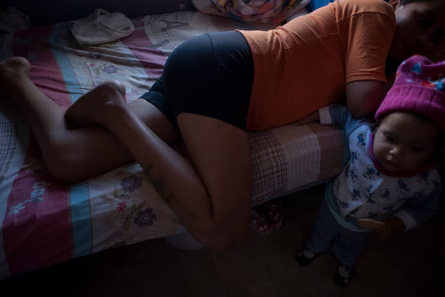
A mother and her child resting in a cell in a women’s prison in Quito, 2017. More than half the women were incarcerated for drug-related crimes
-
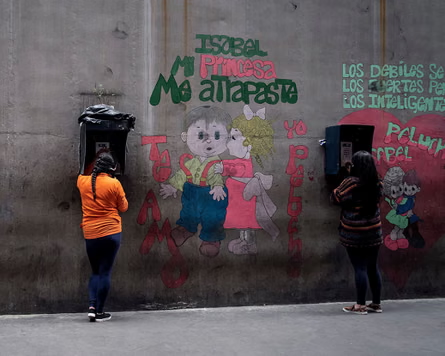
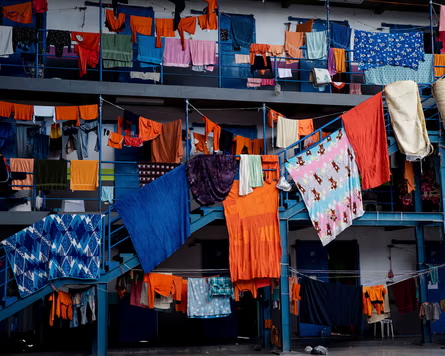
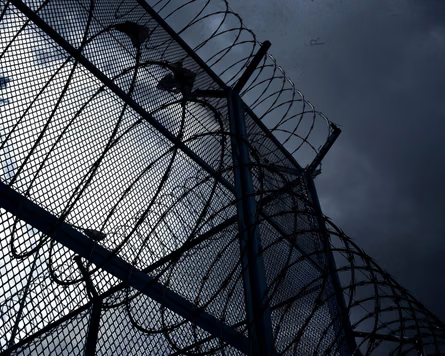
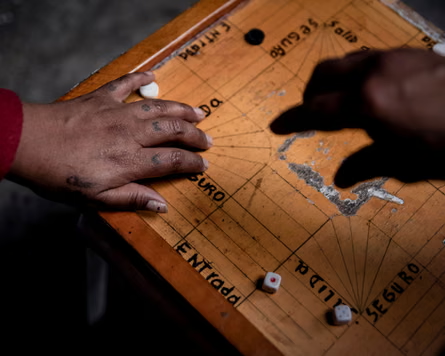
Clockwise from top left: women call family members during the Covid-19 pandemic when in-person visits were restricted; washing hanging out to dry; women play parquet in a prison in the Latacunga social rehabilitation center
Ivonne has already served two three-year sentences for “unlawful possession and ownership of narcotic substances”. Her first prison term began in 2013, when she was 20 years old and raising her then three-year-old daughter alone. She had already quit high school to find work, but began selling marijuana through connections in her neighbourhood. She was arrested one night after police chased her down an alley and found her with a 2kg bag of marijuana. Valentina was sent to stay with Ivonne’s aunt – where she has been living ever since.
-
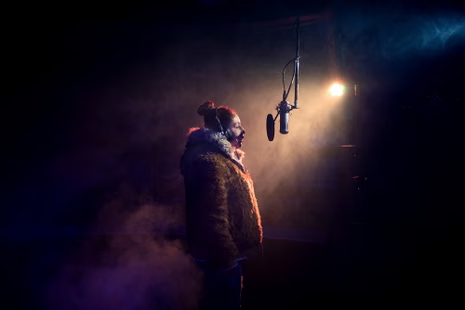
Ivonne sings in a recording studio in the south of Quito. During her time in prison, she graduated from high school and wrote several rap songs describing her life in prison
Ivonne’s second sentence began in 2020. She had been released from prison four years earlier, and was working as a courier, until the Covid-19 pandemic began. After Ecuador implemented strict curfews and lockdown measures, she lost her job. It was hard enough finding work the first time, as “nobody wants to hire someone with a criminal record”, she says. Finding another job during the pandemic was impossible, and she again began selling small quantities of marijuana to support her family.
-
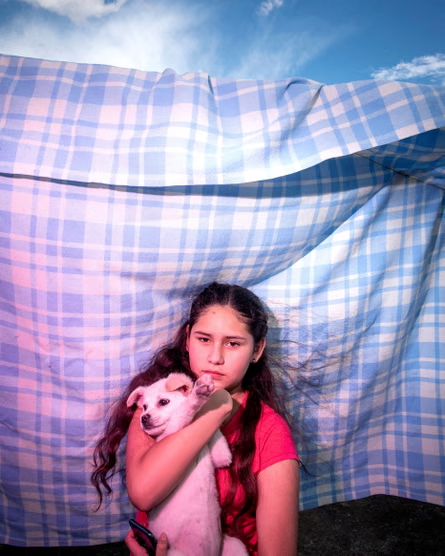
Valentina with a neighbour’s pet in Quito
When Ivonne was arrested in 2020, Valentina was 10 years old, and had spent the previous four years doing everything with her mother. She loved it when Ivonne combed and braided her long hair.
Valentina remembers how angry she felt when her mother was arrested the second time: angry that she wasn’t there for her, angry that she was missing all her important moments, like Mother’s Day events at school, and angry that she had to lie. “Deep down, I did hold a grudge against my mother because I thought, ‘Why did she have to do this?’” says Valentina.
If anyone asked where her mother was, Ivonne and Valentina’s aunt told her to say that she was in hospital.
This was to avoid bullying, but also intrusive questions by teachers and other parents. Ivonne did not want to risk someone contacting social services, who might take her daughter away.
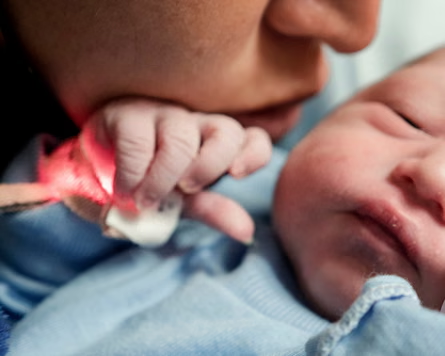
When Ivonne was sent to prison in 2020, she was pregnant. She gave birth to a boy while serving her sentence, a period she describes as sad and lonely, living under strict prison restrictions that didn’t allow her to have any family support, or give into cravings. After her son was born, he lived with her behind bars for nearly two years, before he was sent to join Valentina with Ivonne’s aunt.
-
Ivonne and her newborn baby, Valentina’s sibling, in the maternity ward minutes after his birth in October 2021. He stayed with Ivonne in jail for nearly two years
On her release in 2023, Ivonne joined them, and the three were together as a family for the first time.
Valentina said the first few weeks with her mum at home were strange. There were changes to get used to – the lack of space meant they had to share a bed. But she was also happy.
“The whole thing was super exciting,” she says. “[Mum] tried so hard during those first few days, and she stuck closer to me.”
“We were happy,” says Ivonne, “I was able to spend more time with my kids this time.”
During her last prison sentence Ivonne finished her high school classes and took her final exams, but she still struggled to find work on her release. She did some cleaning and catering work, but it wasn’t enough to contribute to the family. She eventually started selling marijuana again, as it allowed her to spend more time with her children. In October 2025, she was arrested again.
Valentina still feels angry with her mother sometimes, but mostly she just wants her home again.
After Ivonne’s recent arrest, Valentina struggled at school for months, feeling anxious about her mother’s absence, as well as tensions at home from arguments with her aunt.
-
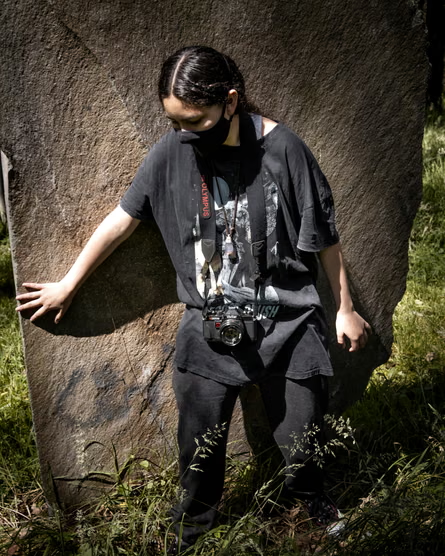
Valentina takes her camera with her to the park, January 2022
Ivonne has asked Valentina not to visit her in prison. She doesn’t want her children to see her behind bars, but mostly she doesn’t want either of them to recount their experience to their teachers, fearful, still, that it could lead to her children being taken away from her for good.
Johanna Alarcón, an Ecuadorian photographer who documented the impact of incarceration on Valentina and Ivonne from 2016 to 2021, has seen Valentina develop from a shy seven-year-old to a teenager with friends and a boyfriend, who is determined to avoid going down the same path as her mother. Now she is older she also recognises that her mother’s situation wasn’t wholly due to poor decisions but a combination of social and political factors that created an environment where Ivonne felt she had no other choice. After spending so much time with Valentina and Ivonne, what strikes Alarcón most is the strength of their bond. “The situation was painful but they showed me the power of love between a mother and daughter.”
Ivonne is now waiting for her next hearing. She plans to plead not guilty.She has been charged with “illicit trafficking of narcotic substances”, Category C – which means large-scale trafficking. Due to increased penalties for drug-related crimes introduced by the president, Daniel Noboa, in 2024, she is facing a prison sentence of 19 to 22 years.
“It’s totally unfair,” says Ivonne’s former lawyer, Alejandro Mancero. “She is being judged as if she were a person whose economic status or development is that of a narco trafficker. She is not a narco trafficker.” Mancero no longer represents Ivonne.
Valentina remains hopeful that she will see her mother soon. Meanwhile, Ivonne says all she can think about is her kids, and missing their weddings and all the other big moments of their lives if she is convicted.
“It’s like a slow death,” she says.
-
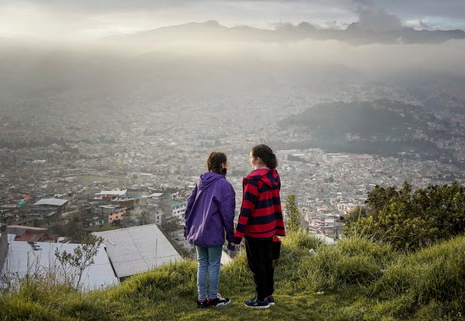
Valentina and her friend look out over the southern districts of Quito, where neighbourhoods are historically shaped by social inequality and economies linked to drug micro-trafficking