





Life on Earth has a good claim for the top spot in any list of the best British TV shows of all time. A giant leap forward from previous wildlife programmes, it gave us the David Attenborough epic as we now know it: every expansive, expensive, dazzlingly informative BBC nature series since has used a template that Life on Earth created. It’s a classic, a landmark, a totem of the creative power the Beeb once had. It’s now 50 years since it went into production, and it’s Attenborough’s 100th birthday this week. As TV anniversaries go, this is a weighty one.
You might worry that a retrospective film about Life on Earth could be an hour of solemn awe and hushed reverence. What you actually get from Making Life on Earth: Attenborough’s Greatest Adventure is a relentlessly entertaining cavalcade of top-drawer anecdotes, more like the sort of gossipy celebration that might commemorate the making of Jaws or Star Wars. Victoria Bobin’s rollicking film is the story of a giant pop-culture moment, a gang of mates remembering how they sensed conditions were right to create a blockbuster masterpiece – if they were willing to flirt with failure and even death to get there.
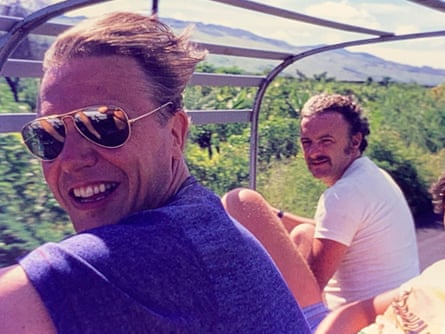
Attenborough, who is seen larking about with this documentary’s crew before his interview properly starts, first explains how he had to sacrifice his august BBC management career to pursue a dream. Having narrowly avoided becoming director-general, which would have been awfully boring for a chap who really wanted to be in a forest gazing at birds of paradise, he quit and rocked up at the Natural History Unit in Bristol.
With the scripts honed, the logistics verified and a best-in-the-business team assembled, our man set off on foreign adventures, any one of which would have been an ambitious undertaking at the time – but the three-year filming stint for Life on Earth meant completing scores of incredible journeys. Something remarkable happened on each one, starting with the Grand Canyon, where Attenborough’s allergy to donkeys meant a climactic final shot had to be filmed from a distance because his eyes had swollen up, and the Galápagos Islands, where the crew’s tents were compromised by giant tortoises trampling the guy ropes.
Matters became hairier in the Comoros Islands in 1978, where a political coup temporarily led to a loss of filming permits. Attenborough sorted that by smooth-talking the authorities in French, but then the elusive nature of the ancient coelacanth – a key player in Life on Earth’s narrative about evolution – initially forced the presenter to make do with a dried specimen found in a glass case in a local bar. Worse strife followed when Attenborough announced that the best artefacts about early human writing were in Iraq, which was on the brink of war with Iran. Life on Earth associate producer Mike Salisbury jovially recalls how he was sent ahead on a recce, because his imprisonment by the notoriously jumpy Saddam Hussein regime would be less of a problem, creatively speaking, than if Attenborough were taken hostage.
Notwithstanding an incident where Salisbury leant across the desk of a distracted official, stamped the team’s passports himself, and legged it, filming progressed and they bagged the footage they wanted, just as they did in Tanzania, where they became the first film-makers to capture lions hunting wildebeest, an achievement that rested on a last-second decision about where to park a Land Rover.
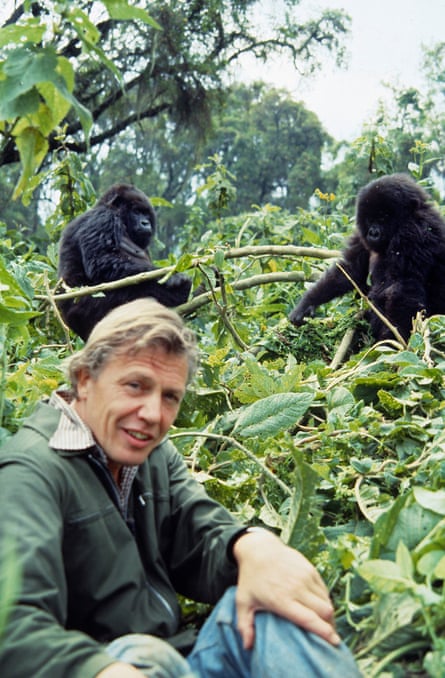
It’s one fantastic story after another, climaxing with how they got the immortal shot of Attenborough being cuddled by mountain gorillas in Rwanda, which has been repeated a thousand times but never loses its impact: “There is more meaning and mutual understanding in exchanging a glance with a gorilla than any other animal I know,” he whispers, stunned by what he’s experiencing, yet able to summarise it with grace. That’s the exact moment when David Attenborough becomes David Attenborough, but we almost didn’t see it because, on their way to the airport with the most important film canisters in natural history in their luggage, the team were intercepted and taken to an army compound in Kigali, where for a good while it looked as if they might be shot.
They got home and Life on Earth aired, to 15 million enraptured viewers. As the 13-episode run continued, pubs grew noticeably emptier on Tuesday nights. Attenborough and co had somehow done it: taking advantage of recent advances in air travel, developments in video camera technology, and a tipping point in how many people were able to watch colour television at home, they had grabbed their chance and achieved the inconceivable. They’d changed TV history. The joy now is in learning that along the way, they had the time of their lives.