










Four in five people are worried that the Iran war will make food more expensive, according to a new poll, as businesses warned the “window is closing” for ministers to cut energy costs for UK retailers.
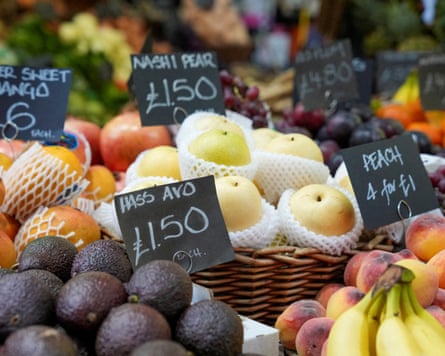
Research by Opinium found that 80% of people are worried about the rising price of groceries, which would come from retailers passing on cost increases to consumers, while 73% expect the conflict to push up prices of other products.
The blockade of the strait of Hormuz has already sent oil and gas prices soaring, caused a crisis in the global fertiliser industry, and has made shipping and distribution more expensive.
The effects have so far been felt most acutely in sectors such as manufacturing and chemicals, which use high amounts of gas. The UK chancellor, Rachel Reeves, announced more support on bills for the most energy-intensive businesses in April, but now faces fresh calls to cut costs for the food sector.
Helen Dickinson, the chief executive of the British Retail Consortium (BRC), said the war is “driving up costs across the supply chain and families are right to be concerned”.
She said ministers should remove non-commodity energy costs for retailers, which are the charges and fees that make up a large portion of electricity bills for companies.
“Other governments are already acting,” she added. “Germany has reduced electricity costs for businesses by moving levies off bills and EU leaders are actively discussing similar responses to this crisis. The UK should be moving in the same direction, not treating global instability as cover for inaction on costs of its own making.”
The Opinium survey suggested that the cost of living crisis would remain an important political issue beyond tomorrow’s local elections, and found that, of the 2,000 people polled, 81% were worried about rising energy bills, 76% about petrol and diesel and 68% about tax increases.
All of those factors could contribute to rising grocery prices, with the Bank of England forecasting food inflation to rise to 7% by the end of the year because of higher fertiliser, energy and transport costs.
Food and non-alcoholic beverage prices rose by 3.7% in the year to March 2026, according to official data, up from 3.3% the previous month.
Supermarket bosses met Reeves at the start of April to assess the Middle East conflict’s impact on the cost of living. Simon Roberts, the boss of Sainsbury’s, said more recently that limiting energy prices for retailers was “the single biggest thing the government should do to keep prices down”.
Uncertainty continues in the Middle East, where Donald Trump’s promise to use warships to open a route through the strait of Hormuz for the hundreds of ships trapped in the Gulf brought the region back to the brink of full-scale war, as Iran sought to reassert its blockade.
Research earlier this week found that food prices are on track to be 50% higher in November than at the start of the cost of living crisis in 2021. Climate and energy shocks have driven an almost quadrupling of the pace of food price growth, according to the Energy and Climate Intelligence Unit thinktank, with costs rising in five years at about the same rate as they had over the previous two decades.
Dickinson added: “Retailers are working hard to hold prices down, but they cannot do it alone. Every cost government chooses not to address is a cost that will find its way into someone’s shopping basket. That is a political choice, and it is one ministers still have time to change – but the window to act is closing.”
A government spokesperson said: “We are acting to protect people from any potential increases in food prices. We have already suspended select food tariffs and continue to work closely with the sector to keep households bills down.”