Middle East crisis live: Iran reviewing peace proposal as...
Taz Ali·2026-05-07·via The Guardian
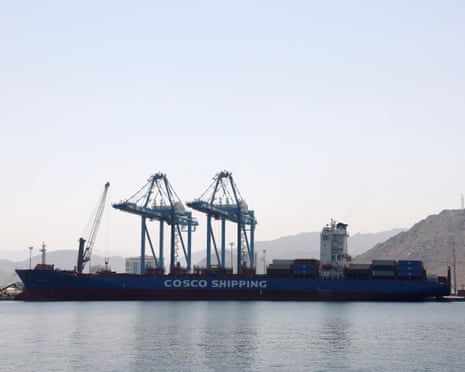
Scenes from the port of Fujairah, as US-Israel conflict with Iran limits marine traffic in the strait of Hormuz Photograph: Amr Alfiky/Reuters
Scenes from the port of Fujairah, as US-Israel conflict with Iran limits marine traffic in the strait of Hormuz Photograph: Amr Alfiky/Reuters
From
Trump says deal with Iran is 'very possible' while Iran downplays reports of peace talks
Morning and welcome to the Guardian’s continuing coverage of the crisis in the Middle East.
The US and Iran have offered conflicting messages over the state of negotiations to end the war, with Donald Trump signalling the talks were “very good” and a deal “very possible”.
Iranian officials, however, have sought to dampen expectations, with state media reporting that Tehran is, at most, reviewing the US’s peace proposal and considering its response via Pakistani mediators. Ebrahim Rezaei, the spokesperson of the Iranian parliament’s national security and foreign policy commission, said the proposal to end the war was merely an “American wish list” and “not a reality”.
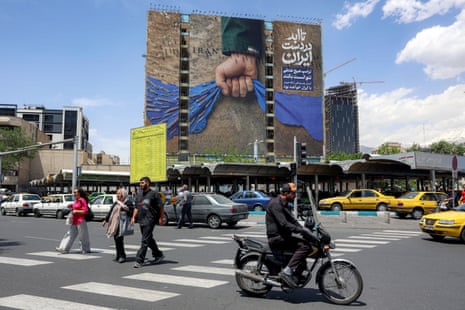
A motorist rides a scooter in Tehran near a billboard on the facade of a building depicting the strait of Hormuz with a caption in Persian reading “Forever in Iran’s Hand”. Photograph: AFP/Getty Images
Still, the US president struck a positive tone last night while speaking to journalists about a possible deal, with a few threats sprinkled in.
“We’ve had very good talks over the last 24 hours, and it’s very possible that we’ll make a deal,” he told reporters in the Oval Office.
“We’ll see whether or not they are agreeing. And if they don’t agree, they’ll end up agreeing shortly thereafter. That’s the way it is.”
In an interview with US broadcaster PBS, he said there was a “very good chance” of the war ending, adding: “If it doesn’t end, we have to go back to bombing the hell out of them.”
In other developments:
News of a possible deal followed Trump’s abrupt U-turn on a US military operation to guide ships out of the strait of Hormuz, dubbed “Project Freedom”. Trump said the decision to pause the mission on Tuesday – two days after it was launched – was to give peace a chance, but NBC reported that it was suspended after Saudi Arabia refused to allow the US military to use its bases and airspace to carry out the operation. US officials told the American broadcaster that Gulf allies were caught off guard by the sudden announcement of Project Freedom, and that it had angered the leadership in Saudi Arabia.
The Iranian president, Masoud Pezeshkian, told his French counterpart, Emmanuel Macron, that the US’s behaviour had “deviated the path of diplomacy towards threats, pressure and sanctions” and that Tehran could not trust Washington. In a statement carried by the Iranian state-run Press TV, Pezeshkiansaid Iran hadentered into dialogue with the US twice and “on both occasions, military aggression against Iran took place concurrently with the negotiations. Such behaviour is effectively like ‘stabbing from behind’”.
Iran has denied any involvement in damage to a South Korean-operated vessel in the strait of Hormuz, which suffered an explosion and fire on Monday. Trump blamed the incident on an Iranian attack, while South Korea’s foreign ministry said the cause of the fire would only be confirmed after the vessel is inspected. The Iran embassy in Seoul issued a statement this morning rejecting the allegations, saying safe passage through the waterway requires strict adherence to Iranian regulations.
The damage and destruction inflicted on US military sites across the Middle East during the war is far larger than what has been publicly acknowledged by the Trump administration or previously reported, according to analysis by the Washington Post. Reviewing satellite imagery, the newspaper found Iranian airstrikes have damaged or destroyed at least 228 US structures or pieces of equipment, including hangars, barracks,fuel depots, aircraft and key radar, communications and air defence equipment. The US Central Command declined to comment on the report.
In Lebanon, where a ceasefire has demonstrably failed to stop the fighting between Israel and Hezbollah, three people were killed this morning in Israeli strikes on Nabatieh south of the country, according to the official Lebanese National News Agency. The Israeli military said one of its soldiers was seriously injured by an explosive-laden Hezbollah drone in southern Lebanon yesterday. It did not say where the attack took place.
In Gaza, where another ceasefire appears to be fraying, an Israeli airstrike has killed Azzam Khalil al-Hayya, the son of Hamas political bureau leader and chief negotiatorKhalil al-Hayya, according to senior Hamas official Basim Naim. Azzam succumbed to his injuries this morning after being struck in an Israeli attack last night in Gaza City, Reuters reported. He is the fourth son of Hamas’s exiled Gaza chief to have been killed in Israeli attacks.
Pakistan, which has positioned itself as a key mediator in talks between the US and Iran, has continued to express optimism at a possible deal without offering any clues at to where the negotiations currently stand.
The Pakistani foreign ministry spokesperson, Tahir Andrabi, would not disclose details of the ongoing diplomatic efforts but said a deal could be reached soon.
“What I can tell you and this is what I have stated before that we remain positive, we remain optimist, and we hope the settlement will be soon rather than later,” he told a news briefing today.
While the first round of US-Iran talks took place in the Pakistani capital Islamabad on 11 April, Andrabi hinted a future deal could be agreed elsewhere.
“If it takes place in Islamabad, it would be an honour and a privilege to host it,” he said.
In televised remarks today, Pakistan’s prime minister, Shehbaz Sharif, said Islamabad remained in “continuous contact with Iran and the United States, day and night, to stop the war and extend the ceasefire”.
IDF claims to have killed commander of Hezbollah's Radwan force in Beirut strike
The Israel Defense Forces (IDF)said it has killed the commander of Hezbollah’s Radwan force, the most elite unit of the pro-Iran armed group, in a strike on Beirut’s southern suburbs.
In a statement, the IDF named the Radwan commander as Ahmed Ghalib Balut, saying he was killed in a strike in the Dahiyeh neighbourhood in southern Beirut.
Hezbollah has not immediately commented on the report.
Israel struck Beirut yesterday for the first time since a ceasefire took effect on 16 April. At least 11 other people were killed in strikes across the south and east, according to the Lebanese health ministry.
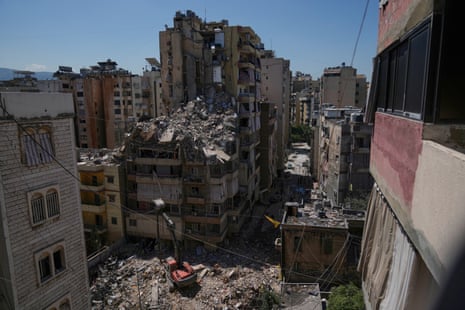
Rescue workers search through the rubble of a building destroyed in an Israeli airstrike in Dahiyeh, Beirut's southern suburbs, Lebanon. Photograph: Bilal Hussein/AP
Trump says deal with Iran is 'very possible' while Iran downplays reports of peace talks
Morning and welcome to the Guardian’s continuing coverage of the crisis in the Middle East.
The US and Iran have offered conflicting messages over the state of negotiations to end the war, with Donald Trump signalling the talks were “very good” and a deal “very possible”.
Iranian officials, however, have sought to dampen expectations, with state media reporting that Tehran is, at most, reviewing the US’s peace proposal and considering its response via Pakistani mediators. Ebrahim Rezaei, the spokesperson of the Iranian parliament’s national security and foreign policy commission, said the proposal to end the war was merely an “American wish list” and “not a reality”.
A motorist rides a scooter in Tehran near a billboard on the facade of a building depicting the strait of Hormuz with a caption in Persian reading “Forever in Iran’s Hand”. Photograph: AFP/Getty Images
Still, the US president struck a positive tone last night while speaking to journalists about a possible deal, with a few threats sprinkled in.
“We’ve had very good talks over the last 24 hours, and it’s very possible that we’ll make a deal,” he told reporters in the Oval Office.
“We’ll see whether or not they are agreeing. And if they don’t agree, they’ll end up agreeing shortly thereafter. That’s the way it is.”
In an interview with US broadcaster PBS, he said there was a “very good chance” of the war ending, adding: “If it doesn’t end, we have to go back to bombing the hell out of them.”
In other developments:
News of a possible deal followed Trump’s abrupt U-turn on a US military operation to guide ships out of the strait of Hormuz, dubbed “Project Freedom”. Trump said the decision to pause the mission on Tuesday – two days after it was launched – was to give peace a chance, but NBC reported that it was suspended after Saudi Arabia refused to allow the US military to use its bases and airspace to carry out the operation. US officials told the American broadcaster that Gulf allies were caught off guard by the sudden announcement of Project Freedom, and that it had angered the leadership in Saudi Arabia.
The Iranian president, Masoud Pezeshkian, told his French counterpart, Emmanuel Macron, that the US’s behaviour had “deviated the path of diplomacy towards threats, pressure and sanctions” and that Tehran could not trust Washington. In a statement carried by the Iranian state-run Press TV, Pezeshkiansaid Iran hadentered into dialogue with the US twice and “on both occasions, military aggression against Iran took place concurrently with the negotiations. Such behaviour is effectively like ‘stabbing from behind’”.
Iran has denied any involvement in damage to a South Korean-operated vessel in the strait of Hormuz, which suffered an explosion and fire on Monday. Trump blamed the incident on an Iranian attack, while South Korea’s foreign ministry said the cause of the fire would only be confirmed after the vessel is inspected. The Iran embassy in Seoul issued a statement this morning rejecting the allegations, saying safe passage through the waterway requires strict adherence to Iranian regulations.
The damage and destruction inflicted on US military sites across the Middle East during the war is far larger than what has been publicly acknowledged by the Trump administration or previously reported, according to analysis by the Washington Post. Reviewing satellite imagery, the newspaper found Iranian airstrikes have damaged or destroyed at least 228 US structures or pieces of equipment, including hangars, barracks,fuel depots, aircraft and key radar, communications and air defence equipment. The US Central Command declined to comment on the report.
In Lebanon, where a ceasefire has demonstrably failed to stop the fighting between Israel and Hezbollah, three people were killed this morning in Israeli strikes on Nabatieh south of the country, according to the official Lebanese National News Agency. The Israeli military said one of its soldiers was seriously injured by an explosive-laden Hezbollah drone in southern Lebanon yesterday. It did not say where the attack took place.
In Gaza, where another ceasefire appears to be fraying, an Israeli airstrike has killed Azzam Khalil al-Hayya, the son of Hamas political bureau leader and chief negotiatorKhalil al-Hayya, according to senior Hamas official Basim Naim. Azzam succumbed to his injuries this morning after being struck in an Israeli attack last night in Gaza City, Reuters reported. He is the fourth son of Hamas’s exiled Gaza chief to have been killed in Israeli attacks.