惯性聚合 高效追踪和阅读你感兴趣的博客、新闻、科技资讯
阅读原文 在惯性聚合中打开

推荐订阅源

U
Unit 42
K
Kaspersky official blog
L
LangChain Blog
有赞技术团队
有赞技术团队
V
Visual Studio Blog
T
The Blog of Author Tim Ferriss
Microsoft Azure Blog
Stack Overflow Blog
Stack Overflow Blog
美团技术团队
Vercel News
Vercel News
CTFtime.org: upcoming CTF events
G
Google Developers Blog
宝玉的分享
宝玉的分享
月光博客
月光博客
爱范儿
爱范儿
The Register - Security
S
SegmentFault 最新的问题
M
MIT News - Artificial intelligence
F
Full Disclosure
Engineering at Meta
Engineering at Meta
阮一峰的网络日志
阮一峰的网络日志
Hugging Face - Blog
Hugging Face - Blog
A
About on SuperTechFans
WordPress大学
WordPress大学
D
Docker
Y
Y Combinator Blog
N
News and Events Feed by Topic
P
Proofpoint News Feed
Apple Machine Learning Research
Threat Intelligence Blog | Flashpoint
Recorded Future
Recorded Future
IT之家
IT之家
C
CXSECURITY Database RSS Feed - CXSecurity.com
Security Latest
Security Latest
Spread Privacy
Spread Privacy
D
Darknet – Hacking Tools, Hacker News & Cyber Security
F
Fortinet All Blogs
AWS News Blog
AWS News Blog
C
Cyber Attacks, Cyber Crime and Cyber Security
P
Proofpoint News Feed
C
CERT Recently Published Vulnerability Notes
D
DataBreaches.Net
Recent Announcements
博客园 - Franky
Google DeepMind News
小众软件
小众软件
B
Blog RSS Feed
I
InfoQ
Attack and Defense Labs
云风的 BLOG
云风的 BLOG

Benson's blog

Enjoy life AI on academic research How AI Will Change the Mobile Ecosystem Look ahead Goodbye 2025 Hacker News to Kindle Another project How to imporve english Introduction of Fraud detection PopTranslate Last day in netease Better idea between Copilot-typed and CLI-typed assistant Gemini-cli LLM Post-Training experience Papers I readed recently about LLM application Difference between LLMs and traditional computer technology GRPO Weekly-#26 AI Application Weekly-#25 AI infra and application Weekly-#24 First week as LLM inference engineer Weekly-#23 seeking job Weekly-#22 2025 New Year AutoSwitch Translate Goodbye 2024 Weekly-#20 Breaking of glass Cross Entropy Loss of Triton Weekly-#18 Cross Entropy Loss of Triton Weekly-#17 Triton Puzzles Weekly-#16 AutoBuilder Weekly-#15 Starting of tanble tennis Weekly-#14 Accident in life Weekly-#13 Trying of xiaohongshu Weekly-#12 summary of LLM acceleration Outline of LLM acceleration Weekly-#11 Copilot-type products Weekly-#10 Preparation for next journey Weekly-#9 Startup of YouTube Notes of flash-attention How to learn knowledge in new fields? Weekly-#8 Start Reading Notes of LoRA Acceleration of LLM - Matrix Multiplication Weekly-#8 Summary for two month Weekly-#7 Staying home Weekly-#6 Cost of PopTranslate Weekly-#5 Updating of PopTranslate Validated example of LLM acceleration Weekly-#4 First insight of LLM accelerate Weekly-#3 PopTranslate Weekly-#2 The fail of first product Weekly-#1 First week of indie develop slack迁移discord 雅思备考 2024Q3 中文博客合集 English Diary in May 五一游记 开始休假 离职前的状态 2024-01-01 duckdb 看懂的第一个PR learning english in October learning english in September learning english in August top hack news 收集 大模型调研 自动驾驶的小玩具 旅游 扬州+苏州 small talk of learning english 新年新气象-碎碎念 刷剧 感染新冠 强化学习简介 神经网络解释性 全局的模型无关解释方法合集 社区发现算法概览 图神经网络入门(GNN) 我的第一款 iOS APP AtCoder Beginner Contest 268 人的信息输入方式对比 重叠社区检测 人穷极一生到底在追求什么 重拾生活规划 社区发现算法 - Louvain 《幸福的方法》 读《人类简史》有感 妙峰山骑行 黑客帝国 特征交互 特征工程 累计局部效应图 模型解释性-PDP 模型解释性 Web3 入门科普 总结 2022.4 孪生网络做 query 相似度任务 学习 2022.4 Imagen DeBERTa 读论文 用CNN做query相似度任务
累计局部效应图
Benson · 2022-07-05 · via Benson's blog

从PDP优化

M-plots

PDP 把当前特征值代入所有样本中,会出现部分样本在实际情况中不可能存在的问题,于是就有 M-plots,计算当前特征值对应的预测期望时,只考虑数据集合中存在的样本。

ALE

ALE 取同一区间内,预测值的变化作为特征的影响,不同区间累计,构建特征和预测值之间的关系。与 M-plots 不同的是,ALE取预测值的变化作为特征影响,而不是取预测值的均值。 影响:特征在一个小区间内不同取值,模型预测值的差异,或者说预测对特征的导数,作为当前区间的影响。 局部:差异定义在当前的小区间内,只具有局部意义 累计:将影响累计起来,构建特征-预测之间的散点图。

使用

单特征

特征划分区间,针对当前特征区间的样本,将特征值分别改为区间最大值和最小值,进行预测,把预测值的平均值求差,作为当前区间的影响。

两特征

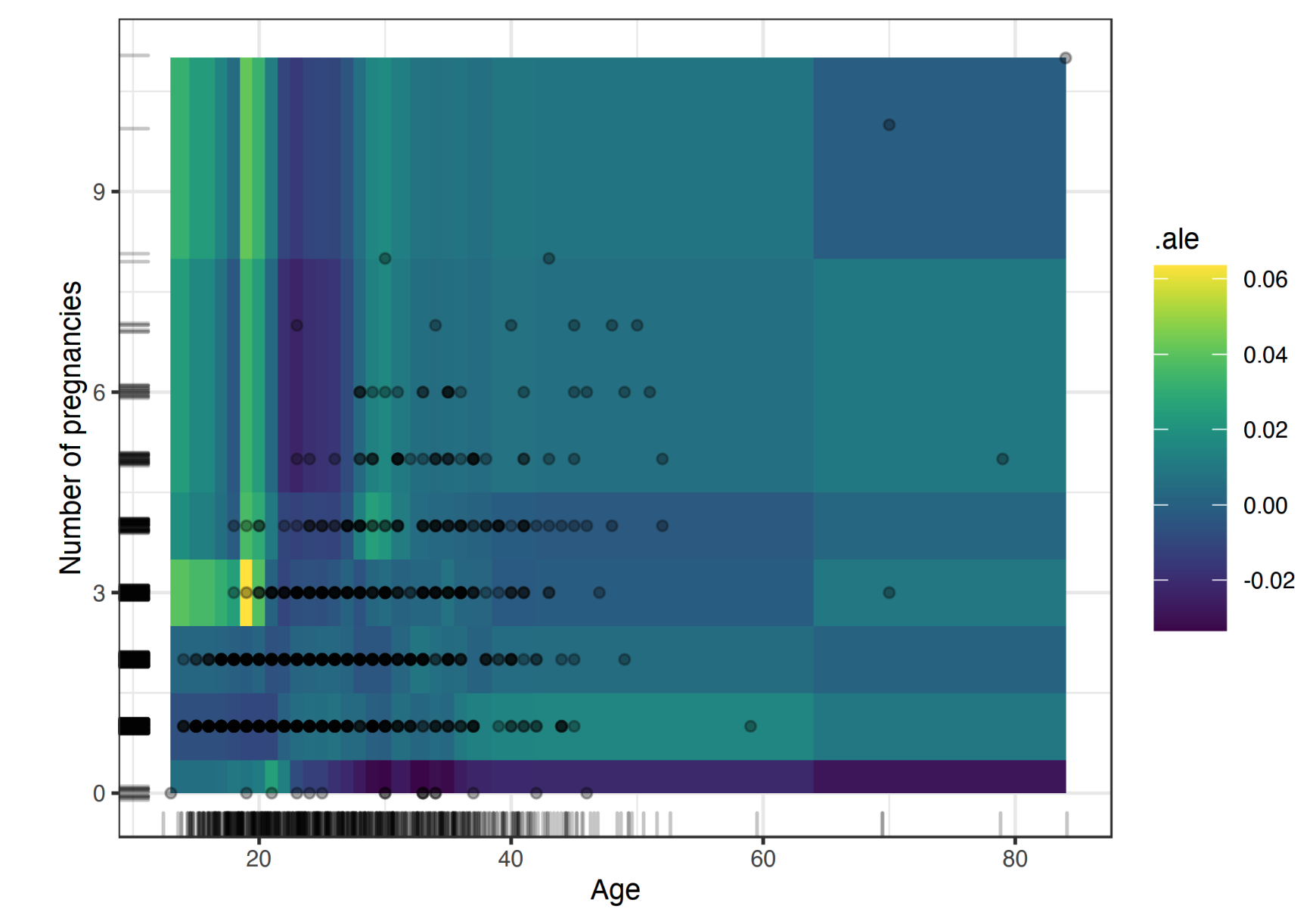
当描述两个特征时,ALE描述特征2在特征1的基础上,对预测值的影响,下图为例,用 $(f(d) - f(c)) - (f(b) - f(a))$ 作为特征 2 在特征 1 的基础上对预测值的影响。
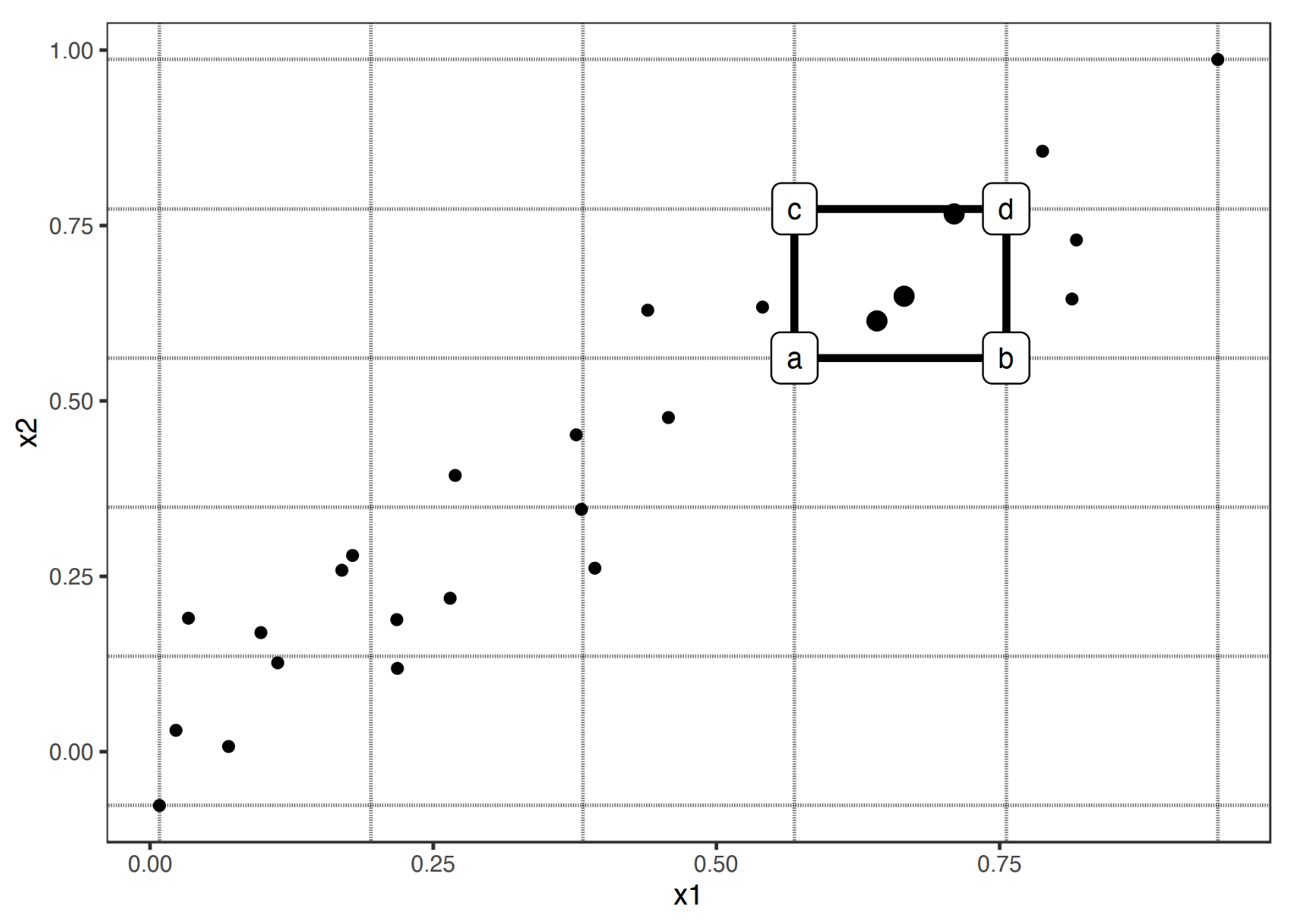
当特征1和2相互独立,该值依然和预测值保持线性关系,当不独立时,能在消除相关性之后考虑特征-预测值之间的关系。

类别型特征

类别特征和数值特征不同的是没有顺序,那给他们排一个顺序就好了。 方法:针对类别特征中任意两个取值,根据其他特征的分布判断这两个取值的相似度,即可以获得类别特征两两取值的相似度矩阵,可以通过 multi-dimensional scaling 降维,降低到一维,从而对类别特征做了排序。 举例:现在对季节这个类别特征做数值化,可用的数值特征为温度

  1. 取季节中 春、夏 两个取值,根据「春」和「夏」对应的温度分布计算他们的相似度
  2. 同时计算季节中 春夏秋冬四个取值任意两个之间的相似度,得到季节之间的相似度矩阵
  3. 对矩阵降维到一维,完成类别特征的数值化

案例

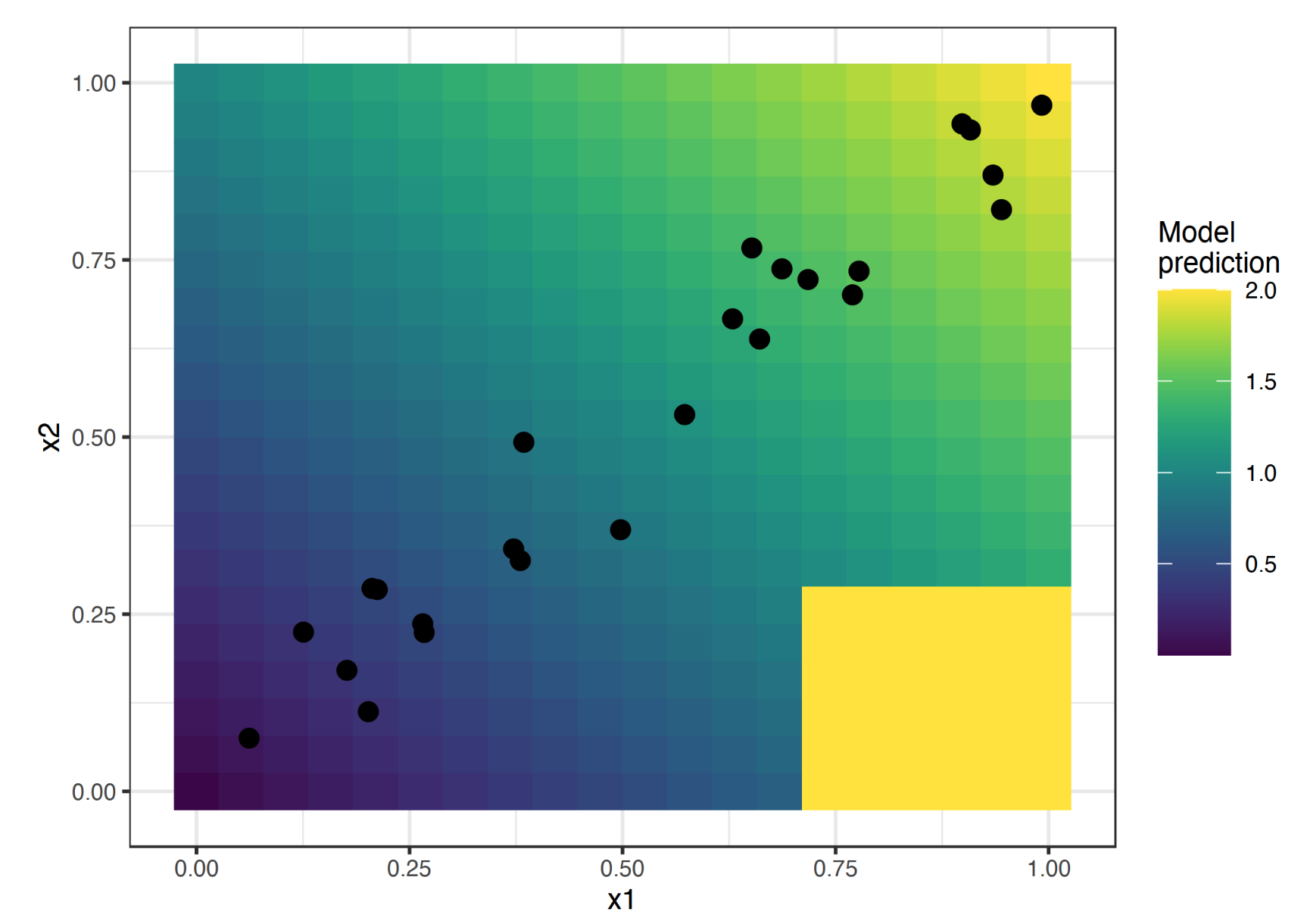
案例1:右下角的极端情况,会出现 PDP 获取了实际中不存在的样本,而 ALE 展示的效果就很好
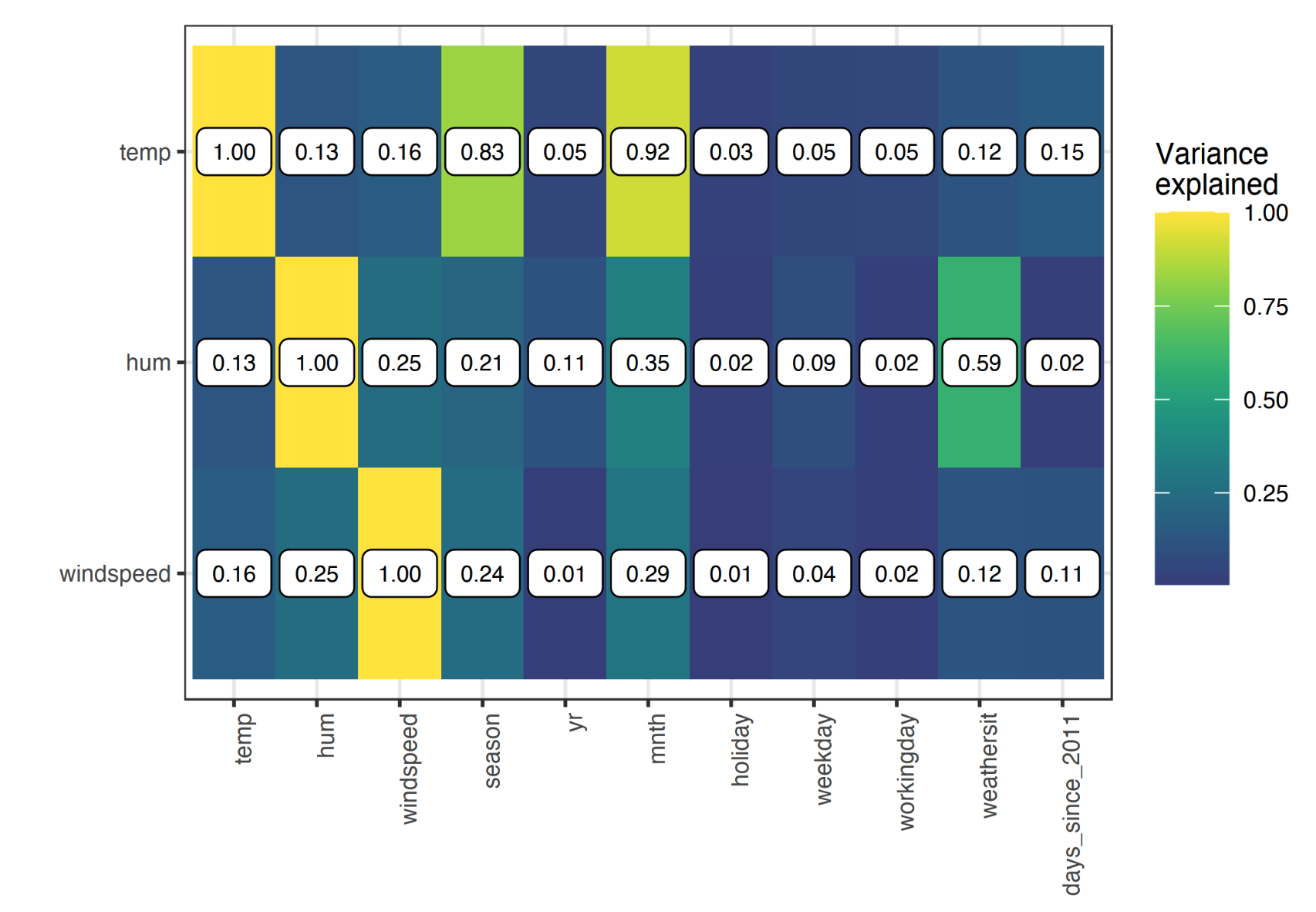
案例2:特征之间用线性回归做预测,以衡量特征的相关性。(为什么突然提这个?
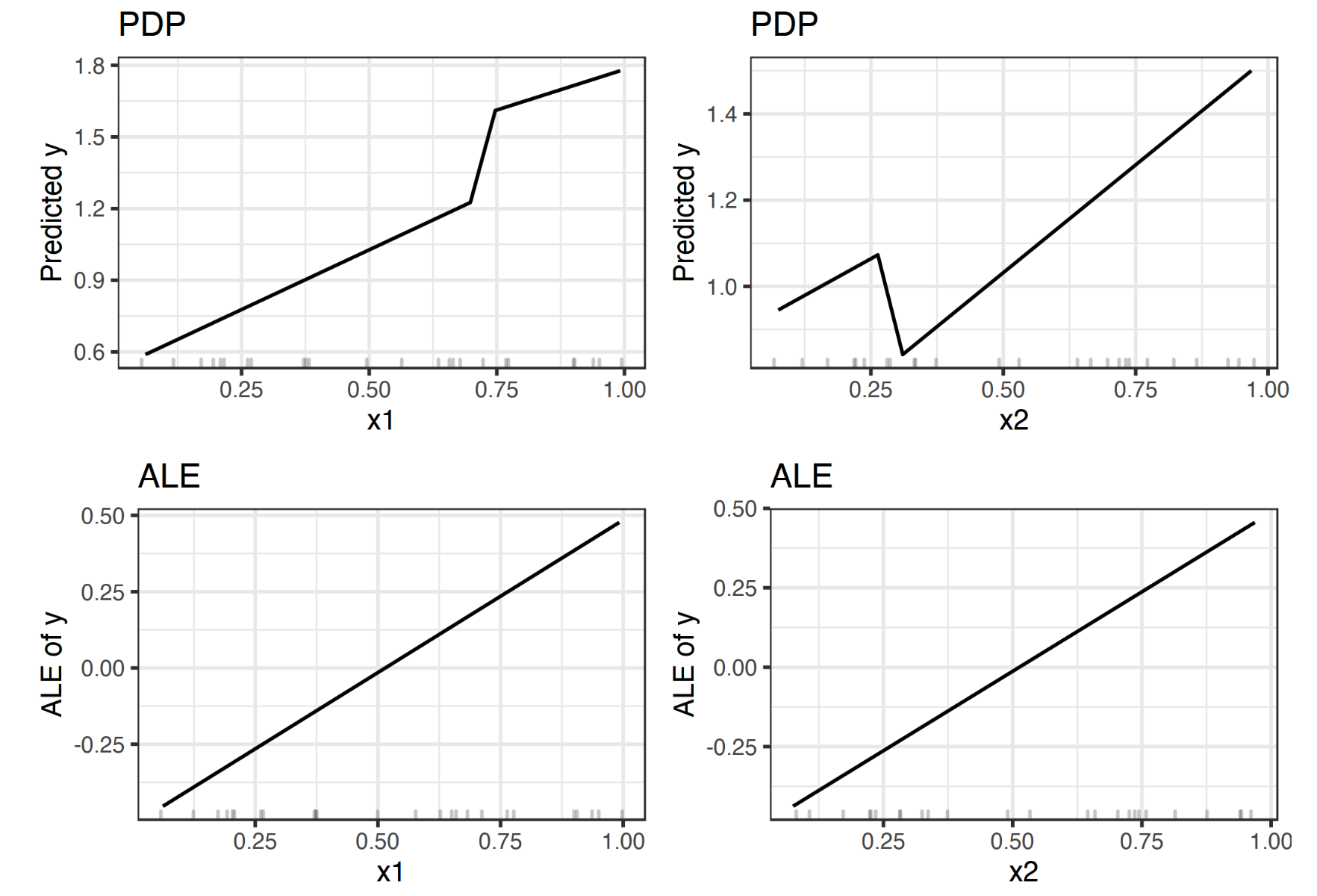
案例3:特征相关性较高,单特征看到的影响并不置信。
特点

优点

ALE 是无偏的,即使特征之间存在相关性,也是有效的。 ALE 效率更高,时间复杂度 O(n),PDP复杂度应该在 O(n*m) 量级 解释性很清晰:1)表达预测值的相对变化。2)以0为中心,每个点都是相对平均值的贡献度。3)2D ALE 显示特征间的关系。

缺点

局部:不同区间所用到的样本都不相同,解释具有局部性。而且在特征极度相关时,单维度的 ALE 是无效的。 和LR不吻合:当特征相关时,ALE 的解释数据和LR的参数不吻合? 波动大:但划分的区间数据量过多,ALE曲线波动较大,当区间数量较少,结果并不置信。没有完美的方案。 没有ICE曲线:PDP 有ICE去曲线。ICE曲线是啥? Second-order effect plots can be a bit annoying to interpret 实现更复杂且不直观 特征强相关时,仍然不好解释:分析两个特征同时变化时才更有意思,而不是单特征的变化? 特征不相关时,PDP更好 缺点很多,但使用法则:使用ALE而不是PDP。emmm

应用

PDP:考虑所有样本,包括实际中不存在的样本,比如房价问题中,房子大小=10平米,房间数量=100个。 ALE:仅考虑数据集中存在的样本,数据集取决于你认为适用的集合。

参考

https://christophm.github.io/interpretable-ml-book/ale.html https://github.com/SeldonIO/alibi https://github.com/christophM/iml https://github.com/blent-ai/ALEPython” 中文翻译:https://github.com/MingchaoZhu/InterpretableMLBook 原文github:https://github.com/christophM/interpretable-ml-book