



惯性聚合 高效追踪和阅读你感兴趣的博客、新闻、科技资讯
阅读原文 在惯性聚合中打开

推荐订阅源

量子位
WordPress大学
WordPress大学
小众软件
小众软件
云风的 BLOG
云风的 BLOG
IT之家
IT之家
人人都是产品经理
人人都是产品经理
奇客Solidot–传递最新科技情报
奇客Solidot–传递最新科技情报
Last Week in AI
Last Week in AI
博客园 - 【当耐特】
T
Tailwind CSS Blog
阮一峰的网络日志
阮一峰的网络日志
V
V2EX
宝玉的分享
宝玉的分享
博客园 - Franky
F
Fortinet All Blogs
钛媒体:引领未来商业与生活新知
钛媒体:引领未来商业与生活新知
freeCodeCamp Programming Tutorials: Python, JavaScript, Git & More
GbyAI
GbyAI
Hugging Face - Blog
Hugging Face - Blog
Jina AI
Jina AI
D
Docker
博客园 - 聂微东
C
Check Point Blog
H
Help Net Security

Benson's blog

Enjoy life Internship AI on academic research How AI Will Change the Mobile Ecosystem Look ahead Goodbye 2025 Hacker News to Kindle Another project How to imporve english Introduction of Fraud detection PopTranslate Last day in netease Better idea between Copilot-typed and CLI-typed assistant Gemini-cli LLM Post-Training experience Papers I readed recently about LLM application Difference between LLMs and traditional computer technology GRPO Weekly-#26 AI Application Weekly-#25 AI infra and application Weekly-#24 First week as LLM inference engineer Weekly-#23 seeking job Weekly-#22 2025 New Year AutoSwitch Translate Goodbye 2024 Weekly-#20 Breaking of glass Cross Entropy Loss of Triton Weekly-#18 Cross Entropy Loss of Triton Weekly-#17 Triton Puzzles Weekly-#16 AutoBuilder
Outline of LLM acceleration
Benson · 2024-11-11 · via Benson's blog

Summary

Methods

There are two main methods to acclerate LLM and another tricky methods

  • low-rank: reduce dimension of matrix
  • block: compute matrix with block
  • trick: update model structure or change training process

Reference

Categories

Low-rank

LoRA

Low-Rank of large matrices when fine-tune

informaiton

reference

  • Measuring the Intrinsic Dimension of Objective Landscapes
  • Intrinsic Dimensionality Explains the Effectiveness of Language Model Fine-Tuning

Linformer

SVD decomposition for large QKV projection matrices to reduce required memory

  • Jun 2020
  • 30%
  • code: hold

Performers

low-rank projection with a novel method named FAVOR

  • Sep 2020
  • 10%
  • code: hold

Multi-head Latent Attention

Project high dimension into low dimension for KV cache, which can reduct much memory ustage.

Block

FlashAttention

Matrices multiplication by blocks

Self-attention Does Not Need O(n2) Memory

attention calculation with blocks

  • Dec 2021
  • 70%

FlashDecoding++

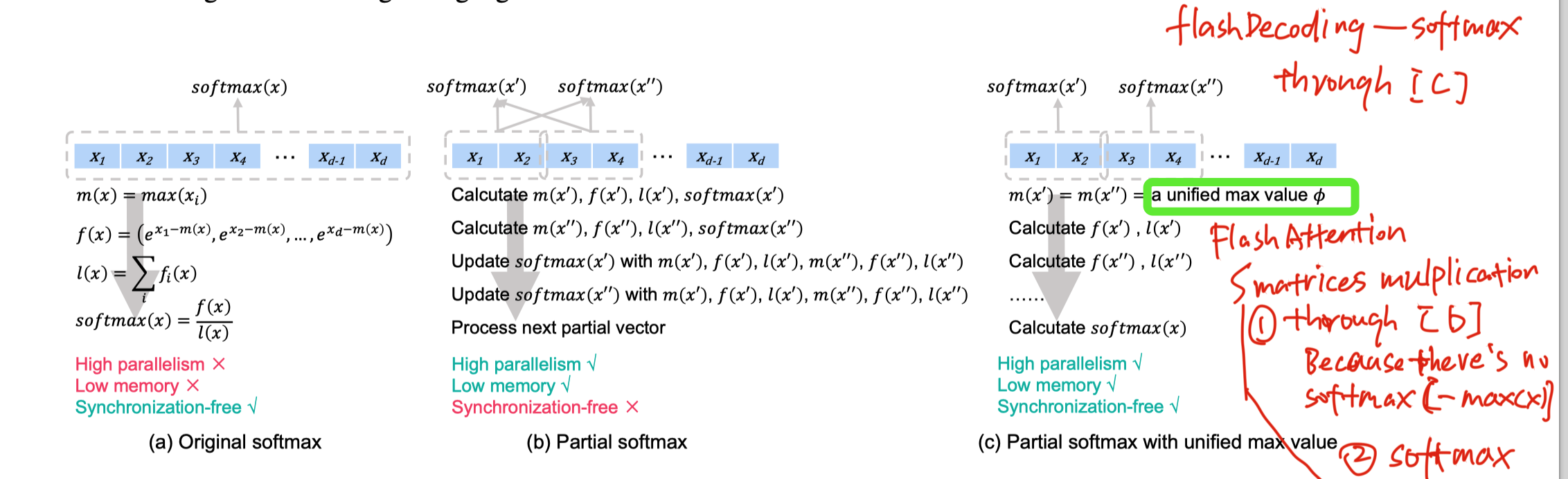
FlashDecoding++: Faster Large Language Model Inference on GPUs, three parts

  • Softmax with block and Unified Maximum Value, result of block softmax can be directly used and merging is unnecesary. Optimized from FlashAttention.
    scalability

  • Flat GEMM(small batch size when reference) Optimization with Double Buffering. [didn’t understand]
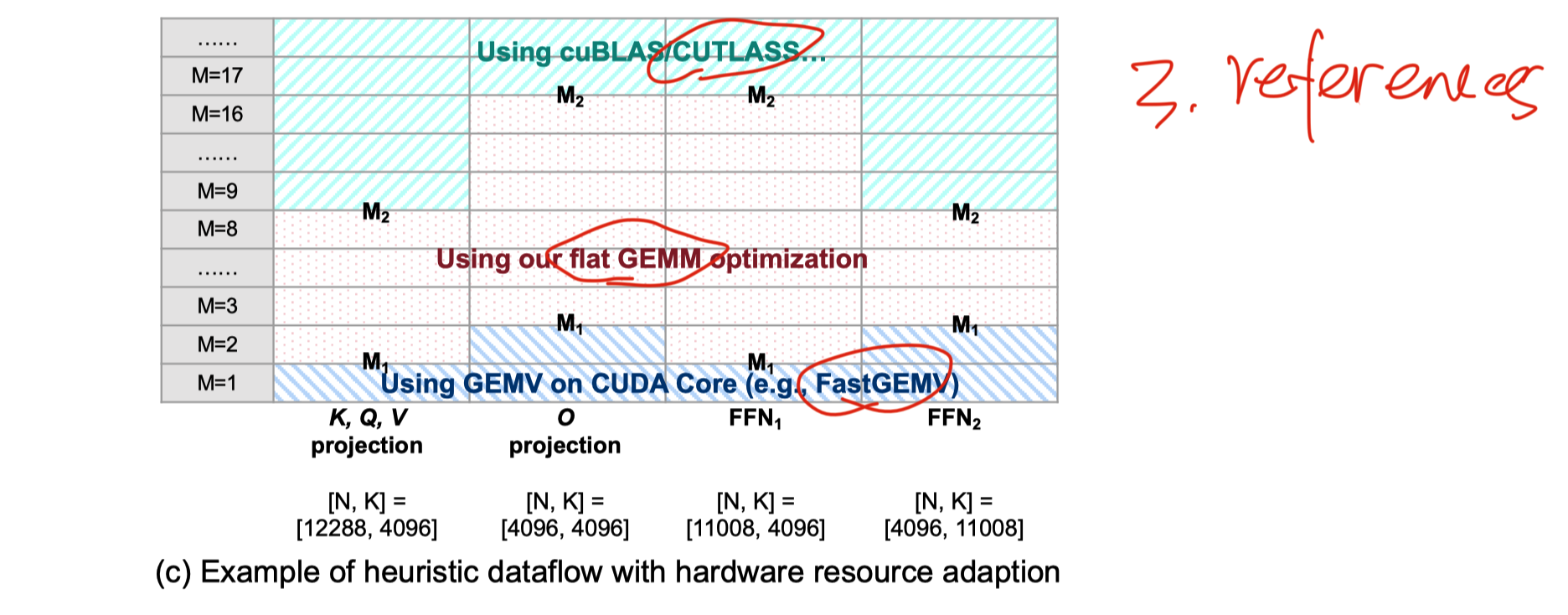
  • Heuristic Dataflow with Hardware Resource Adaption, choose difference optimizaiton methods for different M value(batch size and sequence length) [didn’t total understand]
    scalability

  • reference
    • cuBLAS / CUTLASS
    • flat GEMM: method in current paper
    • fastGEMV
  • No code(2024.11)

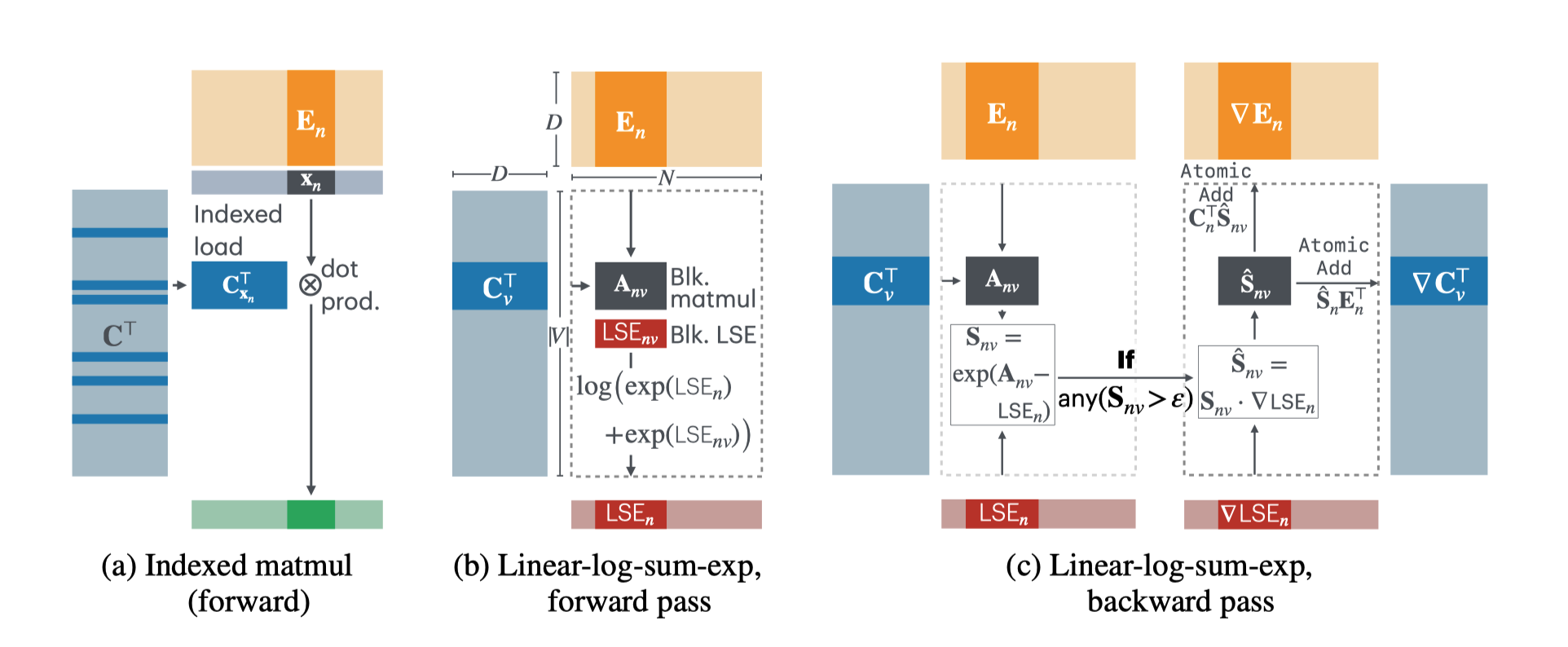
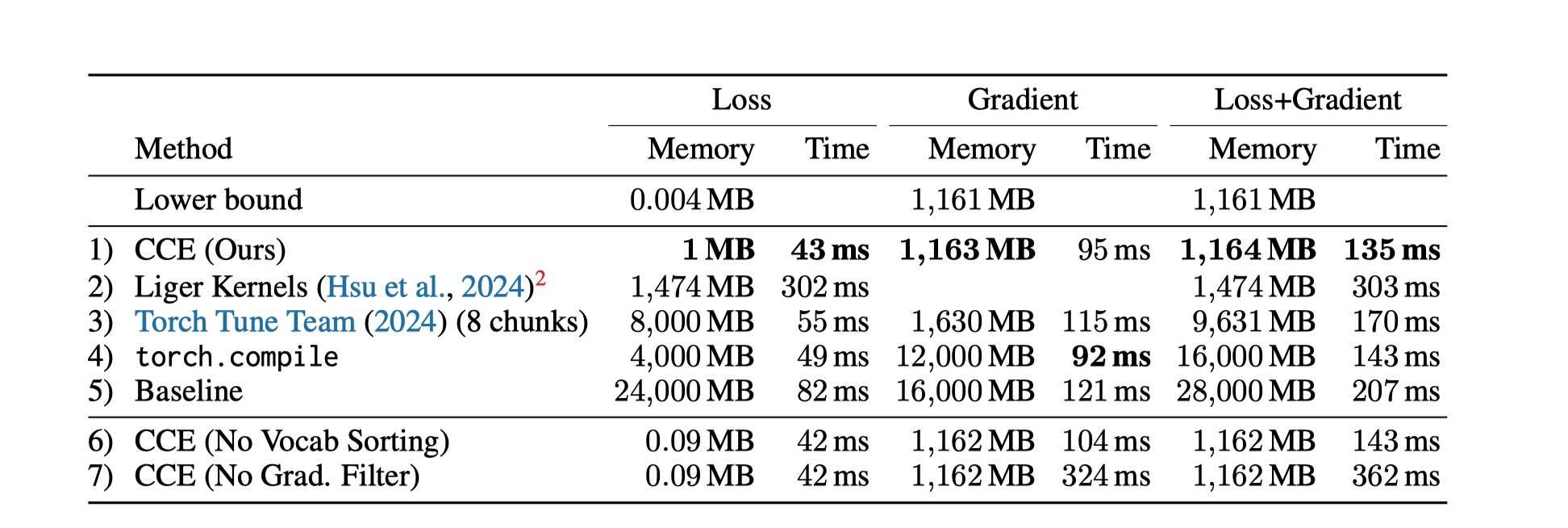
Cut cross entropy

Main idea:

  • Avoid to store final large matrix throught block computation, which can save lots of memory when vocabulary is large.
  • Softmax matrix is sparse, when all values are smaller than precision of data type, computation are unnecessary.
    Idea

    Performance

Basic

Parallelization

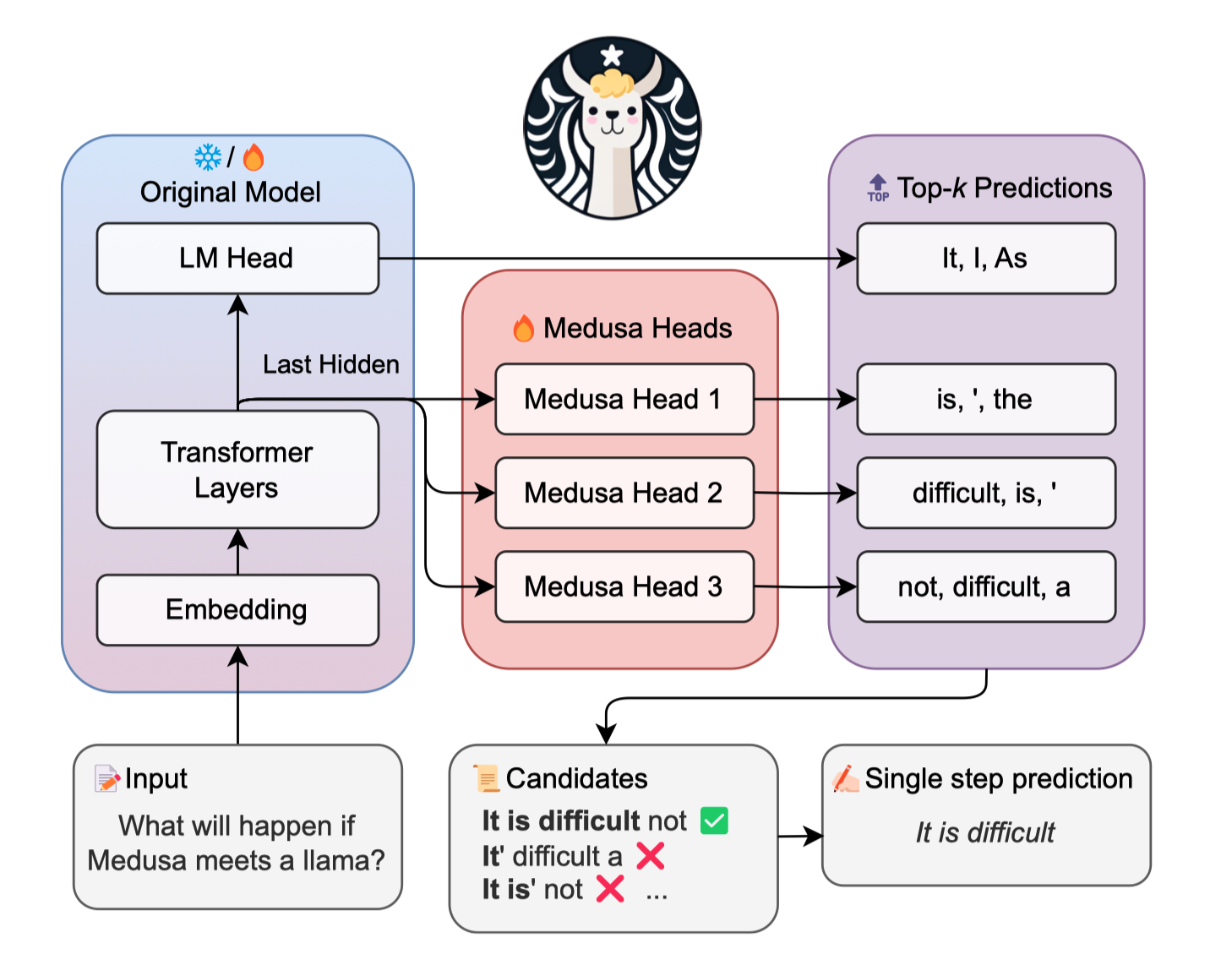
1) Medusa

output top-k predictions for next multiple positions parallelly through adding LM heads for next several positons, which can reduce inference latency.
scalability

2) SnapKV

compress KV cacha for long sequence tasks

Infrastructure

1) triton

  • An alternative language for cuda, designed for deep neural network
  • published in 2019, purchase by OpenAI
  • reasons why it’s great
    • designed for deep neural network
    • open-source, active project in Github
    • clients, like unsloth, other in Github issues
    • friendly to use and implentment, adding them into current Python code, Good to start
    • support for other chips

2) Hardware Acceleration of LLMs: A comprehensive survey and comparison

Simple introduce and compare different hardware acceleration method in terms of efficiency and performance

  • collect all method from 2020-2024
  • comparison with the same process technology
  • different choose for both efficiency and performance

Trick

1) Inference with Reference

Lossless Acceleration of Large Language Models: copy reference to inference because there many same text sentence between them to accelerate inference 2) SwitchHead

Accelerating Transformers with Mixture-of-Experts Attention: select different experts matrices for every head in attention by input content to reduce computation and memory usage. + published: 2024 3) DropBP:

Accelerating Fine-Tuning of Large Language Models by Dropping Backward Propagation:
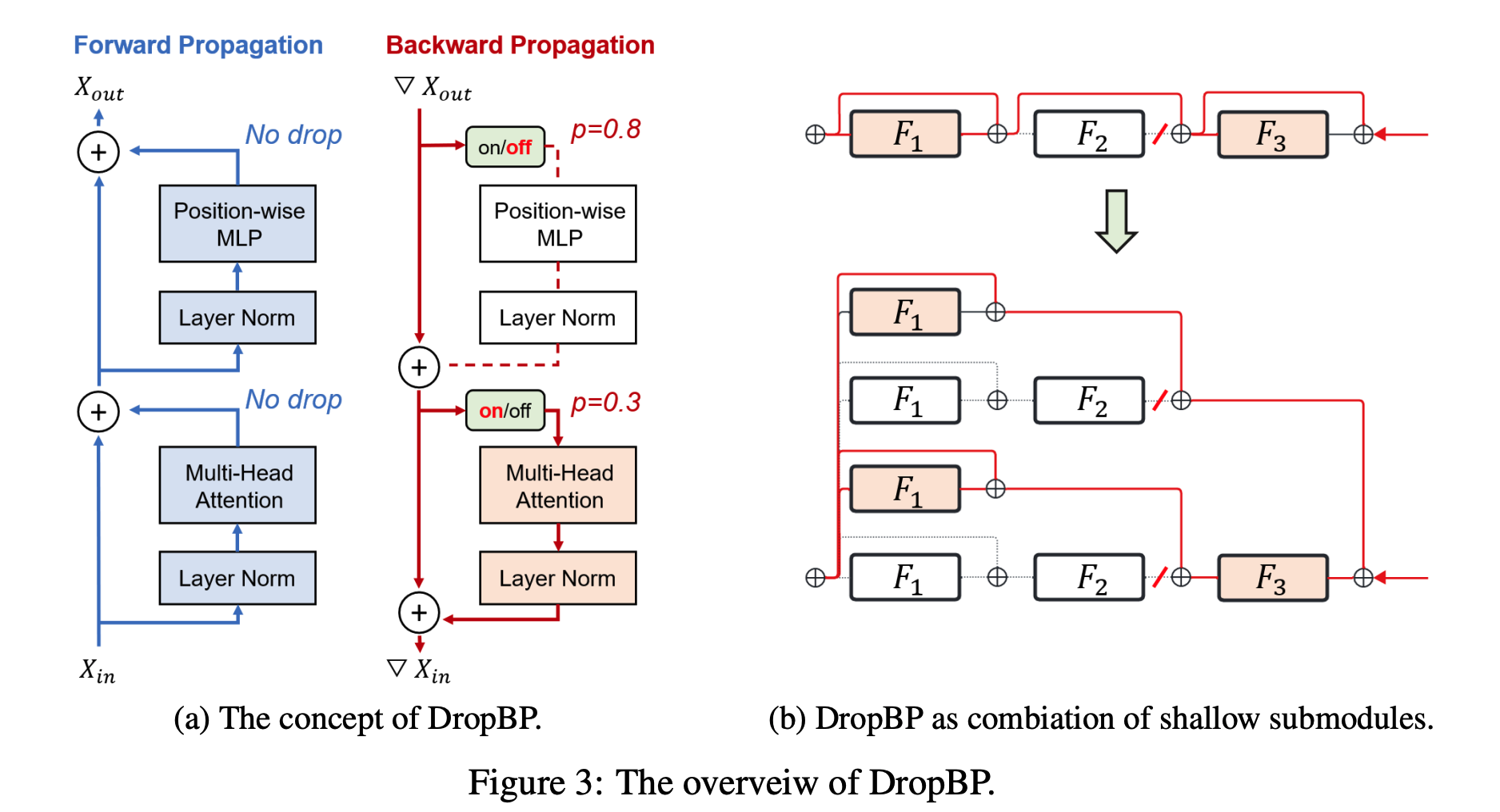
  • Drop Backward propagation based on sensitivity which is the difference between Backward update and not update. great idea!
  • change model constructure to have a 2^n submodels when drop some submodels
  • published: 2024

scalability

To Read

Quantization

Optimizer

RNN

  • RWKV: RWKV is an RNN with transformer-level LLM performance

Trick

Long sequence

  • IceFormer: Accelerated Inference with Long-Sequence Transformers on CPUs

2:4

  • Accelerating Transformer Pre-training with 2:4 Sparsity

Pruning

  • Sheared LLaMA: Accelerating Language Model Pre-training via Structured Pruning

cache

  • Dynamic Memory Compression: Retrofitting LLMs for Accelerated Inference

trade-off

  • AWQ: Activation-aware Weight Quantization for On-Device LLM Compression and Acceleration

PE

This post is licensed under CC BY 4.0 by the author.