惯性聚合 高效追踪和阅读你感兴趣的博客、新闻、科技资讯
阅读原文 在惯性聚合中打开

推荐订阅源

Y
Y Combinator Blog
博客园 - 司徒正美
TaoSecurity Blog
TaoSecurity Blog
Martin Fowler
Martin Fowler
T
Threat Research - Cisco Blogs
Blog — PlanetScale
Blog — PlanetScale
S
Secure Thoughts
博客园 - 三生石上(FineUI控件)
K
KPMG report finds enterprise disconnect between AI and its ROI | CIO
K
Kaspersky official blog
cs.CL updates on arXiv.org
Cisco Talos Blog
Cisco Talos Blog
H
Help Net Security
博客园 - 叶小钗
爱范儿
爱范儿
GbyAI
GbyAI
I
Intezer
M
MIT News - Artificial intelligence
Latest news
Latest news
Schneier on Security
T
Tor Project blog
Simon Willison's Weblog
I
InfoQ
Threat Intelligence Blog | Flashpoint
Cyber Security Advisories - MS-ISAC
C
CXSECURITY Database RSS Feed - CXSecurity.com
罗磊的独立博客
N
News and Events Feed by Topic
T
The Blog of Author Tim Ferriss
V2EX - 技术
V2EX - 技术
B
Blog
T
Tailwind CSS Blog
N
Netflix TechBlog - Medium
Security Latest
Security Latest
V
V2EX
F
Fortinet All Blogs
Forbes - Security
Forbes - Security
Application and Cybersecurity Blog
The Hacker News
The Hacker News
Scott Helme
Scott Helme
P
Privacy International News Feed
P
Palo Alto Networks Blog
H
Heimdal Security Blog
C
Cisco Blogs
T
The Exploit Database - CXSecurity.com
博客园 - Franky
酷 壳 – CoolShell
酷 壳 – CoolShell
G
Google Developers Blog
W
WeLiveSecurity
L
LINUX DO - 最新话题

Ivan on Containers, Kubernetes, and Server-Side

A grounded take on agentic coding for production environments Server-Side Playgrounds Reimagined: Build, Boot, and Network Your Own Virtual Labs [not a] Kubernetes 101 - Pods, Deployments, and Services As an Attempt To Automate Age-Old Infra Patterns JavaScript or TypeScript? How To Benefit From the Dichotomy On Software Design... and Good Writing Building a Firecracker-Powered Course Platform To Learn Docker and Kubernetes How To Publish a Port of a Running Container What Actually Happens When You Publish a Container Port A Visual Guide to SSH Tunnels: Local and Remote Port Forwarding Docker: How To Debug Distroless And Slim Containers How To Extract Container Image Filesystem Using Docker | iximiuz Labs In Pursuit of Better Container Images: Alpine, Distroless, Apko, Chisel, DockerSlim, oh my! How To Start Programming In Go: Advice For Fellow DevOps Engineers Kubernetes Ephemeral Containers and kubectl debug Command How To Develop Kubernetes CLIs Like a Pro Docker Container Commands Explained: Understand, Don't Memorize | iximiuz Labs Learning Docker with Docker - Toying With DinD For Fun And Profit How To Extend Kubernetes API - Kubernetes vs. Django The Influence of Plumbing on Programming How To Call Kubernetes API from Go - Types and Common Machinery How To Call Kubernetes API using Simple HTTP Client Kubernetes API Basics - Resources, Kinds, and Objects OpenFaaS - Run Containerized Functions On Your Own Terms Learning Containers From The Bottom Up Docker Containers vs. Kubernetes Pods - Taking a Deeper Look | iximiuz Labs Learn-by-Doing Platforms for Dev, DevOps, and SRE Folks How HTTP Keep-Alive can cause TCP race condition How to Work with Container Images Using ctr | iximiuz Labs Multiple Containers, Same Port, no Reverse Proxy... Exploring Go net/http Package - On How Not To Set Socket Options Disposable Local Development Environments with Vagrant, Docker, and Arkade DevOps, SRE, and Platform Engineering My Choice of Programming Languages Prometheus Is Not a TSDB How to learn PromQL with Prometheus Playground Prometheus Cheat Sheet - Basics (Metrics, Labels, Time Series, Scraping) Rust - Writing Parsers With nom Parser Combinator Framework pq - parse and query log files as time series Prometheus Cheat Sheet - Moving Average, Max, Min, etc (Aggregation Over Time) Prometheus Cheat Sheet - How to Join Multiple Metrics (Vector Matching) The Need For Slimmer Containers Understanding Rust Privacy and Visibility Model Bridge vs. Switch: Takeaways from a Real Data Center Tour | iximiuz Labs From LAN to VXLAN: Networking Basics for Non-Network Engineers | iximiuz Labs KiND - How I Wasted a Day Loading Local Docker Images Go, HTTP handlers, panic, and deadlocks Exploring Kubernetes Operator Pattern Making Sense Out Of Cloud Native Buzz Service Discovery in Kubernetes: Combining the Best of Two Worlds API Developers Never REST How Container Networking Works: Building a Bridge Network From Scratch | iximiuz Labs Traefik: canary deployments with weighted load balancing Service Proxy, Pod, Sidecar, oh my! You Need Containers To Build Images You Don't Need an Image To Run a Container Not Every Container Has an Operating System Inside Working with container images in Go Master Go While Learning Containers Implementing Container Runtime Shim: Interactive Containers How to use Flask with gevent (uWSGI and Gunicorn editions) My 10 Years of Programming Experience Implementing Container Runtime Shim: First Code Implementing Container Runtime Shim: runc Kubernetes Repository On Flame Dealing with process termination in Linux (with Rust examples) conman - [the] Container Manager: Inception Journey From Containerization To Orchestration And Beyond Linux PTY - How docker attach and docker exec Commands Work Inside Illustrated introduction to Linux iptables From Docker Container to Bootable Linux Disk Image Пишем свой веб-сервер на Python: протокол HTTP 9001 способ создать веб-сервер на Python Explaining async/await in 200 lines of code Explaining event loop in 100 lines of code Save the day with gevent Пишем свой веб-сервер на Python: процессы, потоки и асинхронный I/O Truly optional scalar types in protobuf3 (with Go examples) Node.js Writable streams distilled Node.js Readable streams distilled How to on starting processes (mostly in Linux) Дайджест интересных ссылок – Июль 2016 Пишем свой веб-сервер на Python: сокеты Наследование в JavaScript Мастерить!
Debugging Containers Like a Pro
Ivan Velichko · 2022-10-08 · via Ivan on Containers, Kubernetes, and Server-Side

Debugging even simple containerized applications is challenging. Debugging applications that run in distroless containers is hard. And debugging distroless containers running in a Kubernetes cluster is close to impossible. Unless you know a trick a two. This series will teach you how to use different container debugging tools and techniques to troubleshoot your containerized workloads.
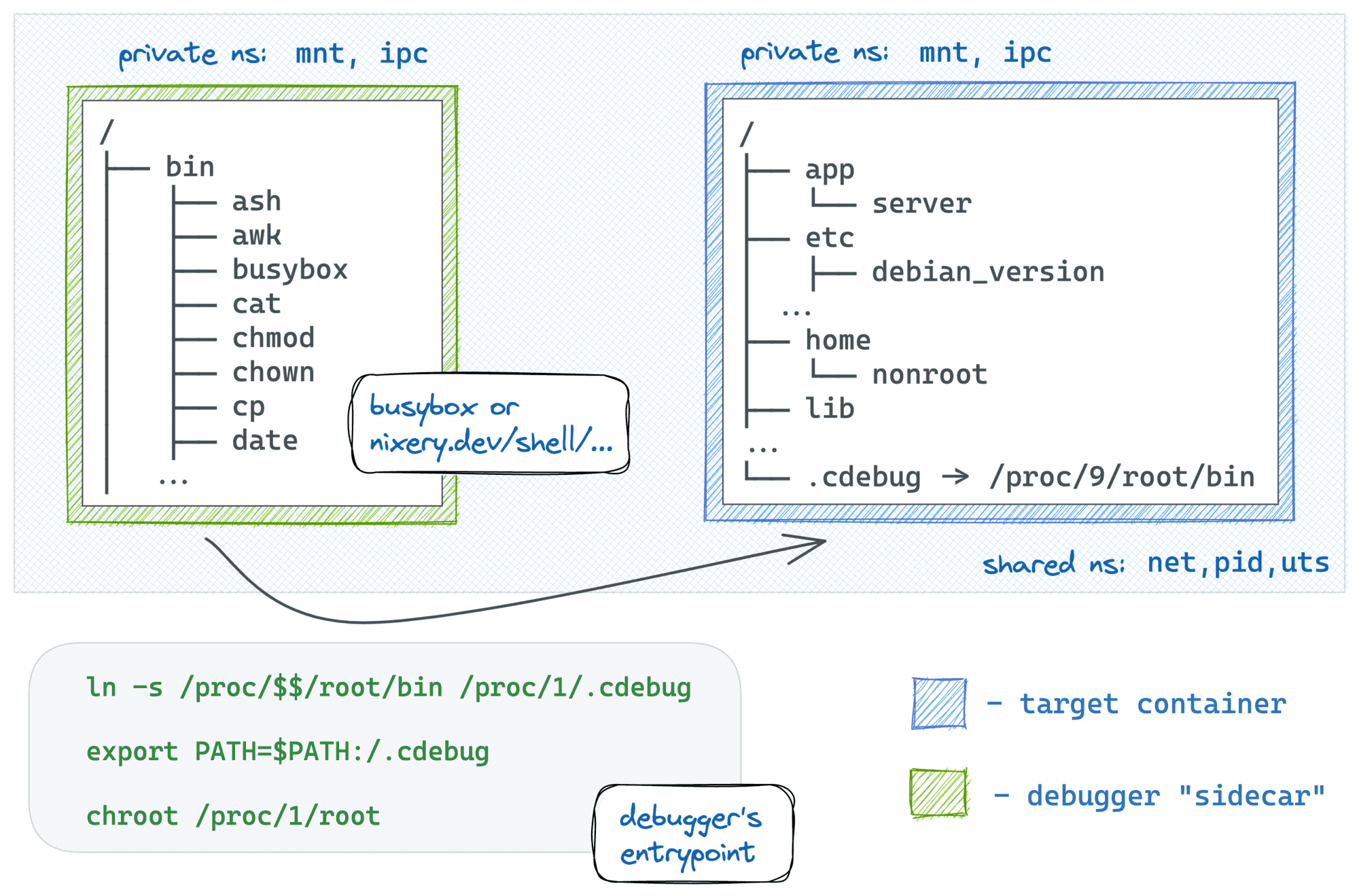
Using a special sidecar to debug a potentially distroless container.

Docker: How To Debug Distroless And Slim Containers

Slim containers are faster (less stuff to move around) and more secure (fewer places for vulnerabilities to sneak in). However, these benefits of slim containers come at a price - such containers lack (the much-needed at times) exploration and debugging tools. It might be quite challenging to tap into a container that was built from a distroless or slim base image or was minified using DockerSlim or alike. Over the years, I've learned a few tricks how to troubleshoot slim containers, and it's time for me to share.

Read more

Kubernetes Ephemeral Containers and kubectl debug Command

Last week at KubeCon, there was a talk about Kubernetes ephemeral containers. The room was super full - some people were even standing by the doors trying to sneak in. "This must be something really great!" - thought I and decided to finally give Kubernetes ephemeral containers a try.

So, below are my findings - traditionally sprinkled with a bit of containerization theory and practice 🤓

TL;DR: Ephemeral containers are indeed great and much needed. The fastest way to get started is the kubectl debug command. However, this command might be tricky to use if you're not container-savvy.

Read more

Containers 101: attach vs. exec - what's the difference?

The difference between docker (or podman, or containerd) attach and exec commands is a common source of confusion. And it's understandable - these two commands have similar arguments and, at first sight, similar behavior. However, attach and exec aren't interchangeable. They aim to cover different use cases, and the implementation of the commands also differs. But still, it might be hard to remember when to use which command.

Since I'm no fan of brute memorization, here is my recipe of how I managed to internalize the difference. Long story short, connecting the dots between the knowledge of what containers really are under the hood and these two commands helped to grasp the difference almost instantly. And like any true understanding, it freed me from relying only on my memory and gave me a chance to extrapolate the knowledge on a similar tech such as Kubernetes 😉

Read more

Why and How to Use containerd From Command Line

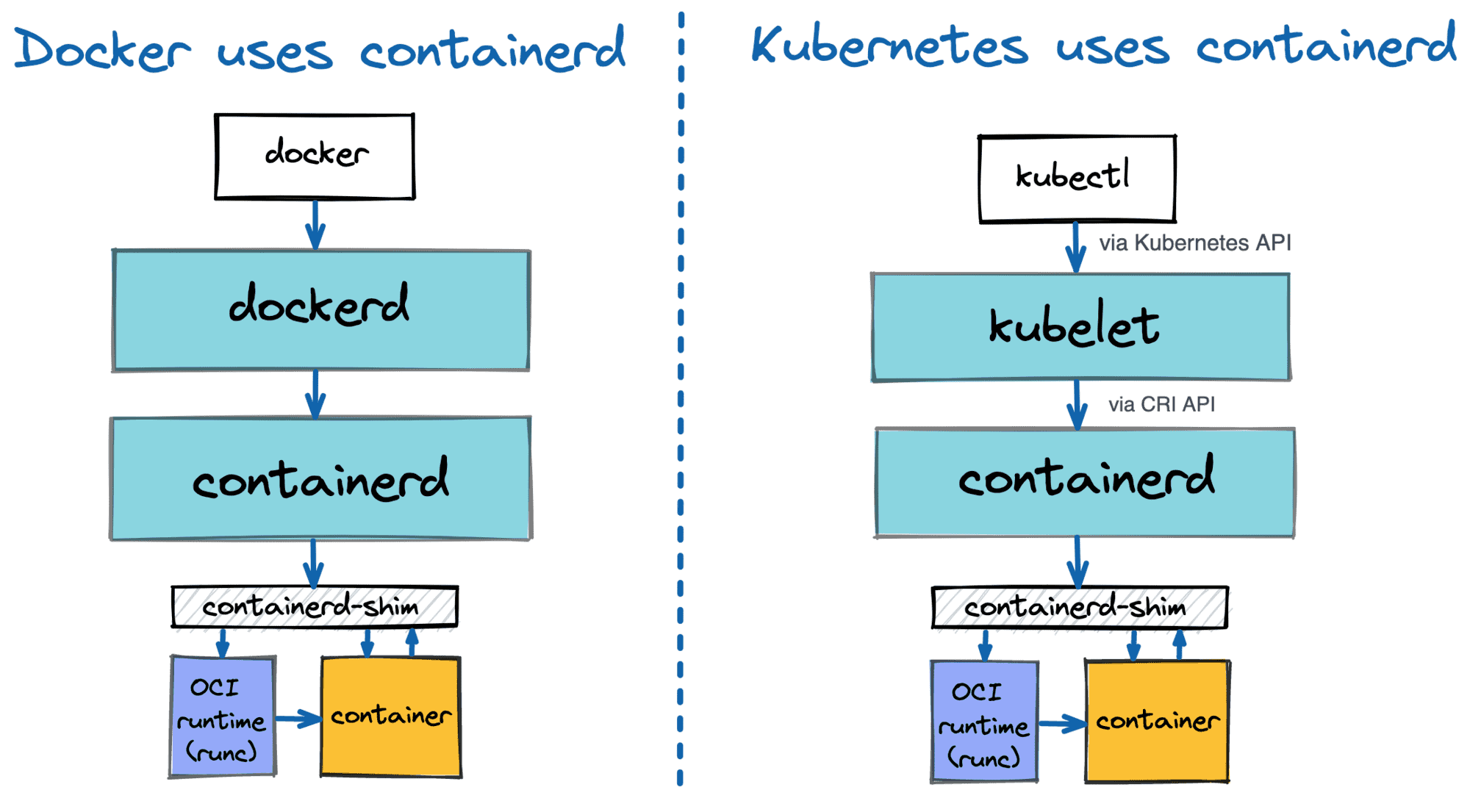
containerd is a high-level container runtime, aka container manager. To put it simply, it's a daemon that manages the complete container lifecycle on a single host: creates, starts, stops containers, pulls and stores images, configures mounts, networking, etc.

containerd is designed to be easily embeddable into larger systems. Docker uses containerd under the hood to run containers. ubernetes can use containerd via CRI to manage containers on a single node. But smaller projects also can benefit from the ease of integrating with containerd - for instance, faasd uses containerd (we need more d's!) to spin up a full-fledged Function-as-a-Service solution on a standalone server.

Docker and Kubernetes use containerd

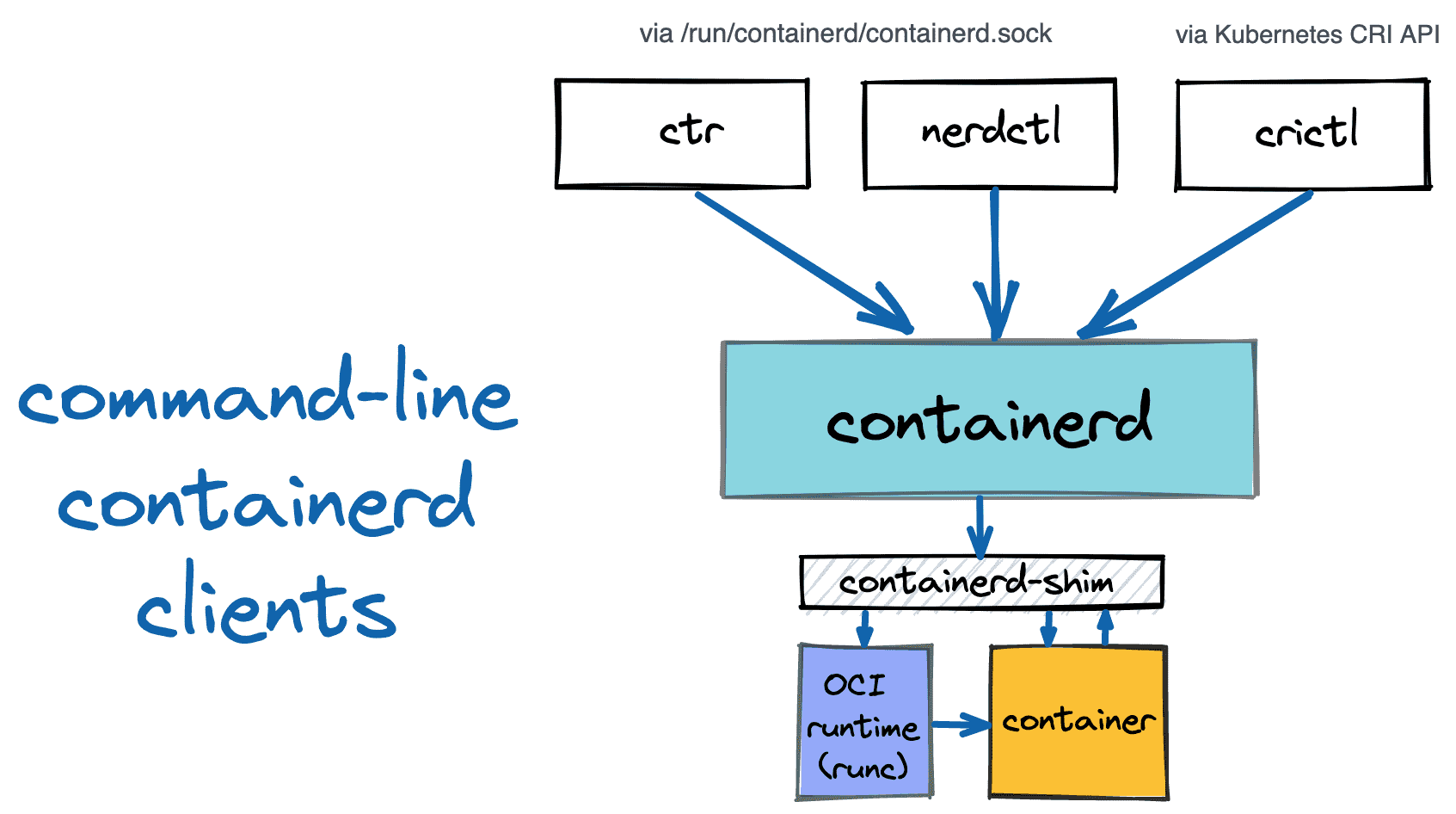
However, using containerd programmatically is not the only option. It also can be used from the command line via one of the available clients. The resulting container UX may not be as comprehensive and user-friendly as the one provided by the docker client, but it still can be useful, for instance, for debugging or learning purposes.

containerd command-line clients (ctr, nerdctl, crictl)

Read more

Docker: How To Extract Image Filesystem Without Running Any Containers

A container image is a combination of layers where every layer represents some intermediary state of the final filesystem. Such a layered composition makes the building, storage, and distribution of images more efficient. But from a mere developer's standpoint, images are just root filesystems of our future containers. And we often want to explore their content accordingly - with familiar tools like cat, ls, or file. Let's try to see if we can achieve this goal using nothing but the means provided by Docker itself.
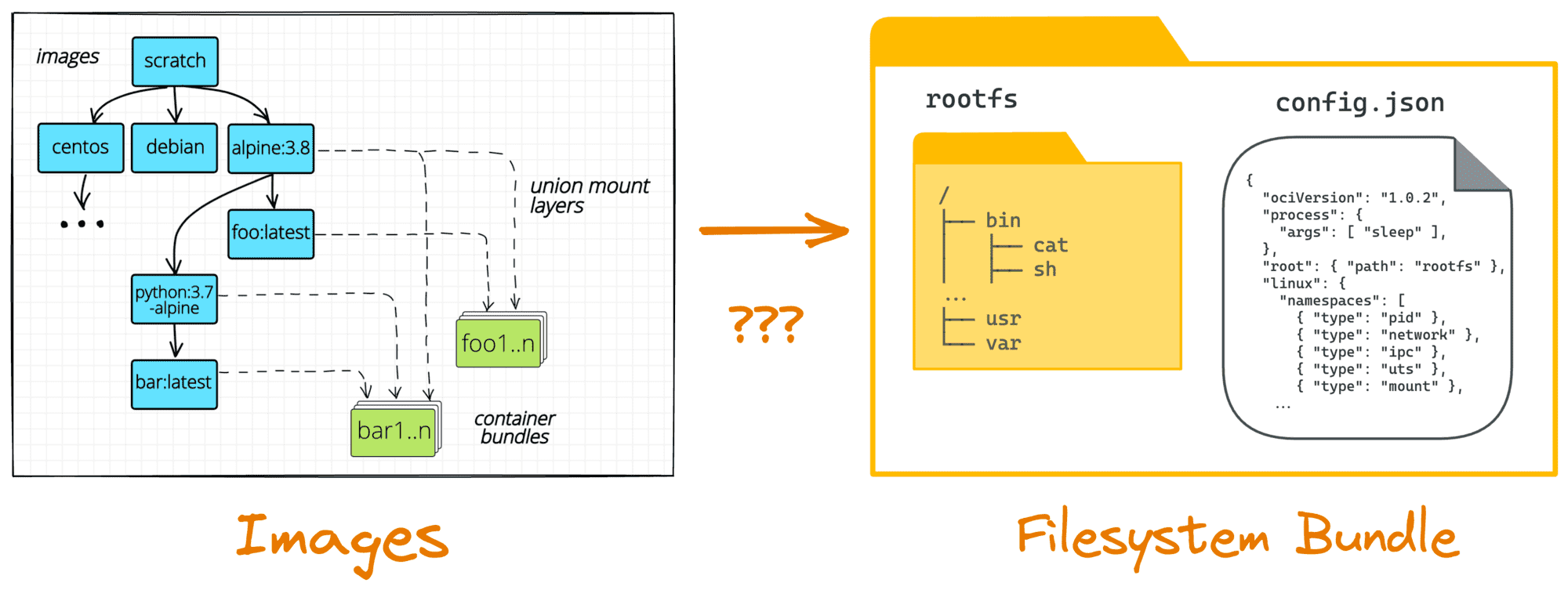
Container image to filesystem.

Read more

KiND - How I Wasted a Day Loading Local Docker Images

From time to time I use kind as a local Kubernetes playground. It's super-handy, real quick, and 100% disposable.

Up until recently, all the scenarios I've tested with kind were using public container images. However, a few days ago, I found myself in a situation where I needed to run a pod using an image that I had just built on my laptop.

One way of doing it would be pushing the image to a local or remote registry accessible from inside the kind Kubernetes cluster. However, kind still doesn't spin up a local registry out of the box (you can vote for the GitHub issue here) and I'm not a fan of sending stuff over the Internet without very good reasons.

Read more

Don't miss new posts in the series! Subscribe to the blog updates and get deep technical write-ups on Cloud Native topics direct into your inbox.

Ivan Velichko