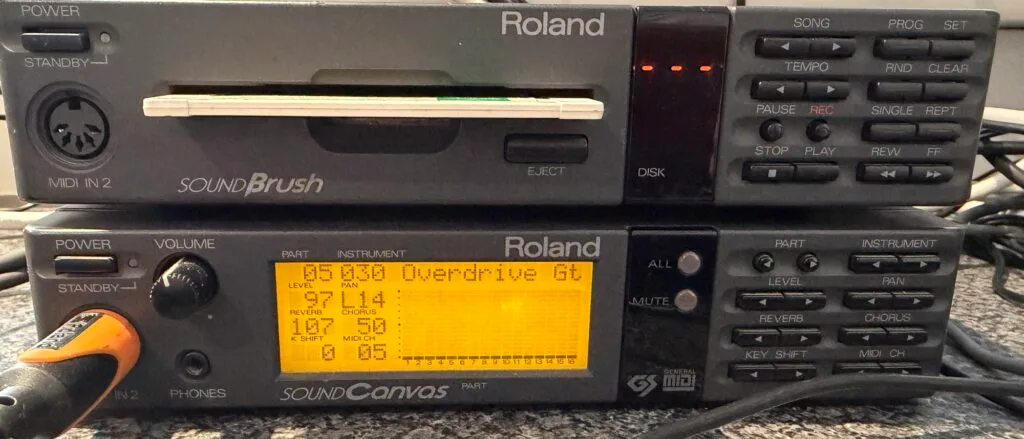
Back in the 80s and early 90s, when games often came on floppy disks, the music came in MIDI format. If you have never heard of MIDI, this is a standard way for electronic instruments to communicate the notes being played. When the music was composed, sound modules such as the Roland MT-32 and later the SC-55 were used.
If you were lucky enough to own one of these devices, you would hear the games as they were meant to be heard. It is like having an orchestra playing in front of you.
I have both the MT-32 and SC-55 and use them whenever I play classic DOS games. It gives them a new lease of life and both sound incredible. The SC-55, however, has a sister device called the SB-55. I acquired one in June and finally got to try it out today.
The SB-55 (SoundBrush 55) uses 720K DD floppy disks to record and play MIDI files through a MIDI device. It has the same design style as the SC-55 intentionally. The two are intended to be used together and you can get a 1U rack mount for them to be next to each other.
To test it, I loaded Canyon.mid onto a floppy disk, connected it to the SC-55’s front port and popped in the disk.
Well, that’s not good…
Given that it is cutting out, my theory was it was power supply related. All these Roland devices use a 9V DC input (centre negative polarity). But, the SB-55’s circuitry likely all works at 5V, so there is likely a DC-DC converter in there. In which case, I suspect the capacitors have failed.
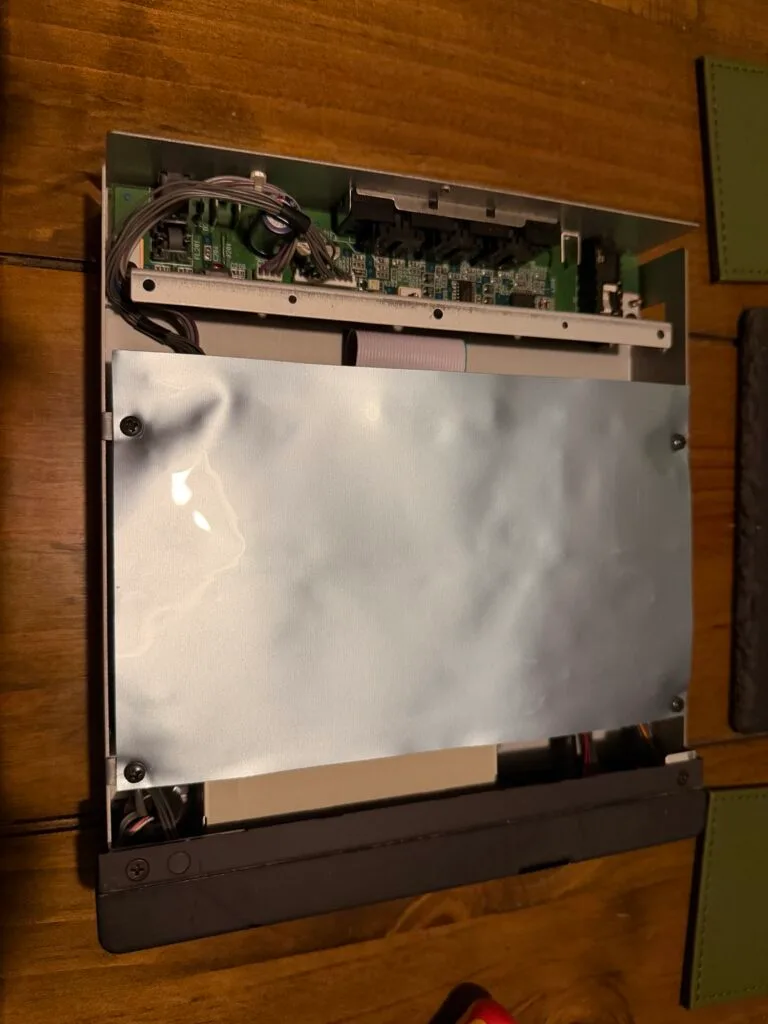
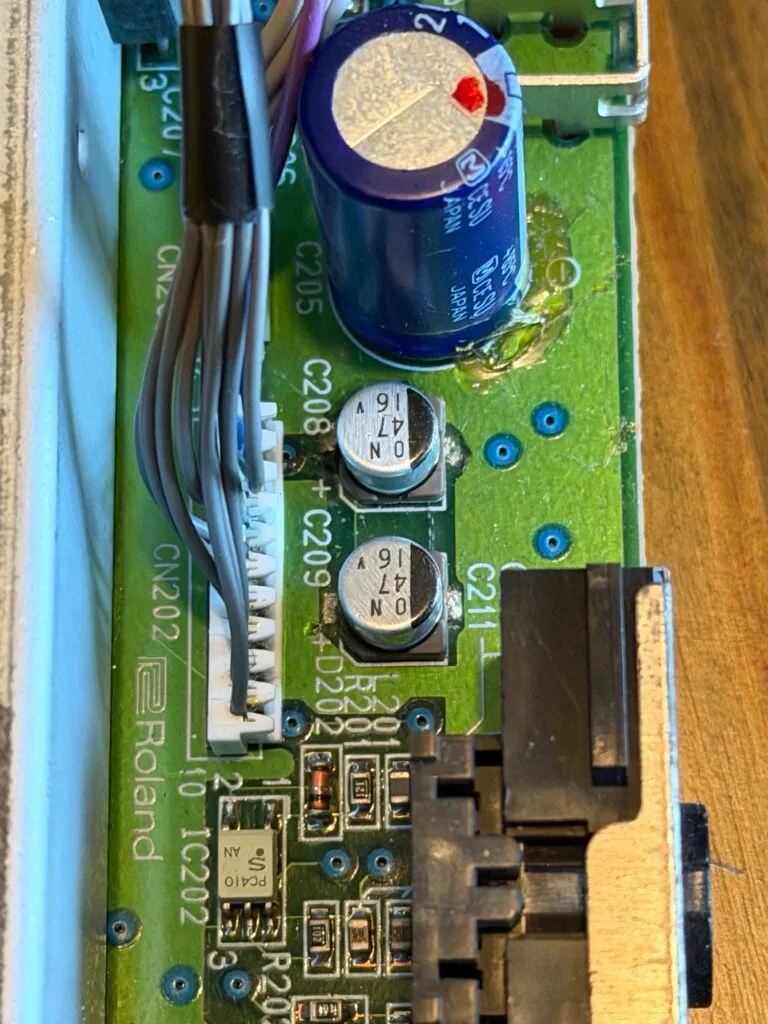
Once I took the lid off, I could see the first problem.
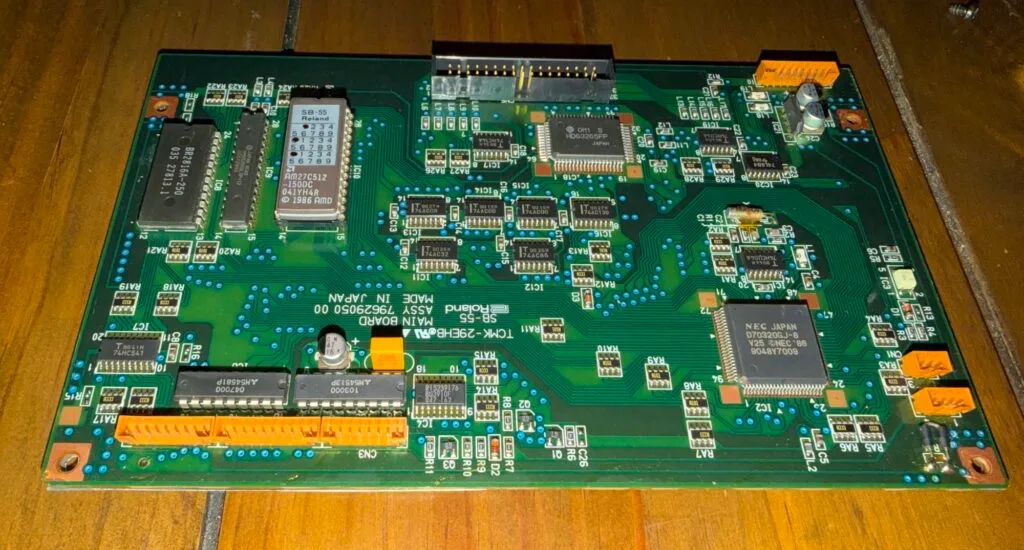
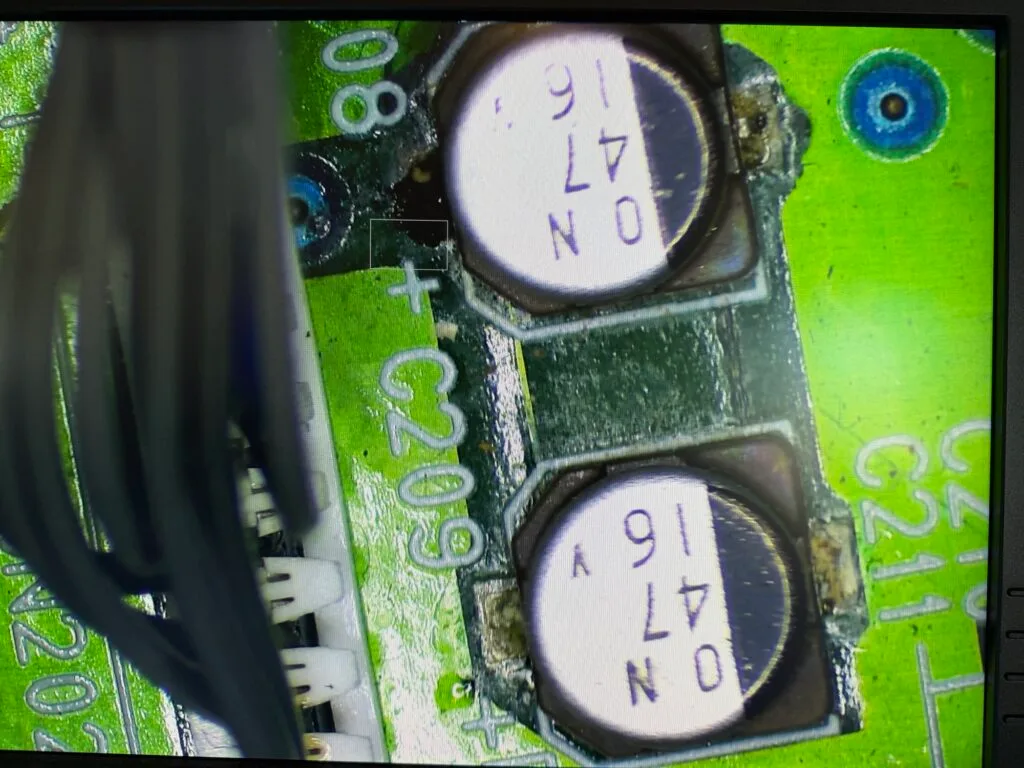
You can’t see it in this photo, but there are two SMD 47uF capacitors behind the cables connected to the back board. These were showing signs of corrosion. The metallic plate on top of the device has an upside-down PCB which is the main motherboard, so I unscrewed that.
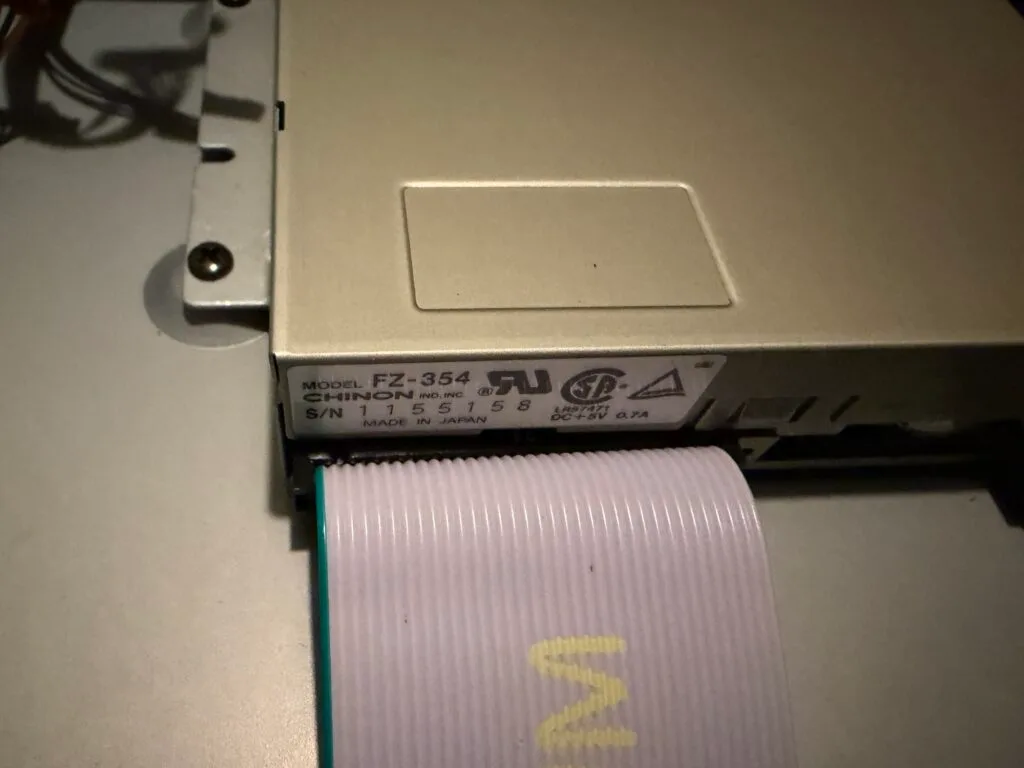
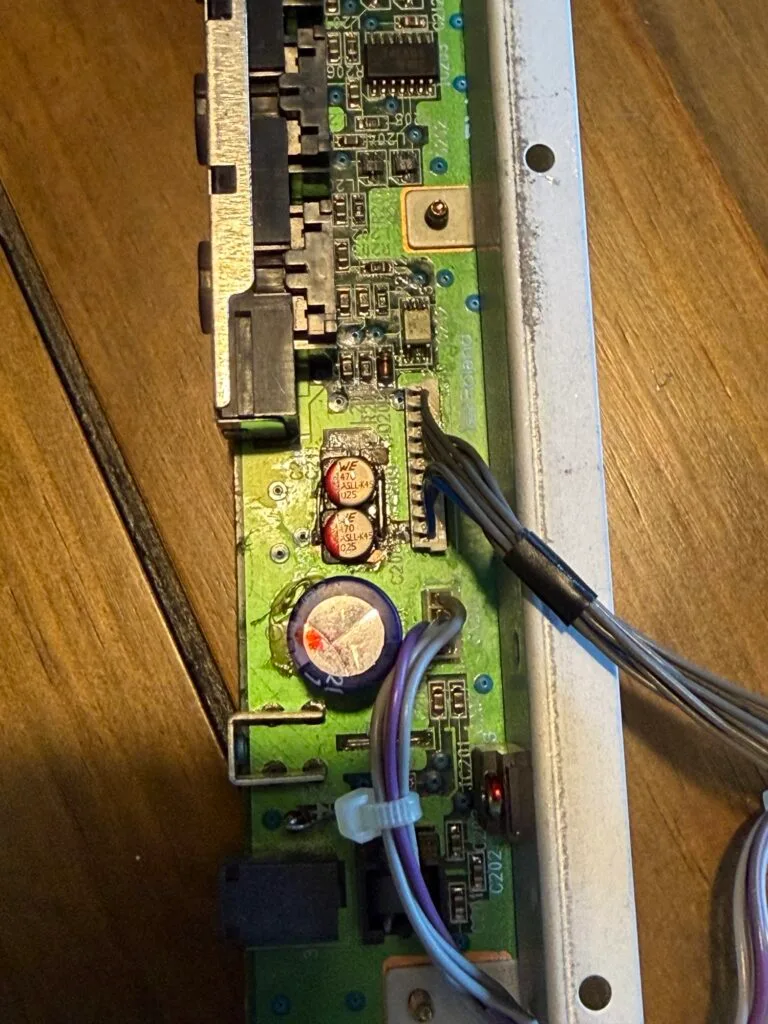
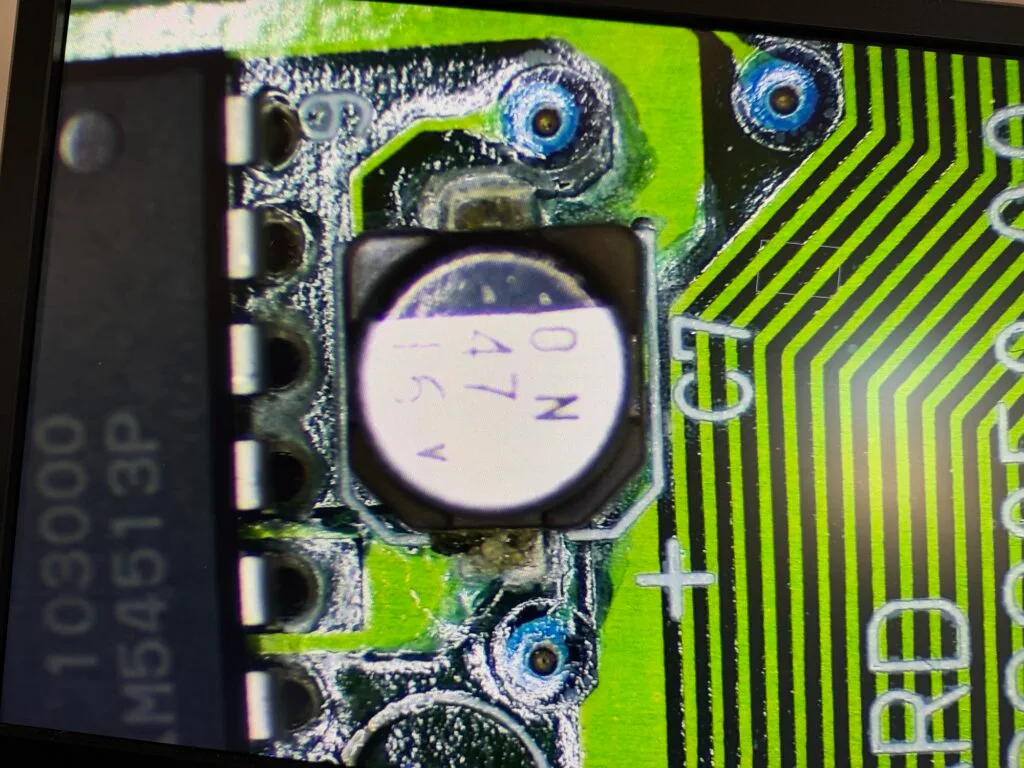
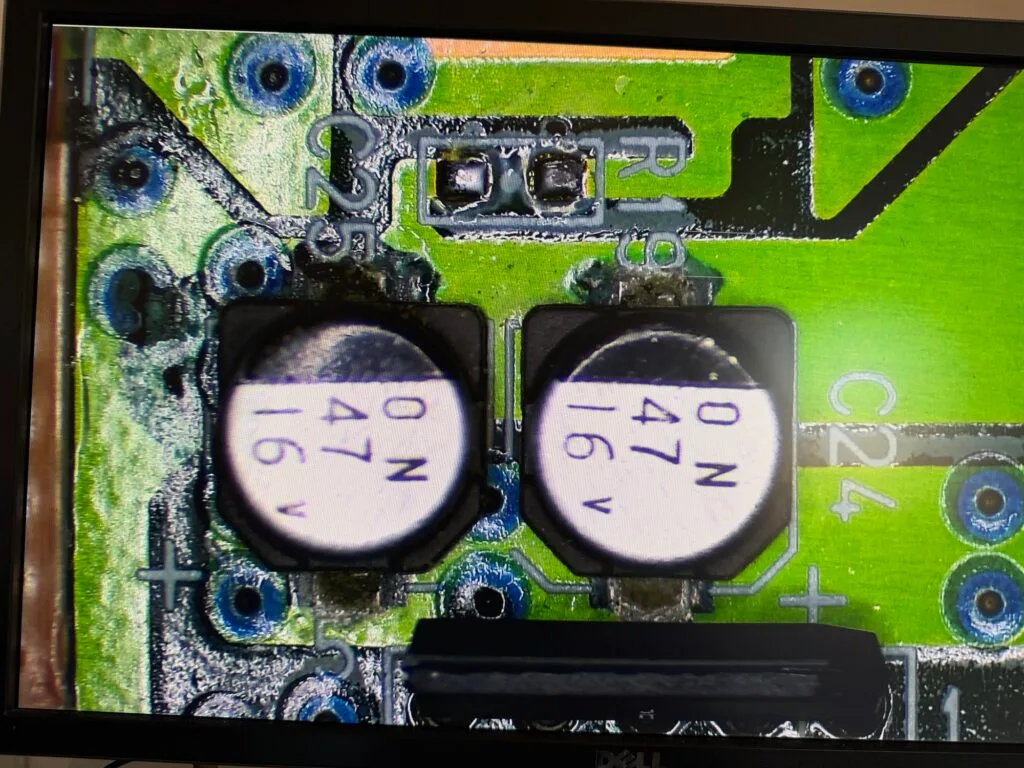
Three more 47uF capacitors, and all have leaked. Under the board was the floppy drive, which is a Chinon FZ-354. This same drive can be found in some Amigas.
Time to move to my workshop…
I attempted to desolder the capacitors on the power board first.
Three of the four pads were destroyed and came off with the capacitors when desoldered. The one for the capacitor at the top of the photo connecting it to the cable was still usable. So, I used a fibre pen to scratch away some of the solder mask for the other end. I then used some thick wire to solder the second capacitor. It wasn’t pretty, but it worked.
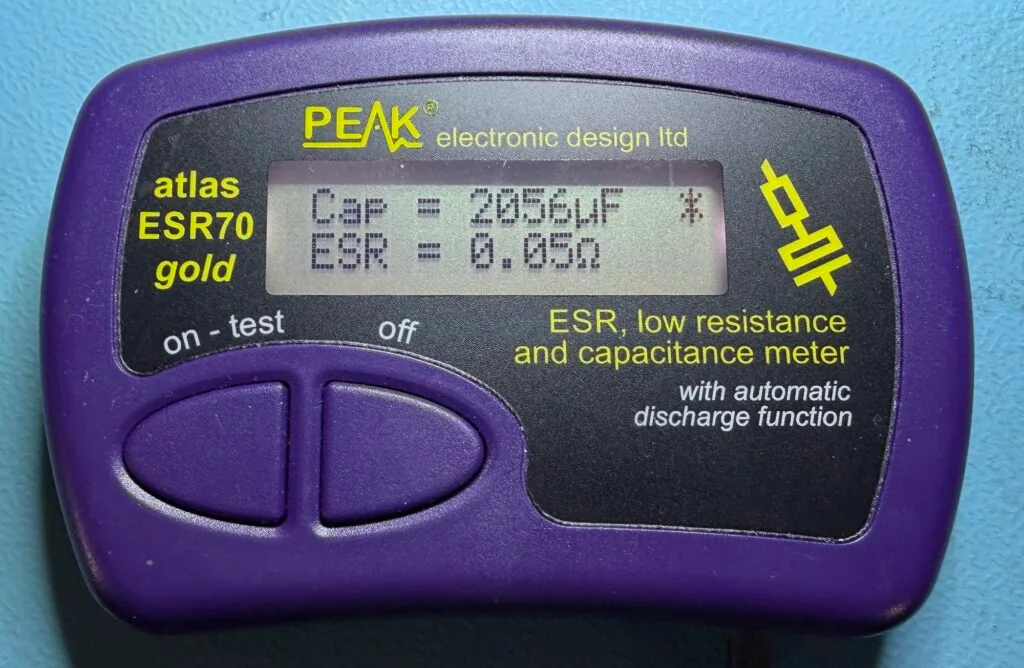
Whilst I was at it, I tested the through-hole capacitor as well. It seemed to be in excellent health, so I left it in place.
Now for the motherboard. Corrosion was just as bad, but luckily I did not lose any pads. It was still a pain to desolder them and required a lot of cleaning as I was working.
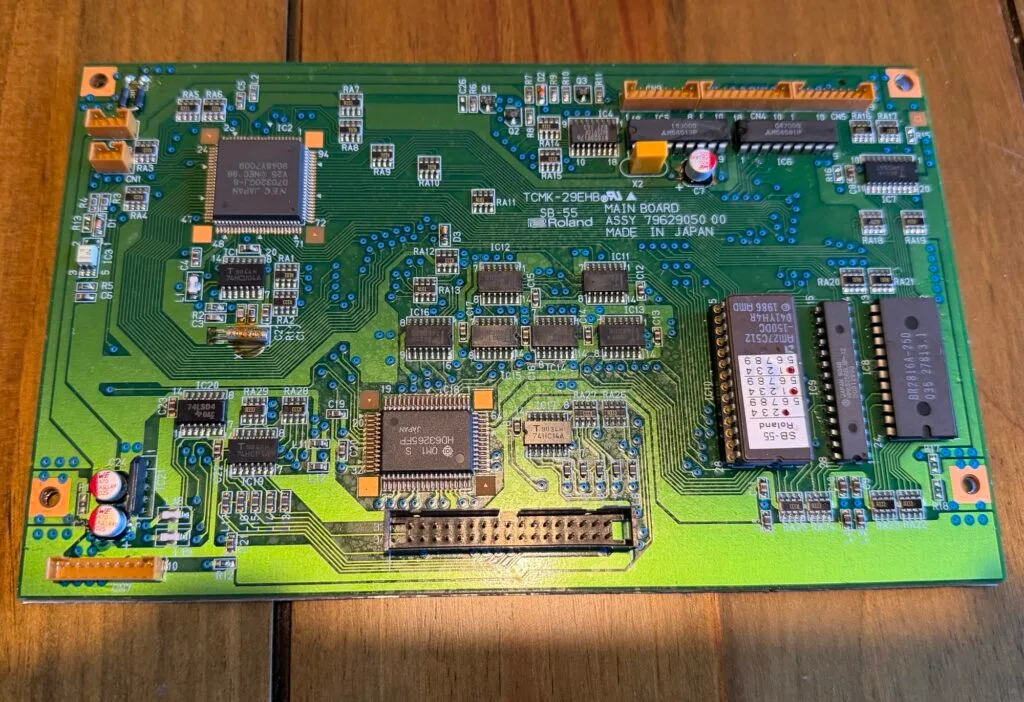
When I was done, this is how the motherboard looked.
I was pretty confident with my repair, so I reassembled the device and tried again…
Perfect! I can now play MIDI files on my SC-55 without needing to boot my computer!
此内容由惯性聚合(RSS阅读器)自动聚合整理,仅供阅读参考。 原文来自 — 版权归原作者所有。