




If you're choosing a developer documentation tool in 2025, Readme and Mintlify are the two most popular options.
While they both share the goal of making docs easier to maintain, they take different approaches when it comes to developer workflows and AI readiness.
There are a few key factors to weigh when making your decision:
1. AI innovation
Your tool needs to keep pace with how AI is reshaping both creation and consumption of documentation, from generating content to enabling users (and LLMs) to find answers quickly. AI-forward documentation won't just support your product: it becomes a strategic advantage.
2. Performance and usability for end users
Documentation is part of product. How fast it loads, how intuitive it feels, and how easy it is to search—all of these details impact the user experience and their impression of your brand.
3. Flexible editing for non-technical teammates
A documentation tool should support both docs-as-code and WYSIWYG no-code editing, so that cross-functional teammates like product, marketing, or support can contribute to docs.
4. Developer experience with docs-as-code support
If your developers are writing and maintaining docs, Git-based workflows need to be the default. They should not have to spend time learning a new web UI and leaving their preferred workflows.
With those in mind, here's how Mintlify and Readme compare.
Integrating documentation and AI is quickly becoming tablestakes. For both automating workflows and feeding documentation into LLMs, Mintlify is leading the industry for innovation.
Mintlify
Readme
The world is quickly moving toward LLMs reading your docs as often as humans. Mintlify's AI-native infrastructure gives you a meaningful advantage here.
Mintlify is built from the ground up with a docs-as-code workflow so developers can stay in their preferred tools, whereas Readme optimizes for non-technical teammates.
Mintlify
Readme
If your team already lives in Git, Mintlify saves developer time by making documentation maintenance feel like part of their everyday workflows.
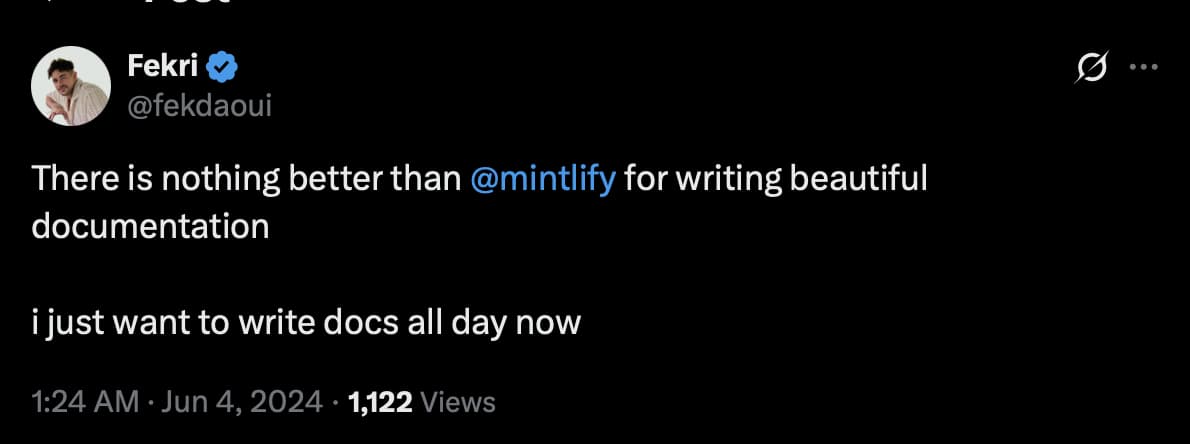
For teams with heavy involvement from cross-functional teammates like product, support, or marketing, Readme offers more functionality for no-code contributors.
Mintlify
Readme
If your docs are primarily edited by non-technical teammates, Readme's visual interface and collaboration tools may be the preferred option.
Both platforms are capable of creating structured docs out-of-the-box. But if you care about speed, polish, and responsiveness, Mintlify pulls ahead.
Mintlify
Readme
If your priority is giving users a modern, interactive experience, Mintlify is often the preferred tool.
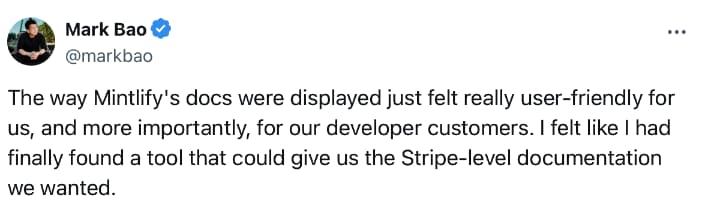
Both tools help you ship better documentation, but they cater to different types of teams.
If your docs are mainly written and maintained by engineers, or if you care about performance and AI-readiness, Mintlify is built to support you. It fits naturally into existing developer workflows, prioritizes usability and performance, and gives you tools that help both humans and LLMs get answers faster.
If your team is primarily non-technical and wants maximum control over layout or landing pages without touching code, Readme may be the more approachable option.
If you want to see why customers like Anthropic, Cursor, and Zapier partnered with Mintlify, you can try it out for free today.
此内容由惯性聚合(RSS阅读器)自动聚合整理,仅供阅读参考。 原文来自 — 版权归原作者所有。