











Welcome to Founder Mode, our new series uncovering how founders and early leaders operate at today's rising startups.
To kick it off, we sat down with Austin Hughes, Co-founder and CEO at Unify, to hear about how he built their GTM engine from 0 to 1. In under 2 years of building, the team has 39x'ed revenue year-over-year and nabbed customers like Lattice, Justworks, and OpenPhone.
While in stealth mode, our first ten customers were from a mix of warm sources. A few came through our network, some through investor introductions, and one even came from a conference. The first customer was actually someone I had advised on their Salesforce setup before, so that trust had already been established.
In January 2024 when we exited stealth, we dialed up our selling efforts, landing customers through both inbound interest and outbound efforts. Three months in, we started seeing real traction.
Founder-led sales means being involved in both top of funnel and closing business, but it's tricky to do both. When you're taking customer calls, you're not thinking about how to drive more demand.
It was time to transition when the process started to feel repeatable—we knew what was working, what types of customers were likely to close, and our closed won rate felt predictable. We had hit a few hundred thousand in ARR, which was a good milestone as well.
At that point, the best use of my time was no longer to be the sole AE, but to reinvest time in thinking about top of funnel. We hired our founding sales rep, who took over most of the sales process, and I stepped back to focus on generating pipeline and to help with bigger deals when necessary.
For our founding sales hire, the main quality we looked for was excitement about the 0 to 1 journey. We needed someone with high energy who was ready to jump into the early-stage ride and help us reach that first $500k of ARR.
As we hired more AEs, we generally knew the traits we wanted — people who had experience working mid-market and enterprise deals, who were rigorous in process and relentless about follow-up. In general, the best AEs are those that are single-track minded to exceed their goals. That drive is critical on the GTM side.
On the growth side, we hired two people who are technical—they studied computer science and can even write code if needed, which unlocks a lot of creative experiments. They have been great at practicing operational excellence while also leaning into experimentation, which is essential in the early days.
If I could go back, I would have hired more AEs earlier. We initially brought on just one founding sales hire, but looking back, it would have helped us learn faster by hiring two AEs and two BDRs right away.
Bringing in multiple experienced sellers would've allowed them to riff off one another and speed up our learning and experimentation. I don't come from a sales background so I don't have all the answers when it comes to sales.
We hyper focus on people who are genuinely engaged with what we do. The traditional "spray and pray" approach to cold outreach rarely works. Instead, we look for pockets of interest and engage with them in a thoughtful way, like putting out steady LinkedIn content and reaching out to people who interact with those posts.
That way, we're connecting with people who are already thinking about Unify, making the outreach much more relevant. Finding those engaged pockets has been a key part of our strategy.
Definitely our Unify Happy Meal campaign. As part of our Series A announcement, we wanted to do something unique to stand out. Our "secret marketing committee"—Garrett, Hyewon, and Rhea—came up with the idea of sending out Unify-branded Happy Meal boxes.
We sent them to over 300 prospects, each containing warm cookies (for “warm outbound”), Unify-branded aprons and handwritten notes. The night before the announcement, our teams in SF and NYC were in the office until midnight packing and folding everything to make sure it was ready for delivery the next morning.
We created a custom landing page and used Unify to track which companies had received the boxes. The response was incredible—it goes to show word of mouth is so powerful for an early-stage startup. Thinking outside the (happy meal) box definitely gets people talking.
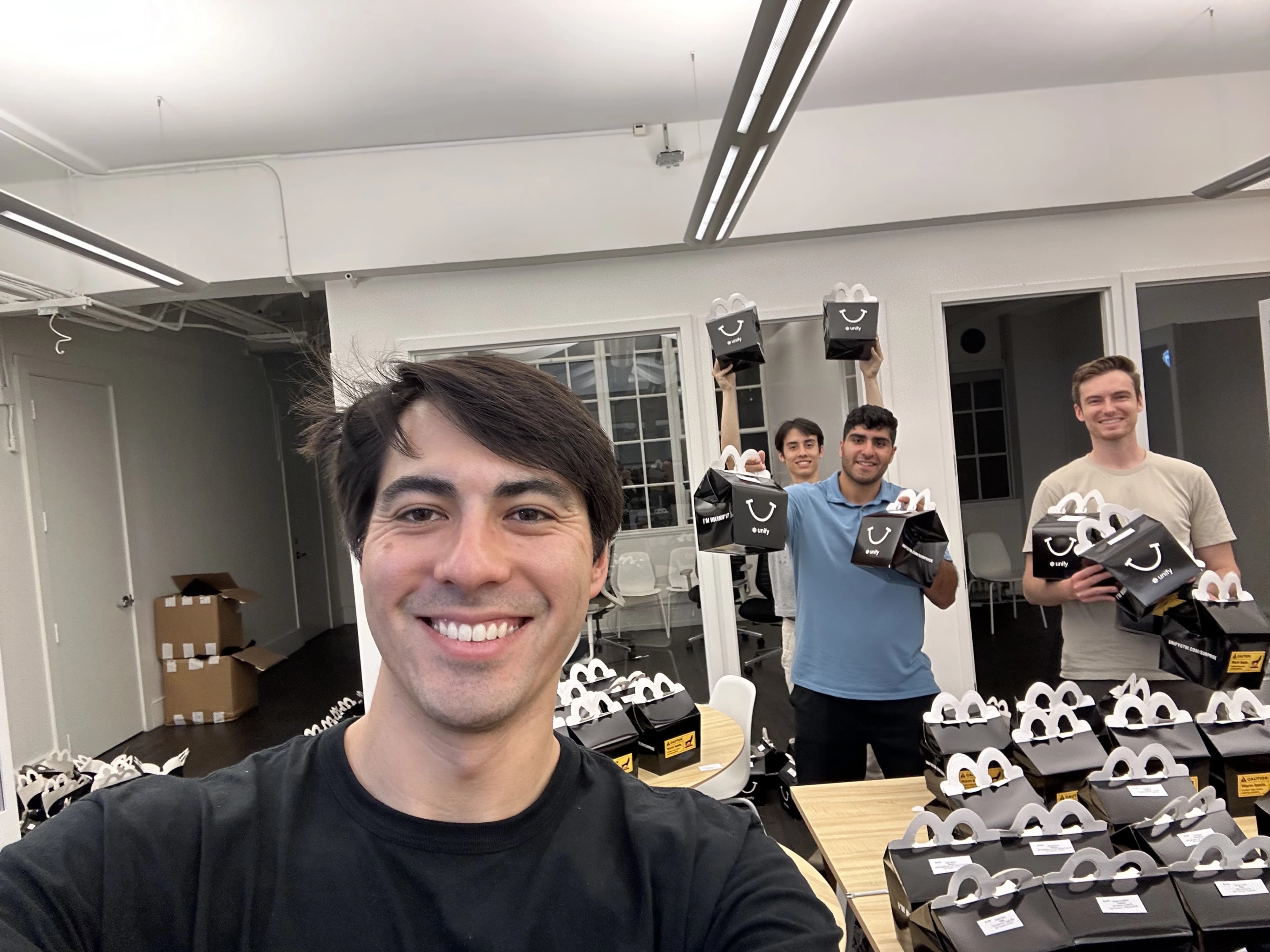
Unify team packing for their Happy Meal campaign
GTM is incredibly important and a lot like building a product itself. You're constantly testing, gathering feedback, and iterating on everything from your pitch to your materials to your process.
You have to treat GTM with the same mindset as product development—it's never “done.” You need to keep tweaking and refining it to get customers to see value as quickly as possible. It's an ongoing process, and the sooner you start treating it that way, the better.
Ready for more Founder Mode? Drop us a line @mintlify with topics you'd like to hear about and stay tuned.
此内容由惯性聚合(RSS阅读器)自动聚合整理,仅供阅读参考。 原文来自 — 版权归原作者所有。