






It's common to hear that developers skip documentation, but the reality is more complex. This assumption oversimplifies the issue and can lead to documentation practices within the team that make onboarding harder for new hires.
When a new developer joins a team, their first stop is almost always the onboarding documents. While the external documentation helps them understand the broader system, the internal documentation guides them through team-specific workflows, decision logs, and coding conventions.
So, if new devs aren't relying on your documentation, the question isn't, "Why won't they read it?" but rather, "How can we make our documentation more useful and approachable?"
In this article, we'll answer the questions of why developers often abandon documentation, what common mistakes teams make when creating it, and how you can create better onboarding documentation for developers.
The answer isn't impatience or laziness. The real issue is that documentation often doesn't align with how developers think and work. Here's why:
Few things are more frustrating than documentation that feels complete but doesn't answer key questions. When your onboarding documentation lacks detailed instructions, new hires are left guessing. They're forced to experiment, cross-reference multiple sources, or abandon the docs altogether.
I remember working with a team where I needed to integrate their service into the application I was building. The API documentation seemed thorough, listing all the available endpoints and parameters, but it didn't provide a simple example of how to authenticate requests.
I tried different configurations, double-checked the API reference, and even searched online, but nothing worked. After hours of trial and error, I reached out to support, only to be directed to a YouTube video from an unrelated third party that explained the missing steps.
At that moment, the documentation lost all credibility. If the official docs couldn't provide the most basic setup guidance, why would I rely on them moving forward? Once developers stop trusting your documentation, it becomes the last place they check for information moving forward.
Developers will always take the path of least resistance to get an answer. If reading through documentation feels slower than trial and error, they'll naturally skip it and figure things out on their own.
This happens when:
Take this Stack Overflow survey, for instance. It showed that 25% of developers spend over an hour daily searching for answers or solutions. These might look like small numbers, but if you manage a team of 50 developers, the time adds up to between 333 to 651 hours lost per week across the entire team — imagine how much of that could be saved with clear, well-structured documentation.
Great onboarding documentation isn't just a pile of facts; it's a structured path from “new and lost” to “confident and shipping code.” The goal is for developers to feel more empowered to solve their problems after reading your documentation.
Great onboarding documentation prioritizes:
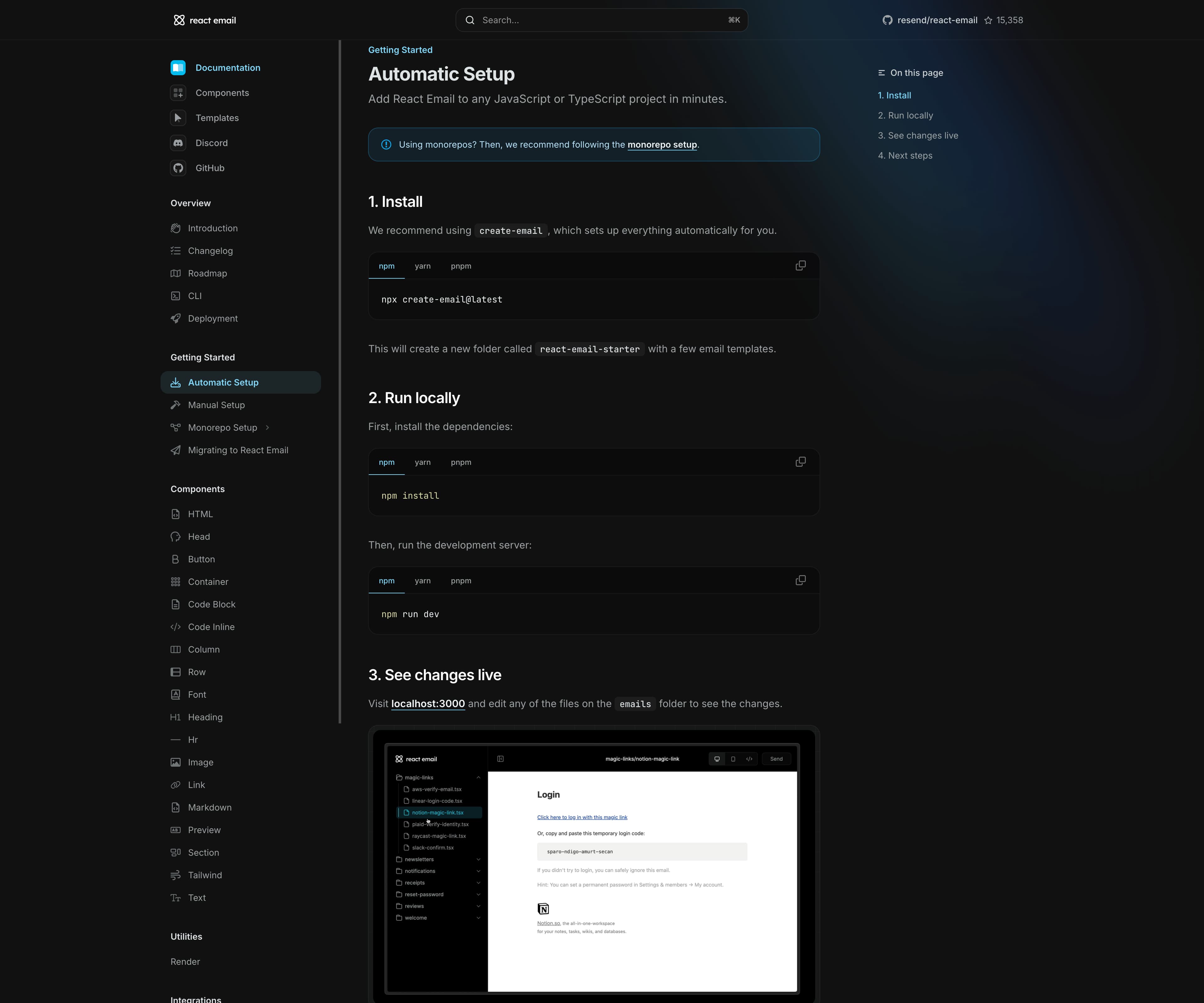
React Email getting started guide
Developers can see the result within minutes. If they have to manually tweak 10 config files before anything runs, you've already lost them.
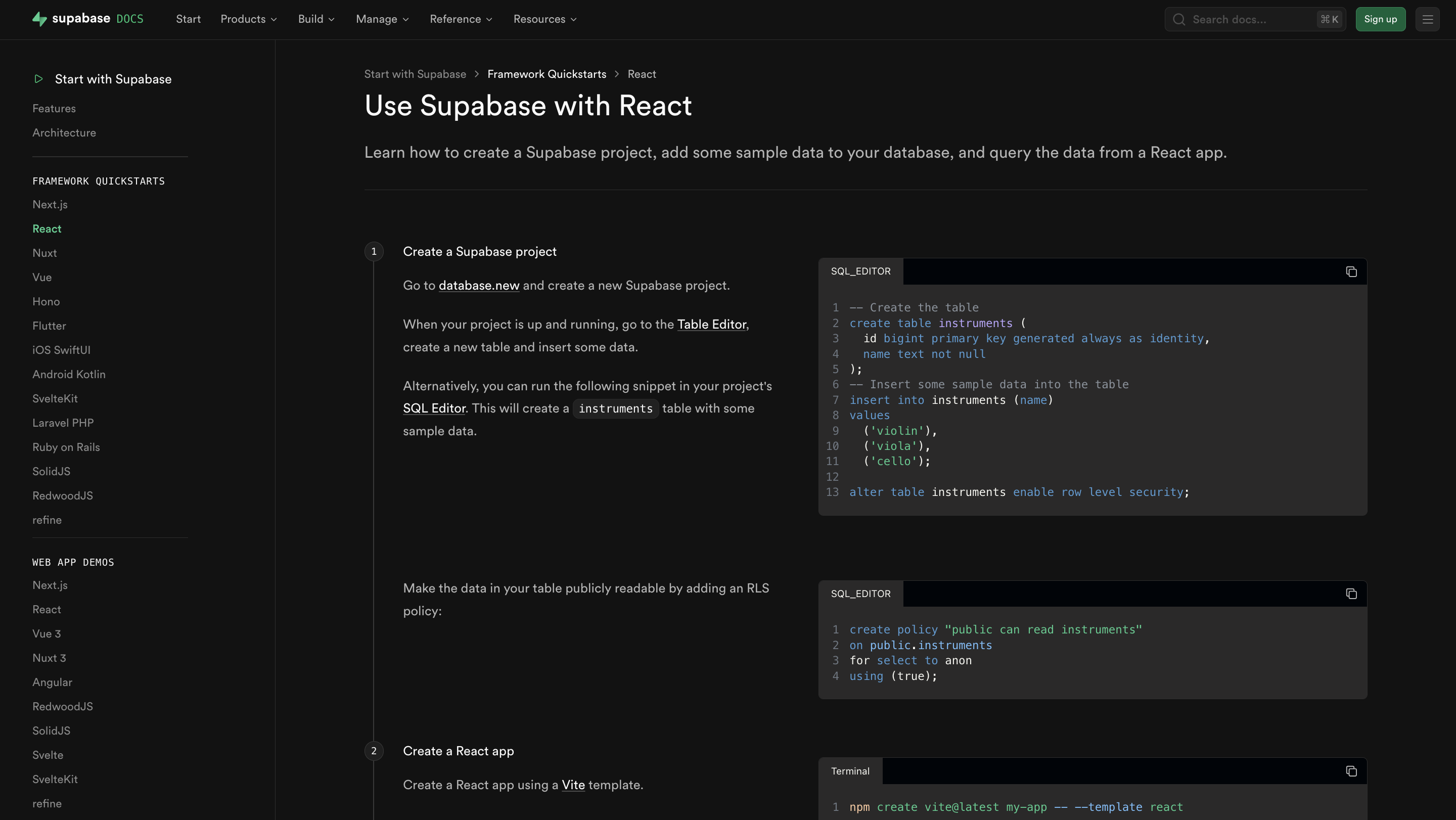
Supabase quickstart guide
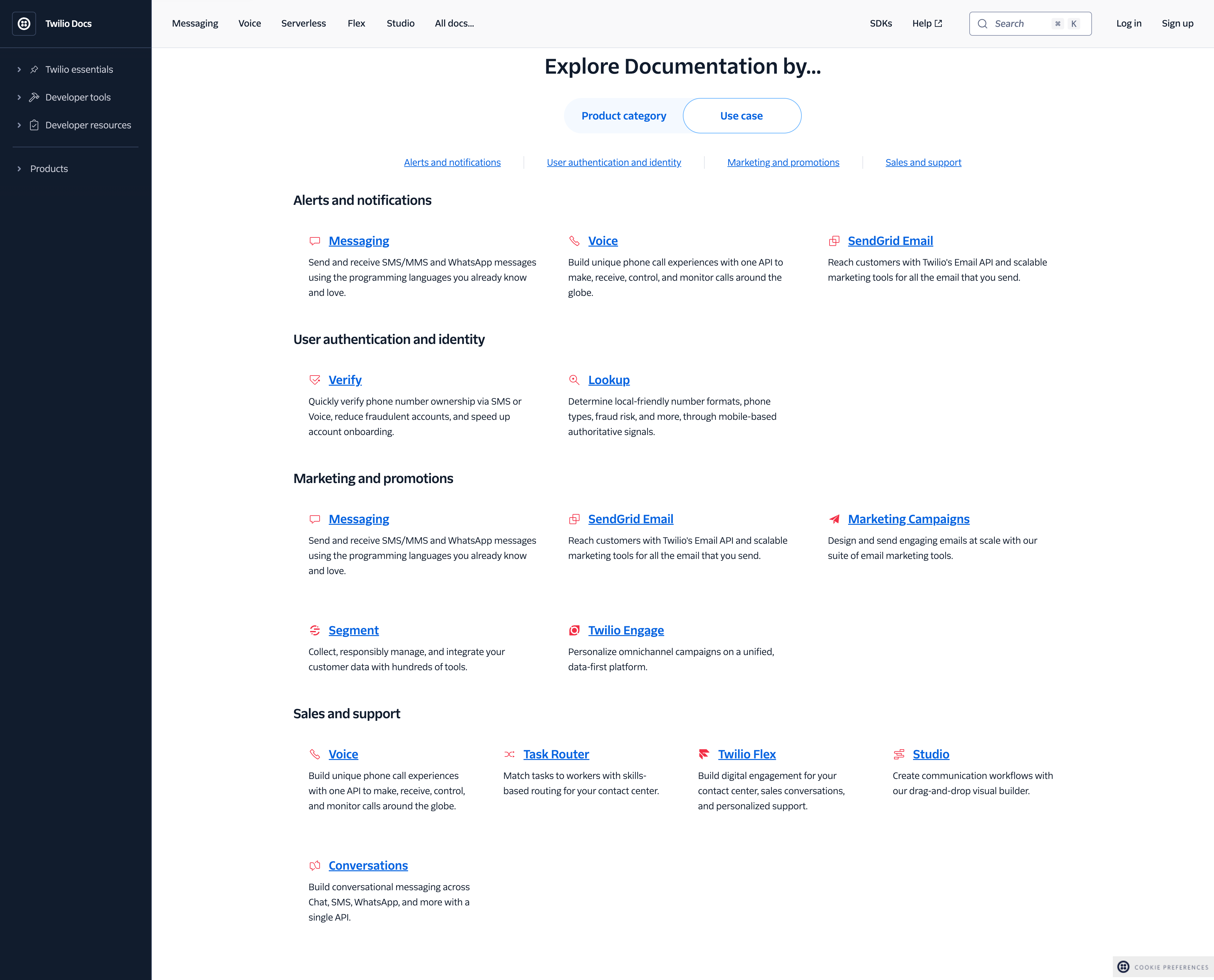
Twilio use cases documentation
But great onboarding documentation isn't just about covering the basics. To truly be effective, your documentation should be:
New developers don't need a philosophical deep dive into your company's software stack. They need clear, actionable guidance on how to get up and running — what tools to install, how to set up their development environment, and where to find key resources.
Instead of saying:
Say:
Instead of:
Say:
Developers should walk away from your onboarding docs ready to contribute, not just vaguely aware of how things work.
Onboarding documentation isn't something you do “once and for all”; it's a living resource that should evolve with your codebase. If your docs haven't been updated in months (or worse, years), they're probably causing more confusion than clarity.
The best teams treat onboarding docs like code:
Great documentation makes everything else easier; it becomes so useful that developers want to use it.
To create a great onboarding experience for your new hires, your internal and external documents have to work together. External documentation isn't just for customers; it's also a valuable resource for new hires. It serves as the first layer of learning, often acting as their initial point of reference when familiarizing themselves with your product.
When done right, external documentation guarantees a smooth onboarding process by providing a consistent, vetted source of truth that reduces reliance on scattered internal notes.
Once a developer understands the broader system, internal documentation helps them navigate the specifics of how your team works — team workflows, decision logs, coding conventions, and company-specific best practices. The internal docs also provide context to new hires as to why certain architectural choices were made and how decisions changed over time.
When the lines between internal and external documentation are not blurred, that is, when internal documentation isn't overloaded with information that should be in the external docs, and the external docs aren't neglected, the new hires will have a smoother onboarding. However, to make the document valuable at all times, it has to be maintained.
Creating and maintaining great documentation isn't something you do once. It takes continuous effort to keep it accurate, accessible, and useful as your codebase changes.
This is where most teams struggle. Even with the best intentions, documents become outdated, scattered, or too difficult to maintain as new features and updates are being shipped regularly.
With documentation tools like Mintlify, teams can fix that: better internal docs to ease new hires' onboarding and better external docs to help new hires and customers understand the product more effectively.
Here are some things you can do:
This solves the problem of your documentation becoming outdated. Use Git sync to make sure you are notified when changes are made in the repository, whether on GitHub or GitLab. This eliminates one of the biggest pain points in creating software documentation.
By making it easy to write, update, and maintain docs as part of the regular engineering process, teams don't have to choose between shipping features and keeping their knowledge base current. The result is a documentation that developers will actually use because it's relevant, reliable, and always up to date.
For structure and flow, use documentation platforms that provide intuitive navigation. This reduces friction by helping developers find answers quickly without needing extra guidance.
Instead of clicking through a cluttered set of pages or following a maze of links, developers can follow a clear learning path, making onboarding smoother and reducing interruptions when asking for help.
Developers aren't the only ones with valuable insights to add to your onboarding documentation. Support, product, customer success, and HR teams often have a deeper understanding of user pain points, internal workflows, and company policies that new hires need to know. Encouraging them to contribute makes documentation more comprehensive and useful.
However, not everyone is comfortable using Git-based workflows. A WYSIWYG, Notion-like interface lets non-engineers contribute without dealing with version control. This makes it easier for cross-functional teams to document real-world challenges, FAQs, and onboarding guidance, making sure that your onboarding documentation is more robust, accessible, and continuously improving.
Use software documentation tools that offer flexible visibility controls without unnecessary roadblocks. This guarantees that all documentation stays centralized while still allowing you to control who gets access to what information.
With proper access management, new developers automatically receive the documentation they need without having to ask around or scan through documents that are not relevant to them. This reduces friction, speeds up onboarding, and keeps sensitive internal information protected.
Great documentation isn't static. It should evolve based on real developer feedback.
Ask new hires regularly what worked well and what could have been better. Identify gaps, confusing sections, or areas where developers still ask for help, then refine your documentation accordingly. Your onboarding documentation should be treated as a living resource that continuously improves to meet the needs of new hires.
Ultimately, the goal is to make your documentation the first resource for new devs rather than an afterthought.
Good documentation is an invaluable part of onboarding and long-term developer success. It should be the first place new hires turn to when they need guidance, not an obstacle they're forced to work around.
Achieving this means keeping it accurate, structuring it for quick answers, and making sure that it evolves with your codebase. With the right approach and tools, you can create onboarding docs that new devs can rely on.
At the end of the day, the best way to measure your documentation's effectiveness is simple: Are new developers finding what they need without frustration? If not, it's time to rethink how your team approaches documentation.
此内容由惯性聚合(RSS阅读器)自动聚合整理,仅供阅读参考。 原文来自 — 版权归原作者所有。