


Founder Mode is a series uncovering how founders and early leaders operate at some of today's standout startups. PostHog, an analytics platform, has built an iconic brand among developers since its inception in 2020.
What sets PostHog apart is their commitment to open-source, not just in their products but in how they operate. Their team of ~65 people manages 9 products, including analytics, session replay, and a data warehouse, while also meticulously documenting their processes on their website. Everything they do—from how they work to what they build—is shared publicly.
This article isn't a deep dive on how they operate (you can find that in their Handbook). Instead, we sat down with co-founder James Hawkins to explore why and how they've made this transparency work.
When Tim and I were starting out, building trust was everything. If we reached out to someone and they Googled us, only to find a slapped-together website full of vague marketing talk that looked like it took an hour to make—why would they trust our product? Who are these people anyway?
Building in public helped us earn that trust. Sharing not only what we were building but also how we were building it tapped into people's natural curiosity when they discover something new. It made people feel like they could get behind us—as if they weren't just watching from the outside but were actually part of the journey.

It's incredibly helpful for hiring—people either think PostHog is the best place ever, or they don't apply. Transparency creates a self-selecting filter that saves us a lot of time.
Another perk is that it strengthens our internal processes. When you're putting things out there for everyone to see, there's an added pressure to keep things organized and high-quality. Knowing that anyone can see our docs, product, and internal processes keeps us motivated to make sure they're always in great shape.
And surprisingly, building in public is helpful for competition. When your competitors can see what you're doing or planning all the time, it encourages them to copy, which means you're always one step ahead. Or alternatively, by showing the direction you're going in, it might prevent them from following your footsteps since they know they'll have to compete with you.
We think of our website as a product. When I hear startups refer to their website as “the marketing site,” I cringe because it means that you're thinking of your website only in the sense of optimizing lead conversion, and not in the user experience.
We want PostHog's site to offer genuine value, creating a resource people actually want to use, whether they're there to read product docs or understand our approach to startup sales. And as we grow, maintaining a high standard for our website has become a competitive advantage. Having a site that's comprehensive and easy to navigate signals to our users that we're committed to quality across the board.
Unfortunately, it's not easy to measure—it is definitely a leap of faith in the beginning. You can't directly attribute better documentation to faster growth.
Most marketing teams are risk averse so they'll do things that you can measure ROI, but sometimes the stuff that makes you stand out is hard to measure.
The truth is, most of your return as a brand is in the last 10% of effort—if you're average, no one will talk about you. But if you go the extra mile to be exceptional again and again, people will start talking about you. Building in public and investing in our website are part of that effort to set ourselves apart from the average.
While the results might not be instant, it's obvious when you've done a good job. For us, our website is our sales team—it's the primary driver of new signups.
Along that vein, we also monitor social media for our brand mentions. If you're doing a good enough job that people are willing to talk about you on the internet, you can trust that growth will follow.
Every Friday, my co-founder Tim and I have a 1:1 to reflect on what's working and what isn't. For every problem, we ask ourselves: what's our guiding principle for this situation, and is it different from what we've done before?
If it is, we tweak the company handbook. Each new challenge is a chance to refine our operating principles and keep them aligned with where we're headed. With this ritual, our handbook is updated nearly every week.
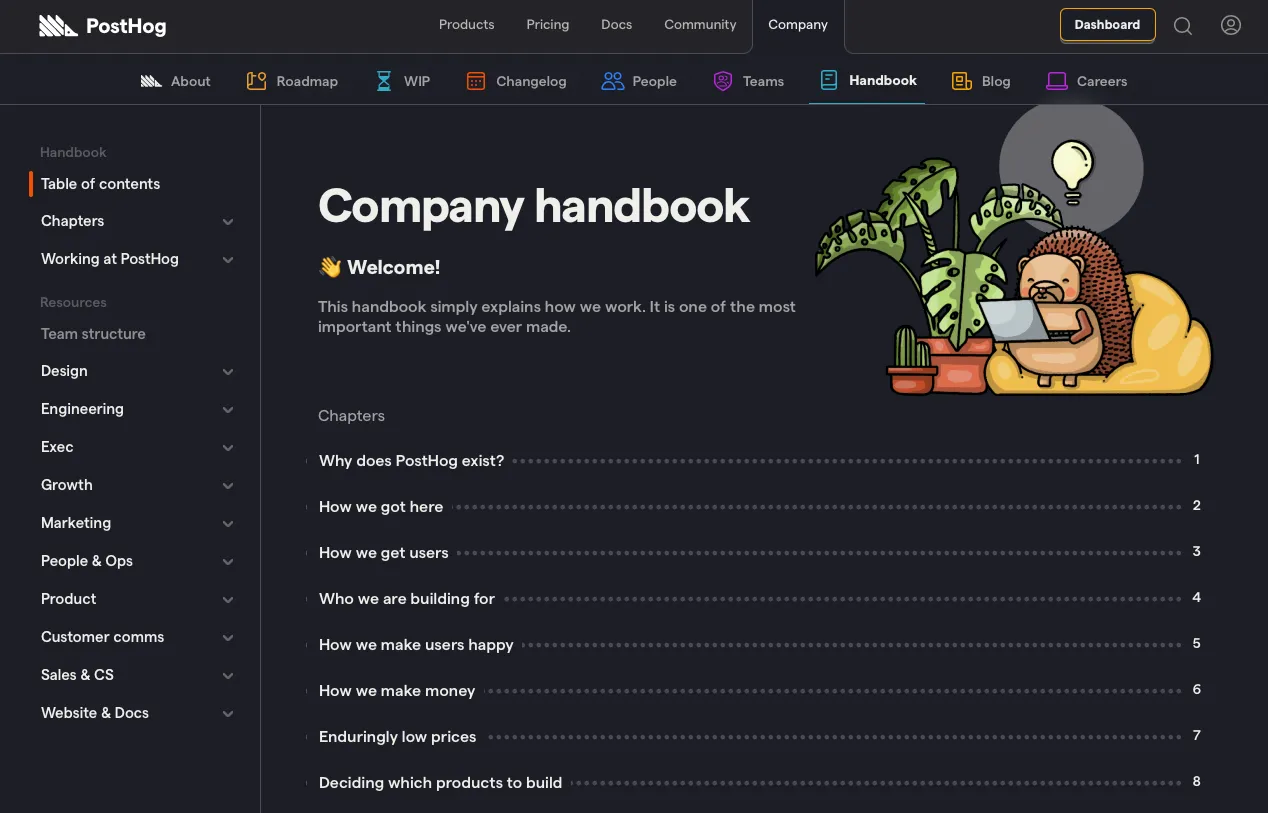
We think maintaining the handbook will only become more valuable as PostHog scales, so we don't have to rehash the same decisions over and over again.
We're anti-tool sprawl. Instead of having documents or tickets spread across a dozen tools, we exclusively use GitHub. Everything from copy changes to roadmap planning is traced back to a pull request in GitHub.
Through consolidating everything into GitHub, we also intentionally raise the bar by forcing everything to be public facing. Whatever we're proposing, it's out there for anyone to see—and holds us accountable. In turn, that builds trust with our community.
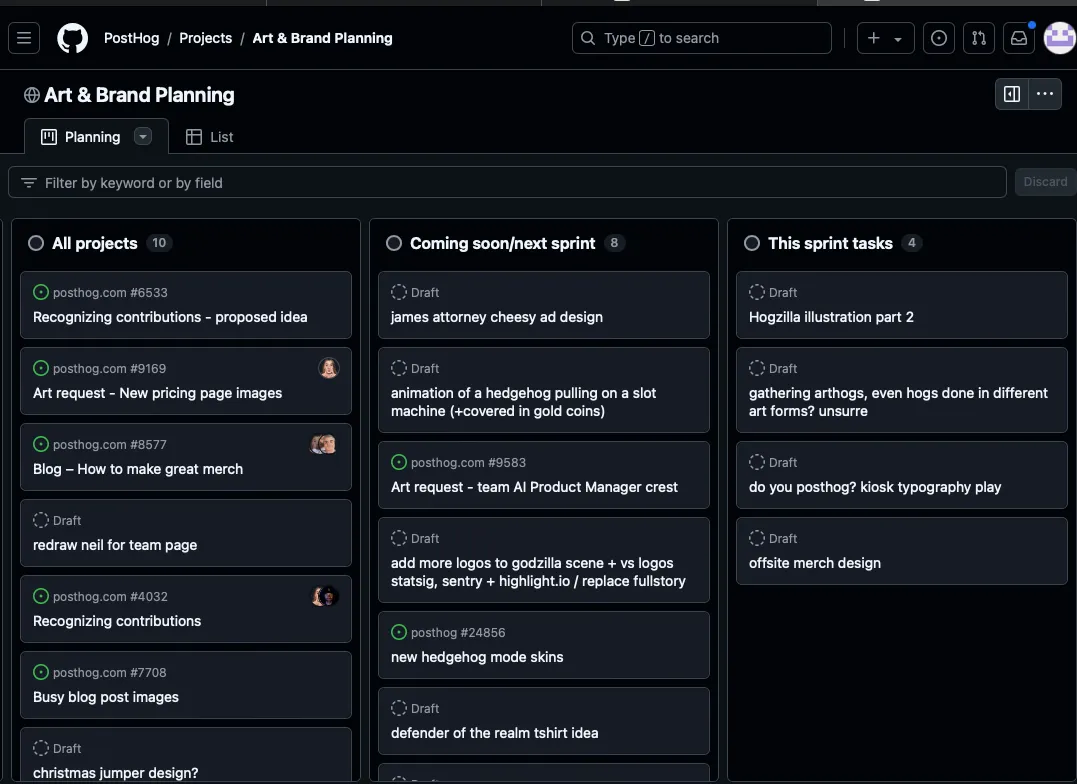
Not kidding... PostHog uses GitHub for everything
Trust is everything, especially in the early days. When you're still finding product-market fit, just being transparent about what you're building and why can earn you users who believe in what you're doing.
Once you have a team, it becomes even more important to document your principles and the “why” behind them. Most startups worry about technical debt, but organizational debt is just as costly. Think of it this way—if you've got 50 people on the team, that's 2000 working hours every week. People can get bogged down by misalignment, stress over priorities, or confusion around decision-making. Spending a few hours defining a clear approach can save hundreds of hours of thrash later on.
Being thoughtful and systematic about how you build is not glamorous, but it helps everyone align and ship faster.
Want to see more Founder Mode? Drop us a line @mintlify with topics you'd like to hear about and stay tuned.
此内容由惯性聚合(RSS阅读器)自动聚合整理,仅供阅读参考。 原文来自 — 版权归原作者所有。