






By Oleg IvanovUpdated Jun 13, 202612 min read
YC's Spring 2026 batch demos on June 16. We scored all 194 companies on public data before they walked on stage, and three things stand out. None of them is what the batch is selling.
One line holds the whole thing together. Almost half the batch is building tools for AI agents, and the highest score on the board belongs to a company you should question hardest.
Key Takeaways
The batch is one bet made 194 ways: most of it builds for AI agents or sells AI automation, and the same theses repeat inside every group.
Monetization is the strongest-looking signal and the least trustworthy. On real payback math, dozens of companies need over a year to earn back one customer.
The scoring pushed most companies toward a narrow wedge. In a batch this concentrated, the broad lane is already taken.
Group averages sit in a tight band: Agent Infrastructure 50.3, AI Workforce 49.1, Care and Capital 48.3, AI Meets the Real World 46.3.
Public data only. A quiet company with signed pilots can score low; the value is the three questions per company, not the number.
See where every company landed
All 194, scored on six public signals — searchable, each with the three questions to ask its founder. Free and open below, no signup.
Jump to the board ↓
The shape of the batch
We split the 194 into four groups. None of them pulled away from the rest. Agent Infrastructure came out highest on average and the atoms group lowest, with the other two stacked in between. The whole class lives in a narrow band. There is no runaway here. (The group averages and the full ranking are in the chart and table below.)
What repeats is the bet. The batch made a single wager and made it over and over, mostly some flavor of building for agents or selling AI automation, and the duplicates pile up inside a group rather than across it. What also repeats is the verdict. The scoring kept telling companies to narrow down, and almost never told one to go wide.
Group 1: Agent Infrastructure, the monetization mirage
Fifty-five companies building the rails everyone else builds agents on: runtimes, sandboxes, memory, observability, agent payments and identity. Twenty-eight of them literally say "for agents" in the one-liner. Top of the group: Kuli at 65.5, Armature and Superlog at 63.2. Bottom: RentAHuman at 32.7.
Source · Fluenta, YC Spring 2026
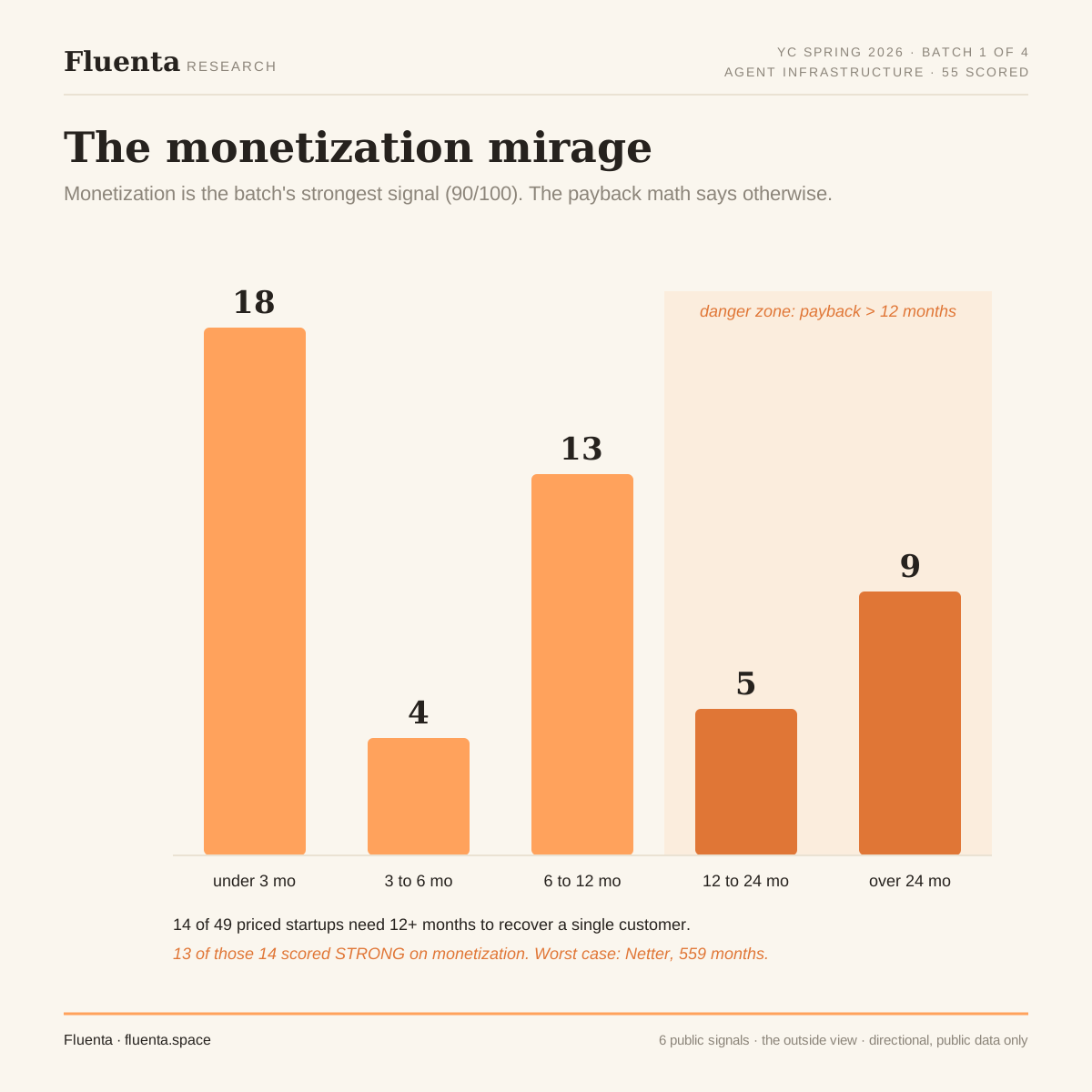
Monetization is the group's strongest signal, and that is the trap. On real CAC-versus-payback math, 14 of the 49 priced companies need more than a year to recover a single customer. Netter pencils out at 559 months, Amboras at 511, Replicas at 508, Incandor at 225. Thirteen of those fourteen scored "strong" on monetization. The lesson is blunt: do not underwrite the monetization score, underwrite the payback.
Source · Fluenta, YC Spring 2026
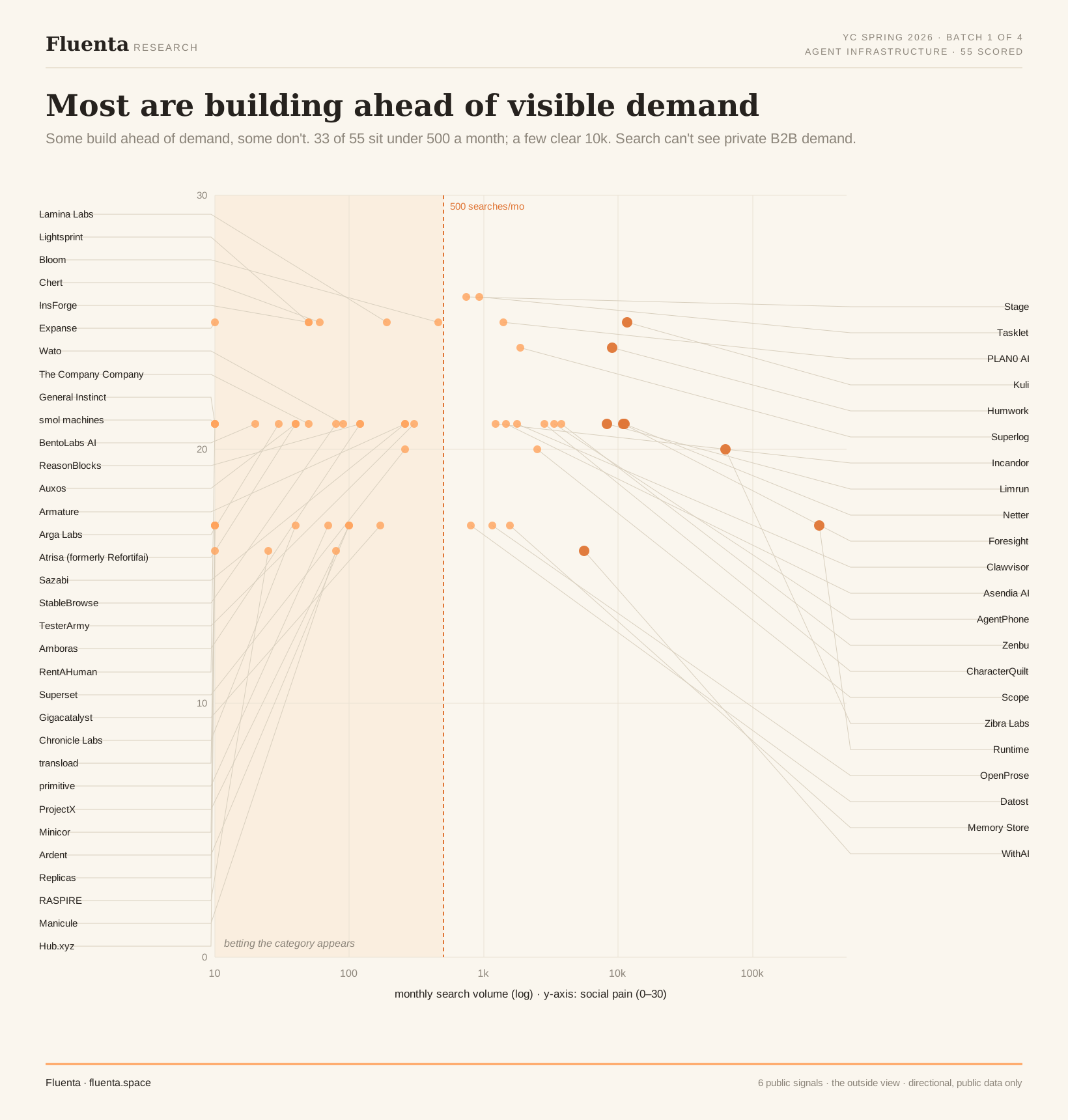
The other pattern is internal collision. Agent memory shows up three times in the same group. Agent sandboxes and testing show up four times. For those companies the first diligence question is not about the market. It is why you and not the others in your own cohort.
Group 2: The AI Workforce, the money already came
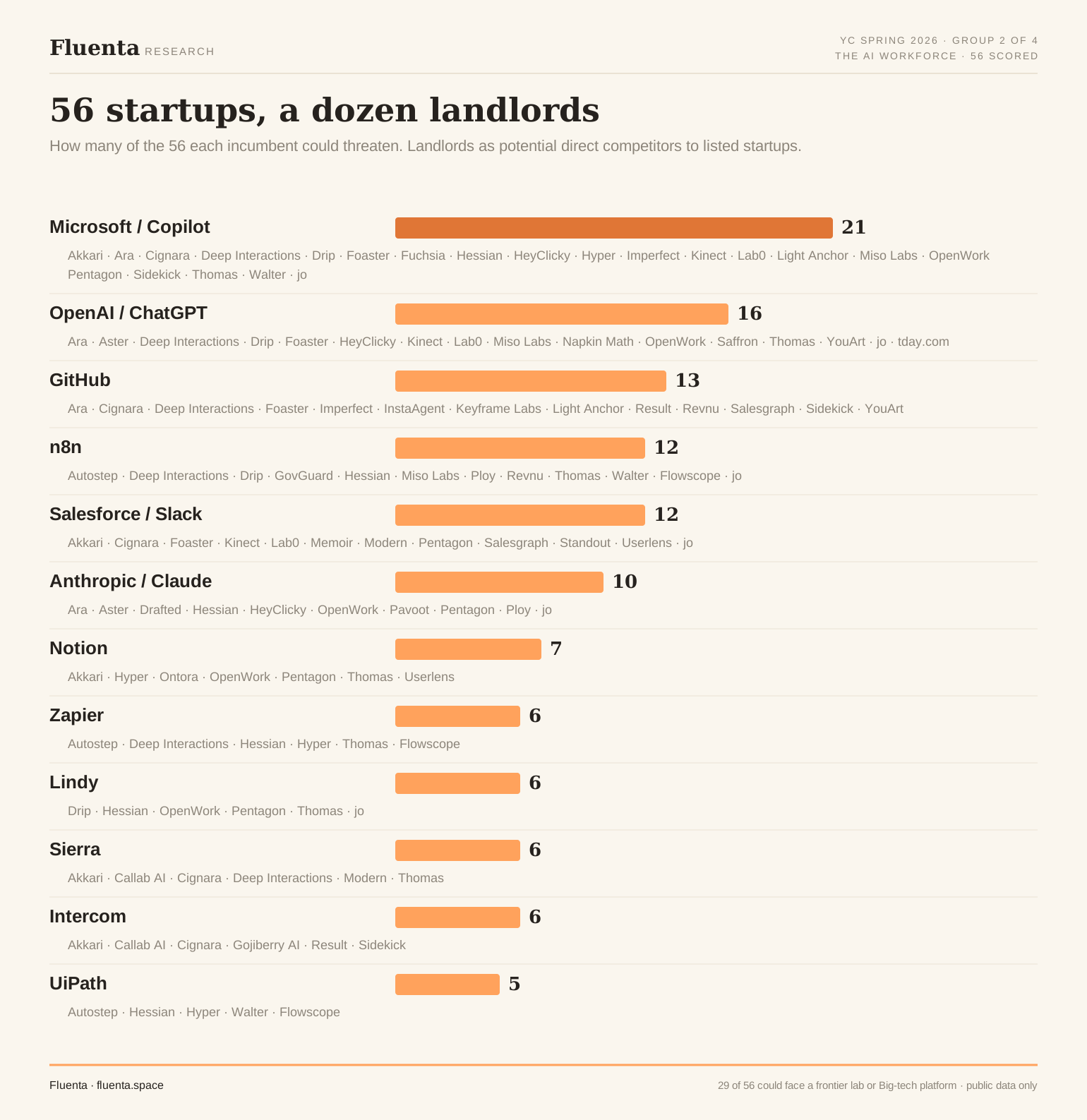
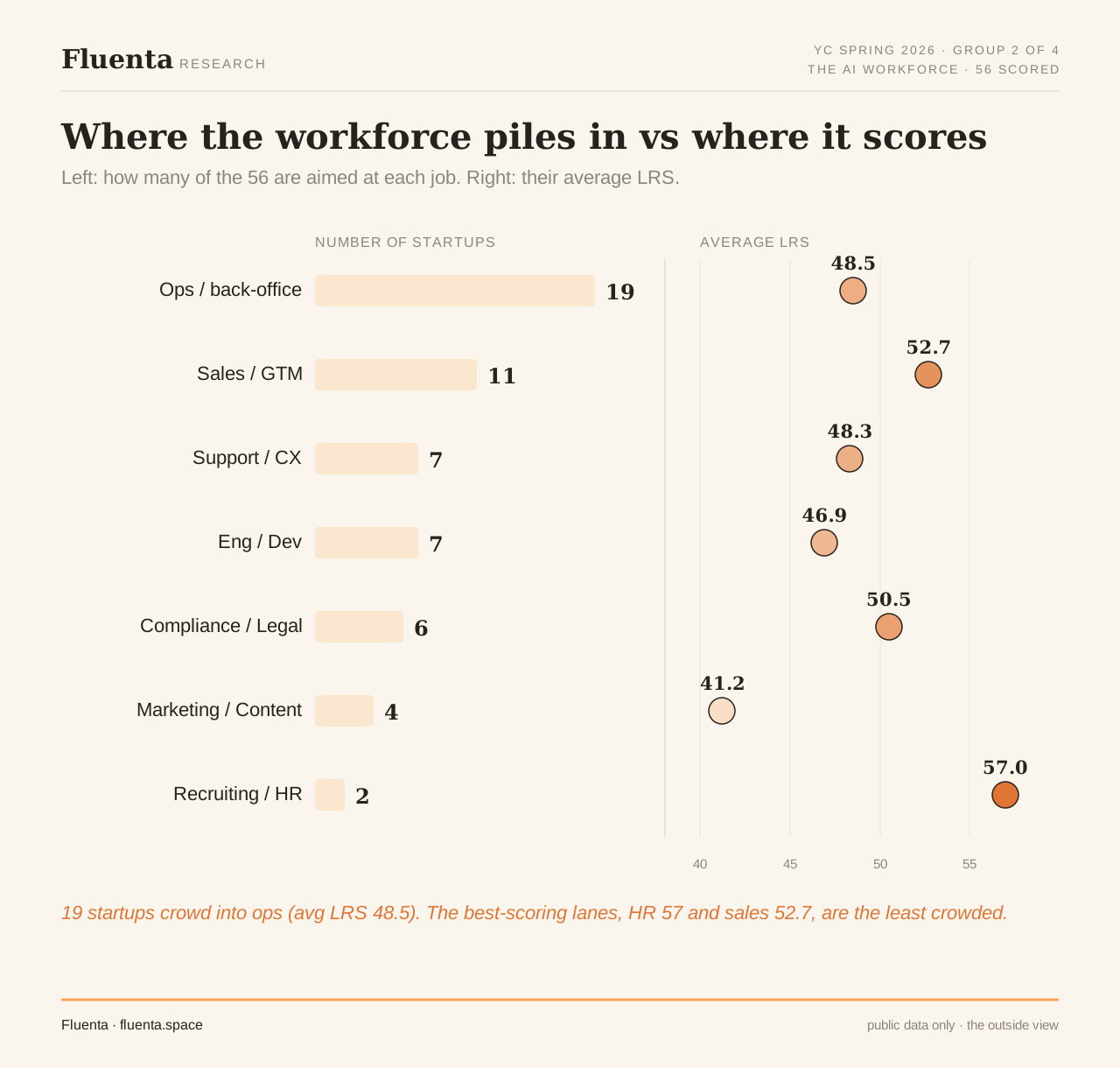
Fifty-six companies pointing agents at specific jobs: sales, support, recruiting, finance, back-office operations. Top: Saffron at 59.9, Pentagon at 59.5, InstaAgent at 58.8. Bottom: Drafted at 37.6.
Source · Fluenta, YC Spring 2026
Funding is the weakest signal for 32 of the 56, and not because the money is absent. It is because the money already came and left. Billions flowed into these categories and got absorbed rather than breaking out. The highest scorers sit in the white space the capital skipped, smaller raises in jobs the giants ignored. The investor read is the inverse of the usual one: a hot funding history here is a warning, not a green light.
Source · Fluenta, YC Spring 2026
The label itself is the tell. Every company in the group's bottom six is a vague "AI automation for X" play. Every company at the top owns one specific job. If the one-liner is "AI automation," the first question is which X they actually own, because the data says the vague ones do not score.
Group 3: AI Meets the Real World, where the unit economics are fiction
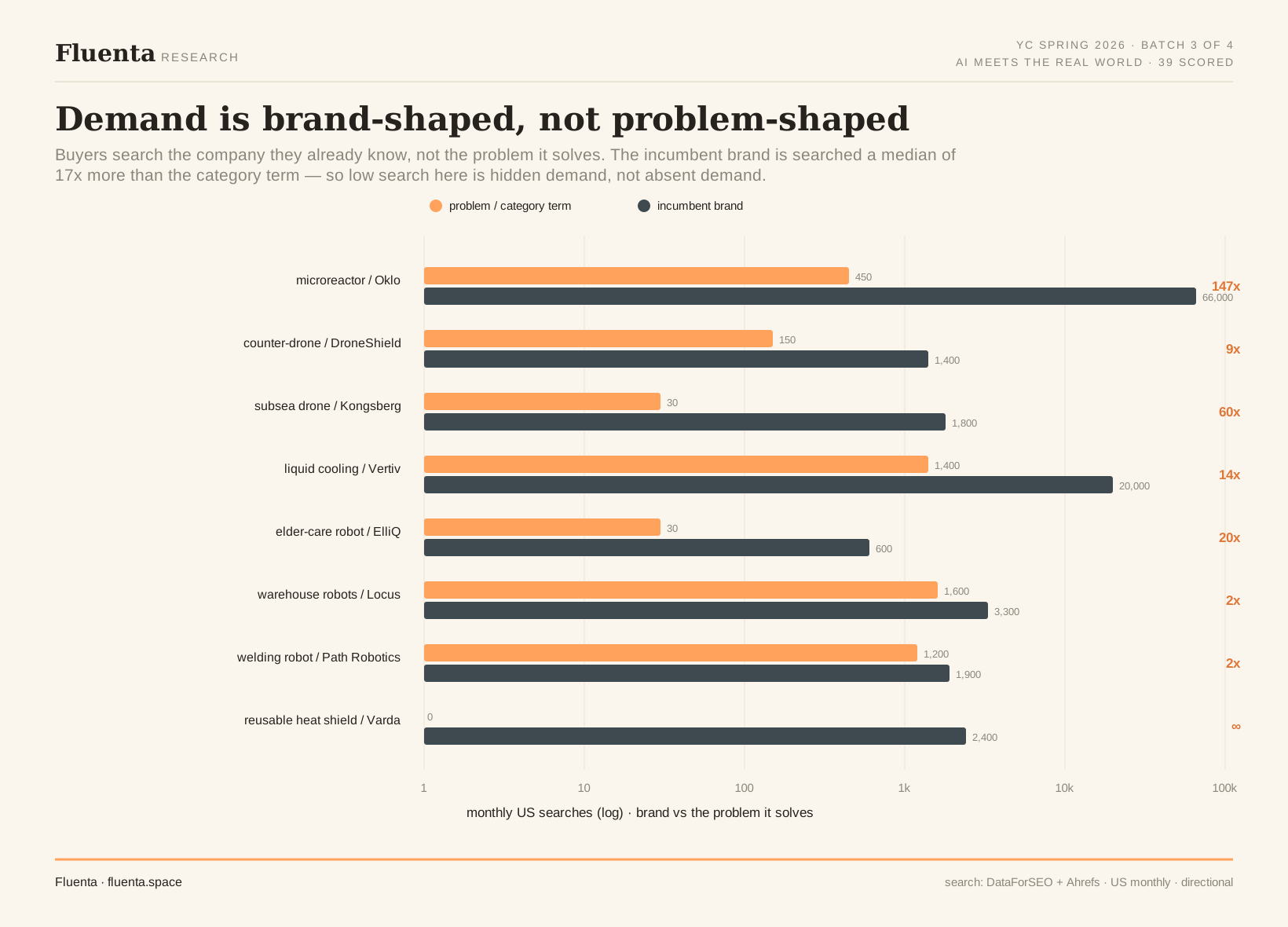
Thirty-nine companies that build in the physical world. One makes a nuclear reactor. Others make robots or drones, and a couple are defense plays. It scored lowest of the four groups, and that ranking is an artifact more than a finding. (Scores and the top and bottom names are in the chart and table below.)
Source · Fluenta, YC Spring 2026
Nobody googles a warehouse robot. Demand here looks dead on paper while the pain scores run hot, and that gap is the whole story. The buyer for a reactor or an industrial robot was never going to be findable by a keyword. Low search is a measurement failure, not a verdict on the problem.
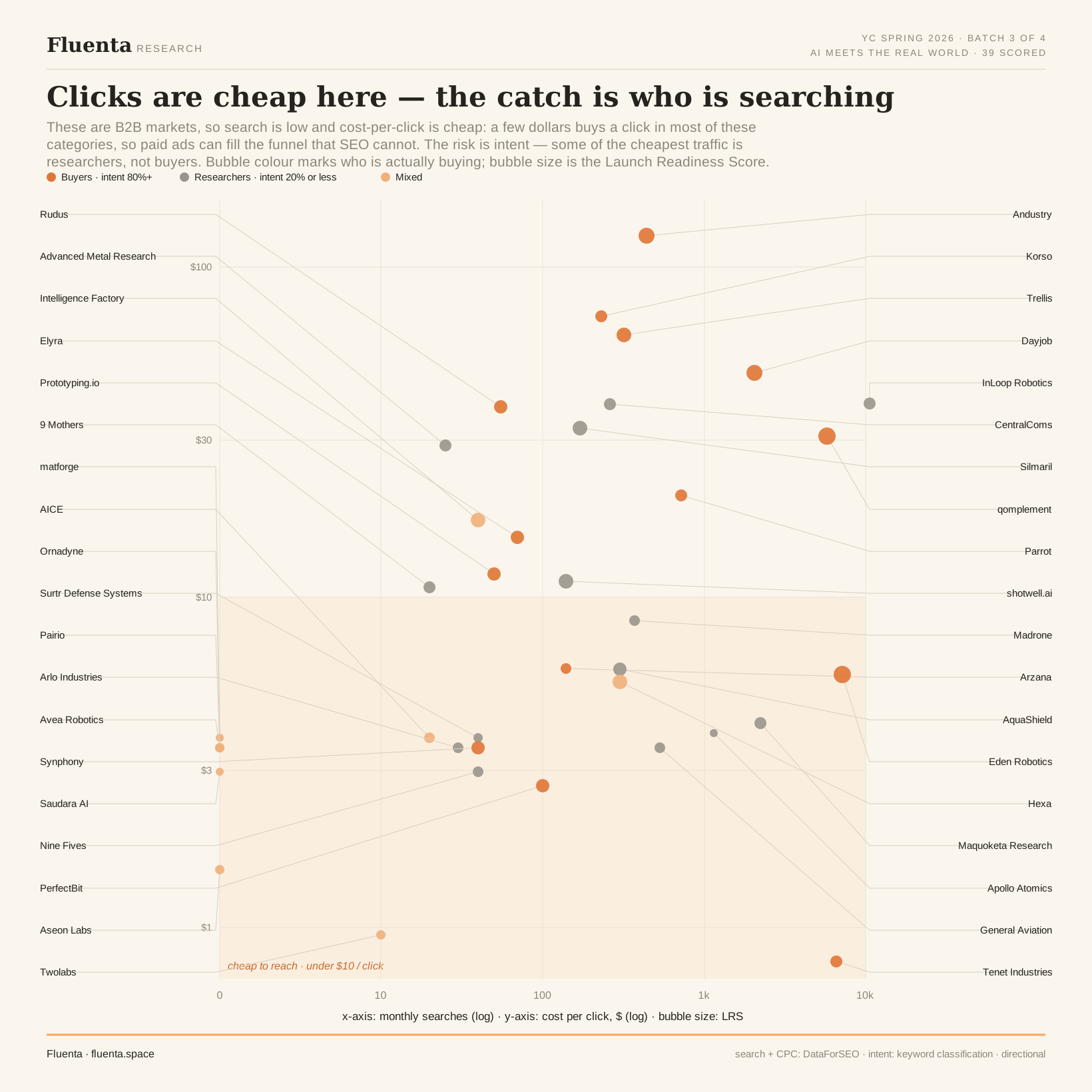
Source · Fluenta, YC Spring 2026
The payback number is the one to throw out. The cards claim a hardware company recovers a customer in about a month, which no hardware company does. That is a SaaS model run on a capex business. It counts the software and ignores what it costs to build the machine and bolt it to a customer's floor. Ask these founders about gross margin per unit, and ignore whatever the card says about payback.
Group 4: Care and Capital, the capital got here first
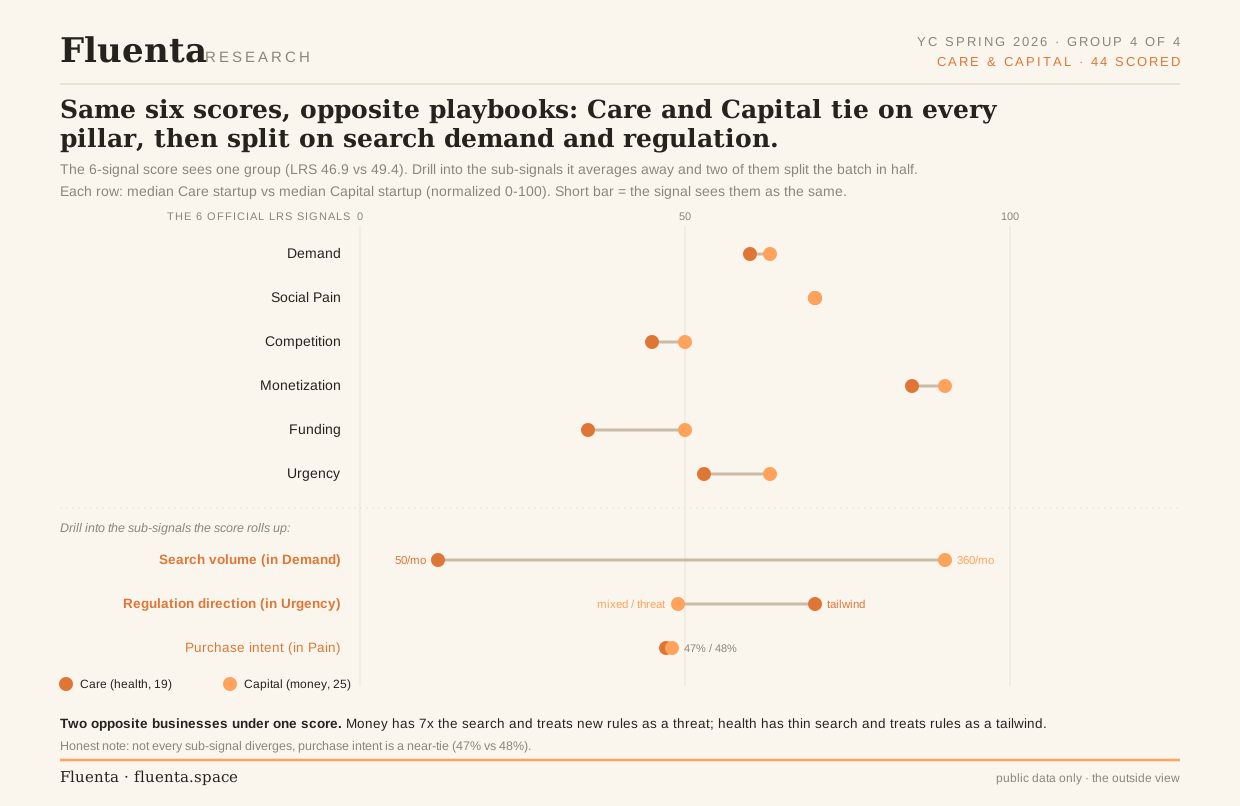
Forty-four companies in the two most regulated, most capital-intensive markets in venture: health and money. It is really two cohorts on one ruler, 19 in care and 25 in capital, and they fail for opposite reasons. Top: Taiga at 60.9, Gravy at 60.2, Arctic Health at 59.9. Bottom: Arden at 36.0.
Source · Fluenta, YC Spring 2026
Monetization is a non-question here. The pillar averages 89 percent, because health and money businesses make money by taking a slice of a transaction that already happens: a claim, a payment, a visit, a trade. So the two pillars that ask whether there is a way to make money stop discriminating. What separates the group is competition and capital.
Source · Fluenta, YC Spring 2026
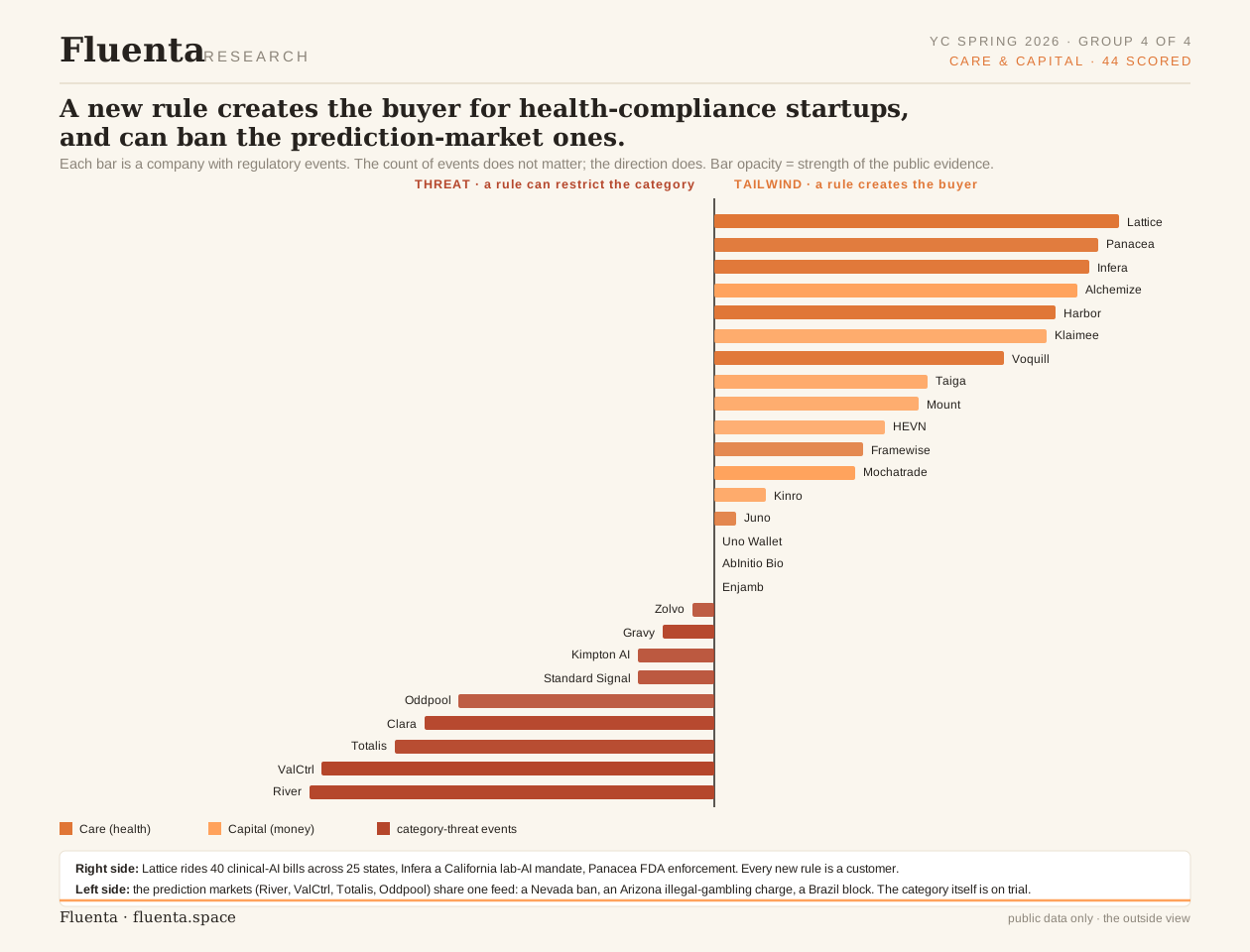
And the capital arrived years ago. Twenty-three of the 44 already face a competitor that raised more than 100 million dollars. Andco is up against EvenUp's 135 million. Clara is up against Forward, which raised 225 million and then shut down. Hedge is up against Nirvana's 100 million. Open lanes, common in the atoms group, are rare here. The care half hides a second problem the score cannot see at all: 18 of the 19 health companies carry an FDA, clinical-validation, or reimbursement barrier that no public signal measures.
Every company in the batch, scored
All 194 companies, searchable. Each row opens to the public-data read and the three questions a sharp investor would press on at Demo Day. Search by name, filter by group, and sort by score.
Tip: add this page to your home screen to use the board offline at Demo Day.
How we scored
Now the method, since you have seen what it found.
Six signals, fixed weights. Demand is worth 35 points, social pain 30, competition 24, monetization 20, funding 10, urgency 10. Each signal is built from a named public source. Search volume and purchase intent drive demand. Complaint threads on Reddit, Hacker News, Quora and the review sites drive pain. The count and concentration of direct competitors drive competition. Real pricing and payback comparables drive monetization. Dated funding rounds drive capital. News and hiring posts drive urgency. The six roll up to a single 0 to 100 Launch Readiness Score.
The score is a prior, not a verdict. A low score often means the demand is private, signed pilots and design partners that public data cannot see, not that the problem is fake. So the number is not the point. The three questions per company are.
What this is, and what it is not
This is the outside view and nothing more. Public data only, no interviews, so a quiet company with signed pilots can score low. Some sector tags are auto-generated and a few are wrong, flagged inline where they matter. The CAC, payback and gross-margin figures are model output, useful as a flag, not cited as fact. The funding extractor is noisy, so we cite only vetted competitor raises and treat unreadable records as "capital is hard to read here," never as a headline number.
The point of publishing it is not the scores. It is the questions. Every founder in the batch can find the three they will most likely get asked and prepare them. Every investor can find where to dig. And anyone can run the same six-signal read on their own idea inside Fluenta (fluenta.space).
Cite this article
Researchers and journalists: this article is freely citable. Click to copy the academic-format reference for your bibliography or footnote.
Ivanov, O. (2026). YC Spring 2026 Batch: All 194 Companies, Scored. Fluenta. Retrieved from https://fluenta.space/resources/reports/yc-spring-2026-batch-scored.
Related Resources
Score your idea in 20 minutes
Run Fluenta X-Ray on your idea. 25 live market + social feeds. Real demand data, real competition, real willingness-to-pay signals. From $7. 20 minutes.