



惯性聚合 高效追踪和阅读你感兴趣的博客、新闻、科技资讯
阅读原文 在惯性聚合中打开

推荐订阅源

WordPress大学
WordPress大学
大猫的无限游戏
大猫的无限游戏
B
Blog
阮一峰的网络日志
阮一峰的网络日志
IT之家
IT之家
Hugging Face - Blog
Hugging Face - Blog
博客园 - 【当耐特】
Jina AI
Jina AI
博客园 - 聂微东
T
The Blog of Author Tim Ferriss
宝玉的分享
宝玉的分享
L
LangChain Blog
M
MIT News - Artificial intelligence
Blog — PlanetScale
Blog — PlanetScale
腾讯CDC
酷 壳 – CoolShell
酷 壳 – CoolShell
Y
Y Combinator Blog
F
Fortinet All Blogs
H
Help Net Security
B
Blog RSS Feed
J
Java Code Geeks
Cyber Security Advisories - MS-ISAC
Apple Machine Learning Research
S
SegmentFault 最新的问题

Comments for Hackaday

AI The Truly Environmentally Friendly Way News Sites Are Blocking Internet Archive Over AI Scraping Fears How The 2020s Chip Crisis Led To A Buggy Saleae Analyzer In 2026 Evidence For Water Vapor Plumes On Europa Vanishes In Re-Analysis Mechanical Stability For Your Coils 3D Printed Hose Sprayer Sets Phasers To Suds The Merits Of Comment-Driven Development As Counterweight To TDD Building A Desktop Catalytic Cracker Process 4 Billion Pixels Per Second From 16 DIY Cameras For The Best V-Tubing Rig Ever An Unlikely Host For An 8080 Emulator Using Brand New NiMH Cells After Sitting 12 Years Unused Investigating The S3 Virge’s Reputation As A 3D Decelerator Card As It Turns Out, There’s More Than One Cassette Mechanism Being Made After All Using Windows 11 On An LGA 775 PC With AGP Videocard An Ethernet WiFi Router on a Pi Pico 2W This Week In Security: Messing With AI, 7Zip And Notepad++ Vulnerabilities, HTTP2 Bomb, And More Using Electrolysis For More Than Just Generating Hydrogen Vintage Turntable Gets Brain Transplant And Home Assistant Integration Connecting Your Car To Home Assistant Microsoft Claims 20 Second Qubits If You Want To Hack Me, Come In Through The Speaker Ways To Embed Magnets In 3D Prints And Not Ruin Printers An RGB Keyboard For Your Hackaday Communicator Badge Ask Hackaday: How Do You Feel About Electronic Shelf Labels? Make Your Ceiling Disappear With ADS-B And Short-Throw Projector Fixing A Nintendo Game Boy Clone That Runs Too Fast Web-Based Control For A CB Radio Distilling Stale Gasoline To Make It Usable Again DIY Ceramic Circuit Boards Surely Count As Solarpunk Texas Instruments Changes The NE5532 And Others Into Incompatible Versions
All The Different Lasers, And How Well They Mark 3D Prints
Donald Papp · 2026-06-25 · via Comments for Hackaday

Skip to content

[Stefan] of CNC Kitchen has an informative video describing his experiences with trying to cleanly laser-mark 3D printed plastics using different methods, and it also happens to be a fantastic tour of all the different laser options available to hobbyists and workshops these days.

Laser marking is a fast and effective way to put things like product names, serial numbers, and other information on plastics. [Stefan] wondered whether laser options would be capable of creating clean and professional marks on 3D-printed items, and approached things with his usual attention to detail.
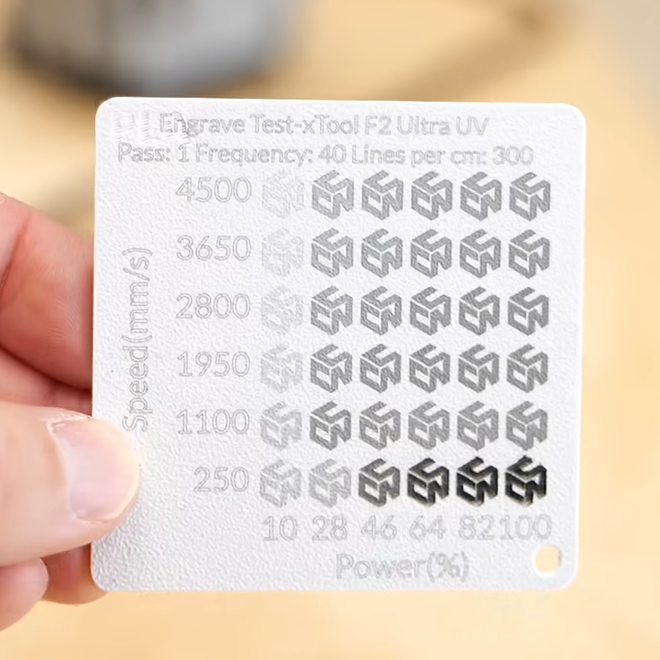
Great results can be had, but using the right tool and dialing in the right settings is critical to results.

How does a laser mark plastic? When the laser hits the material, its energy is dumped into it and can cause pigment bleaching, microfoaming, charring, melting, or ablation (vaporizing) of the surface. The goal is to have a combination of laser and material that delivers a crisp, high-contrast result.

There are several kinds of laser technologies easily available today, and of course a variety of filament types. [Stefan] printed a whole bunch of different PLA, PETG, ASA, TPU, and polycarbonate samples in different colors and tested them with different laser machines, including:

  • UV laser (355 nm wavelength)
  • Blue diode laser (450 nm wavelength)
  • MOPA fiber laser (1,064 nm wavelength)
  • CO2 laser (10,600 nm wavelength)

So is it possible? Yes, but it’s still a bit of a fussy process. There isn’t a one-size-fits-all solution for marking plastic, because results depend a lot on the the right combination of laser type, settings, and target material. That being said, [Stefan] was able to obtain some really great results.

Overall the UV laser was the most suited to marking 3D-printed plastics. [Stefan] says it produced the cleanest results on the widest range of materials with the least fiddling. The MOPA fiber laser also worked, but is clearly more of a metal-marking tool. We’ve seen them etch super-fine PCB traces and while great results are possible it isn’t quite in its element with plastics. Other lasers could get good results under just the right circumstances, but are overall best suited to cutting tasks rather than marking thermoplastics.

Check out the video below for the full details, including some really fantastic closeups.