









There was a particularly tense moment aboard the International Space Station earlier this month, with NASA directing their astronauts to secure themselves in the Dragon capsule and prepare for a potential return to Earth while their Russian counterparts engaged in what we now know to have been some impromptu demolition work on their side of the orbiting complex.
Despite objections from their American partners, Roscosmos had given their cosmonauts the go-ahead to drill and cut into the walls of the Zvezda module — one of the core components of the ISS which has been in orbit since 2000 — to try and identify and ultimately repair persistent leaks that have been venting the Station’s atmosphere out into space for several years. We may never know the exact nature of the behind-the-scenes communication that went on between the two space agencies, but in the end the Russians abandoned their plan and NASA’s personnel were told to resume their normal duties.
But where do things go from here? Although it’s true the International Space Station is entering its final years, the mission isn’t over yet, and that means the two countries need to continue to work together if they hope to get any science done in the time they have left.
At this point there hasn’t been any official word from either agency, but sources that wish to remain anonymous have been dropping hints, and that’s got the rumors swirling. With the understanding that anything is still possible, at this point it looks like Russia is going to abandon any further attempts to repair the leak and instead seal off the crippled compartment of the Zvevzda module. This won’t solve all the problems, and in fact will create some new ones. But if that’s what it will take to keep the peace with NASA until Station operations wind down, it’s apparently a bargain they’re willing to make.
It probably goes without saying that the best kind of leak on a space station is no leak. Having breathable air is rather important when you’re trying to live and work in space, and while the life support systems on the International Space Station are robust enough to compensate for the steady loss of atmosphere they’ve been experiencing up to this point, there’s always a possibility that the rate of loss could increase and put that balance in jeopardy.
There’s also a chance that the leak is a harbinger for something far more serious — a structural failure of the pressure vessel itself. Even with advanced warning, it would be an existential threat to the entire program if one of the ISS modules literally cracked open. We don’t need to go into details about the potential for tragedy should it occur without warning.
All that is to say, if your orbiting laboratory does have to spring a leak, you couldn’t ask for it to be in a better place than where it is on the ISS. After the Station started losing air back in 2019, the crew was able to narrow it down to the Transfer Chamber at the aft end of the Zvevzda module.
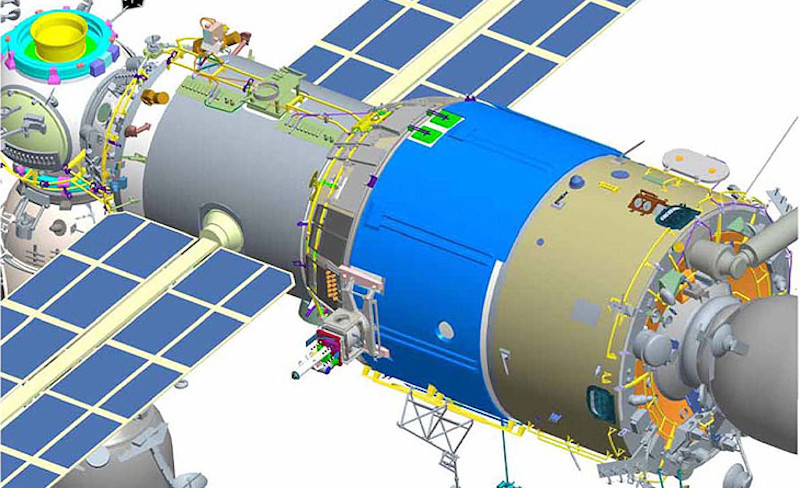
Known as the PrK by the Russians, this small space is a sort of vestibule that connects the inside of the module to the rear docking port, which in turn allows access to visiting spacecraft. The PrK is unique in that it traverses an unpressurized equipment bay; think of it like a tube within a tube. Cracks in the walls of the PrK have been allowing the atmosphere inside the Station to leak out into this unpressurized space even though the external hull of the module hasn’t actually been breached so far as anyone is aware.
The good news is, the easiest and most immediate way to stem the loss of air is to simply close the hatch leading into the PrK. Of course, that means abandoning the docking port on the other side of it.
The Russian section of the Station has multiple docking ports which can be used to transfer crew and cargo, so while having to abandon one of them is hardly ideal, it’s a survivable scenario. It’s fair to say that this would have been a far less palatable solution a decade ago, but now it’s the sort of compromise that you’d expect when working with hardware that’s been in space for more than 20 years.
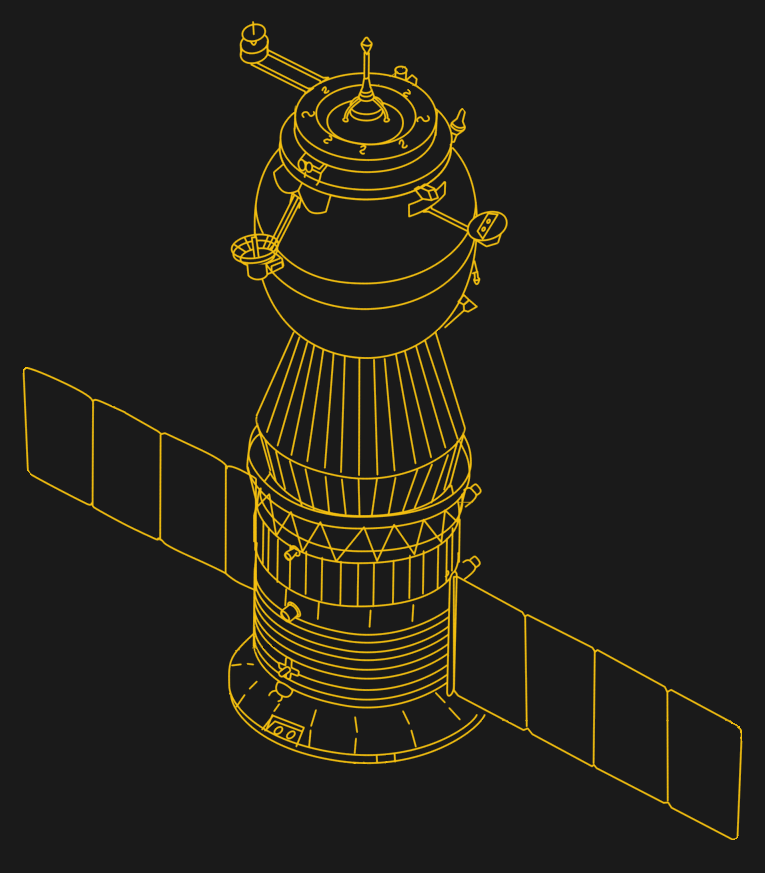
Shuffling spacecraft between the various docking ports on the ISS has become increasingly common as the fleet of vehicles that can visit the orbiting complex has grown over the years. With more cargo-carrying craft set to come online before the end of the decade, things will only get busier. Losing a docking port would add to the logistical challenge, but there’s no question it will be manageable.
Plus, it’s not as if they would have to stop using the port entirely. While sealing off the PrK passage means crew and cargo will no longer be able to pass between a visiting spacecraft and the Zvevzda module, the same isn’t true for deliveries of gasses and liquids. The plumbing that moves water, oxygen, and the propellants for the Station’s thrusters over from the Progress resupply spacecraft is all run on the outside of the structure and is linked up automatically through connectors in the docking port.
Since crew members don’t need to access the inside of the Progress vehicle to transfer these liquids over, the port can still be used for at least some resupply activities.
While crew and cargo transfers can be performed on an alternate docking port, and Zvevzda’s rear port can still support transferring water and other fluids with the PrK hatch closed, there’s still the question of reboost maneuvers.
Normally, a Progress spacecraft docked to the rear of Zvevzda would use its own thrusters to change the velocity of the entire complex. This is most commonly used to counteract atmospheric drag and keep the Station in the intended orbit, as it would otherwise slowly fall back down into the atmosphere and eventually burn up. This maneuver must be done from the rear docking port of Zvevzda as that allows the visiting spacecraft to push along the center line of the Station.
While these reboosts could still be performed without opening the PrK hatch, there’s a question about whether or not it’s safe to continue putting so much stress on the surrounding structure. In fact, though there has been no official determination made, some believe that the repeated stress of performing the reboost maneuvers from that specific docking port could be one of the factors that lead to the cracks forming in the PrK to begin with.

If NASA and Roscosmos determine that continuing to push the entire mass of the ISS through this structure is no longer safe, their only alternative is to do it from the US side. The Space Shuttle was used to reboost the Station this way before its retirement in 2011, and more recently, a Cargo Dragon specially modified to carry additional propellant demonstrated it could fill this particular role if need be.
If you’ve been following space news for a bit now, this might all sound a bit familiar to you — that’s because this isn’t the first time Russia decided that the best course of action was to simply close the door on the PrK. Going back to at least 2024, the official procedure was for the crew to keep the hatch closed unless they were actively loading or unloading a docked vehicle.
That greatly reduced how much air was leaking out, but as long as crews were occasionally opening up the PrK and moving through it, there was a risk of something going catastrophically wrong. Should the rumors prove true, the difference this time is that the door would stay shut and the PrK would remain undisturbed for as long as the ISS remained in orbit. It’s not exactly a fix, but it’s good enough for an aging space station that’s only got a few more years on the clock.
此内容由惯性聚合(RSS阅读器)自动聚合整理,仅供阅读参考。 原文来自 — 版权归原作者所有。