

惯性聚合 高效追踪和阅读你感兴趣的博客、新闻、科技资讯
阅读原文 在惯性聚合中打开

推荐订阅源

K
Kaspersky official blog
Engineering at Meta
Engineering at Meta
D
DataBreaches.Net
Stack Overflow Blog
Stack Overflow Blog
Microsoft Security Blog
Y
Y Combinator Blog
B
Blog RSS Feed
GbyAI
GbyAI
P
Proofpoint News Feed
aimingoo的专栏
aimingoo的专栏
MyScale Blog
MyScale Blog
D
Docker
阮一峰的网络日志
阮一峰的网络日志
Cyber Security Advisories - MS-ISAC
Recorded Future
Recorded Future
美团技术团队
The Register - Security
V
Visual Studio Blog
H
Hackread – Cybersecurity News, Data Breaches, AI and More
T
Tailwind CSS Blog
爱范儿
爱范儿
freeCodeCamp Programming Tutorials: Python, JavaScript, Git & More
T
The Blog of Author Tim Ferriss
博客园 - 司徒正美
量子位
B
Blog
F
Fortinet All Blogs
Martin Fowler
Martin Fowler
博客园 - 【当耐特】
MongoDB | Blog
MongoDB | Blog
A
About on SuperTechFans
I
InfoQ
钛媒体:引领未来商业与生活新知
钛媒体:引领未来商业与生活新知
有赞技术团队
有赞技术团队
雷峰网
雷峰网
大猫的无限游戏
大猫的无限游戏
J
Java Code Geeks
L
LangChain Blog
Latest news
Latest news
S
SegmentFault 最新的问题
Exploit-DB.com RSS Feed
Blog — PlanetScale
Blog — PlanetScale
Threat Intelligence Blog | Flashpoint
Cisco Talos Blog
Cisco Talos Blog
F
Full Disclosure
C
Cisco Blogs
D
Darknet – Hacking Tools, Hacker News & Cyber Security
W
WeLiveSecurity
T
Tenable Blog
T
Tor Project blog

Comments for Hackaday

AI The Truly Environmentally Friendly Way News Sites Are Blocking Internet Archive Over AI Scraping Fears How The 2020s Chip Crisis Led To A Buggy Saleae Analyzer In 2026 Evidence For Water Vapor Plumes On Europa Vanishes In Re-Analysis Mechanical Stability For Your Coils 3D Printed Hose Sprayer Sets Phasers To Suds The Merits Of Comment-Driven Development As Counterweight To TDD Building A Desktop Catalytic Cracker Process 4 Billion Pixels Per Second From 16 DIY Cameras For The Best V-Tubing Rig Ever An Unlikely Host For An 8080 Emulator Using Brand New NiMH Cells After Sitting 12 Years Unused Investigating The S3 Virge’s Reputation As A 3D Decelerator Card As It Turns Out, There’s More Than One Cassette Mechanism Being Made After All Using Windows 11 On An LGA 775 PC With AGP Videocard An Ethernet WiFi Router on a Pi Pico 2W This Week In Security: Messing With AI, 7Zip And Notepad++ Vulnerabilities, HTTP2 Bomb, And More Using Electrolysis For More Than Just Generating Hydrogen Vintage Turntable Gets Brain Transplant And Home Assistant Integration Connecting Your Car To Home Assistant Microsoft Claims 20 Second Qubits If You Want To Hack Me, Come In Through The Speaker Ways To Embed Magnets In 3D Prints And Not Ruin Printers An RGB Keyboard For Your Hackaday Communicator Badge Ask Hackaday: How Do You Feel About Electronic Shelf Labels? Make Your Ceiling Disappear With ADS-B And Short-Throw Projector Fixing A Nintendo Game Boy Clone That Runs Too Fast Web-Based Control For A CB Radio Distilling Stale Gasoline To Make It Usable Again DIY Ceramic Circuit Boards Surely Count As Solarpunk Texas Instruments Changes The NE5532 And Others Into Incompatible Versions Deltarune’s Tenna Brought To Life Linux Fu: Fake Webcams, GUI Edition Hydraulic Drive For Your Lawn Tractor But Just What Is This ‘Artificial Intelligence’? A Diffraction Grating Makes This Clock Readable Turning An Old 3D Printer Into A Vinyl Cutter For Cheap A High-Vacuum Controller For An Eventual Electron Microscope Does Your Terminal Speak Morse? This One Does From Scrappy Pallet Wood To Fancy Tea Tray The 2026 EMF Badge Arrives, With An Add-On. As Expected, It’s Familiar Linux Fu: Taming Strace STM32 Handheld Has OpenGL And All The Classics Jenny’s Daily Drivers: Microsoft Windows 11 Using A Mirror To 3D Scan Both Sides Of An Object At Once Cookies, Baked The 3D Printer Way Restoring Apple’s Terrible But Awesome IBook Laptop After The Dust Settles: Building Pebble Apps Bilingual E-paper News Feed Helps Brush Up Language Skills On The Wisdom Of Replacing A NiMH Module In A Prius Battery Pack Know Your Food: Cheesemaking Like A Wire Bender, But For Pop Tubes Revisiting Making Your Own Internet Router In 2026 Classically-named Argus Robot Is Terminator Meets Tumbleweed Making a Zippy FDM Printer out of Wood Off-Grid OCR Server Powered By IPhone Hackaday Links: May 31, 2026 Comment on A Special Type of Mower For Rocky Fields by Chris Maple 4-bit Relay Logic Counter Begs To Have Its Buttons Pushed Loading Sega Genesis Games Off A Vinyl Record Ebike Display Uses Reflective LCD Modern Graphics Via DisplayLink For Your ISA-Era PC The Final Steps To A Sub-Minute Benchy Poking Around With JTAG On A Guitar Amp Keychain GameCube Controller Made Functional Breaking Enigma With An FPGA, Just Like At Bletchley Park The Uncooperative Mirror Will Not Help You Testing Various Ways To Waterproof FDM Printed Parts Cheap Yellow Display With Boosted PSRAM Turned Snazzy Emulator Station It’s Another Pi Handheld. But It’s A Really Good One Take The Reins Of This Unique Controller Be Your Own Oil Company With Desktop Fischer-Tropsch Process ESP-Osito Eschews Retrocomputing For Modern Code On Modern, Equivalent Hardware A Modern Web Browser For Classic Mac OS Hackaday Podcast Episode 371: Space Computers, Spy Phones, And So Long CHU This Week In Security: Ubiquiti Fixes, And FreeBSD Joins The Club You Don’t Want To Join When Is An Apple Laptop Not A Macbook? When It’s An Apple II Linux Distributions And Who Is Responsible For The Software Autopsy Of A Failed Vintage Carbon Resistor Hunting Submarines Via Gravity Is A Tough Errand So Long, CHU, And Thanks For All The Time Signals A Bicycle Built On An Italian Renaissance Tech Base Linux Fu: The Bluetooth Regression Remember When Flash Drives Were Going To Make Your PC Faster? Putting Version 7.1 Of The Direct Granules FDM Extruder Through Its Paces Tech In Plain Sight: The Mechanics Of String Trimmers Between-Device Sharing Still Sucks Salvaged VFDs In Nixie-Like Clock Mod This IKEA Lamp Into Smart Lighting For Not A Lot Building And Testing A Turbine Driven Hydro Generator Tearing Down Walmart’s $12 Keychain Camera Biohack Your Way To Lactose Tolerance (Through Suffering) Liberating AirPods With Bluetooth Spoofing It’s Hard To Make A (Good) Oscillator Rudolph’s Sleigh On A North Pole PCB This Typewriter Types Toast Beating Bitlocker In 43 Seconds Using An Old Smartphone In Place Of A Raspberry Pi Working Model Reveals Amazing Engineering Of Webb’s Mirror Actuators Electric Vehicle 1900’s Style: New Leases On Old Tech Forth: The Hacker’s Language
Requiem For Long Wave, As The BBC Goes Silent
BT · 2026-06-28 · via Comments for Hackaday

Skip to content

Something happened this morning which will have been unnoticed by many, but which for a certain breed of radio enthusiast marks the end of an era. The BBC stopped broadcasting Radio 4 on their 198 kHz Long Wave frequency, ending over a century of transmission in the band. For now the transmitter carries a recorded message telling listeners that the service has ended, but it’s expected that this will soon be turned off.
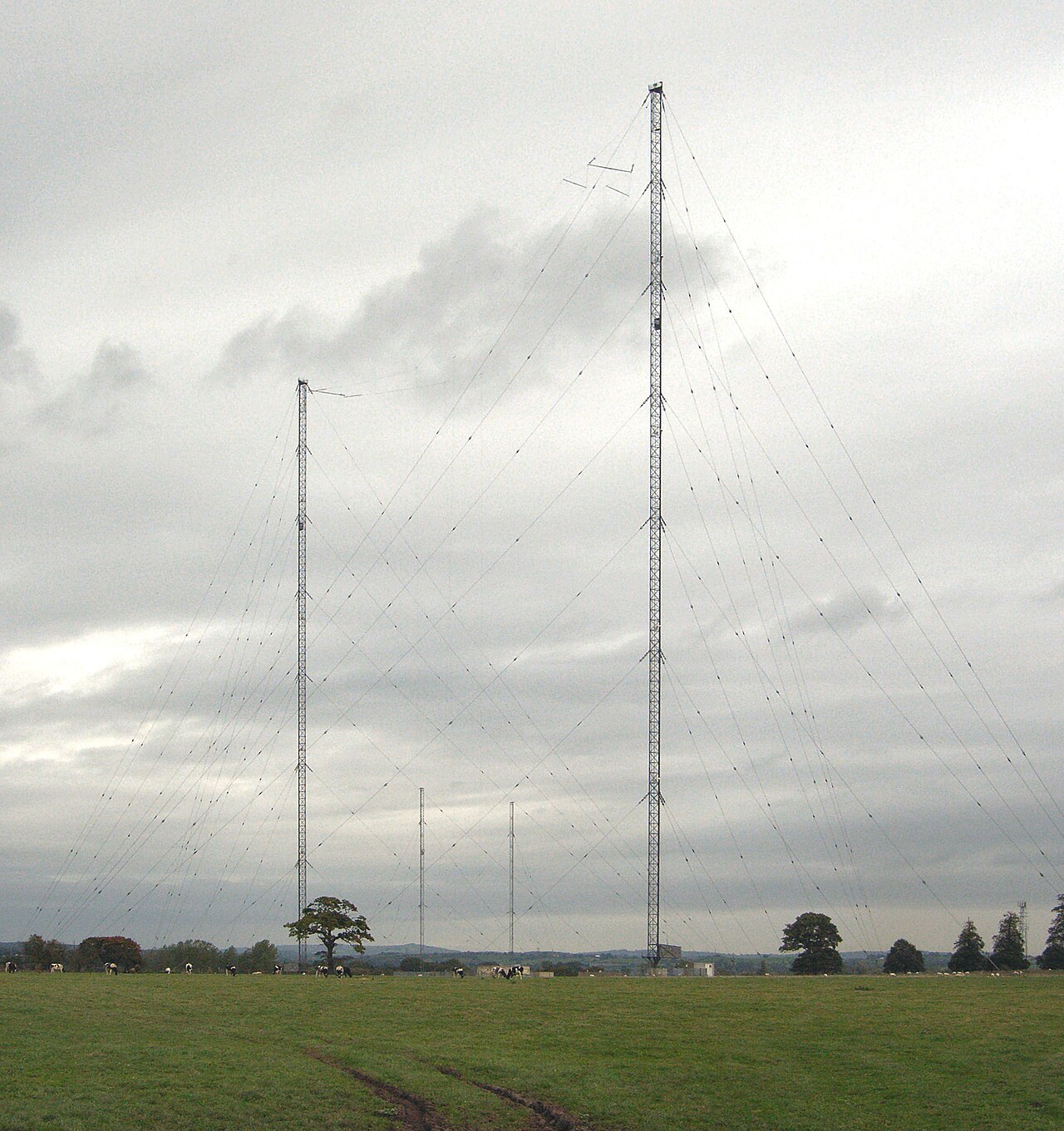
A pair of very large transmitting masts against a cloudy grey sky.
The main 198kHz BBC transmitter, at Droitwich. Bob Nienhuis, Public domain.

American readers may be unfamiliar with Long Wave as it’s a band not allocated in their region. Covering 153 to 279 kHz, it’s a relic from the earliest days of high-power broadcasting in the 1920s, used because of the enormous distances that could be covered with its lower frequencies. The main long wave transmitter for the BBC is at Droitwich, and its demise comes because there are no more spares for its high-power transmitter tubes. It joins many Medium Wave, or AM, as it is commonly known, stations in leaving the airwaves, as increased interference from switch mode electronics and the availability of higher quality alternatives took away their listeners. It’s fair to say that there will be few whose lives are inconvenienced by the switch-off in 2026, but it’s worth taking a moment to remember.

The first BBC Long Wave transmissions in the mid-1920s were on a 1600 metre wavelength, or 187.5 kHz. A series of international agreements saw them move to 193 kHz, and then 200 KHz or 1500 metres in 1934. They stayed on that frequency until another shift down 2 KHz to 198 kHz in 1988. They were atomic-controlled, and thus usable as a frequency standard. The programming started with station names redolent of their era, first the BBC National Service, then the Light Programme you’ll see on the dial in the header image, and finally the more modern-sounding Radio 4. A famous BBC programme tied to Long Wave is the Shipping Forecast, a weather bulletin for deep-sea fishermen which became cult listening on land and now features on FM and digital services too, and there’s even a probably-apocryphal tale that British nuclear submarine captains would once use its presence or absence to judge whether nuclear war had occurred.

In an Oxfordshire farmhouse not far short of fifty years ago, a young child who would later become a Hackaday writer heard a radio show like nothing before, which made an impression that continues to this day. The show was one of the earliest airings of the original Hitchhikers Guide To The Galaxy radio series, through a 1970s ITT radio tuned to BBC Radio 4 on (then) 200 kHz Long Wave. So long, Droitwich, and thanks for all the fish.