









Knowing absolutely nothing about you other than the fact that you’re currently reading Hackaday, I can predict with a high degree of certainty that we’re both fond of at least a few of the same movies. That’s not to say they’re necessarily our favorite works of art. Indeed, in some cases they may even be objectively bad films. But the memory of them has stuck with us — and by extension nearly everyone else in the hacker and maker community — for decades.
Even if you don’t remember all the little details, you’ll never forget the names: movies like WarGames, Ghostbusters, Back to the Future, and Short Circuit. Stories that showed smart people using their intellect and a bit of cobbled together hardware to triumph over the bad guys. The tech wasn’t always believable, sometimes it was downright farcical. But they made it seem real, and by the end of the story when they won the day using brains and a soldering iron rather than fists or a gun, the minutia of how it all worked wasn’t really that important anyway.
 It’s not a stretch to say that films such as these helped put many of us on a path towards science and technology. For those with an interest in more cerebral pursuits, seeing a scientist or an engineer save the day was hugely influential. How many engineers got their start watching Scotty frantically eke just a bit more power out of the Enterprise?
But as we recently discussed some of these classic movies behind the scenes here at Hackaday, it struck us that all of the best examples we could come up with were now 20, 30, or even 40 years old. That’s not to say there aren’t a few contemporary standouts, but they mostly seem to be biopics or other historical dramatizations which don’t quite scratch the same itch. Even so, none of them appear to have had the cultural impact necessary to stand the test of time in the same way their predecessors have.
So where have all of Hollywood’s heroic nerds gone, and what does it mean for future generations if these niche role models are no longer represented?
Before we get lost down memory lane, we should acknowledge that there’s undoubtedly an element of survivorship bias at play here. We naturally identify with the examples that put techie types on a pedestal, and tend to forget about the less flattering portrayals. In truth, it seems that there’s was only a short period of time in which the classic “nerd” characters got promoted from comedic sidekick roles to protagonists. Before that, and arguably after, it’s a different story.
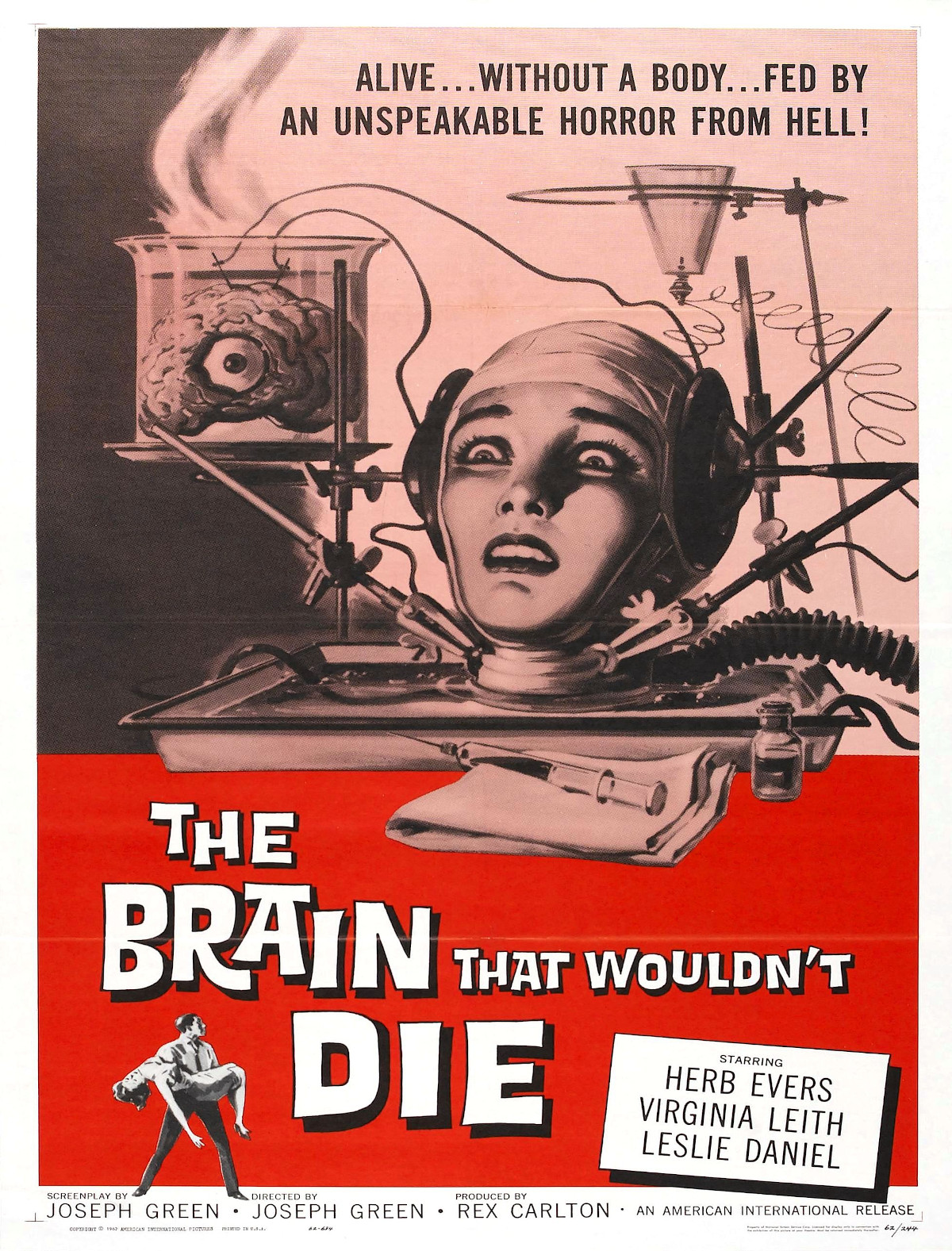 In the early days, the archetype of the “Mad Scientist” was extremely pervasive. From the 1940s up until the 60s or so, you’d be hard pressed to find a drive-in that wasn’t showing the latest hideous creature pieced together by an unscrupulous doctor. But it wasn’t a concept limited to horror and science fiction. After all, MI6 wasn’t in the habit of dispatching James Bond to defeat drooling imbeciles. Whether they knew how to build killer robots or were titans of industry, the smartest person in the room was often seen as the most dangerous.
In a way, that was still less insulting than the alternative. If a scientist wasn’t trying to forcibly transplant somebody’s brain, they probably had a pocket protector, horn-rimmed glasses, unkempt hair, and buck teeth. My sincere apologies to any readers who may currently meet that description. They might not have been the “bad guy” in the traditional sense, and may even have ended up helping out the heroes in their own way, but nobody was looking at the screen and wishing they were the one with the lisp and the lab coat.
A particularly notable case is The Nutty Professor, in which Jerry Lewis portrays the quintessential nerd who uses his knowledge of chemistry to create a confident and suave alter-ego for himself in the style of Jekyll and Hyde. To be fair, the movie ultimately makes a statement about being true to yourself and the importance of what’s on the inside. But ironically, more than 60 years later, the imagery of Lewis hamming it up as a socially awkward intellectual is undeniably the film’s most indelible element.
At the dawn of the 80s, things started to change. You still had the classic bespectacled nerd, but increasingly films started to put greater focus on their skills and abilities. The “geeks vs jocks” trope became very popular, perhaps most famously exemplified by the Revenge of the Nerds franchise which managed to wring four films out of the concept.
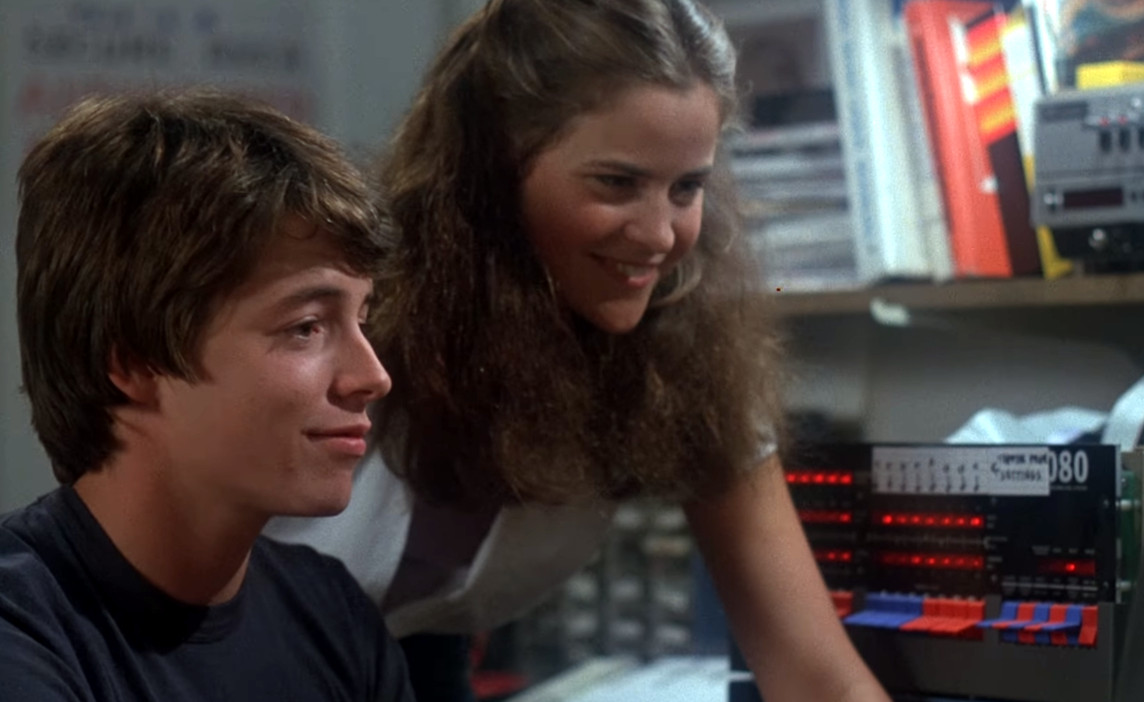
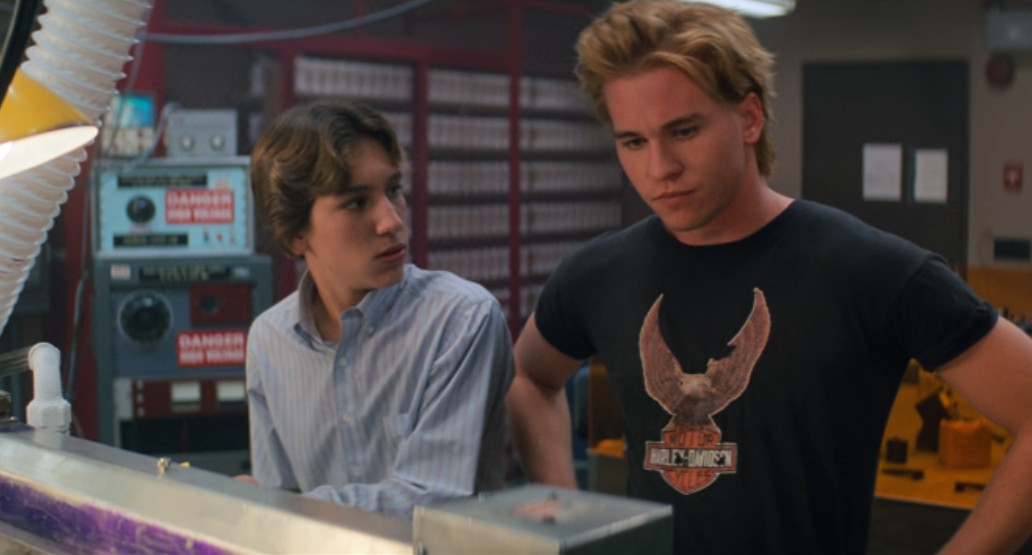
Now a new breed of nerd started to emerge in film that was young, charismatic, and handsome. The only thing that identified Matthew Broderick’s character in WarGames as anything other than a normal teenager in 1983 was the fact that he had a computer in his bedroom and knew how to program it. Steve Guttenberg played a heartthrob roboticist in Short Circuit, and they really screwed the curve up for the rest of us when they cast Val Kilmer as a laser prodigy in Real Genius. The nerds even started to find love, and one wonders how many young men spent their evenings furiously flipping switches on the front panel of their IMSAI 8080 in hopes that a breathless Ally Sheedy might appear in their doorway with an urgent mission that needed their unique expertise. I don’t know about anyone else, but I still haven’t given up hope.
Even school-age kids were getting in on the action. In 1985, Explorers featured a trio of youngsters who built their own spacecraft after assembling a circuit board based on a schematic they collectively dreamt about. The same year saw the release of The Goonies, and while only one of the kids was a tech wiz, they were all clearly meant to be somewhat off-center socially.
Of course, the most famous and culturally relevant example of 1980s nerds using their tech skills to save the day is Ghostbusters. Three 30-something scientists not only determine the physical properties of supernatural entities through empirical research, but also design and construct the equipment necessary to combat them. The resulting “Proton Pack”, which brilliantly captured the look and feel of a piece of hardware hastily thrown together from scavenged parts, became what is arguably the most iconic prop in cinema history. Not only has it been lovingly and reverently recreated by hackers and makers countless times since the movie’s release in 1985, but not a Halloween goes by that you won’t see at least one strapped to the back of a child.
There’s little question that the 1980s represent the high-water mark for nerds in media, but it’s not as if somebody flipped a switch and it all ended at once. There are a few standouts from the early 1990s, with Sneakers coming immediately to mind. It not only meets all of the criteria we’ve discussed here, it’s legitimately an excellent film with an incredible cast. If you haven’t already, please go watch Sneakers.
But for all the hate it’s gotten over the years, I’d also give the nod to Hackers. With a reminder that technical accuracy was never one of the criteria, it absolutely ticks the proper boxes when it comes to young, competent people using their technical skills for good. Plus, if Kilmer raised the bar for hot hackers in film, Angelina Jolie sent it into orbit.
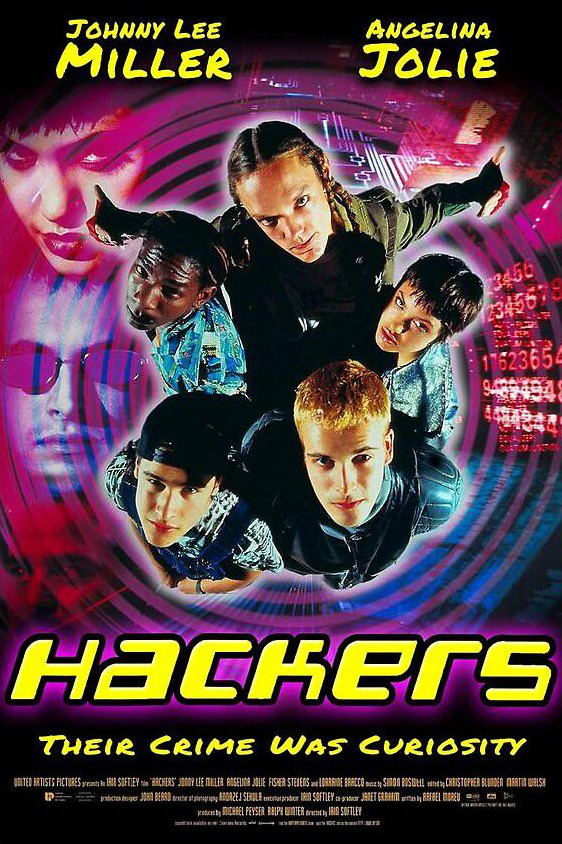 Although the aesthetic benefit that Jolie’s character brings to the film is beyond contestation, it’s important to note that Hackers presents her as exceptionally skilled, with abilities that meet or exceed those of her male peers. The fact that those abilities are accepted by every character in the film without question is a testament to how the audience’s expectations were changing at the dawn of the 2000s. The boys in Revenge of the Nerds might have been able to get away with a panty raid in 1984, but by 1995, the girls were popping shells with the best of them.
That said, those evolving standards may be the reason these type of movies seem to be so uncommon today. Given the expectations and the technical proficiency of the average moviegoer in 2026, what exactly would a nerd hero actually look like? The nerd stereotypes from the Nutty Professor era would be all but completely unrecognizable to modern audiences, and while one could argue that the likes of Elon Musk and Jeff Bezos are getting uncomfortably close to real-life Bond villains, that’s taking us in the wrong direction.
The reality is, it will take more than a teenager with a computer to captivate audiences today. Or to put it another way, if everyone in the theater is at least a little bit of a nerd to begin with, it’s much more difficult to create that mystique on the screen without taking the story to fantastical lengths.
Or at least, that’s one possibility. We’d love to hear your thoughts on the past, present, and future of nerds in the media. Will we ever see the likes of Real Genius and WarGames again, or has the world simply moved on? Are nerds normal?
此内容由惯性聚合(RSS阅读器)自动聚合整理,仅供阅读参考。 原文来自 — 版权归原作者所有。