


A global airline experienced persistent Google Meet connectivity issues with no apparent network infrastructure faults. While their APM tool offered visibility into network paths, it didn’t surface any local anomalies. Catchpoint’s endpoint monitoring, however, revealed performance degradation specifically on Wi-Fi Channel 44 (5GHz band), where signal strength dropped to -80 dBm compared to optimal ranges of -30 to -50 dBm. This correlation between Wi-Fi channel performance and application response times enabled rapid issue resolution and informed infrastructure optimization decisions.
The airline's IT team faced recurring user complaints about Google Meet performance issues, including dropped calls and audio quality degradation. Initial network diagnostics showed no apparent infrastructure problems, leaving the team without actionable insights into the root cause. Tools like Cisco’s Splunk and ThousandEyes lack the local granularity needed to correlate user experience issues with specific Wi-Fi performance characteristics.
The airline’s IT team couldn’t find the root cause using standard tools, leaving user complaints unresolved.
During a proof-of-concept deployment, endpoint agents were installed across multiple machines to collect granular Wi-Fi telemetry including:
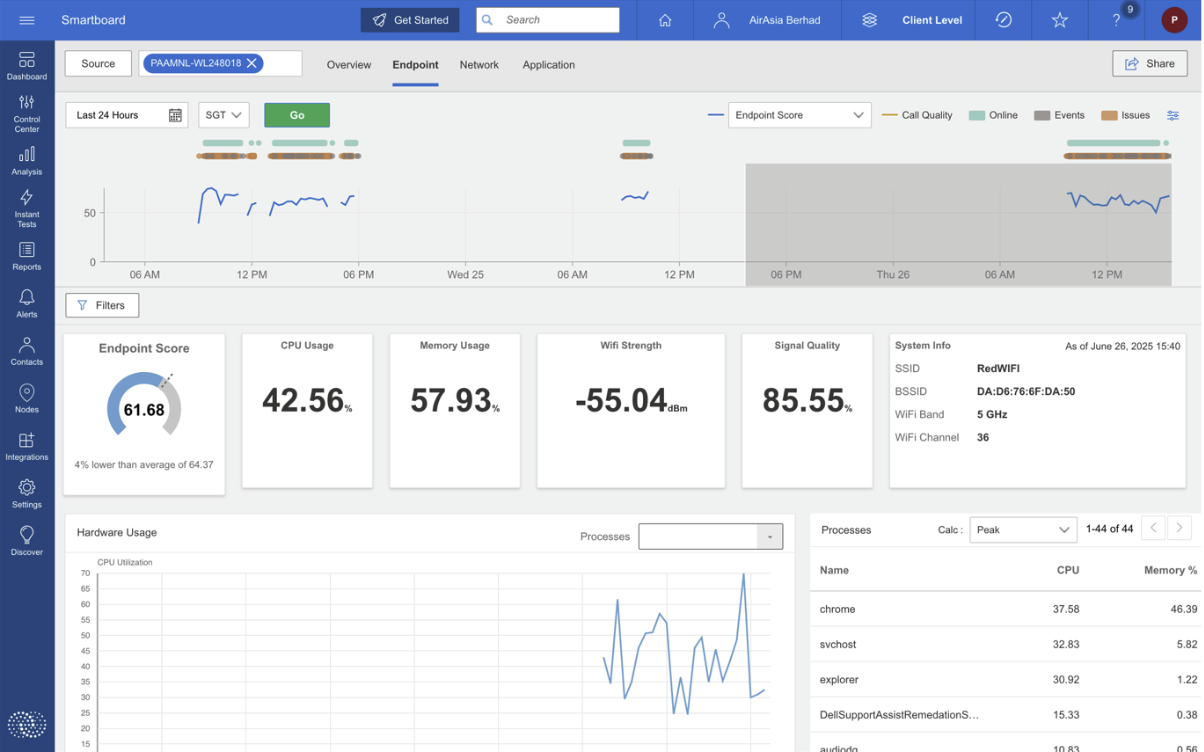
Catchpoint’s endpoint telemetry made it possible to directly correlate Wi-Fi performance with user experience—something traditional monitoring tools couldn’t do. By capturing metrics like signal strength and channel usage at the device level, our agents revealed patterns across varying network conditions that would’ve otherwise gone undetected.
Monitoring revealed significant performance variation between Wi-Fi bands.
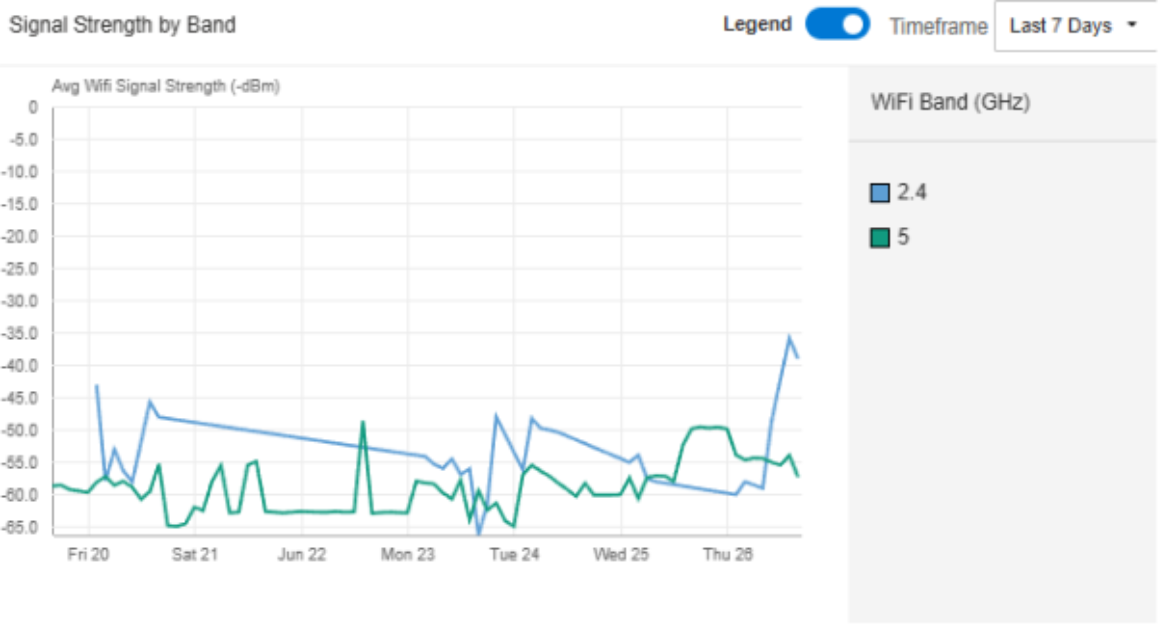
The 2.4GHz band consistently delivered stronger signal strength than 5GHz, confirming environmental interference with higher frequencies.
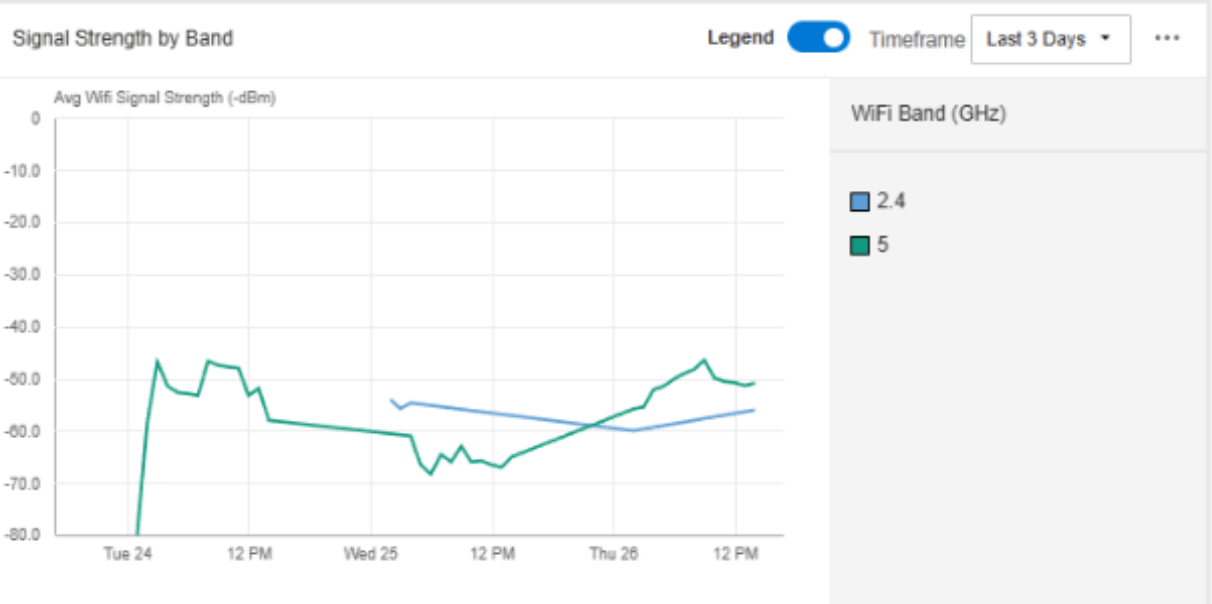
Signal strength analysis showed critical performance thresholds:
A specific user experiencing meeting issues on the 24th recorded signal strength as low as -80 dBm, well below acceptable performance thresholds.
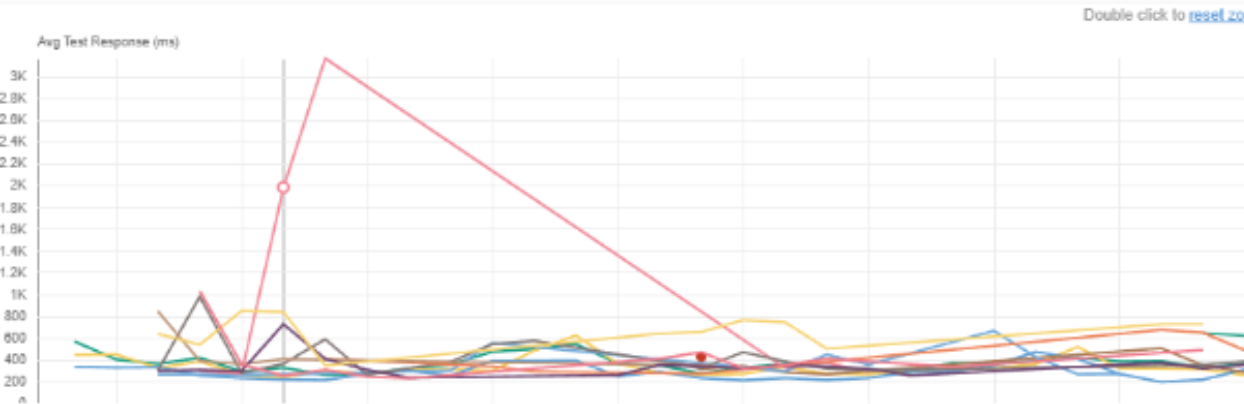
Direct correlation was established between Wi-Fi signal strength and Google Meet response times. Users on Channel 44 (5GHz) experienced degraded performance that aligned with decreased signal strength measurements.
The data confirmed expected 5GHz Wi-Fi behavior characteristics:
In office environments with multiple walls and obstacles between users and access points, these characteristics significantly impact connectivity quality. The shorter range and susceptibility to interference made 5GHz unsuitable for the office’s physical layout, highlighting the need for better infrastructure planning
The granular Wi-Fi visibility enabled:
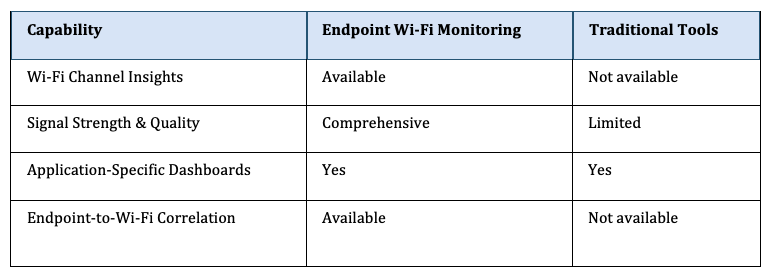
This case demonstrates the value of endpoint-level Wi-Fi monitoring in enterprise environments where:
Based on these findings, organizations should consider:
The systematic approach to Wi-Fi performance analysis demonstrated here provides a framework for identifying and resolving connectivity issues that traditional monitoring approaches may miss.
Ready to uncover the Wi-Fi blind spots impacting your users?
Learn how Catchpoint delivers end-to-end visibility—from endpoint to cloud.
此内容由惯性聚合(RSS阅读器)自动聚合整理,仅供阅读参考。 原文来自 — 版权归原作者所有。