




When we published the first Internet Resilience Report in 2024, the world was still reeling from the CrowdStrike outage that left airlines grounded and financial institutions scrambling. A year later, the stakes are even higher. The 2025 edition confirms what many of us already feel every day in IT Operations: resilience is no longer about uptime alone. It’s about protecting revenue, customer trust, and digital performance at scale.

One CIO we spoke with put it bluntly: “I don’t care if my systems are technically ‘up’. If my customers see the spinner, I’m losing money.” That sentiment echoes throughout this year’s data: slow is the new down.
According to the report, 73% of organizations say fast websites and applications are critical to success, and 42% say if apps are slow, they might as well be down. In a world where downtime costs millions per month, performance is no longer a “nice to have,” rather, it’s survival.
The 2025 Internet Resilience Report reveals how digital resilience has evolved from a technical metric into a board-level imperative, where speed, visibility, and accountability now define business survival. Here are the main insights:
Resilience now has four dimensions: reachability, availability, reliability, and performance. The research depicts a clear shift in consumer behavior, where tolerance for sluggish apps is low, even if uptime looks perfect on paper.
73% of organizations use Internet Performance Monitoring (IPM), with a strong preference for purpose-built, best-of-breed tools over generic platforms. As one retail SRE lead told us, “Our APM kept saying everything was green, but customers couldn’t check out. Without IPM, we were blind.”
AI now underpins Tier 1 applications, but outages or slowdowns are immediately felt by 57% of organizations. Meanwhile, 85% plan to increase AI investments in the next 18 months, showing just how central AI is becoming.
74% say external providers are critical to digital success. Yet many orgs still rely on provider dashboards, which often underreport incidents. “We learned the hard way when our CDN went dark for 20 minutes — we knew before they did,” recalled one media company’s network architect.
More than half of respondents say internet disruptions now cost them over $1M per month. For 13%, the number exceeds $10M. Those aren’t IT costs; they’re boardroom-level risks.
Observability isn’t just about metrics and logs anymore. It’s the foundation for resilience. The four pillars that matter most in the Internet context are:
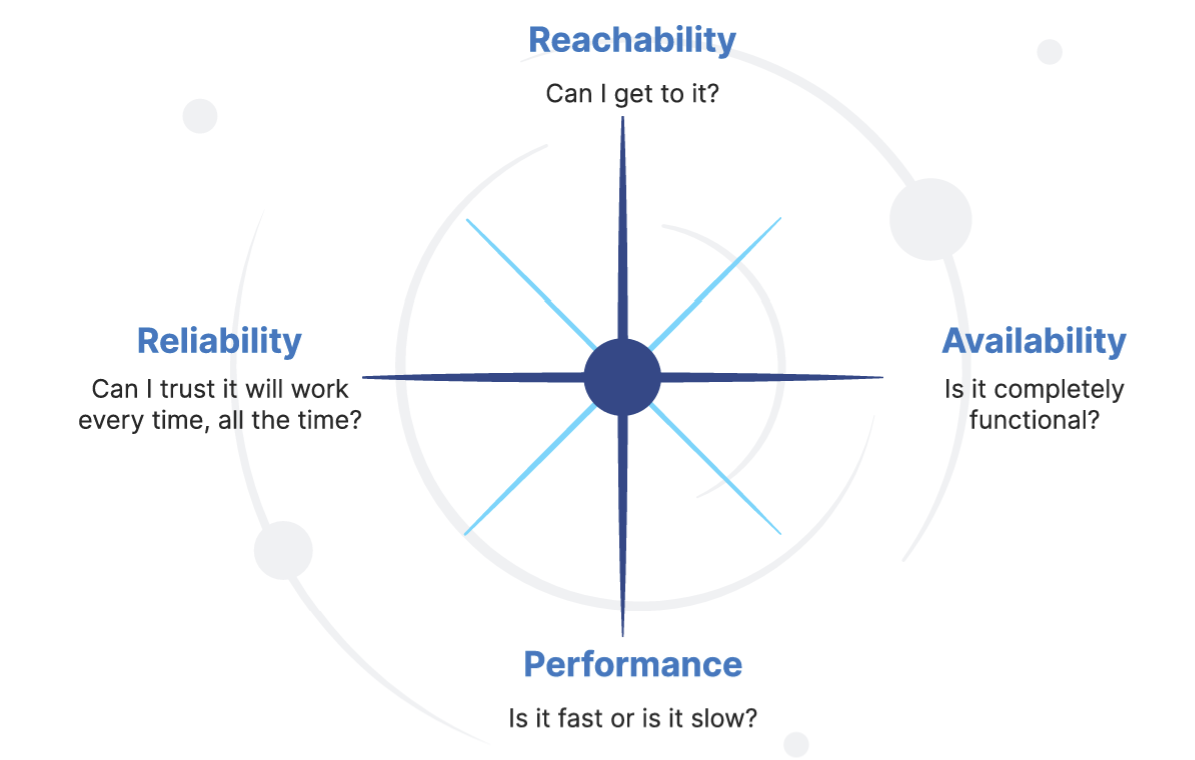
These four dimensions map resilience from the outside-in, focusing not just on internal telemetry but on what customers actually experience. As the report notes, solely monitoring uptime is like checking if the lights are on while ignoring whether the doors are locked and the elevators are working.
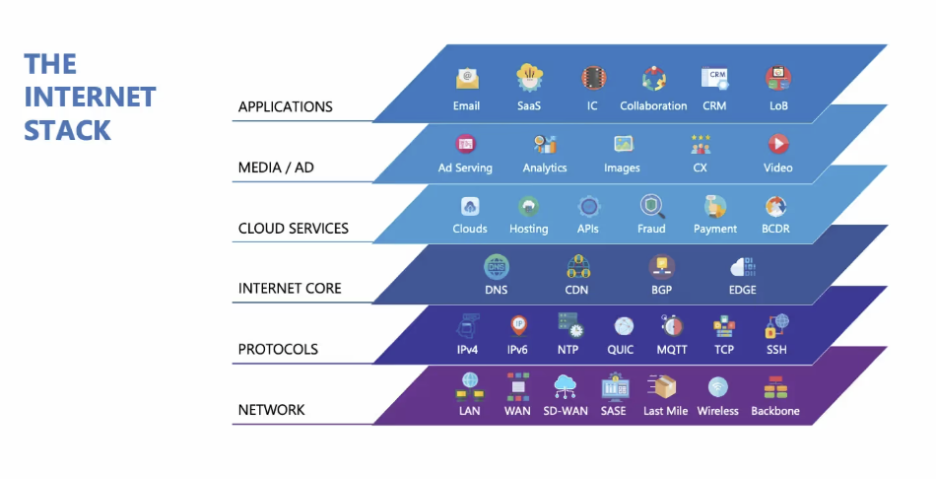
Resilience is no longer a background process, rather, it’s the main event. The organizations that thrive in 2025 will be those that treat performance as core to resilience, adopt best-of-breed IPM, and prepare for a future where AI and third-party dependencies drive both innovation and fragility.
To borrow a line from a banking CTO we interviewed: “We don’t measure uptime anymore, we measure patience. And patience runs out in 3 seconds.”
If your monitoring stack isn’t designed for the Internet itself, you’re not resilient. You’re lucky. And luck isn’t a strategy.
Read the Internet Resilience Report 2025 (No registration required)
Uptime isn’t resilience anymore. The 2025 Internet Resilience Report shows that when every millisecond counts, performance is profit and “slow” means “down.” Discover why the strongest digital businesses monitor the entire Internet Stack, not just their own systems, to stay ahead of the next outage.
When we published the first Internet Resilience Report in 2024, the world was still reeling from the CrowdStrike outage that left airlines grounded and financial institutions scrambling. A year later, the stakes are even higher. The 2025 edition confirms what many of us already feel every day in IT Operations: resilience is no longer about uptime alone. It’s about protecting revenue, customer trust, and digital performance at scale.
One CIO we spoke with put it bluntly: “I don’t care if my systems are technically ‘up’. If my customers see the spinner, I’m losing money.” That sentiment echoes throughout this year’s data: slow is the new down.
According to the report, 73% of organizations say fast websites and applications are critical to success, and 42% say if apps are slow, they might as well be down. In a world where downtime costs millions per month, performance is no longer a “nice to have,” rather, it’s survival.
The 2025 Internet Resilience Report reveals how digital resilience has evolved from a technical metric into a board-level imperative, where speed, visibility, and accountability now define business survival. Here are the main insights:
Resilience now has four dimensions: reachability, availability, reliability, and performance. The research depicts a clear shift in consumer behavior, where tolerance for sluggish apps is low, even if uptime looks perfect on paper.
73% of organizations use Internet Performance Monitoring (IPM), with a strong preference for purpose-built, best-of-breed tools over generic platforms. As one retail SRE lead told us, “Our APM kept saying everything was green, but customers couldn’t check out. Without IPM, we were blind.”
AI now underpins Tier 1 applications, but outages or slowdowns are immediately felt by 57% of organizations. Meanwhile, 85% plan to increase AI investments in the next 18 months, showing just how central AI is becoming.
74% say external providers are critical to digital success. Yet many orgs still rely on provider dashboards, which often underreport incidents. “We learned the hard way when our CDN went dark for 20 minutes — we knew before they did,” recalled one media company’s network architect.
More than half of respondents say internet disruptions now cost them over $1M per month. For 13%, the number exceeds $10M. Those aren’t IT costs; they’re boardroom-level risks.
Observability isn’t just about metrics and logs anymore. It’s the foundation for resilience. The four pillars that matter most in the Internet context are:
These four dimensions map resilience from the outside-in, focusing not just on internal telemetry but on what customers actually experience. As the report notes, solely monitoring uptime is like checking if the lights are on while ignoring whether the doors are locked and the elevators are working.
Resilience is no longer a background process, rather, it’s the main event. The organizations that thrive in 2025 will be those that treat performance as core to resilience, adopt best-of-breed IPM, and prepare for a future where AI and third-party dependencies drive both innovation and fragility.
To borrow a line from a banking CTO we interviewed: “We don’t measure uptime anymore, we measure patience. And patience runs out in 3 seconds.”
If your monitoring stack isn’t designed for the Internet itself, you’re not resilient. You’re lucky. And luck isn’t a strategy.
Read the Internet Resilience Report 2025 (No registration required)
This is some text inside of a div block.
此内容由惯性聚合(RSS阅读器)自动聚合整理,仅供阅读参考。 原文来自 — 版权归原作者所有。