


Search isn’t what it used to be. The way people discover information online is shifting. Instead of clicking through search results, many now ask AI answer engines like ChatGPT and Perplexity to do the research for them.
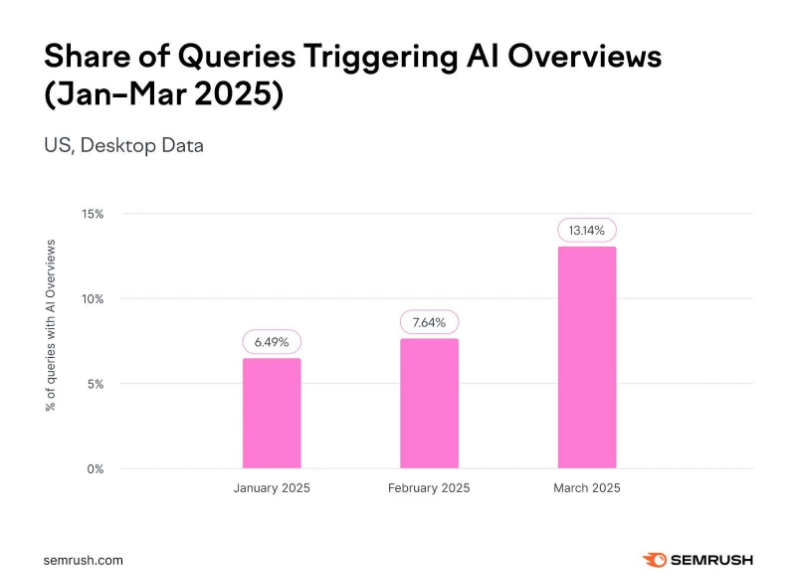
In March 2025, 13.1% of Google desktop searches featured AI Overviews— doubling from over 6% in January, according to Semrush analysis of 10+ million queries. Meanwhile, Gartner predicts that by 2026, a quarter of all search traffic will shift to AI assistants, with ChatGPT alone already serving 400+ million users each week.
This means getting your content recommended by these AIs – a practice called Answer Engine Optimization (AEO), also called Generative Engine Optimization (GEO) – has quickly become a priority for brands that want to stay visible. You need to be the go-to answer when your audience turns to AI for help.
But a Search Engine Land study of nearly 8,000 AI citations shows just how fragmented the ecosystem is:
The takeaway? AI answer engines are black boxes that change often, and it’s hard to keep up with where and how you’ll get cited. But one thing remains unchanged: web performance still matters.
If your website isn’t fast, stable, and reliable, you’ll reduce your chances of being cited. AI systems pull from multiple sources, and performance is one factor that can determine whether your page is included in those answers.
SEO isn’t going away. The fundamentals (quality content, smart keyword use, structured data, and Core Web Vitals) remain essential.
But AEO raises the bar:
When it comes to being seen by AI, performance isn’t a bonus—it’s a baseline. Here’s why it still matters more than ever:
Catchpoint’s Banking Website Benchmark Report showed that only 1 in 4 banks delivered pages in under 3 seconds despite nearly perfect uptime.
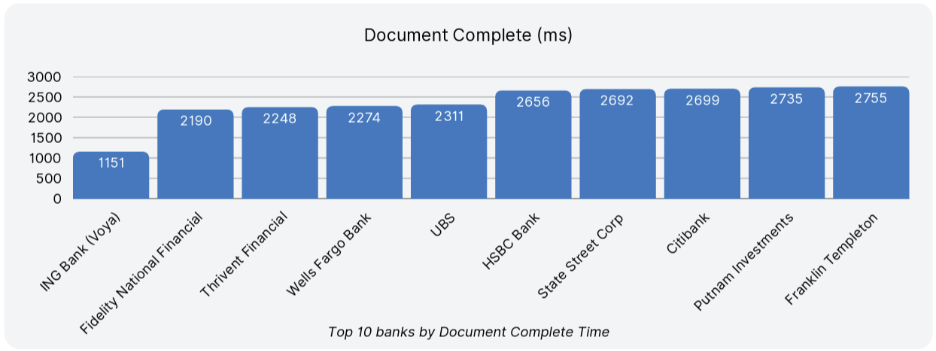
2025 Banking Website Benchmark Report: Top 10 banks by Document Complete
The winners weren’t just online; they were consistently fast everywhere. And it’s not just banking. Our industry benchmark reports show the same trend across retail, SaaS, and travel.
Optimizing web performance is important for both SEO and AI SEO. Here’s a roadmap to improve your website’s performance.
You can’t improve what you don’t measure. Begin by benchmarking your site’s speed and responsiveness across geographies, devices, and networks using WebPageTest. Run tests to track your performance metrics and test your critical user journeys to identify potential issues.
Combine real-user monitoring data with synthetic tests to get a full picture of your site’s health. This approach lets you see how real visitors experience your pages and also catch issues proactively in a controlled environment. The goal is to have eyes on your website’s performance 24/7, so you can spot and fix small slowdowns before they snowball.
For teams juggling both proactive testing and real-world data, the WebPageTest Expert Plan offers a unified way to combine synthetics with real user monitoring (RUM) for full visibility.
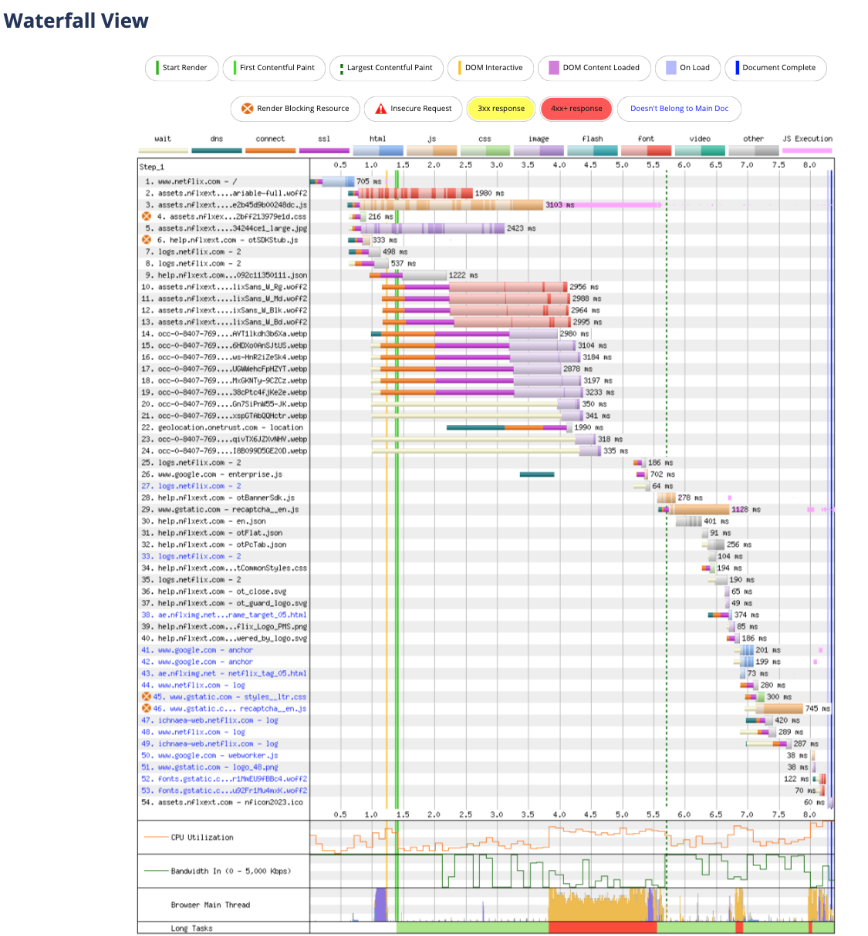
DNS lookups, CDN routing, and TLS handshake times all impact how quickly your site loads. A sluggish DNS could mean you’re left out of the answer entirely. DNS plays a bigger role than most people realize.
To dive deeper, join us on September 24th for our webinar “Beyond SEO: How DNS Impacts AI Search and Web Performance” with Matthew Bowes (Metamend) and Terry Bernstein (IBM NS1 Connect). We’ll explore how DNS and performance together shape your visibility in today’s AI-powered search world.
Web performance isn’t a one-and-done project. Every new script, image, or design tweak can tip the scales. Continuous monitoring with synthetic + RUM, combined with smart alerting, ensures you catch regressions and fix issues before they affect experience or search ranking.
SEO isn’t dead — it’s evolving. AEO means your site must be discoverable and deliver a great experience instantly. High-quality, authoritative content paired with fast, stable, and trustworthy pages gets prioritized by answer engines.
AI search may feel like a black box that changes often. But performance is a constant you can control. By measuring performance from all angles, fixing bottlenecks, and monitoring continuously, you’ll protect both your rankings and your brand’s visibility in AI-driven search.
Learn more
Search isn’t what it used to be. The way people discover information online is shifting. Instead of clicking through search results, many now ask AI answer engines like ChatGPT and Perplexity to do the research for them.
In March 2025, 13.1% of Google desktop searches featured AI Overviews— doubling from over 6% in January, according to Semrush analysis of 10+ million queries. Meanwhile, Gartner predicts that by 2026, a quarter of all search traffic will shift to AI assistants, with ChatGPT alone already serving 400+ million users each week.
This means getting your content recommended by these AIs – a practice called Answer Engine Optimization (AEO), also called Generative Engine Optimization (GEO) – has quickly become a priority for brands that want to stay visible. You need to be the go-to answer when your audience turns to AI for help.
But a Search Engine Land study of nearly 8,000 AI citations shows just how fragmented the ecosystem is:
The takeaway? AI answer engines are black boxes that change often, and it’s hard to keep up with where and how you’ll get cited. But one thing remains unchanged: web performance still matters.
If your website isn’t fast, stable, and reliable, you’ll reduce your chances of being cited. AI systems pull from multiple sources, and performance is one factor that can determine whether your page is included in those answers.
SEO isn’t going away. The fundamentals (quality content, smart keyword use, structured data, and Core Web Vitals) remain essential.
But AEO raises the bar:
When it comes to being seen by AI, performance isn’t a bonus—it’s a baseline. Here’s why it still matters more than ever:
Catchpoint’s Banking Website Benchmark Report showed that only 1 in 4 banks delivered pages in under 3 seconds despite nearly perfect uptime.
2025 Banking Website Benchmark Report: Top 10 banks by Document Complete
The winners weren’t just online; they were consistently fast everywhere. And it’s not just banking. Our industry benchmark reports show the same trend across retail, SaaS, and travel.
Optimizing web performance is important for both SEO and AI SEO. Here’s a roadmap to improve your website’s performance.
You can’t improve what you don’t measure. Begin by benchmarking your site’s speed and responsiveness across geographies, devices, and networks using WebPageTest. Run tests to track your performance metrics and test your critical user journeys to identify potential issues.
Combine real-user monitoring data with synthetic tests to get a full picture of your site’s health. This approach lets you see how real visitors experience your pages and also catch issues proactively in a controlled environment. The goal is to have eyes on your website’s performance 24/7, so you can spot and fix small slowdowns before they snowball.
For teams juggling both proactive testing and real-world data, the WebPageTest Expert Plan offers a unified way to combine synthetics with real user monitoring (RUM) for full visibility.
DNS lookups, CDN routing, and TLS handshake times all impact how quickly your site loads. A sluggish DNS could mean you’re left out of the answer entirely. DNS plays a bigger role than most people realize.
To dive deeper, join us on September 24th for our webinar “Beyond SEO: How DNS Impacts AI Search and Web Performance” with Matthew Bowes (Metamend) and Terry Bernstein (IBM NS1 Connect). We’ll explore how DNS and performance together shape your visibility in today’s AI-powered search world.
Web performance isn’t a one-and-done project. Every new script, image, or design tweak can tip the scales. Continuous monitoring with synthetic + RUM, combined with smart alerting, ensures you catch regressions and fix issues before they affect experience or search ranking.
SEO isn’t dead — it’s evolving. AEO means your site must be discoverable and deliver a great experience instantly. High-quality, authoritative content paired with fast, stable, and trustworthy pages gets prioritized by answer engines.
AI search may feel like a black box that changes often. But performance is a constant you can control. By measuring performance from all angles, fixing bottlenecks, and monitoring continuously, you’ll protect both your rankings and your brand’s visibility in AI-driven search.
Learn more
This is some text inside of a div block.
此内容由惯性聚合(RSS阅读器)自动聚合整理,仅供阅读参考。 原文来自 — 版权归原作者所有。