





The Homebrew Summer 2024 Hackathon brought together maintainers from across the globe to focus on enhancing security and performance aspects of Homebrew. Held July 16 to July 20 and hosted at IndyHall in Philadelphia, the event aimed to address issues identified in last year’s security audit from Trail of Bits, and to optimize the software’s performance. This post will share outcomes from the event, evaluate the effectiveness of the gathering, and serve as a blueprint for other open source projects who are considering in-person events as a way to make focused progress.
Since 2019, Homebrew’s maintainers meet annually for the “Annual General Meeting” in Brussels, Belgium. At AGM’s inception, Brussels was deemed a convenient location for the predominantly European team to coincide with the free FOSDEM conference. Since then, the global distribution of the core team has expanded.
At the same time, maintenance issues related to performance (the not-so-glamorous tasks of running a mature project that the whole world relies upon) and the remaining pieces of the Trail of Bits Security Audit needed to be completed.
The Project Leadership Team decided to undertake an experiment: our first North American in-person event, thematically focused and with an application process.
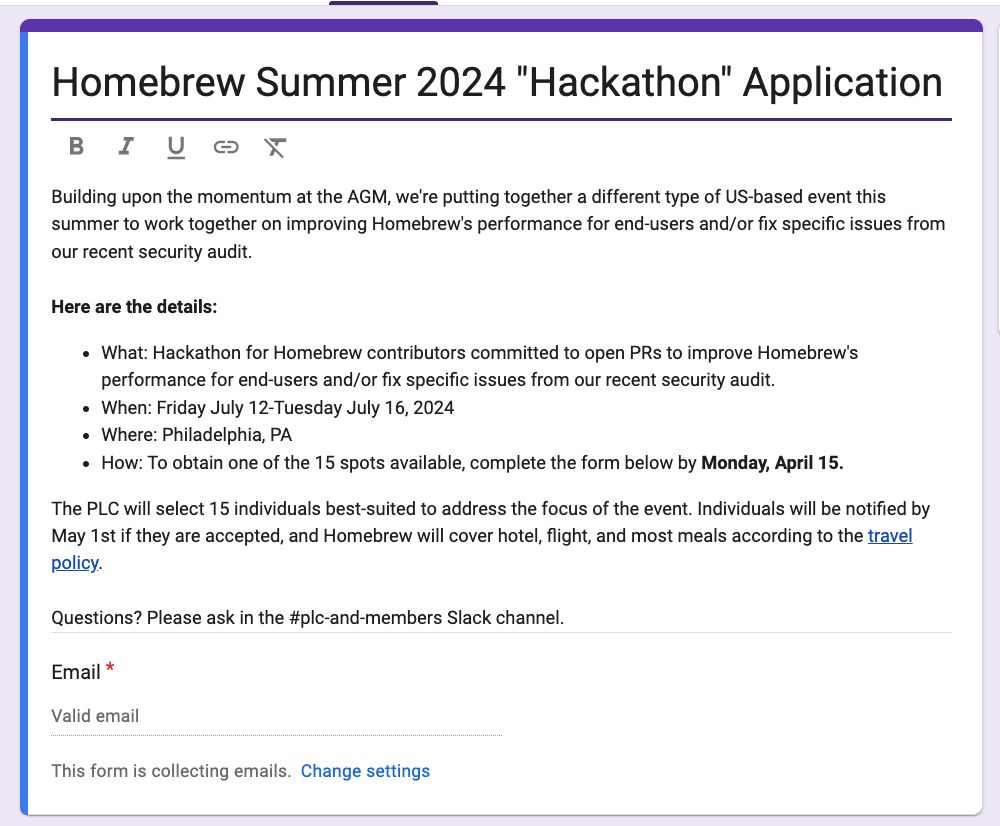
Of the 16 applications, 12 participants were accepted.
On the first day of the three-day event, Project Leader Mike McQuaid gave a presentation about how to triage and measure the highest-impact performance-related issues:
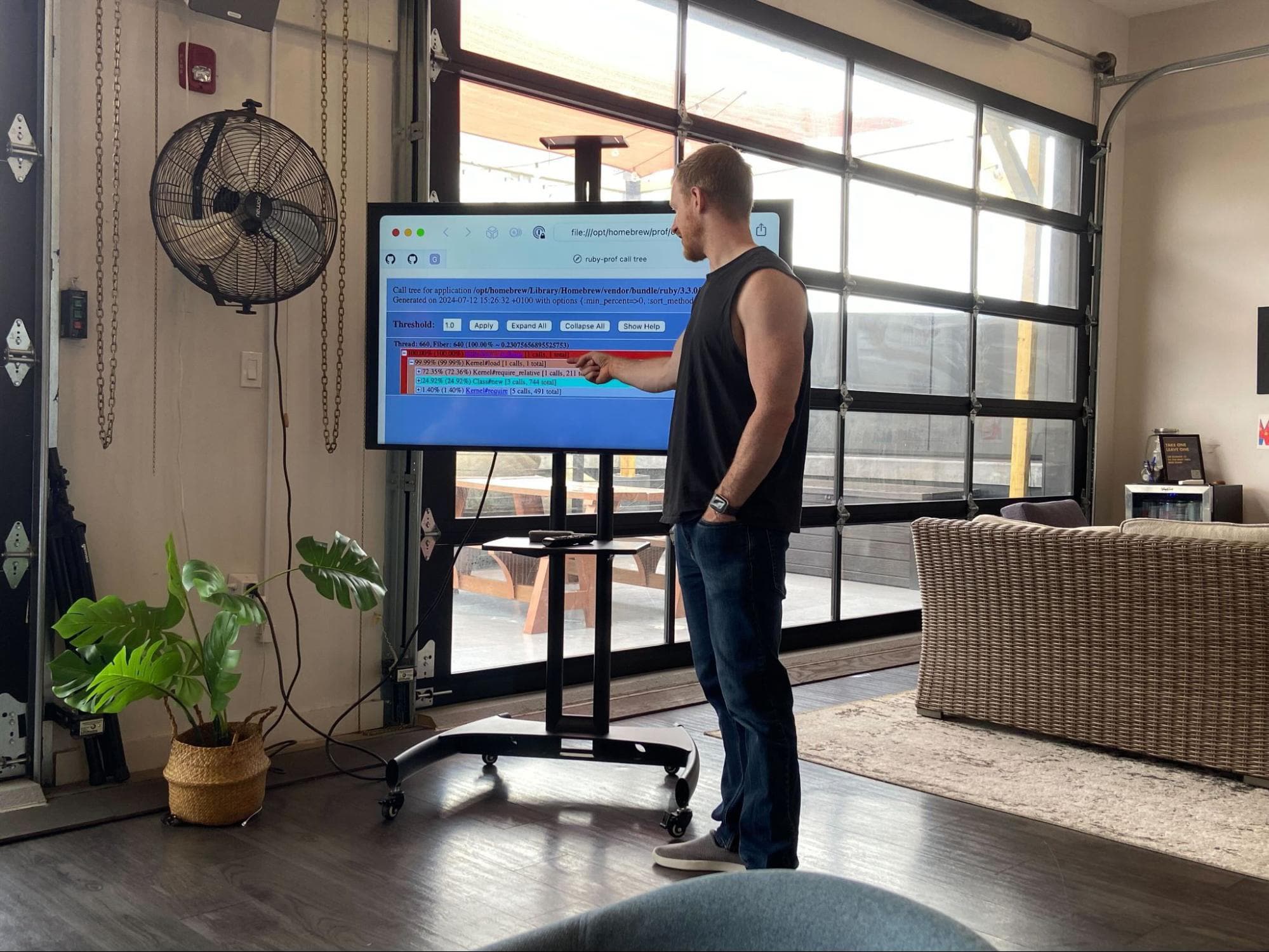
From there, participants tackled high-priority issues, raising pull requests in the dedicated Slack channel to ensure speedy reviews.
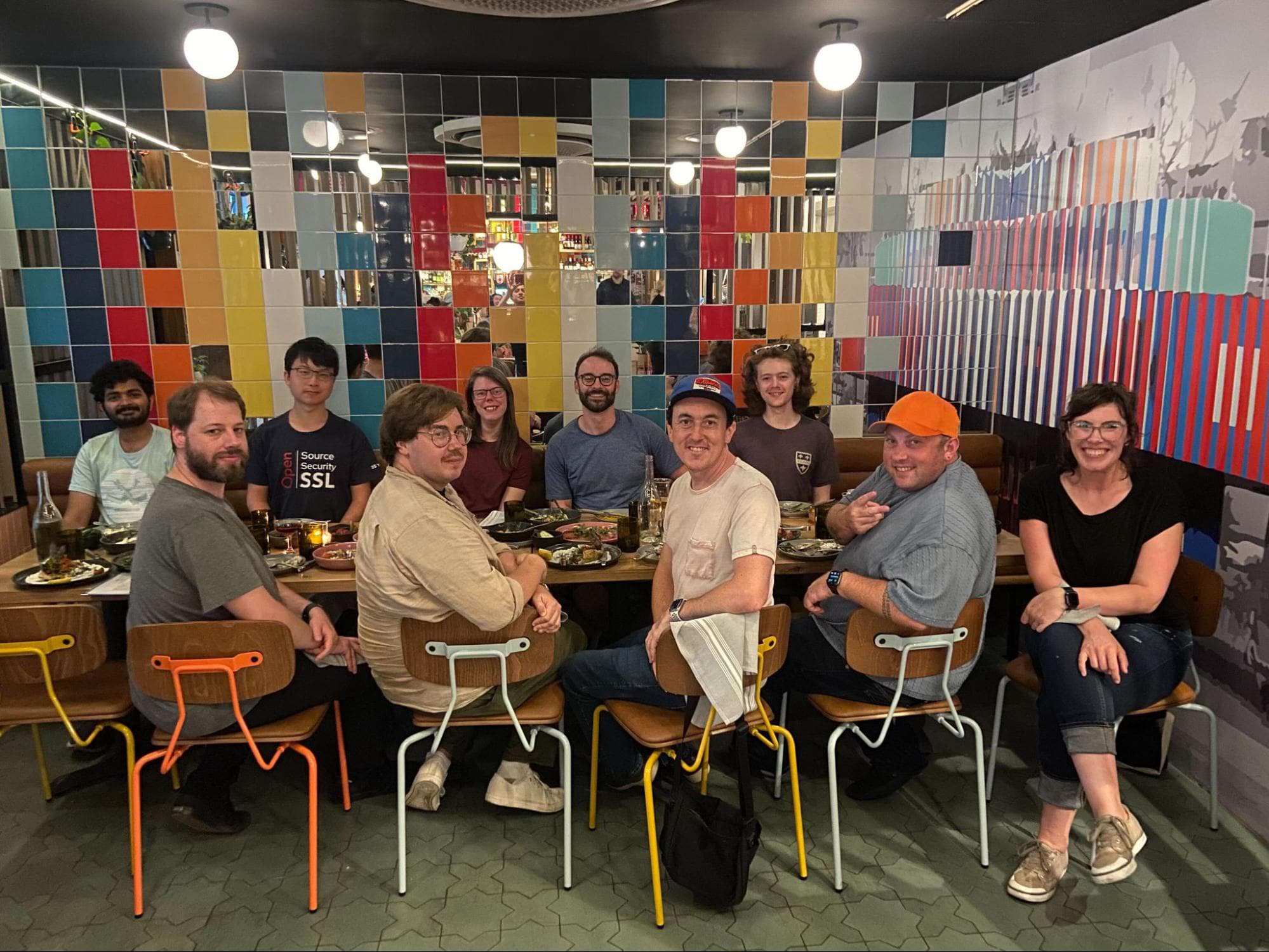
Participants worked synchronously and co-located over three days, with standup around 9:30am and departing at 5:00pm. Dinners were optional but provided opportunities for additional discussion:
Participants made significant progress in the following areas:
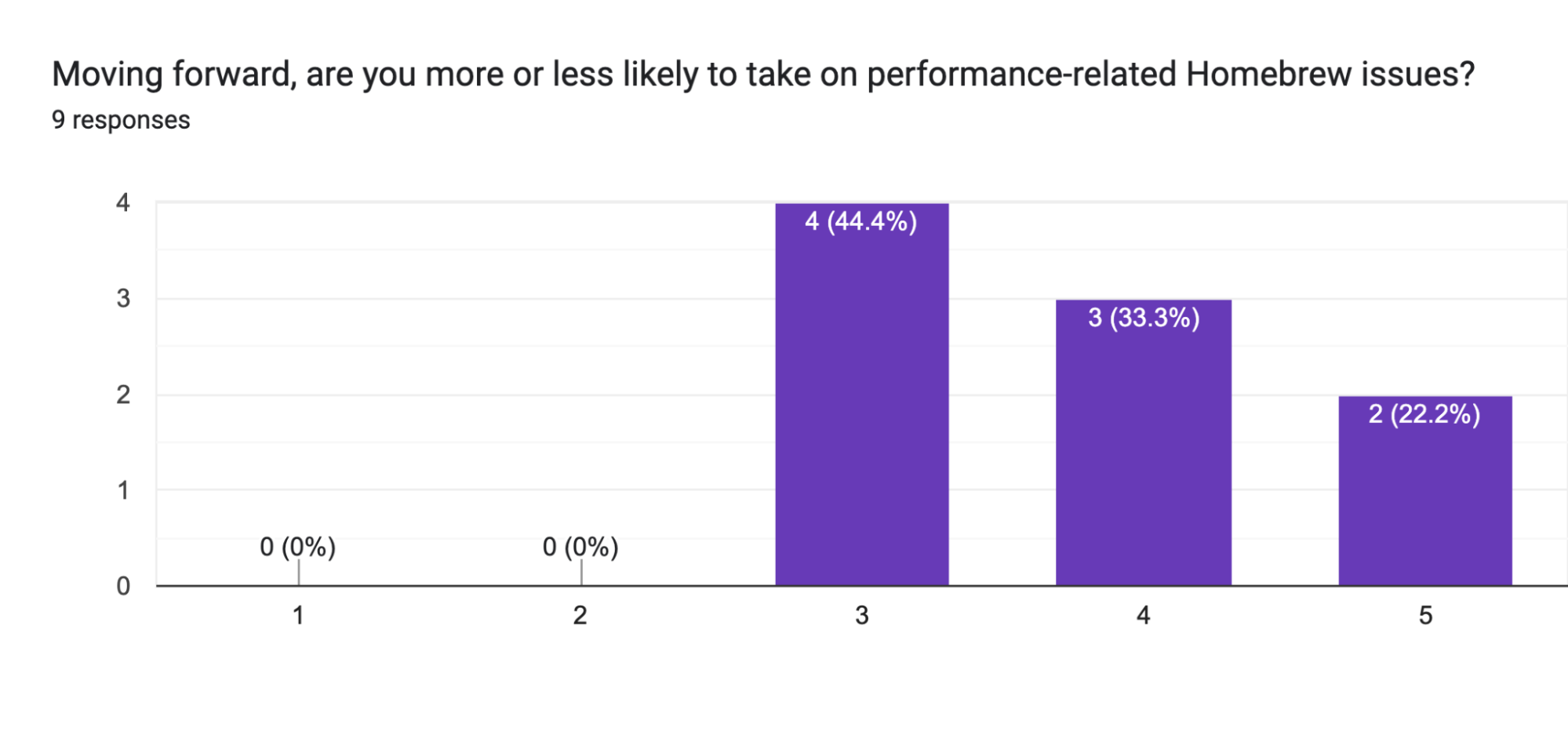
In addition to the direct impact participants had by shipping code, there’s some evidence that this in-person gathering may have increased the capacity of maintainers in areas of security and performance, which will ultimately benefit the project in the future:
1 = least likely, 5 = most likely
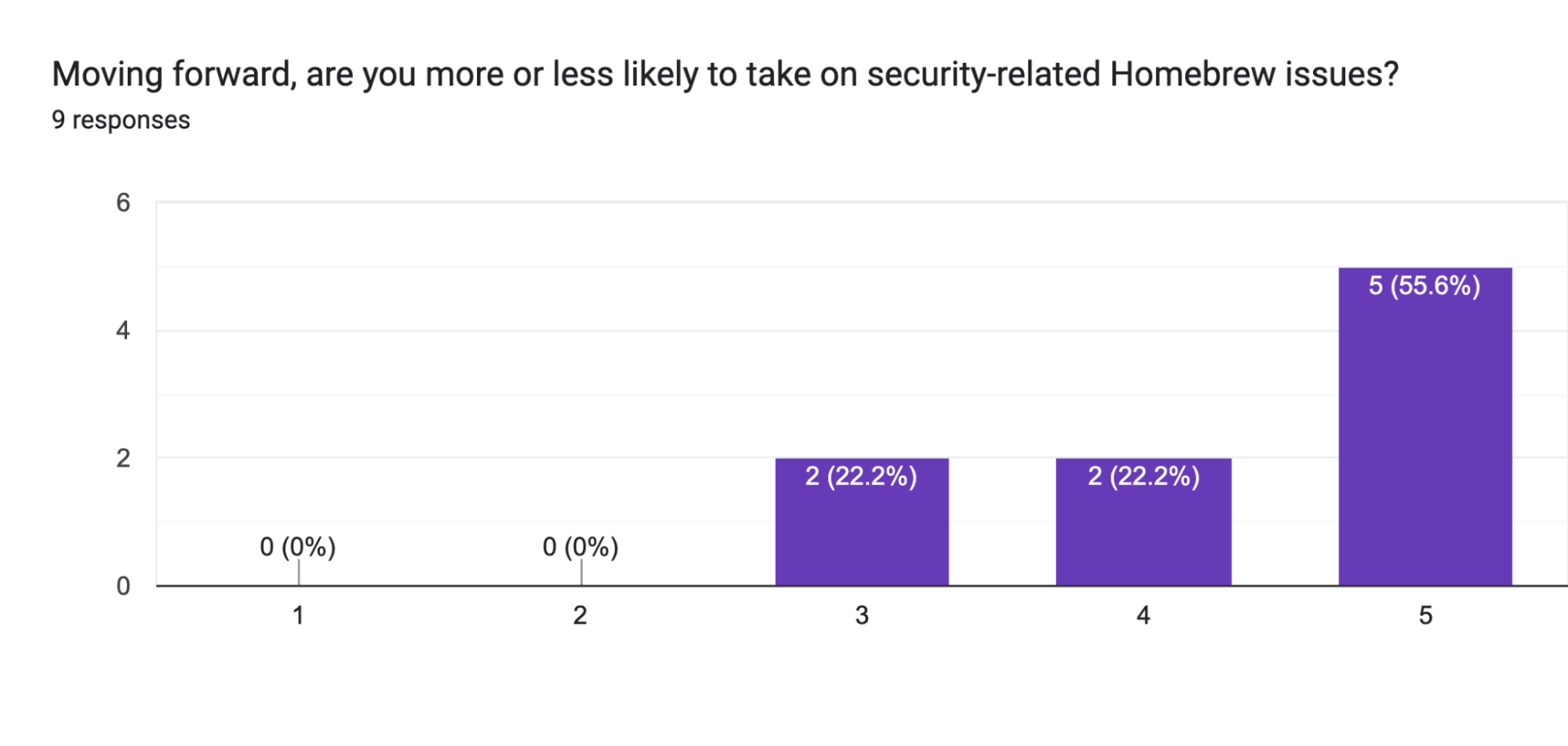
While the event seemed successful to us as organizers, we also wanted to hear from the participants themselves as part of our evaluation.
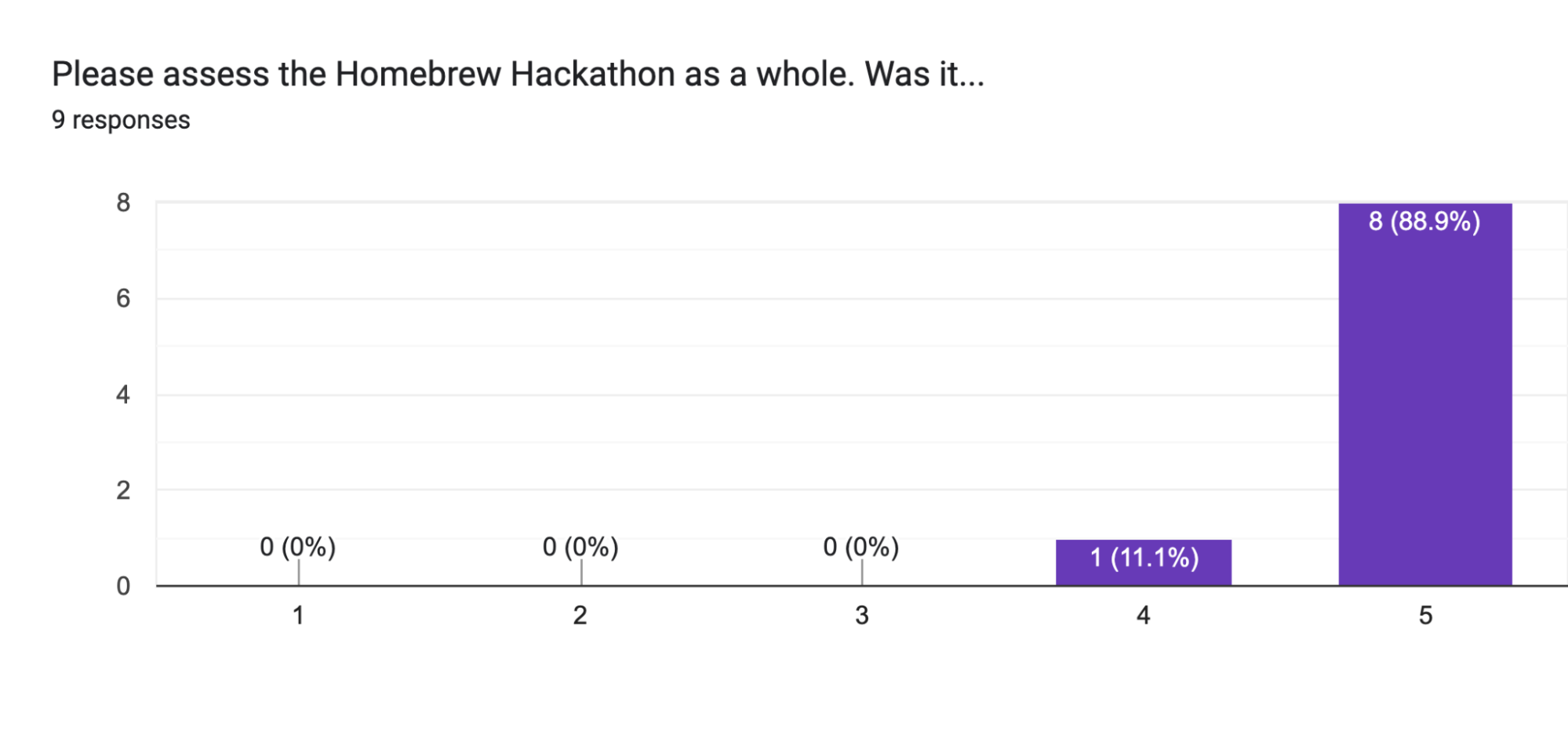
Overall, the hackathon received positive feedback:
Participants themselves assessed the event as successful:
1 = least successful, 5 = most successful
One of the unexpected effects of the rapid progress was a flurry of notifications for the maintainers who were not attending the event:
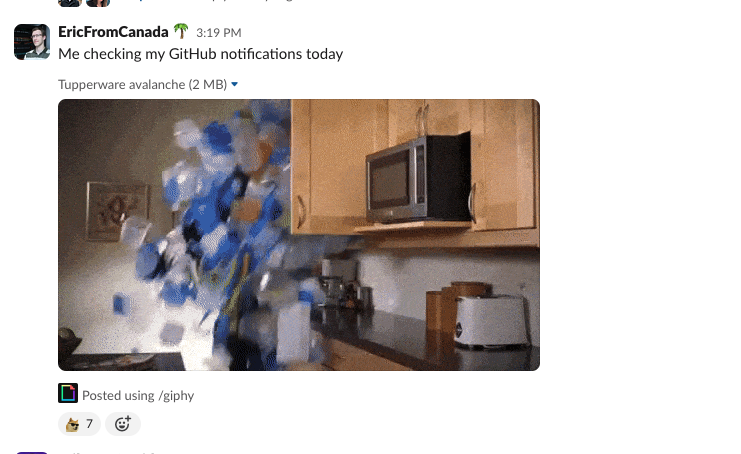
Apologies, Eric.
In their own words, participants identified key benefits:
What in particular made the Hackathon successful or not successful?
As an experiment, we were keen to hear how we might improve the structure to be more effective. Attendees had feedback in the following areas:
Overall, the event not only addressed critical technical challenges but also strengthened the bonds within the Homebrew community, setting a positive precedent for future collaborative efforts.
Today, I’m proud to announce Homebrew 6.0.0. The most significant changes since 5.1.0 are a new tap trust security mechanism, the new faster, smaller, default internal...
Homebrew 5.1.0 has been released. Homebrew’s most significant changes since 5.0.0 are expanded brew bundle support, brew version-install, new -full formula handling an...
Today, I’d like to announce Homebrew 5.0.0. The most significant changes since 4.6.0 are download concurrency by default, official support for Linux ARM64/AArch64, tim...
Today, I’d like to announce Homebrew 4.6.0. The most significant changes since 4.5.0 are opt-in concurrent downloads with HOMEBREW_DOWNLOAD_CONCURRENCY, preliminary ma...
Today, I’d like to announce Homebrew 4.5.0. The most significant changes since 4.4.0 are major improvements to brew bundle/services, preliminary Linux support for cask...
此内容由惯性聚合(RSS阅读器)自动聚合整理,仅供阅读参考。 原文来自 — 版权归原作者所有。