

惯性聚合 高效追踪和阅读你感兴趣的博客、新闻、科技资讯
阅读原文 在惯性聚合中打开

推荐订阅源

T
Threatpost
OSCHINA 社区最新新闻
OSCHINA 社区最新新闻
Engineering at Meta
Engineering at Meta
T
The Blog of Author Tim Ferriss
Recent Announcements
G
Google Developers Blog
Google DeepMind News
The Register - Security
MongoDB | Blog
MongoDB | Blog
U
Unit 42
B
Blog
H
Hackread – Cybersecurity News, Data Breaches, AI and More
L
LangChain Blog
Stack Overflow Blog
Stack Overflow Blog
P
Privacy International News Feed
L
LINUX DO - 最新话题
博客园_首页
博客园 - Franky
大猫的无限游戏
大猫的无限游戏
小众软件
小众软件
Threat Intelligence Blog | Flashpoint
T
Tor Project blog
V
Visual Studio Blog
让小产品的独立变现更简单 - ezindie.com
P
Privacy & Cybersecurity Law Blog
C
Cyber Attacks, Cyber Crime and Cyber Security
K
Kaspersky official blog
C
Cisco Blogs
博客园 - 【当耐特】
阮一峰的网络日志
阮一峰的网络日志
I
Intezer
罗磊的独立博客
MyScale Blog
MyScale Blog
Last Week in AI
Last Week in AI
A
About on SuperTechFans
G
GRAHAM CLULEY
Y
Y Combinator Blog
Microsoft Security Blog
GbyAI
GbyAI
T
Threat Research - Cisco Blogs
P
Proofpoint News Feed
D
DataBreaches.Net
The Hacker News
The Hacker News
Spread Privacy
Spread Privacy
AWS News Blog
AWS News Blog
I
InfoQ
T
The Exploit Database - CXSecurity.com
Simon Willison's Weblog
博客园 - 叶小钗
Project Zero
Project Zero

Supabase Blog

AI Agents Know About Supabase. They Don't Always Use It Right. Custom OIDC Providers for Supabase Auth 100,000 GitHub stars Supabase docs over SSH Navigating Regional Network Blocks Supabase Joins the Stripe Projects Developer Preview Log Drains: Now available on Pro Supabase Storage: major performance, security, and reliability updates Supabase incident on February 12, 2026 Hydra joins Supabase X / Twitter OAuth 2.0 is now available for Supabase Auth BKND joins Supabase Supabase is now an official Claude connector Supabase PrivateLink is now available Introducing: Postgres Best Practices When to use Read Replicas vs. bigger compute Introducing TRAE SOLO integration with Supabase Supabase Security Retro: 2025 Sync Stripe Data to Your Supabase Database in One Click Building ChatGPT Apps with Supabase Edge Functions and mcp-use Own Your Observability: Supabase Metrics API Introducing iceberg-js: A JavaScript Client for Apache Iceberg Introducing Supabase for Platforms Adding Async Streaming to Postgres Foreign Data Wrappers Build "Sign in with Your App" using Supabase Auth Introducing Seven New Email Templates for Supabase Auth The new Supabase power for Kiro Introducing Supabase ETL Introducing Analytics Buckets Introducing Vector Buckets Snap, Inc. Launches Snap Cloud, Powered by Supabase Triplit joins Supabase Supabase Series E 1000 Y Combinator Founders Choose Supabase gm 👋 web3, welcome aboard to Sign in with Web3 (Solana, Ethereum) Announcing the Supabase Remote MCP Server Enterprise speed, enterprise standards with Bolt Cloud + Supabase PostgREST 13 Lovable Cloud + Supabase: The Default Platform for AI Builders Processing large jobs with Edge Functions, Cron, and Queues Defense in Depth for MCP Servers OrioleDB Patent: now freely available to the Postgres community Supabase Launch Week 15 Hackathon Winner Announcement The Vibe Coder's Guide to Supabase Environments Testing for Vibe Coders: From Zero to Production Confidence The Vibe Coding Master Checklist Vibe Coding: Best Practices for Prompting Supabase Auth: Build vs. Buy Top 10 Launches of Launch Week 15 Supabase Launch Week 15 Hackathon Storage: 10x Larger Uploads, 3x Cheaper Cached Egress, and 2x Egress Quota Persistent Storage and 97% Faster Cold Starts for Edge Functions Algolia Connector for Supabase New Observability Features in Supabase Improved Security Controls and A New Home for Security Introducing Branching 2.0 Stripe-To-Postgres Sync Engine as standalone Library Supabase Analytics Buckets with Iceberg Support Create a Supabase backend using Figma Make Introducing JWT Signing Keys Supabase UI: Platform Kit Build a Personalized AI Assistant with Postgres Announcing Multigres: Vitess for Postgres Building on open table formats Open Data Standards: Postgres, OTel, and Iceberg Simplifying back-end complexity with Supabase Data APIs PostgreSQL Event Triggers without superuser access Top 10 Launches of Launch Week 14 Supabase MCP Server Data API Routes to Nearest Read Replica Declarative Schemas for Simpler Database Management Realtime: Broadcast from Database Keeping Tabs on What's New in Supabase Studio Edge Functions: Deploy from the Dashboard + Deno 2.1 Automatic Embeddings in Postgres Introducing the Supabase UI Library Supabase Auth: Bring Your Own Clerk Postgres Language Server: Initial Release Migrating from Fauna to Supabase Migrating from the MongoDB Data API to Supabase Dedicated Poolers Postgres as a Graph Database: (Ab)using pgRouting AI Hackathon at Y Combinator Calendars in Postgres using Foreign Data Wrappers Supabase Launch Week 13 Hackathon Winners How to Hack the Base! Running Durable Workflows in Postgres using DBOS database.build v2: Bring-your-own-LLM Restore to a New Project Hack the Base! with Supabase Top 10 Launches of Launch Week 13 Supabase Queues High Performance Disk Supabase Cron Supabase CLI v2: Config as Code Supabase Edge Functions: Introducing Background Tasks, Ephemeral Storage, and WebSockets Supabase AI Assistant v2 OrioleDB Public Alpha Executing Dynamic JavaScript Code on Supabase with Edge Functions ClickHouse Partnership, improved Postgres Replication, and Disk Management
PgBouncer is now available in Supabase
Angelico de los Reyes · 2021-04-02 · via Supabase Blog

PgBouncer is now available in Supabase

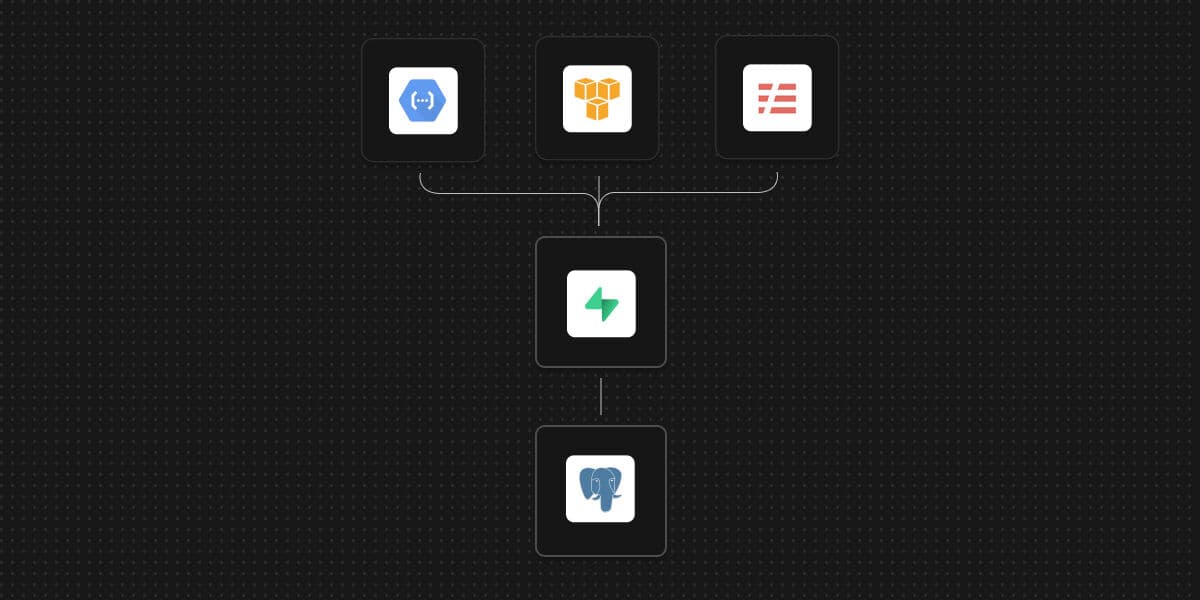
Javascript Frameworks like Next.js, Redwood, Blitz, and tools like Prisma are all moving in one direction. Serverless.

Serverless functions work great for developers using the Supabase API because we manage a PostgREST server for every project. Supabase also provides direct access to the Postgres database, so that developers can connect any tool they want. Unfortunately, Serverless function don't work well for direct Postgres connections (for reasons we'll discuss soon).

Jamstack developers make up a large portion of the Supabase Community. While we'd love for developers to use PostgREST, we mostly want developers to use Postgres. This means supporting the tools which they already love.

So today we are adding PgBouncer, an open source connection pooler for Postgres.

Typically when a client connects to a PostgreSQL database, they need to open and manage their own database connection. With a connection pool, connections are already opened and available for use. When a client makes a request, they use a connection from the pool. When the transaction or session is completed the underlying connection is simply returned to the pool and is once again free to be used by another user or application.

Handling connection surges#

In a traditional architecture, middleware servers (e.g. APIs) manage a small number of connection to a Postgres database. Essentially, the middleware server is a connection pool.

In a Serverless environment, there is no middleware server to maintain a connection, so they create a new connection for each concurrent request. Since Serverless functions are typically used for bursty workloads, this can end up opening a lot of connections to the database and overwhelm your Postgres server.

Connection pools mitigate this. Connections are opened beforehand and recycled across users and applications. What's more, connection pools are specialized for this task. A small number of connections is sufficient to handle demand ten, twenty times its size, or even more. Whenever a new connection is required it is taken from a pool of open and available connections instead of initializing an entirely new one. This eliminates the need to spawn a new process.

It's a common misconception that PgBouncer increases the number of connections a Postgres instance can open. This is not the case. If Postgres is configured for a maximum of 50 connections before connection pooling, it will still only be able to open 50. Connection pooling simply keeps connections open and idle, ready to accept clients. Nevertheless, as mentioned above, PgBouncer allows your database to be able to handle more than it can without a connection pool.

PgBouncer is like a Queue. With regular Postgres, when you hit your connection limit, new connections are rejected. PgBouncer overcomes this limitation. When all connections in the pool are in-use, it doesn't reject any incoming requests. Instead, PgBouncer queues them until a connection is returned to the pool and made available. This doesn't mean connection pooling is a magic bullet. If your clients is running expensive queries then the connections might take a long time before they are returned to the pool. The natural solution to this is to increase your database resources so that it processes queries faster or PgBouncer can open more connections.

From today, all new projects will include connection pooling. In the Database section of our dashboard, you will notice a new section for it. Under the hood, we utilise PgBouncer which is installed in the same server as PostgreSQL. Through the dashboard, we provide you with the necessary connection details to start using the connection pool as well as the ability to modify Pool Mode. Not sure which mode to use? Below is a quick primer on each mode.

Pool Mode determines how PgBouncer handles a connection.

Session#

When a new client connects, a connection is assigned to the client until it disconnects. Afterward, the connection is returned back to the pool. All PostgreSQL features can be used with this option.

Transaction#

This is the suggested option for serverless functions. With this, the connection is only assigned to the client for the duration of a transaction. Once done, the connection is returned to the pool. Two consecutive transactions from the same client could be done over two, different connections. Some session-based PostgreSQL features such as prepared statements are not available with this option. A more comprehensive list of incompatible features can be found here.

Statement#

This is the most granular option. Connections are returned to the pool after every statement. Transactions with multiple statements are not allowed. This is best used when AUTOCOMMIT is in use.

Try out connection pooling now with a new project in the dashboard. For now, we do not have any plans to port this over to older projects.

Eventually, we will expose more PgBouncer settings to the UI such as Pool Size. At the moment it is set to 15.

We are still working towards getting the latest version of Supabase Postgres to both the AWS and Digital Ocean marketplaces. Follow us on Twitter to be informed once it's released!