




Architecture and design firm HKS is well known for its stadium projects, especially in North America. Two of its American football venues, SoFi Stadium in California and the AT&T Stadium in Texas, are currently hosting Fifa World Cup games. Alex Thomas, the regional design director for sports and entertainment at HKS London, recently joined The Urbanist to discuss the finer points of stadium design in the modern age.
“One of the big shifts has been in the recognition that these buildings should really be tied to their context, whether that’s the climate, the city or the culture,” said Thomas. “That’s why, when you look at any of our sports projects, they all look so different. They are unique pieces of architecture, designed to respond to their various contexts.”
When it comes to stadiums, there’s more to consider than just exterior façades and capacities. These are buildings steeped in memory and emotion that carry the weight of communities and fanbases. Because of this, they must ensure that the atmosphere can thrive without forsaking accessibility. Every fan will no doubt have a different view on which ground is the world’s best but here is Thomas’s list of his 10 favourite sports venues.
1.
SoFi Stadium, Inglewood, Los Angeles, USA
“The best stadium in the world. The roof canopy has a low, elegant profile but, inside, the spectacular arena is filled with daylight. The bowl sinks below ground level, making the entry experience akin to discovering a colossal crater in the ground. The Oculus, a Samsung-designed screen suspended from the ceiling, makes the experience digitally immersive at a scale that I haven’t seen elsewhere. The ground is also genuinely multifunctional. Be it the Super Bowl, Taylor Swift’s Eras Tour, the Fifa World Cup or the LA28 Olympic Games, the SoFi can host it. It shows what a modern stadium can be.”
Inside SoFi Stadium prior to Super Bowl LVl (Image: BJ Warnick/Alamy)
2.
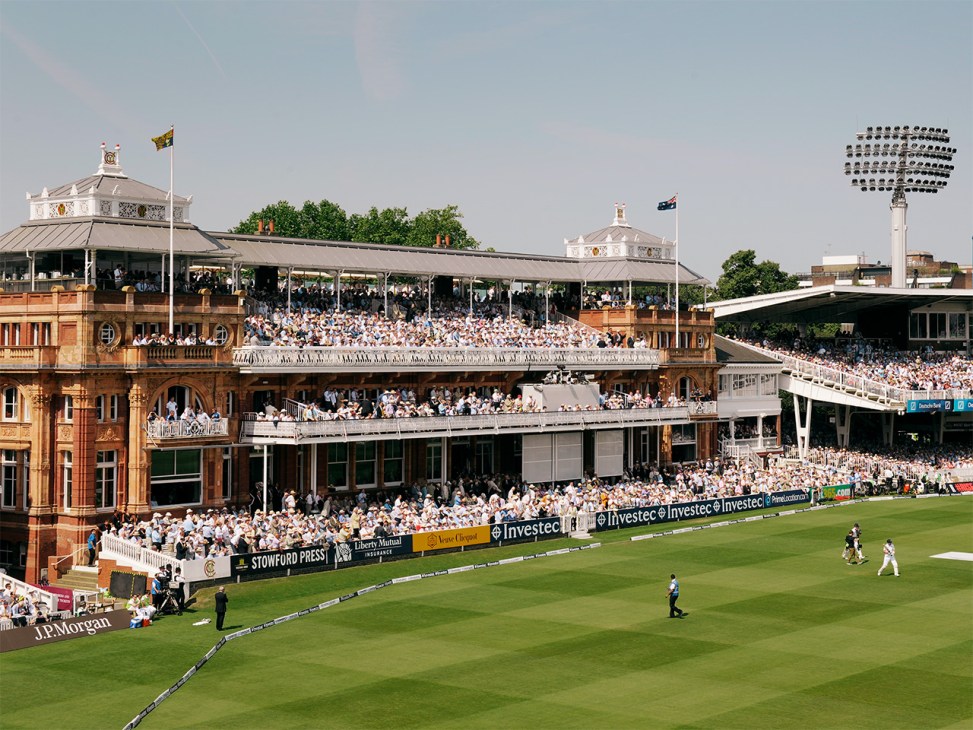
Lord’s Cricket Ground, London, UK
“A friend recently described Lord’s as “the largest pub in London”, which captures the atmosphere nicely. There’s something magical about the way that the ground comes alive over the course of a day. The focus and energy move organically between the action on the field and the life around it. The Pavilion is also one of sport’s most storied buildings. Long before modern stadiums developed commercial ideas such as field clubs and tunnel clubs, Lord’s created a powerful relationship between players, members, the dressing rooms and the field of play.”
3.
Carrow Road, Norwich, UK
“Few would have imagined seeing this one on the list but, having grown up in rural Norfolk, I am a lifelong Norwich City fan and Carrow Road is my home stadium. As a boy, I went there with my dad before the all-seater era. In those early years, I couldn’t see much but I vividly remember the mass of people swaying on the terraces. When I was a teenager, my mates and I would throw ourselves into the match-day experience in the Barclay End. Now my kids enjoy the same day out. For me, Carrow Road is about emotional connection to family, culture and place.”
4.
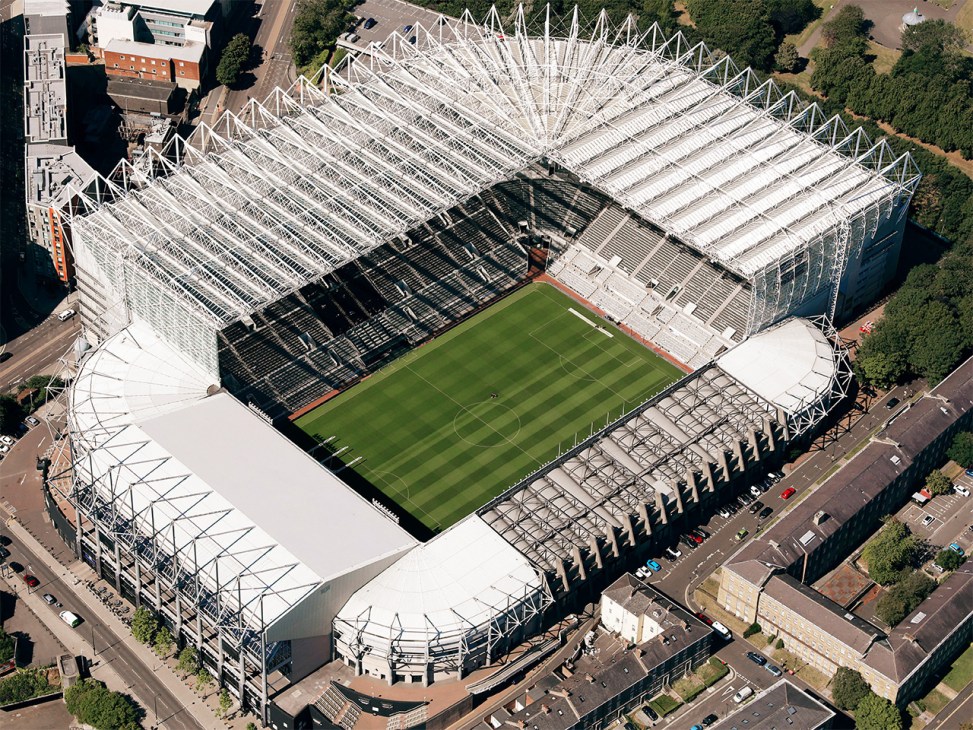
St James’ Park, Newcastle upon Tyne, UK
“From The Canaries [Norwich City] to The Magpies [Newcastle United]: I studied architecture in Newcastle and my first-year halls of residence looked out over Leazes Park towards the back of the stadium that towers above. St James’ Park sits right in the heart of town and dominates the city’s culture. On match days, Newcastle pulses along with the stadium. My gran was a Geordie and I have a fondness for this city where everything revolves around the football club.”
5.
Cosm Venues, Los Angeles and Dallas, USA
“Projects like this show how stadium typology is evolving. HKS was a key collaborator with Cosm in the creation of these venues, designing the first two locations in Los Angeles and Dallas. What’s fascinating is that they perform many of the same functions as a stadium in terms of user experience: people coming together with friends, fans, family or for business around a shared live event. The difference is that the action is brought into the room through extraordinary technology that makes you feel as though you are sitting there in the best seat in the house.”
6.
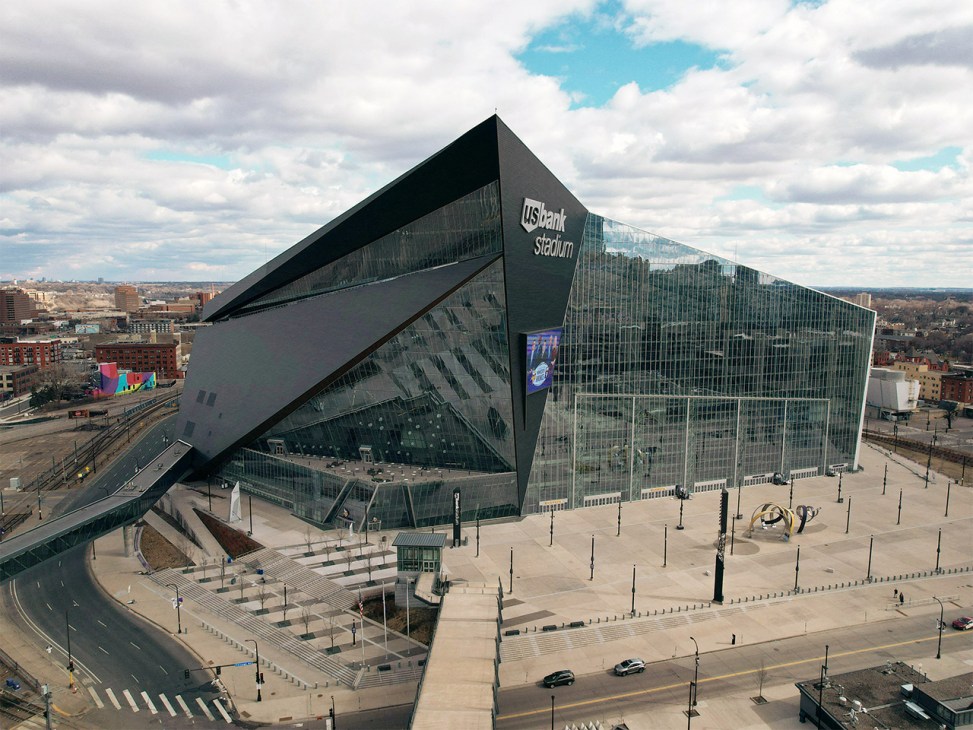
US Bank Stadium, Minneapolis, USA
“This is a textbook example of architecture as an art form. US Bank Stadium pulls everything together: climate, community, the team brand [Minnesota Vikings] and form, loosely inspired by Viking longhouses and shattered ice floes in the nearby Mississippi river. It feels specifically Minnesotan. The stadium is on the edge of downtown Minneapolis and the endzone doors create a deliberate connection with the city skyline. The arena seems to have helped to support wider investment and growth in that part of the city. The roof does a lot of work too. It deals with snow, brings daylight into the building and helps to reduce energy demand by holding a reservoir of air above the field.”
7.
Optus Stadium, Perth, Australia
“This is a project that’s close to my heart because I was involved in its early stages, working with Cox Architecture and Hassell Studio. There’s a richness to its design narrative: the connection to Indigenous heritage, the spirit of the site and the stadium’s position on the bend of the Swan river. It has helped to extend the city centre eastward and created a new public destination that serves as both a park and a stadium. There are also strong stories around sustainable transport and energy use. Good architecture reveals itself over years of use and Optus Stadium seems to keep gathering more meaning.”
Aerial view of the Optus stadium (Image: Michael Evans/Alamy)
8.
Royal Arena, Copenhagen, Denmark
“OK, this isn’t technically a stadium but indulge me. Designed by 3XN in collaboration with HKS, Royal Arena shows how some considerate design – even when it comes to a large sports and entertainment venue – can help a building to become a good neighbour. Rather than being a closed box, it was designed to engage with the public, supporting the daily activity around it and catalysing growth and regeneration in Ørestad.”
9.
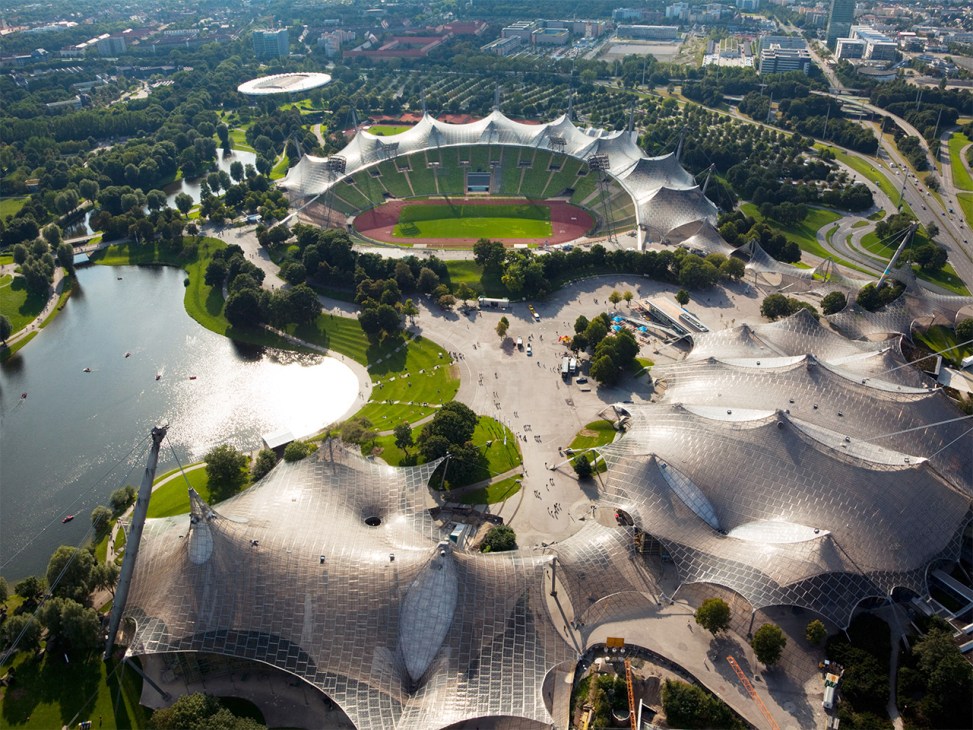
Munich Olympic Stadium, Munich, Germany
“This is a masterpiece of structural engineering and design. The lightweight roof structure by Frei Otto used revolutionary tensile cable techniques to create a form that still feels unexpected, pure and expressive today. It is one of the great examples of engineering becoming architecture.”
10.
Camp Nou, Barcelona, Spain
“This list needed a great mid-century stadium. I could have chosen the Maracanã Stadium, Estadio Azteca, Dodger Stadium or San Siro but I chose Camp Nou. That’s partly because I worked on it in 2016, when we studied how the stadium had evolved from Francesc Mitjans i Miró’s original 1950s design. What I really like is the purity of the original idea: the clarity of the bowl, the elegant structural forms and the balance between the huge open volume of the stadium and the crisp cantilever of the marquesina roof. But the architecture is only part of it. Camp Nou’s relationship with Barcelona and the wider Catalonian neighbourhoods, food, climate and match-day traditions is what gives it real depth. It’s not just a big football ground – it’s one of the great civic rooms of European sport.”
Inside the Camp Nou (Image: Tim Clayton/Corbis via Getty Images)
To listen to Alex Thomas’s interview with Monocle’s editor in chief, Andrew Tuck, tune in to ‘The Urbanist’
此内容由惯性聚合(RSS阅读器)自动聚合整理,仅供阅读参考。 原文来自 — 版权归原作者所有。