








It’s 08.30 and slivers of sunlight shine through the pines of Madrid’s Real Club de Campo Villa. Its general manager, Juan Carlos Vera Pró, starts the day with a lap of the grounds in his Volvo. At about 250 hectares, the prestigious country club sprawls across rolling hills between a busy highway and the Manzanares river. The architecture, sport facilities and golfing greens cling to Madrid’s past but the club’s popularity – it currently has 35,000 members and a long waiting list – proves that it’s very much a part of the present. “We are always thinking of ways to improve our installations,” says Pró, who stops to show Monocle the busy driving range.
Appointed in 2019 by the incoming mayor, Pró swapped national parliament, where he had held a seat for 26 years, for the club’s copious sporting arenas. Here, there are 240 horses, an equestrian club, hockey, croquet and padel, as well as 34 tennis courts. Pró says that he spends a lot of time handing out trophies. “Last week I awarded more than 600 kids participation medals for a hockey tournament.”
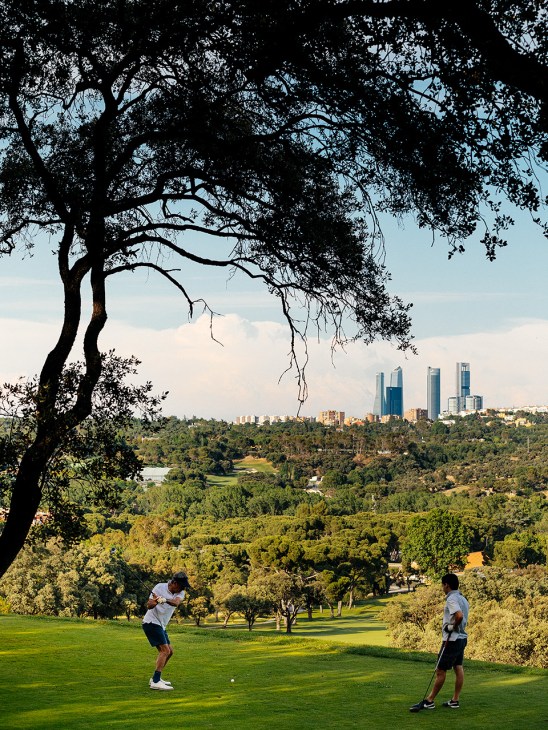
Only five minutes’ drive from the city centre, these tranquil lawns are among the best places in the Spanish capital to disconnect from the daily grind. We are shown the site where a planned virtual training centre will help the club’s 14,000 golfers to improve their swing. To ensure that the putting schedule is fair, there’s a lottery-like system that was “developed to alleviate any squabbles around availability – and to prove that there’s no favouritism”, says Pró. It makes sense: some 6,000 members are expected to pass through the gates this coming weekend.
These days, the club provides escape from stress but its history reflects the complexities of Spain’s past political turmoil. In 1930 a group of well-to-do youngsters, including a duke and a count, were so disgruntled by price hikes at another country club that they founded this establishment on their own land. Some adjoining hectares from the crown were added too. A year later, following the declaration of the Second Spanish Republic, the land was ceded to the local government. When the Spanish civil war ended in 1939, it was turned into a private institution until 1984, when today’s public version of the club was launched, and – in a move that reflected the new open spirit of Spain – 6,000 new members were admitted.
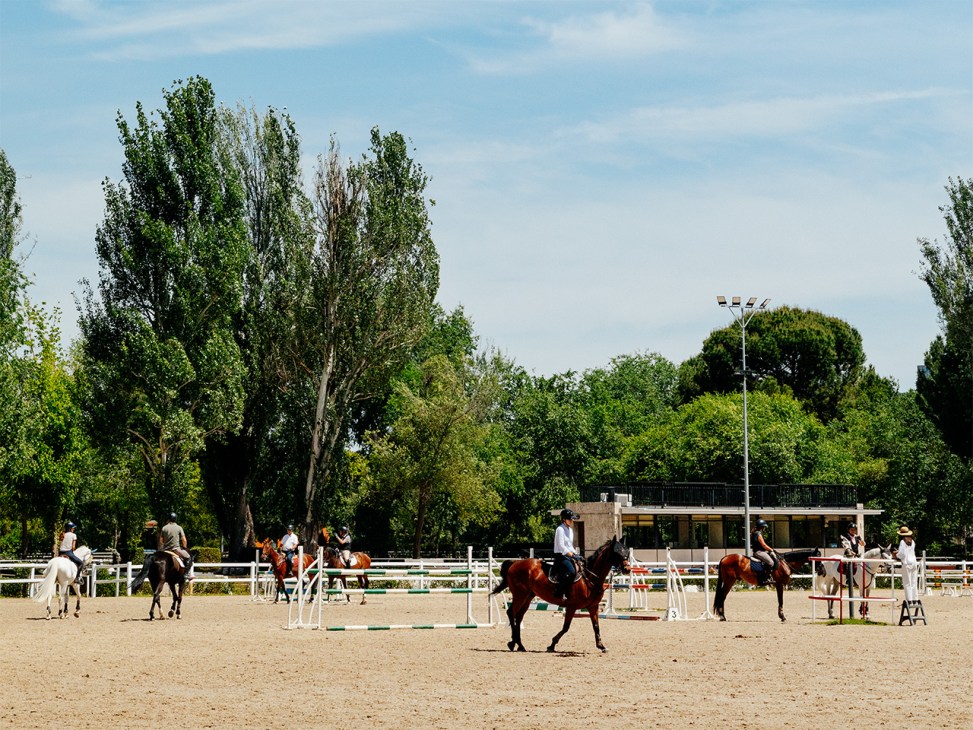
Officially, Real Club de Campo Villa is owned by Madrid City Council, which has a 51 per cent stake, with the remainder split equally between the national heritage department and the Royal Spanish Equestrian Society. Annual memberships are priced at €950, though new admissions have been frozen for several years. Monocle is told that fresh places are only made available when there is a voluntary renouncement or a death.
An exception was made, however, for Rafael Nadal, who was recently made an honorary member after hosting a charity tournament at the club. Last year, Spain’s king bestowed a royal honour of sporting excellence, prompting a small but regal change to the club’s logo.
Moment of calm in Club Social
Meanwhile, at the Chalet de Arriba – Real Club de Campo’s event space, which is known colloquially as Club Social – the scent of jasmine perfumes the air and a perfectly framed view of Madrid’s skyline can be seen across the valley. Designed by architect Luis Gutiérrez Soto in 1931, the clubhouse possesses a frozen-in-time feel, lending it an embassy-like charm.
In the afternoons, tables fill with friendly games of bridge and canasta. Inside the adjoining café, people read newspapers, while others sip cortados sitting on leather chairs made by Spanish firm Casa & Jardin. Outside, on the driving range, the crack of an eight-iron sending the ball skywards is the only sound you can hear.
此内容由惯性聚合(RSS阅读器)自动聚合整理,仅供阅读参考。 原文来自 — 版权归原作者所有。