
惯性聚合 高效追踪和阅读你感兴趣的博客、新闻、科技资讯
阅读原文 在惯性聚合中打开

推荐订阅源

大猫的无限游戏
大猫的无限游戏
博客园 - 【当耐特】
Cloudbric
Cloudbric
H
Hackread – Cybersecurity News, Data Breaches, AI and More
Attack and Defense Labs
爱范儿
爱范儿
The Cloudflare Blog
腾讯CDC
Security Archives - TechRepublic
TaoSecurity Blog
TaoSecurity Blog
云风的 BLOG
云风的 BLOG
Recent Announcements
C
Check Point Blog
Schneier on Security
S
Schneier on Security
J
Java Code Geeks
B
Blog RSS Feed
Cisco Talos Blog
Cisco Talos Blog
Vercel News
Vercel News
Stack Overflow Blog
Stack Overflow Blog
博客园_首页
cs.AI updates on arXiv.org
A
About on SuperTechFans
Threat Intelligence Blog | Flashpoint
Google DeepMind News
阮一峰的网络日志
阮一峰的网络日志
罗磊的独立博客
A
Arctic Wolf
S
Secure Thoughts
P
Palo Alto Networks Blog
The Last Watchdog
The Last Watchdog
SecWiki News
SecWiki News
cs.CV updates on arXiv.org
博客园 - 三生石上(FineUI控件)
D
Darknet – Hacking Tools, Hacker News & Cyber Security
量子位
U
Unit 42
I
InfoQ
D
DataBreaches.Net
P
Privacy International News Feed
T
Troy Hunt's Blog
博客园 - 叶小钗
T
Threatpost
博客园 - Franky
K
Kaspersky official blog
Hugging Face - Blog
Hugging Face - Blog
IT之家
IT之家
www.infosecurity-magazine.com
CTFtime.org: upcoming CTF events
C
Cisco Blogs

Monocle

Air-con has become the latest front in a culture war – but more hot air is the last thing our overheating cities need All aboard as the Emirates’ first train service takes to the rails The seven standout shows at Paris Fashion Week Men’s spring/summer 2027 Where to eat and beat the heat in Paris: three new restaurants favoured by the fashion crowd What can be gleaned from Washington’s Reflecting Pool on the week of the US’s 250th birthday? Inside Monocle's July/August 2026 issue What makes Copenhagen a great city? Its ability to learn from its mistakes Stadium designer Alex Thomas’s top-10 sports venues in the world The case for keeping the economy – and the office – cool Cities are like theatres, we the actors. What part do you want to play? Cities are like theatres, we the actors. What part do you want to play? Onion – The Mansion: The latest outpost of a fashion retailer born of a musician’s side hustle Summer playlist: Celebrate the summer with these 40 scorching songs Meet the practice behind the Obama Presidential Center’s brand identity For all its problematic elements, the Fifa World Cup remains the greatest show on Earth Despite its enormous scale, Tokyo remains a city where good manners thrive Heatwave be damned! Paris Fashion Week Men’s brings leather and layers to the runways The Amble EV is gearing up to reinvent the way we drive Our summer issue is out now and measures the immeasurable – what makes a city worth living in? The art of the amble: Exploring the social rituals of evening walks across Spain, Italy and Greece Greetings from the past: A look back at postcards serving as snapshots of history It takes a village: Three new co-living developments that are bringing generations together The People’s charter for living well in cities: 13 rules for oafs, oiks and rapscallions How a city splashed out on staying cool: Zürich’s best fountains How The Lobb Club became Bangkok’s coolest tennis hangout Why does everyone want to be a member of Madrid’s Real Club de Campo Villa? A shore cure for urban fatigue: How Sydney, New York and Kobe are rethinking their waterfronts How Dubai, New York, Paris and Shenzhen are building their flying-taxi networks Saddle up at Polo Palladio for a taste of Jaipur’s social scene Tyler Brûlé introduces Monocle's 2026 Quality of Life survey on CNN Monocle’s Quality of Life Survey 2026: The 20 most liveable cities in the world At 25, Vienna’s MuseumsQuartier remains a model for putting art and design at the centre of city life The 10 best spring/summer 2027 collections at Milan Fashion Week Men’s Can Flame Tree Season create Dubai's own cherry-blossom moment? Who is Andy Burnham? The man hoping to be the UK’s seventh prime minister in 10 years Berlin swimmers take the plunge amid efforts to reclaim bathing in the Spree Manifesta makes a case for site-specific biennials as it arrives to Ruhr for its 16th edition The Monocle Quality of Life Survey’s top cities throughout the past decade Six beautiful travel books from Monocle to guarantee a well-spent summer Storied US news programme ‘60 Minutes’ might be old but it doesn’t need to change How London’s Workshop Café & Academy is bringing a touch of luxury to the daily grind How London’s Workshop Café & Academy is bringing a touch of luxury to the daily grind Seven little luxuries that make life worth the luggage allowance Spain’s newest art initiative Bienal Climática bridges Avilés’s industrial past with its ecological future Spain’s newest art initiative Bienal Climática bridges Avilés’s industrial past with its ecological future ‘Everything has its perfect timing’: Káryyn on summer songs and the album that took 16 years to make Why are we asking AI all our silly questions when our partners have all the answers? How one intrepid iPhone kept a cabin entertained from Madrid to Montevideo Running brands are going the extra mile as South Koreans take to the great outdoors Andy Burnham seems on course for Downing Street – but Keir Starmer hasn’t been a total failure Art Basel brings fun back to the fair with the element of surprise Peacocks on safari and other observations from this year’s Pitti Immagine Uomo Is AI-created art worthy of display? A new Los Angeles museum thinks so Colombia’s presidential election is a choice between extremes. The country needs to return to the centre Hermès goes big, bright and bold at its new London flagship The UK’s under-16 social-media ban won’t make Big Tech safer The US’s 250th anniversary celebrations come out swinging with a show of pumped-up machismo at the White House AI won’t replace jobs humans are good at. Now people just need to prove their worth SpaceX IPO, diamond smuggling and the inconvenient truth about Mars The 2026 Women’s Prize winners talk rejection, process and finding stories worth telling There’s a place for your backpack on the train – it’s not your back Want to know why São Paulo is so vibrant and ambitious? Here are 10 observations The biggest contest of the 2026 World Cup is off the pitch Japan must prioritise pragmatism with China over provocation Few artists made a bigger splash than David Hockney, who has died at 88 Why US cities are poised to be fantastic World Cup hosts Copenhagen’s 3 Days of Design proves that big things can come in small packages Tacky? Yes. Patriotic? Often. But the World Cup needs its anthems A sticky World Cup tradition: Tracking down Panini football stickers Dane in the life: Takeaways from Copenhagen’s 3 Days of Design AI isn’t reinventing the wheel but it should heed the lessons of human innovation Seven Amsterdam bookshops worth writing home about Amid rising regional tensions and soaring travel costs, Gulf residents are choosing staycations The Mercadona doctrine and how to make yourself at home part-time Montevideo might be small but it knows how to appreciate good architecture London’s Quentin Blake Centre for Illustration opens in a bid to draw new audiences to the art form A shore thing: Konfekt’s summer issue is an ode to sun, sand and sea ‘What we are dealing with is a moral trauma’: How NGO Superhumans is helping to rehabilitate battle-scarred Ukrainians A shore thing: Konfekt’s summer issue is an ode to sun, sand and sea Mark Carney is the gaffer to get behind as World Cup co-host Canada readies for kick-off Couture is ‘a dance with the materials’: Iris van Herpen on keeping the art of fashion alive See the best of the Swedish capital with Monocle’s guide to Stockholm From the Pope to Bad Bunny, ‘Madrileños’ have plenty to put their faith in this weekend At the Black Sea Security Forum in Odesa, Ukraine looks increasingly like the leader of the free world Forget Milan, Paris and London: Helsinki is where talent scouts head to look for the best fashion designers Looking to the sky reveals much about what’s happening on the ground Is Lisbon’s art market on the up? Arco Lisboa, the city’s growing contemporary art fair, has put on a promising display Off the wall: How Frank Bowling painted his way to prominence Dress codes for dummies: Can AI save Chad and Britney from their worst wardrobe impulses? What is so special about ‘Le Petit Prince’? Electric bikes are handy but why must they be used as garbage bins on wheels? The best new books, films, museums and albums in June How Iranians have been coping with the US-Israel conflict through limited internet access Ibiza is hoping to capitalise on Dubai’s affluent tourist exodus – but it would do well to remember its roots Songtsam: Modern Chinese hospitality Editor’s letter: Andrew Tuck on the booming business of coffee What’s hot in the world of coffee? We spill the beans on the global market Not your average joe: 25 of the world’s best coffee shops, run by next-generation owners Breaking new ground: 25 exceptional brands that are leading the coffee industry Travel across L’Empordà, Spain – a coastline of storied hotels, seafront tables and surrealist heritage
‘Silence is part of our products’ performance’: Amundsen Sports’ CEO on building an outdoor-clothing brand using natural fabrics
Chadner Navarro · 2026-06-19 · via Monocle

The Norwegian company’s founder, Jørgen Amundsen, speaks with Monocle about famous ancestors, the beauty of using natural fibres in his products and why his label’s knickerbocker trousers make him proud.

When you’re the descendant of pioneering polar explorer Roald Amundsen, outdoor adventure is less of a calling and more of a birthright. Jørgen Amundsen leaned into his familial connection (his great-grandfather was Roald’s cousin) to found Amundsen Sports in 2009. The Norwegian brand draws inspiration from textiles and techniques used during the senior Amundsen’s era to make clothing and gear for modern-day outdoor sports. 

The outdoor-clothing industry relies heavily on synthetic fibres but Amundsen Sports has carved out a space for natural fabrics. The company sources most of its material from small manufacturers in the UK and Europe: waxed cotton from Scotland; wool from Austria; corduroy from France. Today most rainwear is made from laminated plastic but Amundsen Sports uses Ventile in its collections, a water-resistant cotton constructed from densely woven fibres. The material doesn’t disintegrate in the same way as synthetics, meaning that it can withstand years of use.

Monocle spoke with Jørgen Amundsen about the origin of his brand, how it has positioned itself in the industry and the value of wearing silent clothing. This conversation has been edited for clarity and length.
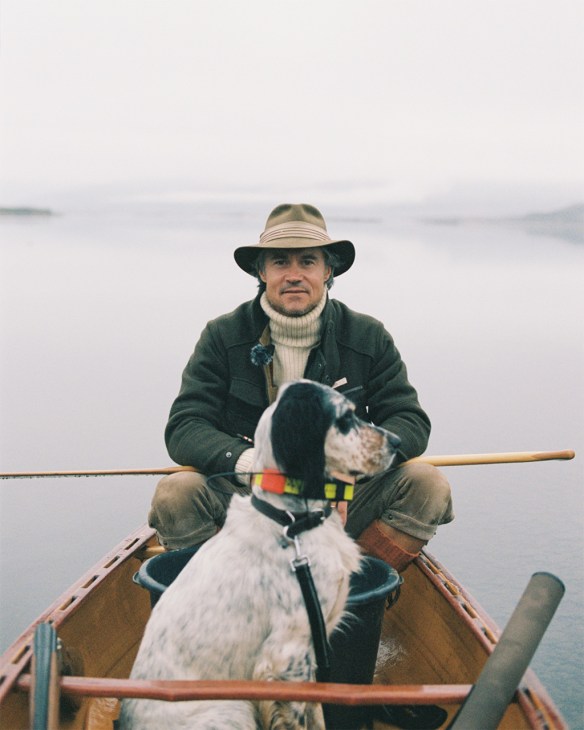
Jørgen Amundsen (Images: Courtesy of Amundsen Sports)

How did your connection to Roald Amundsen impact your approach to the brand?
I’ve always been inspired by Roald Amundsen’s story – not only his feats but also his philosophies. He lived with the Inuits in the Arctic for three years, learning cold-weather survival, and combined that knowledge with the cutting-edge technology of his time. We apply a similar philosophy at Amundsen Sports by looking at how things were done in the past and asking: ‘What can we learn from that?’ We combine that approach with modern technology to create our products. 

What inspired you to launch Amundsen Sports?
When I was living in Switzerland, I struggled to find things that I needed for my outdoor lifestyle. It was impossible to get my hands on any wool. There were no good cotton anoraks. I couldn’t find wool ski sweaters. Everything was fleece; it was all plastic. It seemed like the whole industry had forgotten how things used to be and what has always worked. I wanted to do something about that.

How do you design clothing that draws on historical influence while meeting the needs of customers?
We always challenge ourselves to make clothes that we believe in, that are differentiated and that the market will hopefully understand. For 15 years, the knickerbocker trousers have been our flagship product. This is an item that everyone used to wear – hikers, hunters, skiers – but at some point it disappeared. We researched and tested why knickerbockers were superior to pants [and we found that] they offer more adaptability and mobility. If you wear them with gaiters, you are fully protected.

It wasn’t easy to launch with knickerbockers because people didn’t understand them. It took some education before they started taking off. Now, I would say there aren’t many Norwegian outdoor enthusiasts who don’t own a pair of Amundsen knickerbockers. We just have to do the same outside Norway.

Within your inventory, what’s the perfect example of a natural textile that you believe outperforms synthetics?
We have a collection of cotton mountainwear sewn in Ventile, which was invented in England during the Second World War. It only uses the top three per cent longest cotton fibers in the world. It’s very densely woven, so when it comes in contact with water or moisture, the weave swells and [the fabric structure] becomes more compact. It’s not waterproof but it’s highly water-resistant. The fabric is just so much more comfortable. It’s silent and it feels great on the skin. We use it to make jackets, anoraks, pants and knickerbockers.

You mentioned silence. How important is it that clothes don’t make noise?
Hearing the swishing of your garments as you move reduces the pleasure of being outdoors. We view silence as part of our products’ performance.

Are textiles and fabrics the most important part of Amundsen Sports?
The materials provide our products with versatility. It’s easy to wear technical clothing when you’re on the mountain but [when it’s made from] natural materials, you can wear them to a restaurant or the office too. [Natural materials] age so beautifully compared to synthetic [alternatives].

We also do some synthetics, including a three-layer ski suit. If you’re going to be outside for days on end and it’s raining, there are benefits to [synthetics]. But it won’t have the same lifespan. The lamination will wear off and then you have something that isn’t breathable, that isn’t silent, that isn’t waterproof. So, yes: you can say materials are the most important thing to us.
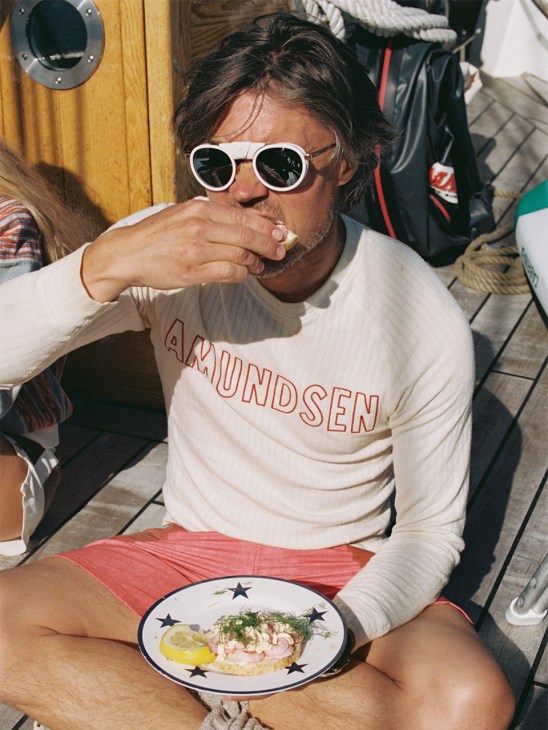
Given that the brand has a higher price point and is more niche, how do you strategise for growth?
We would not be successful if our business model focused on producing something cheap or by following trends. The only reason why we have had this strong growth is because we do our own thing. Being a small company, we don’t need everyone to like our products. But we are growing. Last year, we had a $50m [€43.05m] turnover, which sounds small but that’s coming from zero 15 years ago.

You have shops in Norway, the US and Verbier. How does retail factor into your plans for growth? 
We want to continue opening shops in Europe and the US. [These locations] are very important for us; it’s where the customer can really understand the whole brand. We want to follow our customers where they are. They don’t live under a stone in the mountains – they have normal lives in cities. Our e-commerce orders come from New York and London. We opened [a shop] in New York’s Nolita neighborhood four years ago. The natural next step is London. After a few recent visits, we’re still looking for the right location. But we’re hoping to open there this year.