





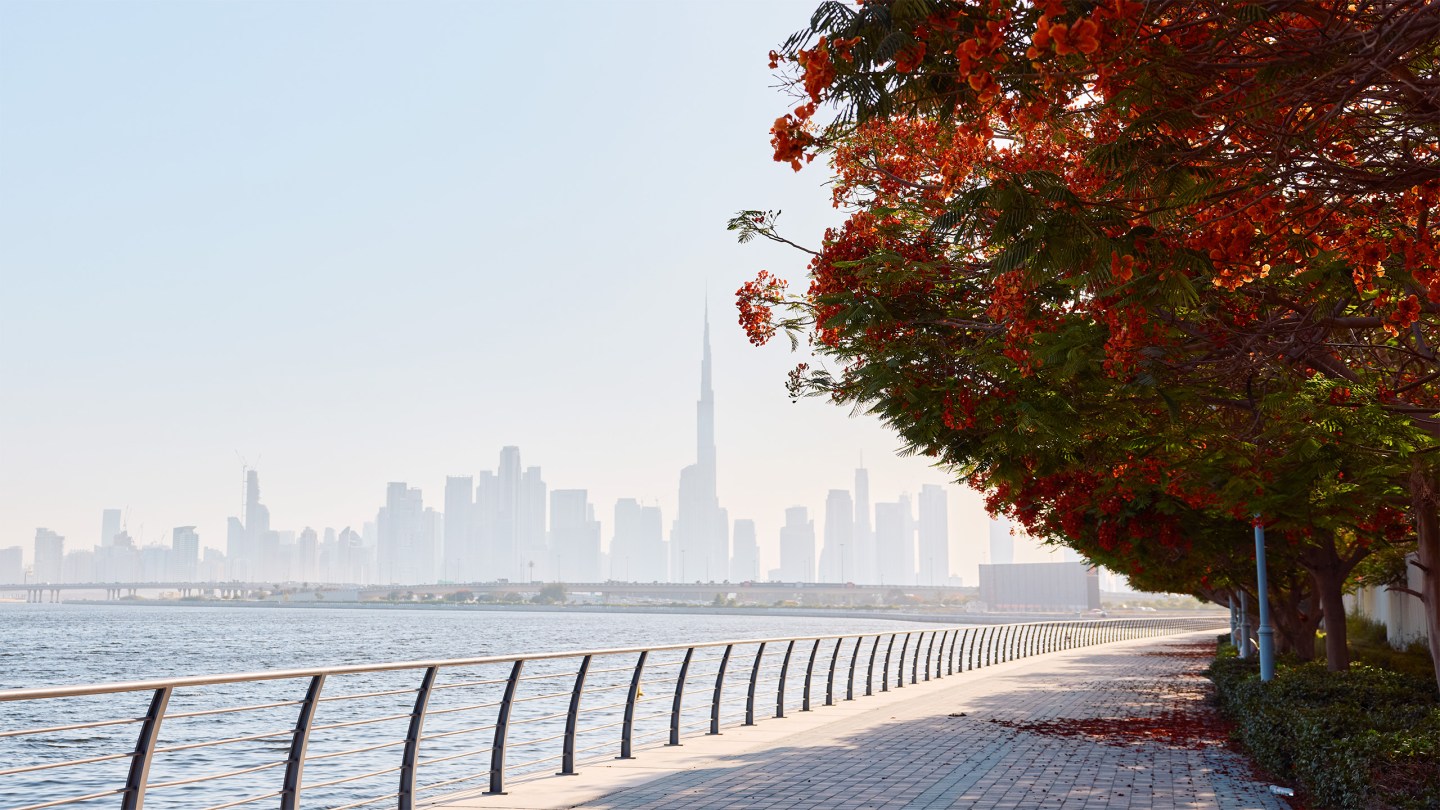
Every summer, Dubai comes alive in shades of red as the city’s flame trees come into bloom. This year, city leadership is looking to strengthen the tree’s presence in Dubai’s civic identity.
There is something theatrical about the flame tree. As temperatures rise across Dubai and much of the Gulf retreats indoors, the city’s Delonix regia trees respond by doing precisely the opposite. Their broad green canopies erupt into brilliant orange-red blooms, setting roadsides, parks and waterfront promenades ablaze. It’s oddly defiant. Just as summer begins, nature stages its most spectacular performance.
It is this contradiction that sits at the heart of Dubai’s newly launched Flame Tree Season. In a city better known for skyscrapers than colourful canopies, the initiative encourages residents to notice a phenomenon that has been occurring here for decades. And it asks another question too: can Dubai create its own version of Japan’s sakura (cherry blossom) season?
Like Japan’s cherry blossoms, the flame-tree bloom is fleeting, seasonal and photogenic. This year special menus have appeared in cafés, brands have created limited-edition products and social media is full of photographs of blossoms against urban backdrops. Yet Dubai’s version is unmistakably its own. Rather than emerging from centuries of folklore, Flame Tree Season began with a question posed to Dubai Design Lab, a part of Dubai Future Foundation: if Dubai were to have a flower season, what would it be?
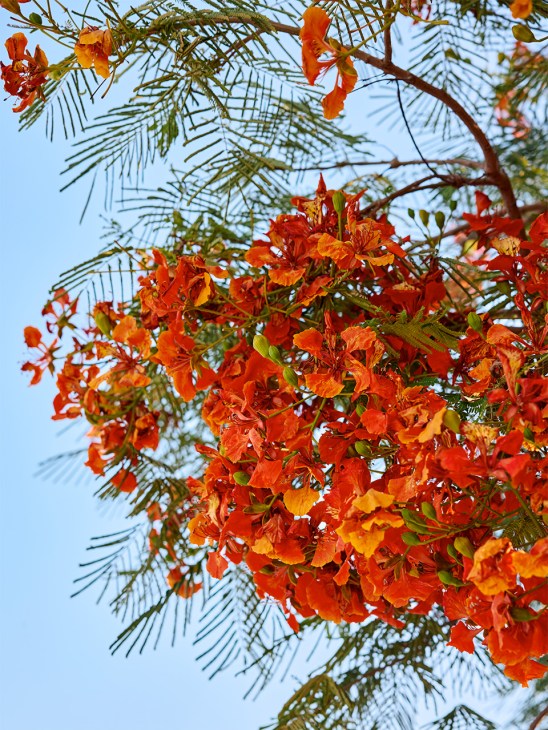
“We discovered that the flame tree has been planted in Dubai since the 1970s, with more than 50,000 existing in the landscape,” says Rafia Bin Sulaiman, associate manager and design researcher at Dubai Design Lab. “We thought, if we have something as beautiful as this surrounding us but few people are appreciating its beauty, what if we came up with a story and a narrative that complements this tree?”
Originally from Madagascar, the tree has become embedded in the city’s landscape. It thrives in the Gulf climate, grows rapidly and creates a canopy that can lower surface temperatures beneath it by as much as 5C. Tens of thousands have been planted across the emirate. Trees frame the Burj Khalifa, line quiet waterfront promenades and scatter orange petals across pavements like confetti.
For Bin Sulaiman, the tree mirrors Dubai. “It comes from a faraway place but it found its belonging in Dubai like many people that live here today,” she says. “This tree also signifies resilience because it starts to bloom when heat hits.” That symbolism feels particularly resonant. While much of the region has spent most of this year navigating uncertainty and conflict, the flame tree has arrived as an unexpectedly optimistic symbol.
What makes Flame Tree Season interesting is that it is evolving beyond a government initiative. More than 235 brand collaborations have emerged and according to Bin Sulaiman, much of that participation has happened spontaneously. “We thought this year we’ll just test it,” she says. “How do people like it? How does it resonate? So we started it but the idea has grown organically.”
And yet, this is where the comparison with Japan diverges. Cherry-blossom season arrives at precisely the right moment. Spring weather draws people outdoors. Families gather beneath the trees, colleagues picnic in parks and entire neighbourhoods seem to reorganise themselves around the bloom. Dubai’s flame trees do the opposite. They flower just as the city begins its annual retreat indoors. By June, temperatures regularly exceed 40C. Residents try to stay in air-conditioned homes, offices, shopping centres and cars, or leave the country altogether. A canopy that lowers the temperature by 5C sounds impressive until one remembers that 45C becomes 40C – more comfortable perhaps but hardly picnic weather. The reality is that most people will experience the bloom through a windscreen. But perhaps that, too, says something about modern Dubai.
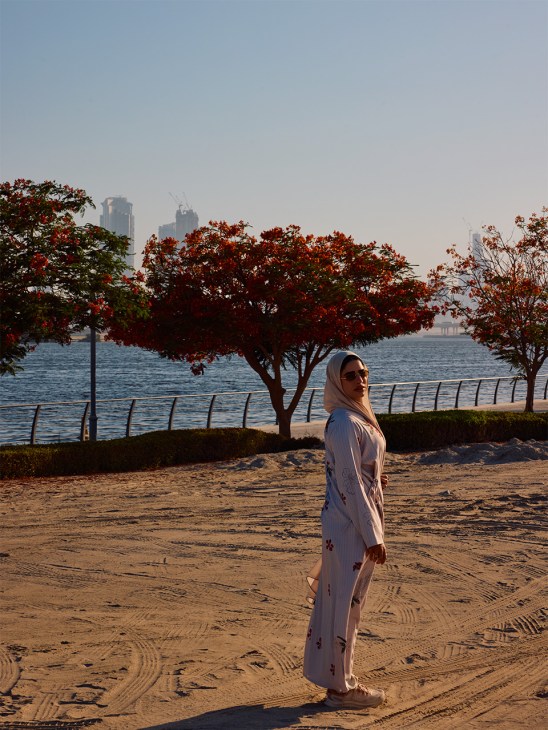
Flame Tree Season isn’t trying to be cherry-blossom season. But it does show Dubai’s ambition to create civic rituals. For decades, the emirate has excelled at constructing physical infrastructure and this is a welcome nod to the natural landscape.
What is certain is that the trees offer a different way of seeing Dubai. Their fiery canopies, contrast with the blue skyline rising in the distance, create a marker of the passage of time in a city that can feel like it only has one season.
Flower power: how trees and flowers sell nations, generate tourism spend and deliver soft-power hits.
Tulips, The Netherlands: From late March to early May, tourists flock to the Netherlands to see the country’s blooming tulip fields (the gardens at Keukenhoff alone receive some 1.4 million visitors). The season helps market the country’s powerful horticultural industry and delivers genteel tourists at an otherwise quiet moment in the calendar.
Autumn foliage, New England: Just when the tourism season wanes in many parts of the US, this region’s trees help lure in crowds of so-called “leaf-peepers”. Each autumn these nature fans arrive – often on cruises – to see the leaves of New England’s forests of maples, oaks and dogwoods turn bright red, copper brown and golden yellow. Their presence generates billions in tourism dollars.
Lavender, Provence: The visual identity – and marketing – of southern France makes great use of this fragrant plant. Usually in full purple flush at the start of July, lavender has grown here for centuries and is used in soaps and fragrances. Many visitors plan trips to coincide with the plant’s peak season, making it a fragrant moneymaker.
此内容由惯性聚合(RSS阅读器)自动聚合整理,仅供阅读参考。 原文来自 — 版权归原作者所有。