惯性聚合 高效追踪和阅读你感兴趣的博客、新闻、科技资讯
阅读原文 在惯性聚合中打开

推荐订阅源

L
LangChain Blog
C
Check Point Blog
博客园 - Franky
V
Visual Studio Blog
云风的 BLOG
云风的 BLOG
aimingoo的专栏
aimingoo的专栏
Microsoft Security Blog
V2EX - 技术
V2EX - 技术
AI
AI
Hacker News - Newest:
Hacker News - Newest: "LLM"
Jina AI
Jina AI
S
Security @ Cisco Blogs
Security Archives - TechRepublic
H
Hacker News: Front Page
H
Hackread – Cybersecurity News, Data Breaches, AI and More
O
OpenAI News
Attack and Defense Labs
Exploit-DB.com RSS Feed
爱范儿
爱范儿
H
Heimdal Security Blog
Threat Intelligence Blog | Flashpoint
G
Google Developers Blog
G
GRAHAM CLULEY
V
V2EX
The Register - Security
人人都是产品经理
人人都是产品经理
B
Blog RSS Feed
Schneier on Security
M
MIT News - Artificial intelligence
Stack Overflow Blog
Stack Overflow Blog
Help Net Security
Help Net Security
大猫的无限游戏
大猫的无限游戏
C
CERT Recently Published Vulnerability Notes
The GitHub Blog
The GitHub Blog
V
Vulnerabilities – Threatpost
The Last Watchdog
The Last Watchdog
J
Java Code Geeks
S
Secure Thoughts
OSCHINA 社区最新新闻
OSCHINA 社区最新新闻
量子位
NISL@THU
NISL@THU
K
Kaspersky official blog
Engineering at Meta
Engineering at Meta
T
Threatpost
Recent Commits to openclaw:main
宝玉的分享
宝玉的分享
Security Latest
Security Latest
T
The Exploit Database - CXSecurity.com
博客园_首页
A
Arctic Wolf

Monocle

Air-con has become the latest front in a culture war – but more hot air is the last thing our overheating cities need All aboard as the Emirates’ first train service takes to the rails The seven standout shows at Paris Fashion Week Men’s spring/summer 2027 Where to eat and beat the heat in Paris: three new restaurants favoured by the fashion crowd What can be gleaned from Washington’s Reflecting Pool on the week of the US’s 250th birthday? Inside Monocle's July/August 2026 issue What makes Copenhagen a great city? Its ability to learn from its mistakes Stadium designer Alex Thomas’s top-10 sports venues in the world The case for keeping the economy – and the office – cool Cities are like theatres, we the actors. What part do you want to play? Cities are like theatres, we the actors. What part do you want to play? Onion – The Mansion: The latest outpost of a fashion retailer born of a musician’s side hustle Summer playlist: Celebrate the summer with these 40 scorching songs Meet the practice behind the Obama Presidential Center’s brand identity For all its problematic elements, the Fifa World Cup remains the greatest show on Earth Despite its enormous scale, Tokyo remains a city where good manners thrive Heatwave be damned! Paris Fashion Week Men’s brings leather and layers to the runways The Amble EV is gearing up to reinvent the way we drive Our summer issue is out now and measures the immeasurable – what makes a city worth living in? The art of the amble: Exploring the social rituals of evening walks across Spain, Italy and Greece It takes a village: Three new co-living developments that are bringing generations together The People’s charter for living well in cities: 13 rules for oafs, oiks and rapscallions How a city splashed out on staying cool: Zürich’s best fountains How The Lobb Club became Bangkok’s coolest tennis hangout Why does everyone want to be a member of Madrid’s Real Club de Campo Villa? A shore cure for urban fatigue: How Sydney, New York and Kobe are rethinking their waterfronts How Dubai, New York, Paris and Shenzhen are building their flying-taxi networks Saddle up at Polo Palladio for a taste of Jaipur’s social scene Tyler Brûlé introduces Monocle's 2026 Quality of Life survey on CNN Monocle’s Quality of Life Survey 2026: The 20 most liveable cities in the world At 25, Vienna’s MuseumsQuartier remains a model for putting art and design at the centre of city life The 10 best spring/summer 2027 collections at Milan Fashion Week Men’s Can Flame Tree Season create Dubai's own cherry-blossom moment? Who is Andy Burnham? The man hoping to be the UK’s seventh prime minister in 10 years Berlin swimmers take the plunge amid efforts to reclaim bathing in the Spree Manifesta makes a case for site-specific biennials as it arrives to Ruhr for its 16th edition The Monocle Quality of Life Survey’s top cities throughout the past decade Six beautiful travel books from Monocle to guarantee a well-spent summer Storied US news programme ‘60 Minutes’ might be old but it doesn’t need to change How London’s Workshop Café & Academy is bringing a touch of luxury to the daily grind How London’s Workshop Café & Academy is bringing a touch of luxury to the daily grind Seven little luxuries that make life worth the luggage allowance Spain’s newest art initiative Bienal Climática bridges Avilés’s industrial past with its ecological future Spain’s newest art initiative Bienal Climática bridges Avilés’s industrial past with its ecological future ‘Everything has its perfect timing’: Káryyn on summer songs and the album that took 16 years to make Why are we asking AI all our silly questions when our partners have all the answers? How one intrepid iPhone kept a cabin entertained from Madrid to Montevideo Running brands are going the extra mile as South Koreans take to the great outdoors Andy Burnham seems on course for Downing Street – but Keir Starmer hasn’t been a total failure Art Basel brings fun back to the fair with the element of surprise ‘Silence is part of our products’ performance’: Amundsen Sports’ CEO on building an outdoor-clothing brand using natural fabrics Peacocks on safari and other observations from this year’s Pitti Immagine Uomo Is AI-created art worthy of display? A new Los Angeles museum thinks so Colombia’s presidential election is a choice between extremes. The country needs to return to the centre Hermès goes big, bright and bold at its new London flagship The UK’s under-16 social-media ban won’t make Big Tech safer The US’s 250th anniversary celebrations come out swinging with a show of pumped-up machismo at the White House AI won’t replace jobs humans are good at. Now people just need to prove their worth SpaceX IPO, diamond smuggling and the inconvenient truth about Mars The 2026 Women’s Prize winners talk rejection, process and finding stories worth telling There’s a place for your backpack on the train – it’s not your back Want to know why São Paulo is so vibrant and ambitious? Here are 10 observations The biggest contest of the 2026 World Cup is off the pitch Japan must prioritise pragmatism with China over provocation Few artists made a bigger splash than David Hockney, who has died at 88 Why US cities are poised to be fantastic World Cup hosts Copenhagen’s 3 Days of Design proves that big things can come in small packages Tacky? Yes. Patriotic? Often. But the World Cup needs its anthems A sticky World Cup tradition: Tracking down Panini football stickers Dane in the life: Takeaways from Copenhagen’s 3 Days of Design AI isn’t reinventing the wheel but it should heed the lessons of human innovation Seven Amsterdam bookshops worth writing home about Amid rising regional tensions and soaring travel costs, Gulf residents are choosing staycations The Mercadona doctrine and how to make yourself at home part-time Montevideo might be small but it knows how to appreciate good architecture London’s Quentin Blake Centre for Illustration opens in a bid to draw new audiences to the art form A shore thing: Konfekt’s summer issue is an ode to sun, sand and sea ‘What we are dealing with is a moral trauma’: How NGO Superhumans is helping to rehabilitate battle-scarred Ukrainians A shore thing: Konfekt’s summer issue is an ode to sun, sand and sea Mark Carney is the gaffer to get behind as World Cup co-host Canada readies for kick-off Couture is ‘a dance with the materials’: Iris van Herpen on keeping the art of fashion alive See the best of the Swedish capital with Monocle’s guide to Stockholm From the Pope to Bad Bunny, ‘Madrileños’ have plenty to put their faith in this weekend At the Black Sea Security Forum in Odesa, Ukraine looks increasingly like the leader of the free world Forget Milan, Paris and London: Helsinki is where talent scouts head to look for the best fashion designers Looking to the sky reveals much about what’s happening on the ground Is Lisbon’s art market on the up? Arco Lisboa, the city’s growing contemporary art fair, has put on a promising display Off the wall: How Frank Bowling painted his way to prominence Dress codes for dummies: Can AI save Chad and Britney from their worst wardrobe impulses? What is so special about ‘Le Petit Prince’? Electric bikes are handy but why must they be used as garbage bins on wheels? The best new books, films, museums and albums in June How Iranians have been coping with the US-Israel conflict through limited internet access Ibiza is hoping to capitalise on Dubai’s affluent tourist exodus – but it would do well to remember its roots Songtsam: Modern Chinese hospitality Editor’s letter: Andrew Tuck on the booming business of coffee What’s hot in the world of coffee? We spill the beans on the global market Not your average joe: 25 of the world’s best coffee shops, run by next-generation owners Breaking new ground: 25 exceptional brands that are leading the coffee industry Travel across L’Empordà, Spain – a coastline of storied hotels, seafront tables and surrealist heritage
Greetings from the past: A look back at postcards serving as snapshots of history
Tom Jackson · 2026-06-25 · via Monocle

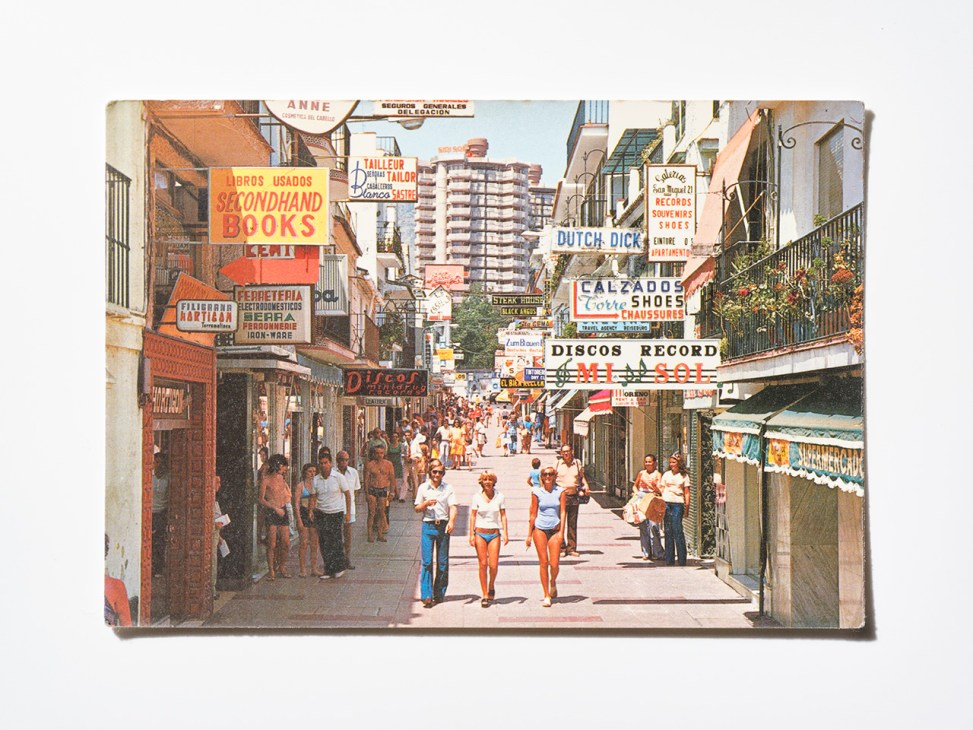
The postcard, addressed to a department of British Steel in Llanwern, South Wales, is franked Torremolinos, Málaga, 25 November 1975. The picture side features four brightly coloured images of the Costa del Sol: a row of whitewashed houses; a sweeping bay under an azure sky; a crowded beach; and on the sand, beside a faded bullfighting poster, a donkey in a straw hat. The reverse reveals more of the story: “Having a lovely time. The weather is much better than expected. We’re having a lot of fun. There’s plenty of food, drink & entertainment. Unfortunately, Franco has died today & there’s no more entertainment until Sunday evening (no music even). Still, we’re not going to let that spoil it.”

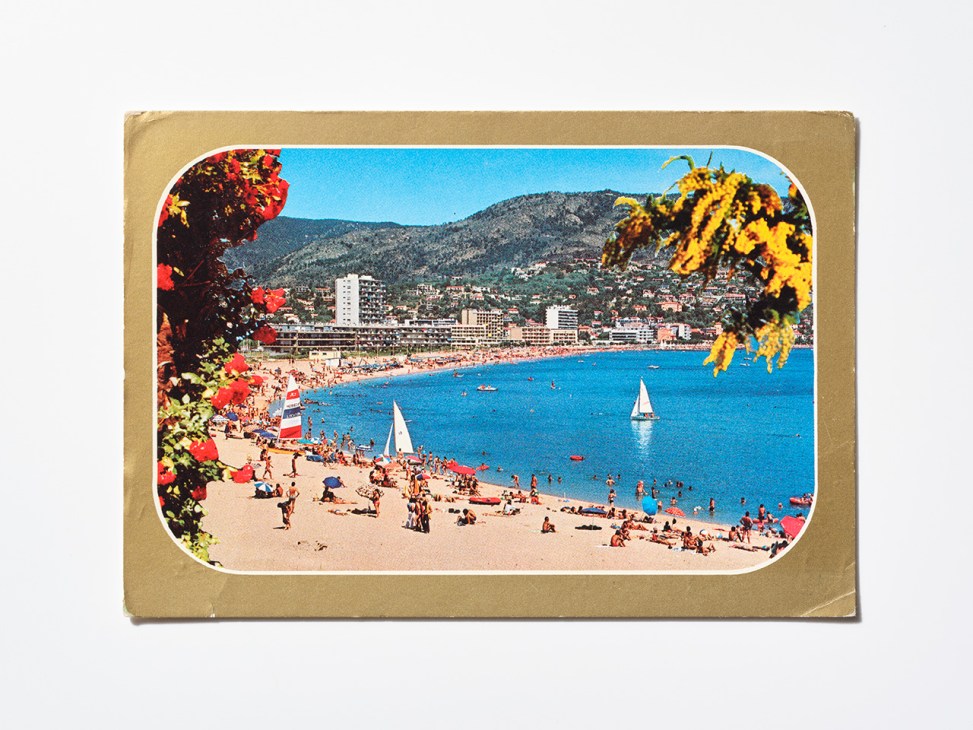
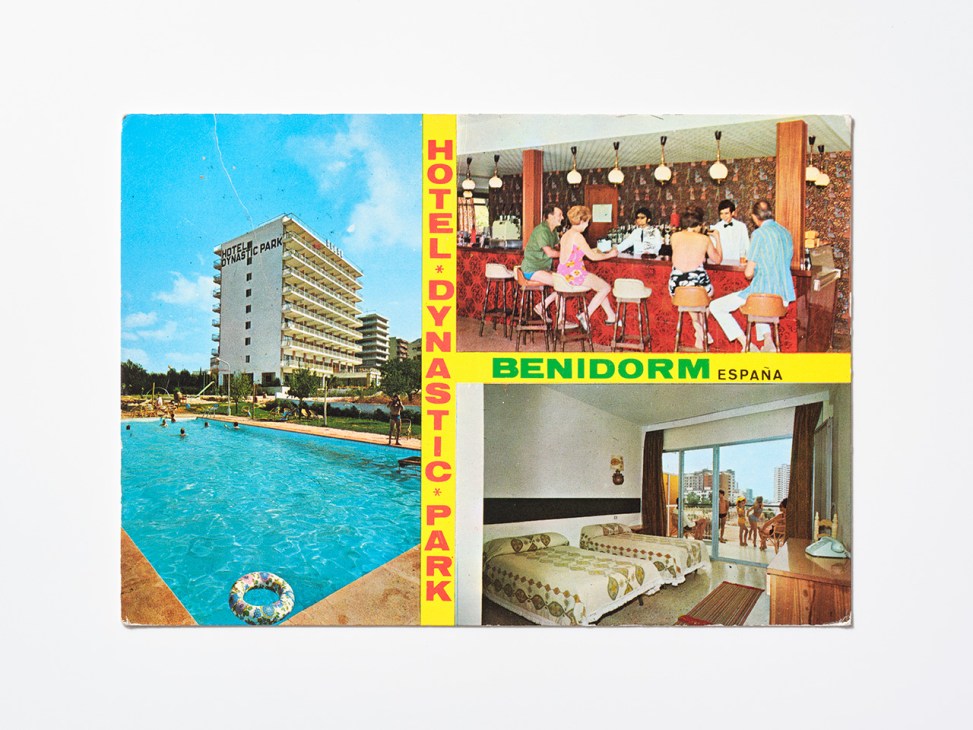
Sue’s trip to the Costa del Sol intersected with the end of Spain’s autocratic rule that had lasted for almost four decades and the postcard in my hand is a tiny witness to that moment. In the years from 1959, Francisco Franco, Spain’s leader, opened up the economy and increased foreign trade, overseeing what has been referred to as the “Spanish miracle”. One aspect of rapid economic growth was the breakneck development of tourist resorts. Beginning with Benidorm, fishing villages were transformed into tourism factories, as high-rise developments mushroomed along the Mediterranean coast, bringing employment, wealth and squadrons of British holidaymakers in search of the sun. In 1975, the year Franco’s death silenced the music on Sue’s holiday, more than 30 million foreign visitors arrived in Spain.
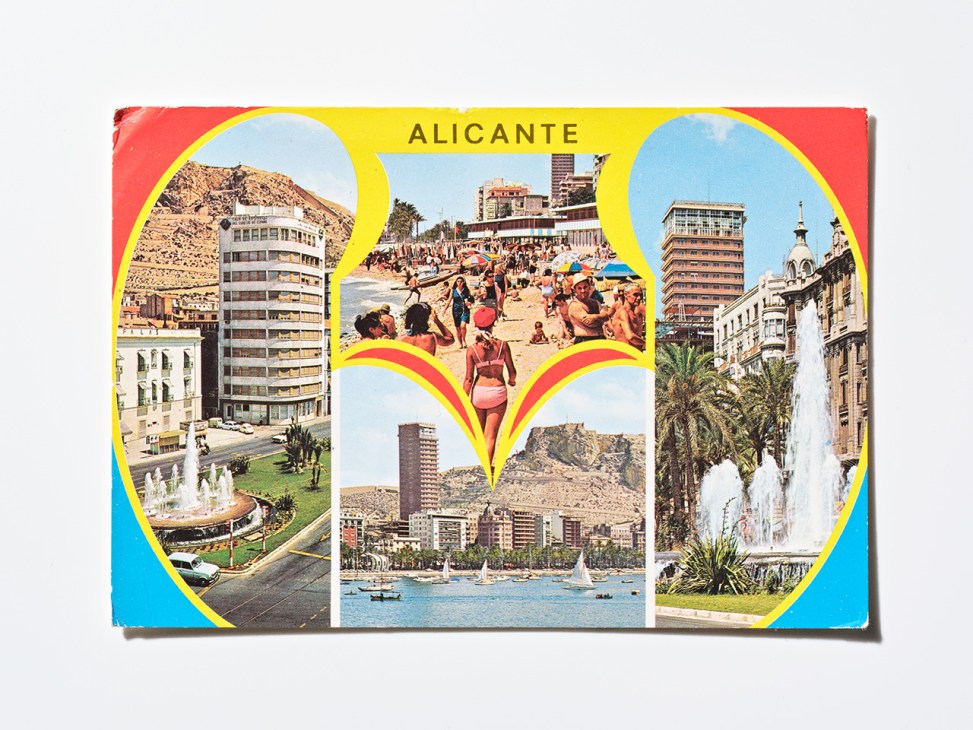
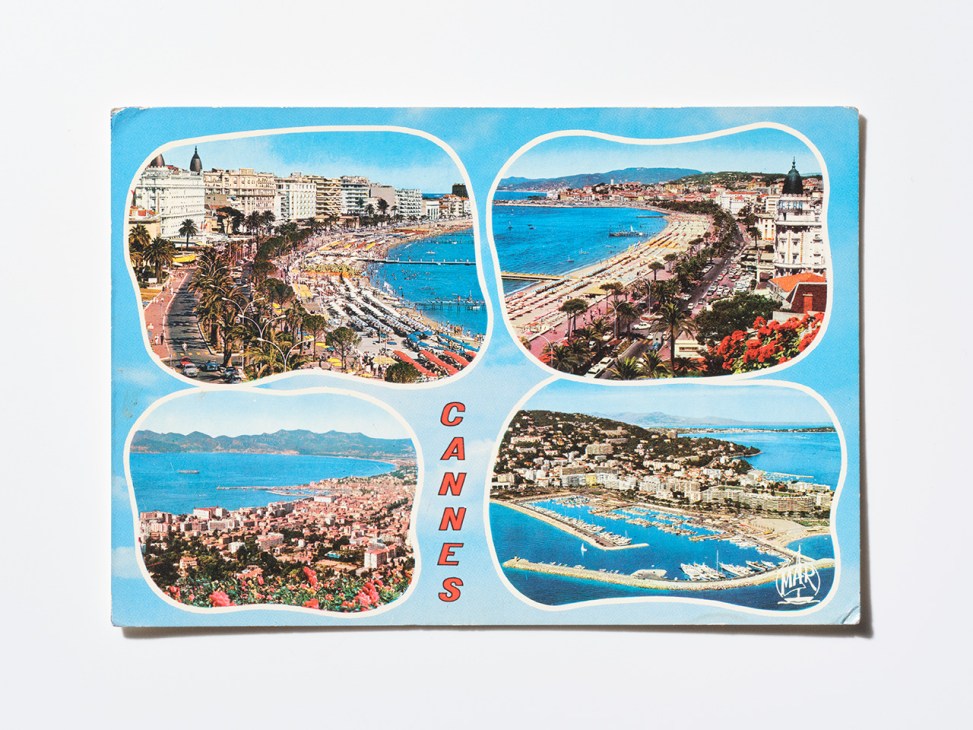
“We’ve arrived at the flat at 8 in the morning, after driving for 24 hours. We took a shortcut through the back villages of the plain, but we found out there is no such road. The car withstood a hell of a bashing.” a hell of a bashing.”
From Alicante, Spain, to Carshalton, Surrey (September 1973)
“Arrived late, got to thrust & take-off, then stopped. Plane had a fault. Changed to another Tri-star. Frightening!!”
From Cannes, France, to Lytham, Lancashire (March 1976)

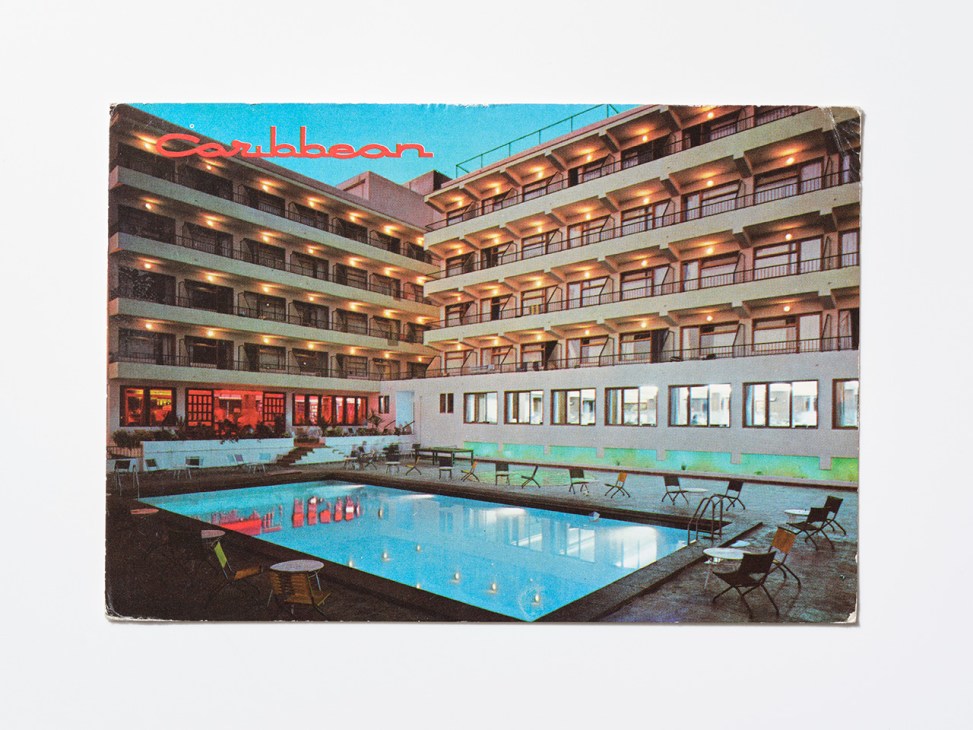
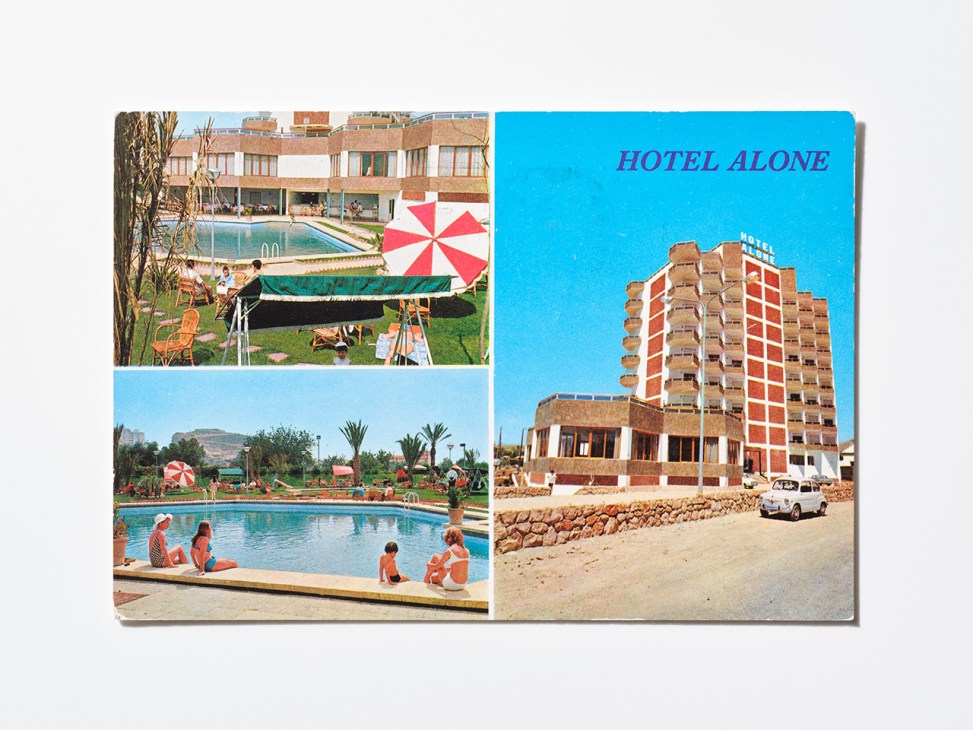
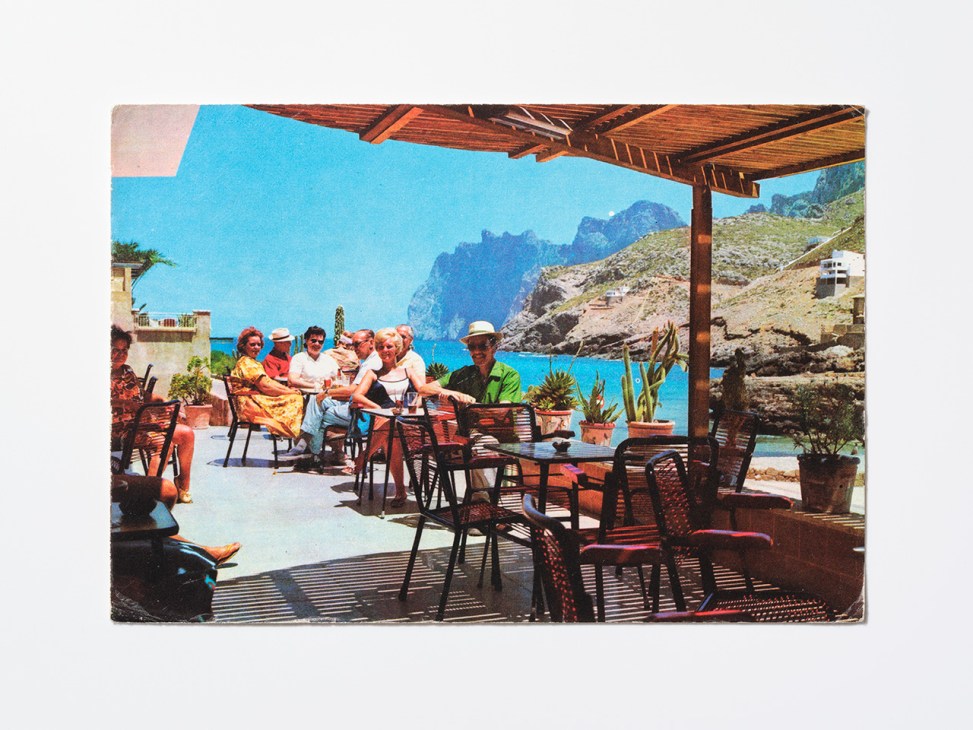
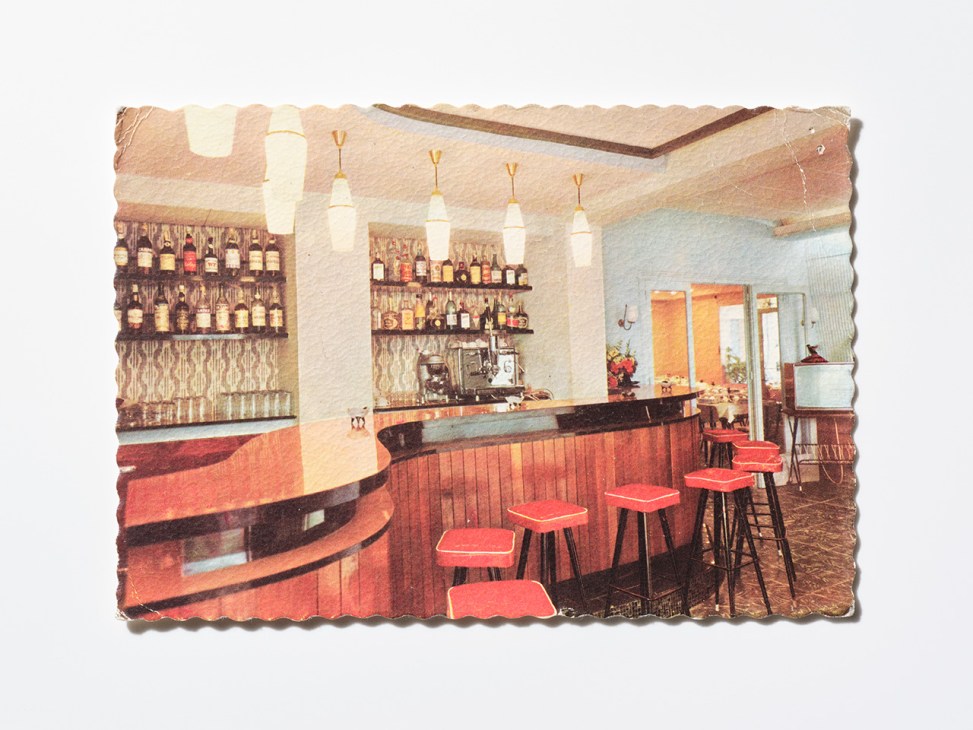
To document these holidays, the production of full-colour Spanish tourist postcards underwent a similar surge, selling in vast numbers. At the time, to take your own photographs was an analogue hobby that required planning and commitment: as a collector, I have seen countless messages on postcards referring to the onerous business of sending rolls of film to be developed, or counting an exact number of photos taken. In a world yet to be flooded with digital images, the picture postcard was an ideal method of sending home a tangible token of a week in the sun. And if the picture on the card was idealised and generic (or showed the wrong hotel), the message on the other side could still be unique and personal. For most European holidaymakers, foreign travel in the 1950s and 1960s was new and exciting. There’s an argument that modern tourism was invented on the Costa Blanca: the Spanish taught themselves how to host masses of foreign visitors, who in turn learnt how to be on holiday.

As the global tourism industry has grown, so too has our visual inventory: every beach, every beauty spot, every meal is now documented. But those evanescent images rest on devices in pockets and servers on different continents; after a change in terms and conditions or new ownership of the platform, who knows how long they might last. When I’m sifting through a box of old postcards from the 1960s and 1970s, flipping between image and message, looking for anything to catch the eye, I’m aware that these small cardboard oblongs have weight both physically and metaphorically. They were built to survive and they still work: the pictures are clear, the messages fresh and immediate. They weren’t addressed to me but speak to me nonetheless. They comprise a vast, touching, fragmented archive of first-hand testimony of what it felt like to travel to the Costas and further afield in that first flush of affordable travel for the masses.
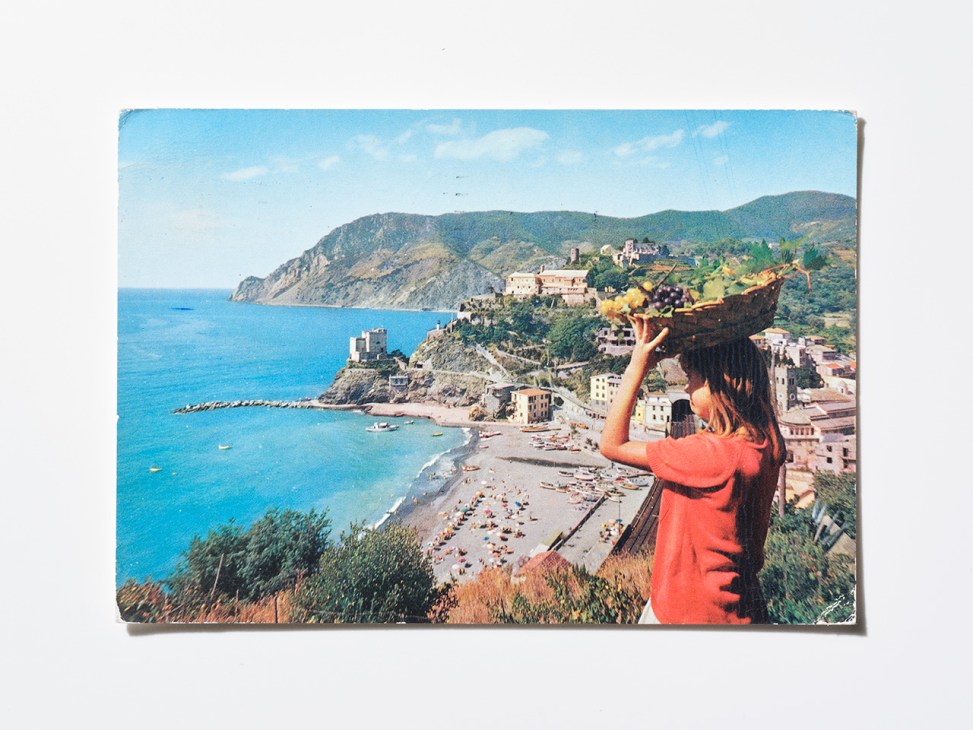
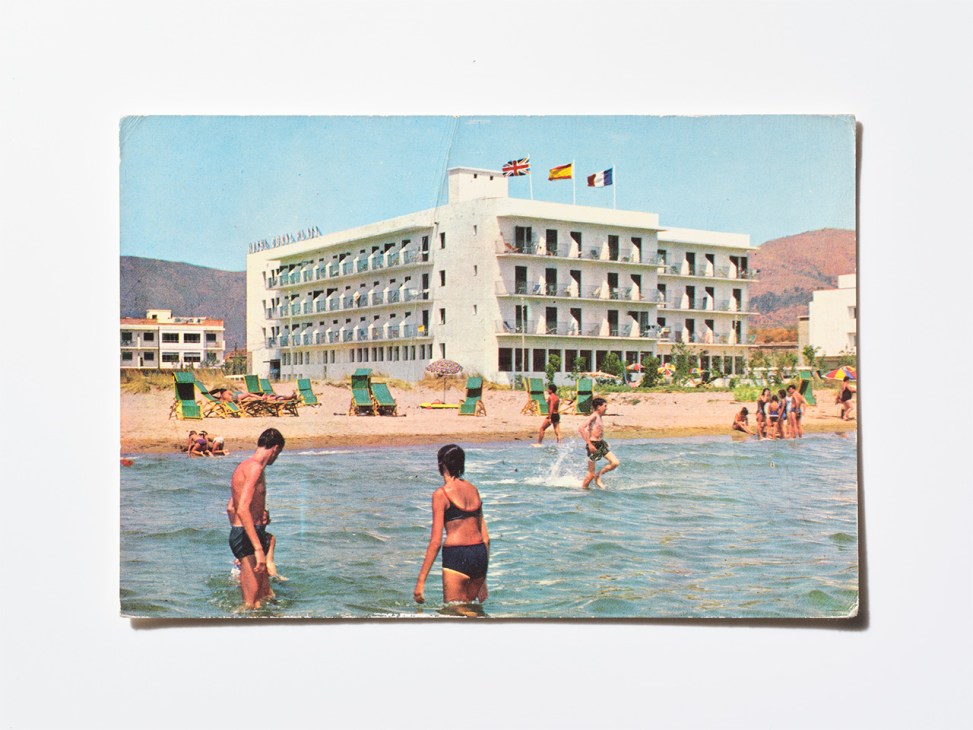
“I am having a good rest and putting on weight with minestrone and spaghetti.”
From Monterosso, Italy, to Preston, Lancashire (August 1966)
“The weather is beautiful. Grace & Eddie. PS. This is our hotel.”
From Rosas, Spain, to East Dulwich, London (date unknown)

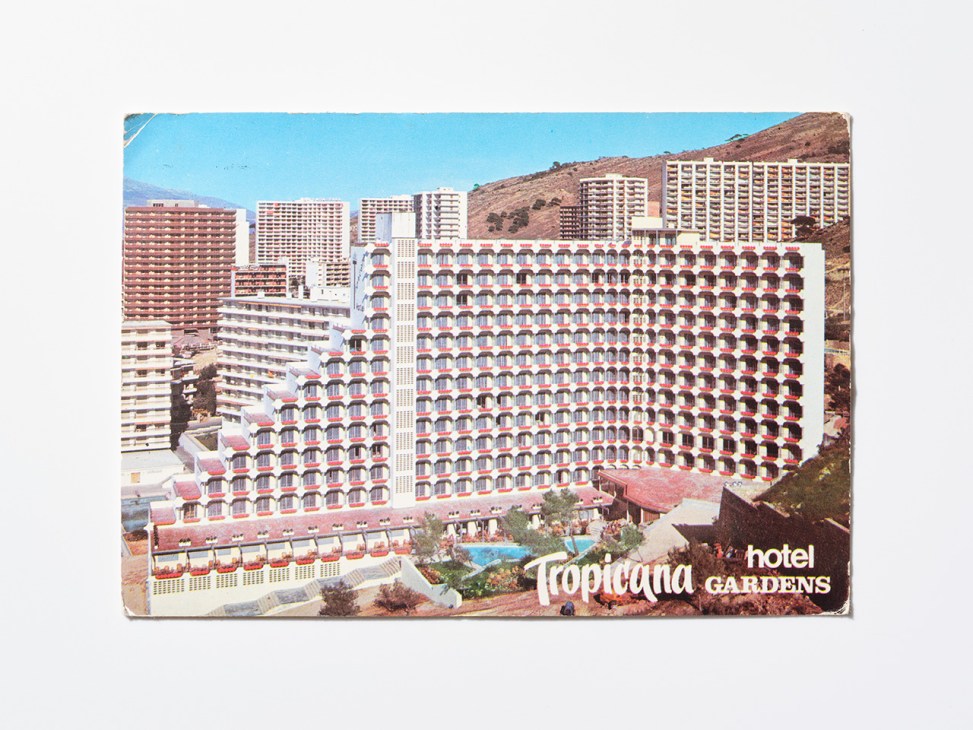
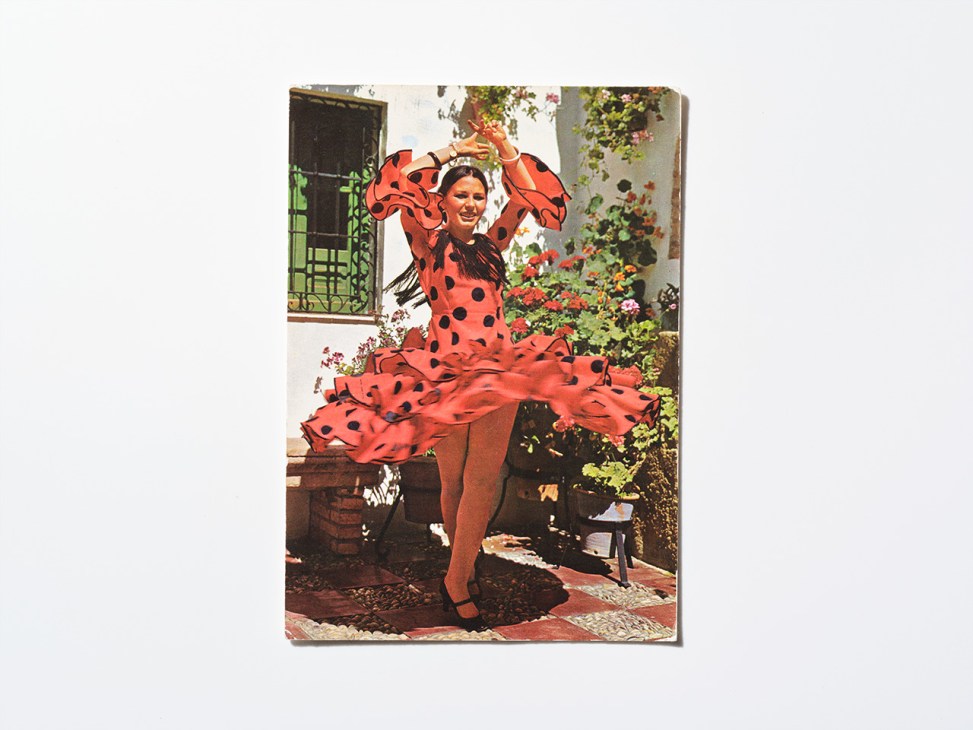
Hotels and tour operators were well aware that these cards represented important viral marketing. Postcards from southern Europe acted, certainly in the earlier part of the era, as personalised testimonials to the advantages of a holiday in the sun. With the brand-new hotel and pool and loungers and happy, tanned customers on the front of the card, the back was left for Tripadvisor-style endorsements. One reads: “Oranges are fresh and sweet. Flowers are grown in profusion here. Hotel has lovely sweet peas in bloom.” Some hotels would offer to send the cards for you, helpfully adding a rubber-stamped image of the hotel so that, even if the photograph was of a beach or donkey or flamenco dancer, the recipient would nevertheless be under no illusion as to which hotel the praise should be attached to.

In those early days, air travel itself was often a new experience, and the humblest package holidaymaker could feel like they were now part of the jet set. A postcard from Formentor, Mallorca, shows a row of women in bikinis sitting on a low wall by the harbour. Addressed to Liverpool, it announces: “You must visit this place, not very expensive, Grace Kelly staying in the next room to us, so we may stay longer.” And, for some, the glamour of the exotic is more explicitly eroticised: who knows what this faraway place in Spain, France, Italy or Greece might offer? Cheeky comments are commonplace, imagined objects of (fleeting) desire include waiters, local boys, local girls, other holidaymakers male or female, anyone in a bikini and, later, anyone out of a bikini.
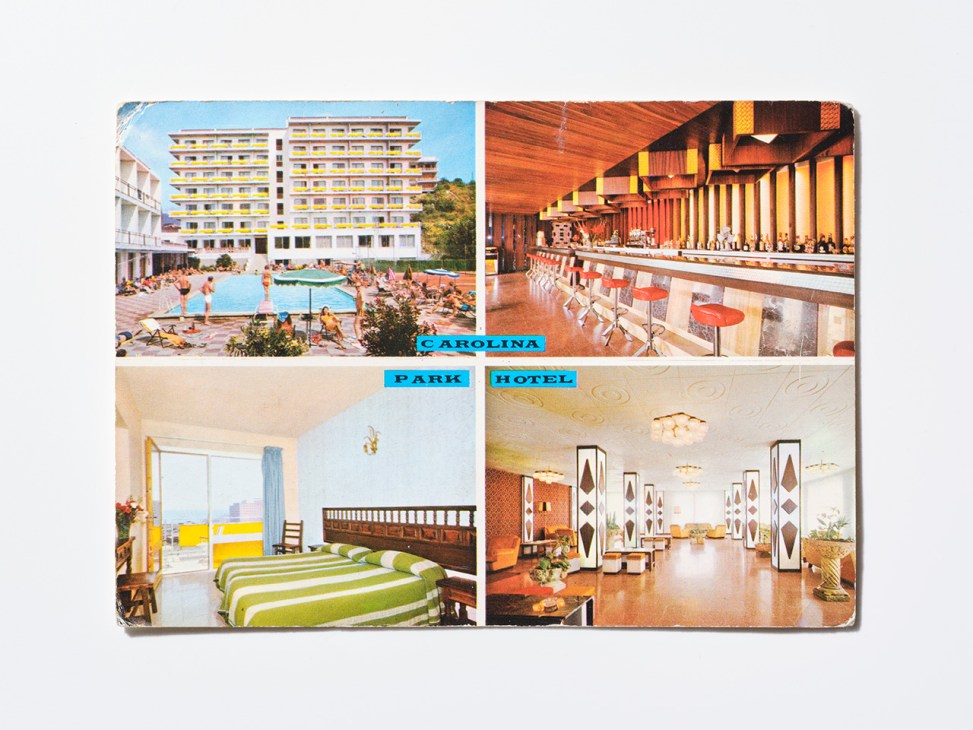
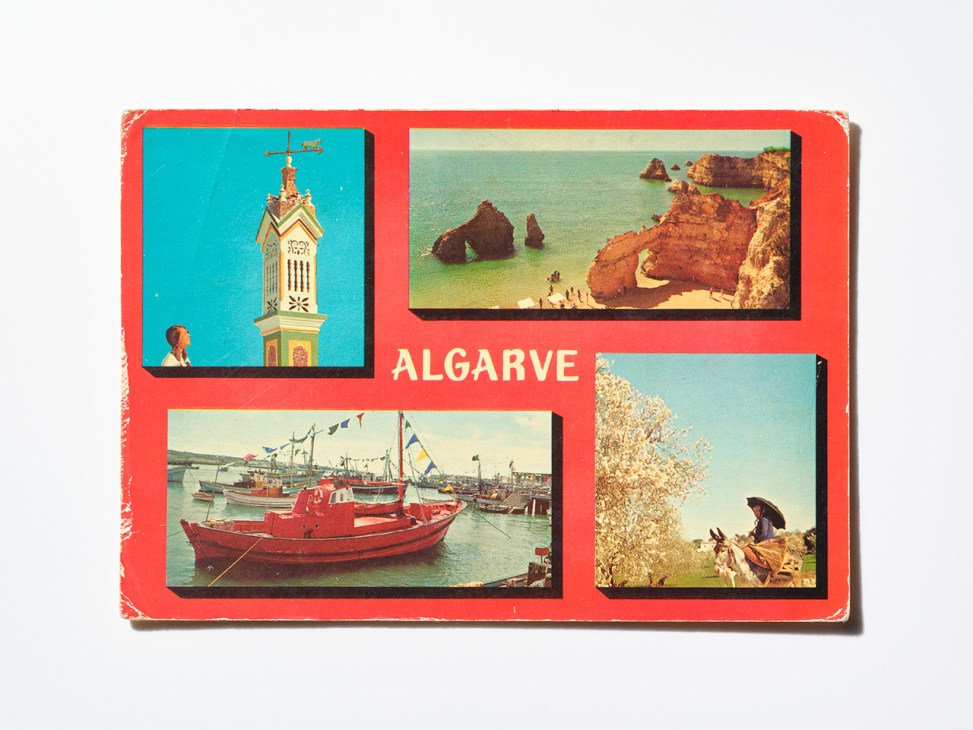
“The hotel itself is very comfortable, food is good. Plenty of nightlife. On the whole this promises to be a very good holiday.”
From Callela de la Costa, Spain, to North Wembley, Middlesex (date unknown)
“Today we went donkey riding. The weather is very hot. Love from Tracey.”
From Algarve, Portugal, to Portsmouth, Hampshire (April 1972)

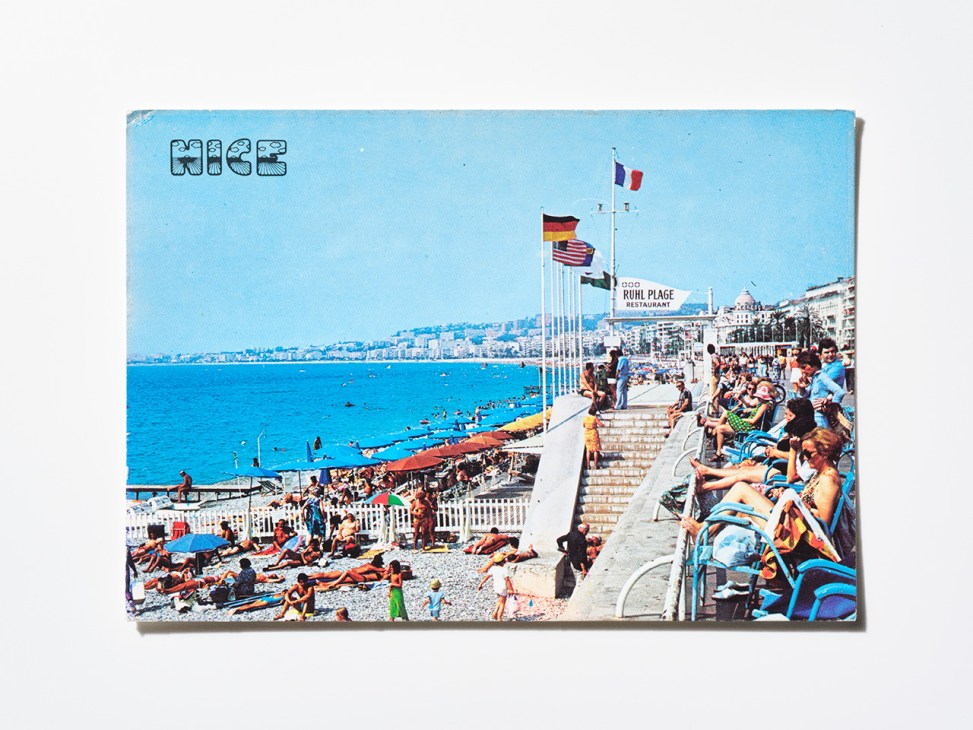
By the 1960s, Italy and France were opening up too. Yes, Cannes, Nice and Monte Carlo had long been the playground of the moneyed, but now the Côte d’Azur was encouraging visitors. Postcards suggest that French tourism was more diverse, with smaller hotels, rentals and camping. Visitors to France could write home on exquisitely composed, beautifully produced photographic cards by publishers such as Yvon, Artaud Frères or Iris. “Isn’t it gorgeous living on fresh melon grapes, wine and cheese?” one from my collection muses.

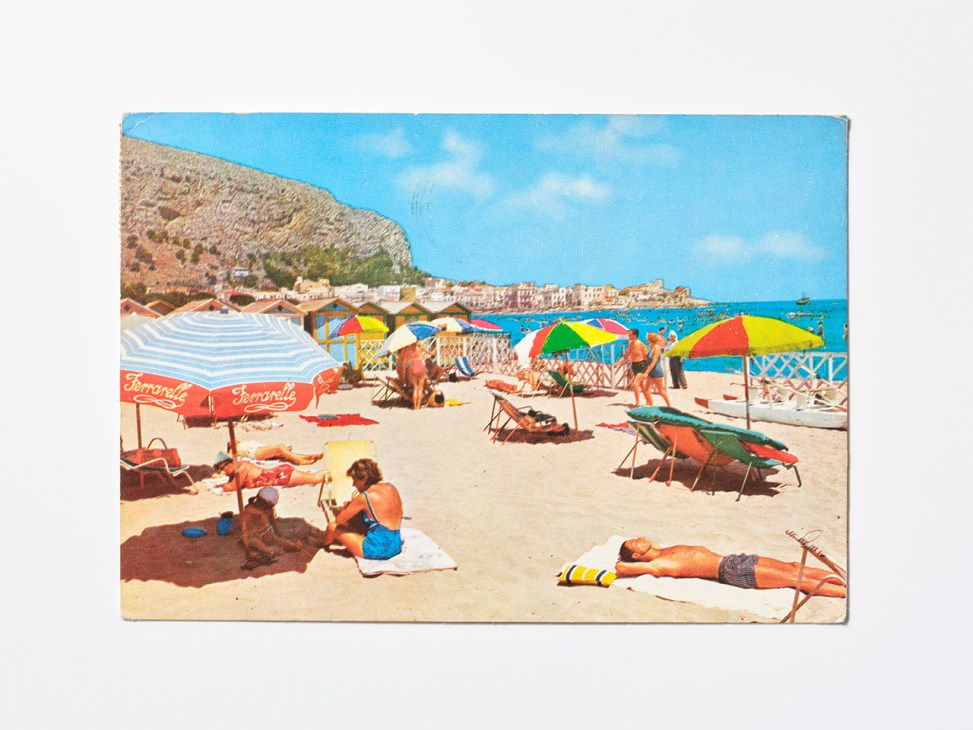
Iris cards, printed using the mysterious Mexichrome process, were aware of their superior quality, exhorting: “Collectionnez les Cartes Postales!” Collect postcards! And the recipients did. Cards from Italy show lower-rise hotels, crammed in front of or stacked on top of cliffs; they seem to favour high wide-angle shots of beaches, sunbathers little more than dots – a glimpse of modern mass beach tourism but on a slightly less industrial scale. Looking through thousands of these cards, changes in tone emerge: the early wonder of the 1960s sours slightly by the late 1970s. The thrill of “fresh melon grapes wine and cheese” increasingly gives way to cheap alcohol and plenty of it. By August 1977, Brian’s holiday in Palma Nova, Mallorca, sounds plain brutal. “Ossie & I stoned out of our minds on Sunday night, he fell asleep on the pavement. Hotel is okay but the food is the worst I’ve ever had. Head waiter is a bit of a nark so it’s the swimming pool for him.” Yikes.

But innocence is always glimpsed in the rear-view mirror. As early as September 1958, a correspondent sent a black-and-white postcard, a panorama of Benidorm, to South Kensington, complaining that: “The place is now super developed, shops with plate glass doors & self-service groceries, milk bars, Americans & still patches of oil on the beach. Hordes of people, return fare from London & 14 days here for £44!!” The traditional visitor was losing his exclusive hold on the place: the masses were coming and, with them, changes.

A holiday is an attempt to step outside the calendar but, as Sue discovered in Torremolinos in 1975 – and as visitors to the Gulf found in February 2026 – even from your sunlounger the movements of the world are inescapable: political and international events can all too easily upset your idyll. Now, tourism itself is changing: leisure travel is a global industry and its impact is under scrutiny. In 2024, thousands of locals protested in the Canary Islands against overtourism. In Barcelona, protesters called for an end to the overuse by visitors of resources, public spaces and public services.

Time and the turning of the world will chase us all from our poolside reveries eventually. These holiday moments still urge us to snap countless pictures and squirrel them away. The intention might be the same – to capture and share a moment – but often our digital equivalents never see the light of day. More than 50 years have passed since these many millions of postcards were written, sent and received. Yet, by freezing to perfect stillness those beach scenes in Magaluf, flamenco poses, or donkeys in Lloret de Mar, by capturing in ink the fleeting thoughts and feelings of a particular sunburnt holidaymaker at a specific moment, these resilient little cards have, in a small way, held back the deluge and beaten time itself.

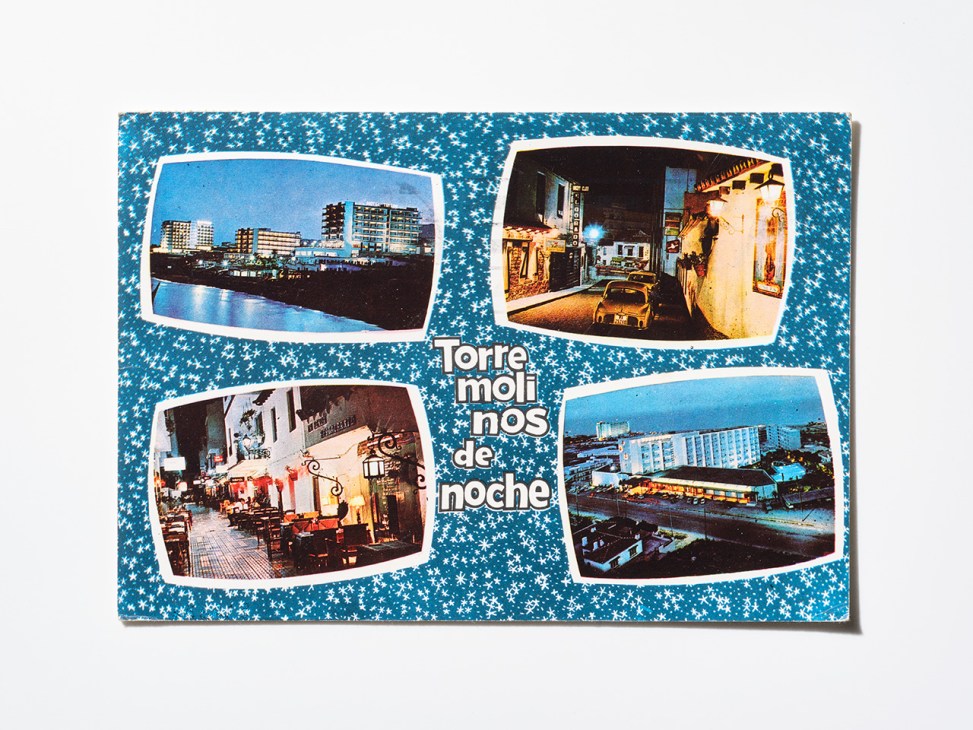
“Sorry but we cannot find you a Spaniard. Will try again next week.”
From Malgrat de Mar, Spain, to Edinburgh, Scotland (August 1968)
“Not much work here – mainly accounts of the Hotel that I do first thing each morning and then in the swimming pool all day.”
From Torremolinos, Spain, to Kenilworth, Warwickshire (September 1974)
“It’s four o’clock and you’ll all be working. Just think of me lying in bed groaning with a hangover and being serenaded by 3 concrete mixers and a crane. Luv Jill”
From El Arenal, Mallorca, Spain to Wakefield, Yorkshire (1968)
“This is the life, folks. Sun, sea, swimming – being waited on hand & foot. Wish we had done this before. Eric is stretched out having his after dinner nap in one of the sun hammocks.”
From Benidorm, Spain, to Dundee, Scotland (September 1971)
“The sea is as blue as the postcard.”
From Le Lavandou, France, to Uxbridge, Middlesex (July 1977)
“This is our hotel although it looks big it is one of the smaller hotels here. Food etc very good. Not too hot here at the moment.”
From Benidorm, Spain, to Tiverton, Devon (May 1978)
“I tried the Ruhl Casino last night and thought it a ghastly place. Minimum stake 20F! I didn’t gamble.”
From Nice, France, to London (September 1978)
“No shops opening until Wed, as it happens to be a religious festival! Can only window shop for my mum’s present. The hotel is very good. I’m trying all the food and it’s very good. PS. We forgot the camera.”
From Benidorm, Spain, to Bourne End, Buckinghamshire (July 1973)
“Hello lads: lovely weather out here, lots of jumping, nice beaches fags and booze.”
From Ibiza, Spain, to the Savoy Hotel Kitchen, London (August 1978)
“Isobel & Patrick send their regards – we are so busy doing nothing.”
From Hostal Mayol, Mallorca, Spain, to Fife, Scotland (September 1968)
“Weather is just right. Hotel & food good, especially the marmalade!”
From Torremolinos, Spain, to Liverpool (February 1978)
“Having a smashing holiday. Drink food & weather lovely.”
From Lloret de Mar, Spain, to Dundee, Scotland (August 1968)
“Hotel good but service could be better. I had to shake them up a bit today. Beaches not as nice as Majorca. Cheerio, Jim & Vera.”
From Torremolinos, Spain, to Accrington, Lancashire (July 1973)
“After all the delicious bread, pasta and cakes I’m sure to put on at least a stone. Love Edith.”
From Mondello, Sicily, to Jersey, Channel Islands (December 1971)