












On its 80th anniversary, France’s bestselling and most widely translated children’s fable proves that simple narratives speak volumes.
Scan the bookshelves of any French home, bookshop or library and there’s a title that you will invariably find: Le Petit Prince. Written and illustrated in 1942 by military pilot Antoine de Saint-Exupéry, the book is a children’s novella so synonymous with Gallic identity that the French still purchase between 200,000 and 300,000 copies a year.
Saint-Exupéry was an intrepid explorer and his narrative was inspired by his own experiences. He wrote Le Petit Prince while in exile on Long Island after being demobilised. In the story, a stranded pilot meets a prince from a neighbouring asteroid. After encountering six narrow-minded, egocentric characters, the young prince grows disillusioned with the meaning of life. It’s a wise fox who identifies the story’s moral: “L’essentiel est invisible pour les yeux” or “What is essential is invisible to the eye.” The message is impossible to misunderstand: the most meaningful aspects of life – love, kindness and friendship – aren’t visible. It’s a predictable moral, perhaps, but the book’s success is anything but.
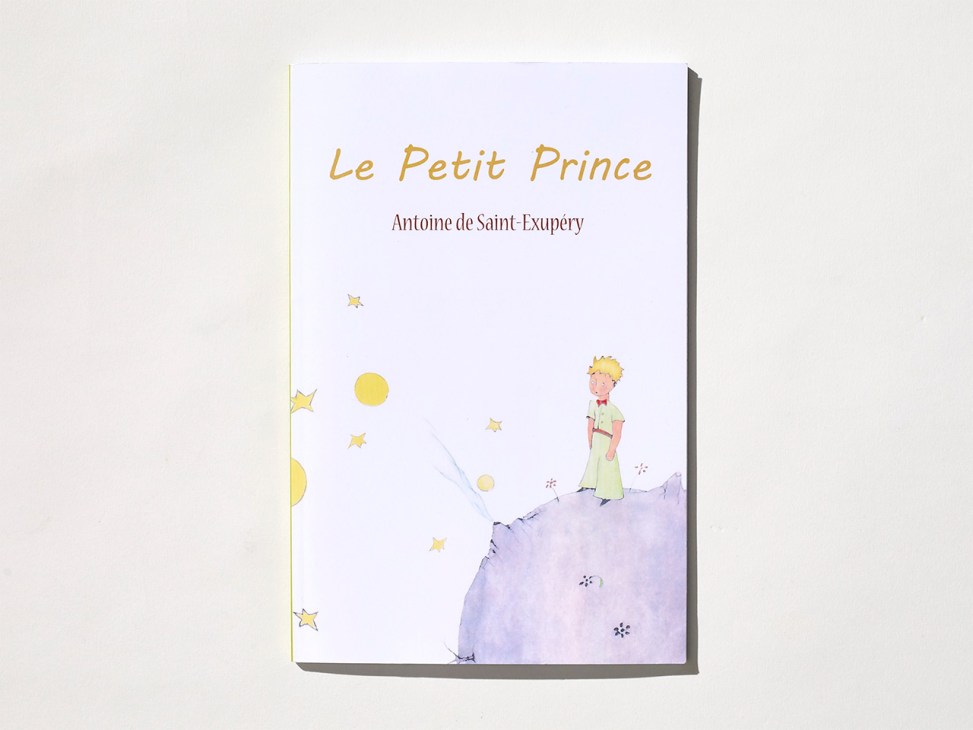
For a novella that has become a paradigm of quintessential Frenchness, Le Petit Prince was ironically first published in the US. The book was banned under the Vichy regime, a government that Saint-Exupéry had denounced. When Gallimard eventually published the book in France in 1946, the prestigious publishing house couldn’t have foreseen that 80 years on, it wouldn’t just be Francophone readers who would cherish the title.
Available in more than 650 languages, Le Petit Prince has become the second-most translated book worldwide, second only to the Bible. Its uncomplicated storyline, universal themes and simple lexicon have fostered remarkable longevity. Today you can find a copy in Chinese, Hawaiian or Emirati Arabic and you can also read the enchanting fable in endangered dialects. These include Sardinian, Quechua and Toba, spoken in Argentina and Paraguay. Le Petit Prince is also one of a handful of modern works that has been translated into classical Latin.
With more than 300 million copies sold globally, the universally understood tale has become an unlikely ambassador of French soft diplomacy and the linchpin of its well-admired literary capabilities. “Antoine was a stylish and courageous French pilot who smoked cigarettes,” says Thomas Rivière, Saint-Exupéry’s great-great-nephew and head of licensing for the estate. “A bit like Chanel, his story has become the epitome of the ‘Made in France’ brand.”
Sales are particularly buoyant in the US – a bronze statue of the prince was installed on New York’s Fifth Avenue in 2023. The French American Cultural Foundation also champions the book as a paradigm of successful cross-cultural exchange between the two nations. Even the UN has identified the publication as aligned with its own mission to foster understanding across borders.
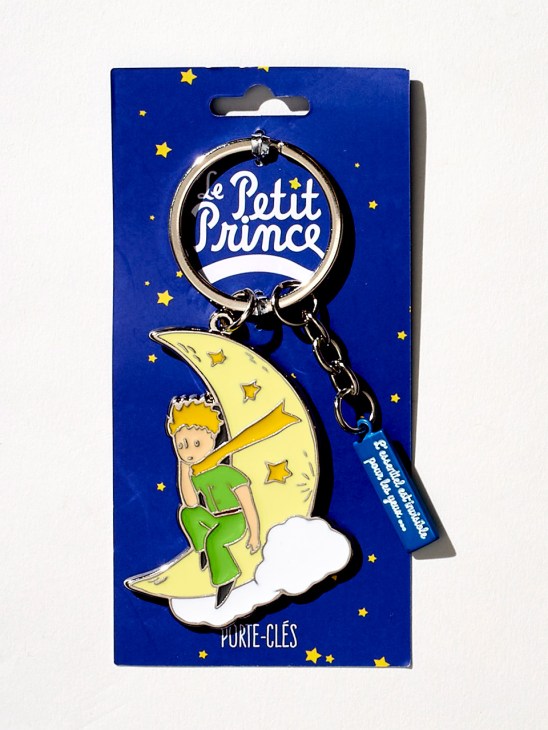
But the narrative has travelled further still. When an animated film adaptation hit the Chinese box office in 2015, it became the highest grossing title of its kind in the Chinese mainland at 158m yuan (approximately €20m), prompting more than 70 Mandarin translations and collectible prince figurines. And, in Latin America, the book is a mainstay of the school curricula as the author had personal ties to the region: Saint-Exupéry travelled to Argentina in 1929 to serve as the director of Aeroposta Argentina, a subsidiary of the French airline Aéropostale.
Le Petit Prince is not just an unlikely bestseller, but a multifarious brand that has spawned a musical, opera, graphic novels, ballet productions and even a self-help book entitled How to Live like the Little Prince. For the 80-year anniversary of its publication, La Poste has released an official Le Petit Prince stamp featuring Saint-Exupéry’s whimsical watercolour illustrations, while the Monnaie de Paris has introduced a collectable €2 coin into circulation.
Beyond its pop-culture prominence, the sustained global sales of that same Le Petit Prince story indicate how literary characters – even those created for children – can become dependable protagonists during fractured times. Though Saint-Exupéry, who perished in an aviation accident in 1944, never lived to see the success of his novella, his legacy speaks volumes. “The book is 80 years old and yet somehow still feels modern,” says Rivière. “I’m confident that Le Petit Prince will still resonate with readers 80 years from now.”
‘Le Petit Prince’ in numbers
1939: The year that Antoine de Saint-Exupéry was in a plane crash in the desert, an event that would later shape his iconic novella, Le Petit Prince
1946: Le Petit Prince is published in France by Gallimard publishing house
650: The number of languages into which the story has been translated
300 million: The total number of Le Petit Prince copies sold worldwide to date
300,000: The number of copies sold in France annually
此内容由惯性聚合(RSS阅读器)自动聚合整理,仅供阅读参考。 原文来自 — 版权归原作者所有。