







The Danish capital is a regular frontrunner in Monocle’s Quality of Life surveys. But Copenhagen has also made its mistakes. Thankfully, the city continues to learn and grow.
It used to be that if you won the Fifa World Cup three times, you would get to keep the Jules Rimet Trophy. Brazil achieved this in 1970 and I don’t think there would be much argument if Monocle similarly awarded the Quality of Life trophy to Copenhagen in perpetuity. After all, no city has topped our list of the best places to live more often. Only occasionally – like this year – there’s a terrible clerical error and it ends up placing second.
Leaving aside my attempts to have the so-called winner, Tokyo, excluded on the grounds that it’s not actually a single city but more than 20 stuck together, why has Copenhagen been such a solid performer ever since our first ranking (in which, of course, the Danish capital came first place)? A well-educated labour force adds value to the things that it produces so the Danes are rich, yes, but the Saudis are too. Democracy and equality are key foundation stones, especially when it comes to education. Denmark tops most global rankings of economic and gender equality, as well as transparency.
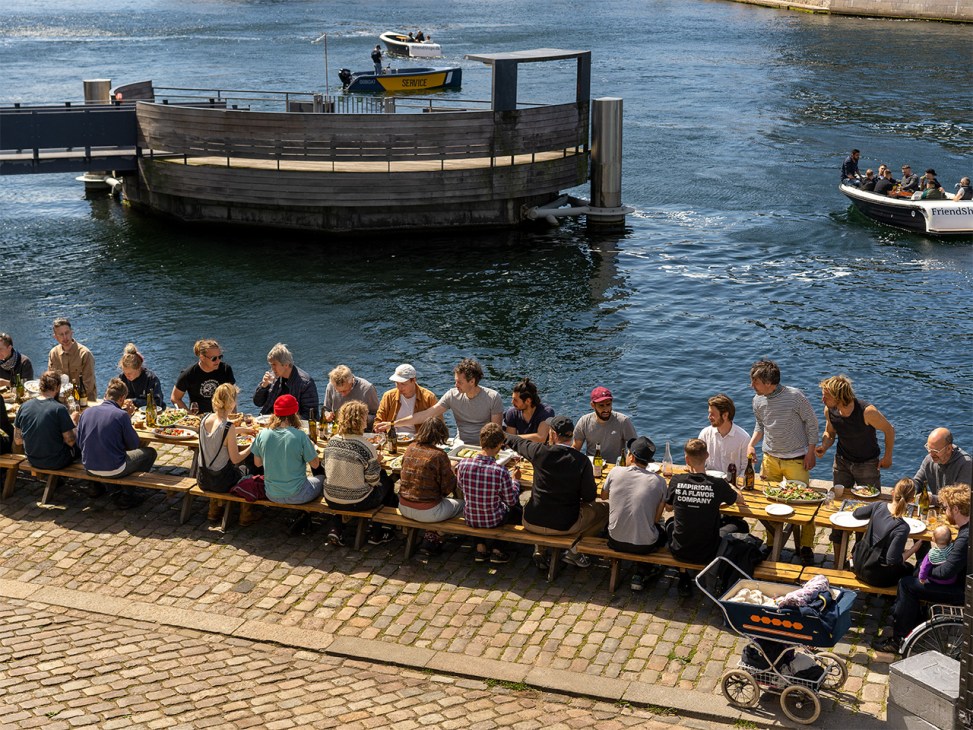
So where’s the country’s second city, Aarhus, on our list? What makes the capital so special? Obviously it has more of the icing-and-cherry stuff: culture, retail, dining and vibes. But one of the most significant long-term factors is what I call its “iterative urbanism”: the people who plan and build Copenhagen genuinely seem to learn from their mistakes, listen to the inhabitants and constantly seek to refine how they do things.
In the early 2000s, Copenhagen got it very wrong with Ørestad, an office and residential area near the airport that it had built high and wide with long, open thoroughfares and characterless offices and apartment blocks. Much of it felt as though it had been designed by accountants applying some pan-European template. It was the antithesis of Danish architect Jan Gehl’s “cities for people” approach. I once took a tour of the city with Gehl. We started at the desolate, windswept Ørestad, before driving to a place that, for him, epitomised the best of what an urban environment could be. The fishing village of Dragør was only 20 minutes away but a world apart, with its low-rise, closely built housing, welcoming squares, cobbles and plentiful greenery.
Lessons from Gehl’s approach were applied in the next district to emerge, Nordhavn. With a few exceptions, the buildings here aren’t so high, they are more closely built and there’s life at street level. There are great transport links and cars command less street space. The harbour waters are better integrated too, which brings light and air. The city granted some of the country’s best architects more freedom here, so there are more creative moments – take, for example, studio JaJa Architect’s Konditaget Lüders car park, which has a recycling centre on the ground floor and a public park on the roof. Next came the Sydhavn harbour area, which, though architecturally still rather one-note, is still a far nicer place to live and visit than Ørestad.
Soon the city will start transforming Refshaleøen into a place where 25,000 people will live, work, shop and go to school. This former industrial zone is quite raw and many want it to stay that way. But, once again, Copenhagen is iterating its approach. Transport links will be key, so a Metro will be built, along with a 460-metre cycle bridge across the harbour. A big question is what to do with private cars. Some want to exclude them completely, while others wonder how this might affect its appeal to visitors and potential residents. I’m hoping that the city will achieve a pragmatic balance – because iteration, consultation and good old-fashioned Danish moderation are what have always raised quality of life in this all-time number-one city.
Michael Booth is Monocle’s Copenhagen correspondent. For more opinion, analysis and insight, subscribe to Monocle today.
此内容由惯性聚合(RSS阅读器)自动聚合整理,仅供阅读参考。 原文来自 — 版权归原作者所有。