惯性聚合 高效追踪和阅读你感兴趣的博客、新闻、科技资讯
阅读原文 在惯性聚合中打开

推荐订阅源

G
GRAHAM CLULEY
V
V2EX
WordPress大学
WordPress大学
博客园 - Franky
Last Week in AI
Last Week in AI
博客园 - 司徒正美
有赞技术团队
有赞技术团队
freeCodeCamp Programming Tutorials: Python, JavaScript, Git & More
博客园 - 【当耐特】
V
Visual Studio Blog
C
CERT Recently Published Vulnerability Notes
OSCHINA 社区最新新闻
OSCHINA 社区最新新闻
cs.CL updates on arXiv.org
Jina AI
Jina AI
Attack and Defense Labs
腾讯CDC
The Hacker News
The Hacker News
Hugging Face - Blog
Hugging Face - Blog
K
KPMG report finds enterprise disconnect between AI and its ROI | CIO
J
Java Code Geeks
人人都是产品经理
人人都是产品经理
阮一峰的网络日志
阮一峰的网络日志
T
Tailwind CSS Blog
S
SegmentFault 最新的问题
大猫的无限游戏
大猫的无限游戏
小众软件
小众软件
A
Arctic Wolf
量子位
博客园 - 聂微东
奇客Solidot–传递最新科技情报
奇客Solidot–传递最新科技情报
N
News and Events Feed by Topic
雷峰网
雷峰网
博客园_首页
Google Online Security Blog
Spread Privacy
Spread Privacy
罗磊的独立博客
H
Hacker News: Front Page
让小产品的独立变现更简单 - ezindie.com
月光博客
月光博客
TaoSecurity Blog
TaoSecurity Blog
Exploit-DB.com RSS Feed
博客园 - 三生石上(FineUI控件)
宝玉的分享
宝玉的分享
IT之家
IT之家
The Cloudflare Blog
爱范儿
爱范儿
博客园 - 叶小钗
Threat Intelligence Blog | Flashpoint
Apple Machine Learning Research
酷 壳 – CoolShell
酷 壳 – CoolShell

MIT Technology Review

Why do South Koreans love AI so much? This man with ALS is “the first power user” of a brain implant that lets him speak The Download: cutting AC emissions, and nature’s drug designer These new solid-state ACs promise a cool future. Scientists aren’t so sure. The Download: “reprogramming” aging, and the hidden sense of interoception You do your own time Why “reprogramming” is the buzziest approach to reversing aging right now Inside interoception: The hidden sense of how you feel inside The Download: soccer’s data renaissance and China’s big nuclear plans Google DeepMind is worried about what happens when millions of agents start to interact Job titles of the future: Nature’s drug designer Inside soccer’s data renaissance Why China is betting on big nuclear reactors The Download: the “steroid olympics” and a safer Mythos The “steroid olympics” were a circus—and a window into our culture The Download: whole-body rejuvenation drugs and five things to know about AI Learning to lead in a hybrid human-AI enterprise David Sinclair plans to test whole-body rejuvenation drugs in the XPrize competition Five things you need to know about AI The Download: how the World Cup ball will fly and OpenAI’s “super app” Why this year’s World Cup ball may not fly as far The Download: AI hacking beyond Mythos, and chatbots’ impact on our brains Are AI chatbots making us lose control of our brains? The Meta hack shows there’s more to AI security than Mythos The Download: AI-generated lawsuits and virtual power plants for data centers How courts are coping with a flood of AI-generated lawsuits How virtual power plants could provide energy for data centers The Download: Trump’s new AI order, and smart glasses for warfare The Download: AI can run your admin department now Rehumanizing global health care with agentic AI How small businesses can leverage AI The Download: China’s brain implant ambitions China has approved the world’s first invasive brain-computer chip—here’s what’s next The Download: unlocking lithium and controlling Ebola The deadly Ebola outbreak is proving difficult to control How the Pope’s Magnifica Humanitas offers a template for individuals to meet the AI moment How a new extraction process could unlock the world’s lithium The Download: climate tech goes public and the AI Hype Index returns Climate tech companies are going public. What’s next? The AI Hype Index: AI gets booed in graduation season The Download: keeping up with AI, and the future of IVF Green steel startup Boston Metal is doubling down on critical metals How Chinese short dramas became AI content machines The shock of seeing your body used in deepfake porn Three things in AI to watch, according to a Nobel-winning economist The Download: seafloor science and military chatbots The Download: inside the Musk v. Altman trial, and AI for democracy A blueprint for using AI to strengthen democracy Week one of the Musk v. Altman trial: What it was like in the room Trump’s mass firing just dealt another blow to American science A new US phone network for Christians aims to block porn and gender-related content This startup’s new mechanistic interpretability tool lets you debug LLMs Rebuilding the data stack for AI The Download: DeepSeek’s latest AI breakthrough, and the race to build world models The Download: introducing the 10 Things That Matter in AI Right Now Roundtables: Unveiling The 10 Things That Matter in AI Right Now The new word in home construction could be “plastics” A natural protein may protect the GI tract from infection This tool could show how consciousness works Early life may have breathed oxygen earlier than believed Analog computing from waste heat Get ready for hotter, muggier, stormier summers Recent books from the MIT community AI at MIT Inventor recalls eye imaging breakthrough Pie Day 2026 The Download: bad news for inner Neanderthals, and AI warfare’s human illusion The case for fixing everything How robots learn: A brief, contemporary history Making AI operational in constrained public sector environments Treating enterprise AI as an operating layer The Download: cyberscammers’ banking bypasses, and carbon removal troubles Why having “humans in the loop” in an AI war is an illusion The noise we make is hurting animals. Can we learn to shut up? The quest to measure our relationship with nature Is carbon removal in trouble? The Download: NASA’s nuclear spacecraft and unveiling our AI 10 Cyberscammers are bypassing banks’ security with illicit tools sold on Telegram No one’s sure if synthetic mirror life will kill us all Building trust in the AI era with privacy-led UX Redefining the future of software engineering The Download: the state of AI, and protecting bears with drones NASA is building the first nuclear reactor-powered interplanetary spacecraft. How will it work? Coming soon: 10 Things That Matter in AI Right Now The problem with thinking you’re part Neanderthal Why opinion on AI is so divided Want to understand the current state of AI? Check out these charts. The Download: how humans make decisions, and Moderna’s “vaccine” word games Job titles of the future: Wildlife first responder You have no choice in reading this article—maybe What’s in a name? Moderna’s “vaccine” vs. “therapy” dilemma The Download: an exclusive Jeff VanderMeer story and AI models too scary to release Constellations The Download: AstroTurf wars and exponential AI growth Desalination technology, by the numbers Is fake grass a bad idea? The AstroTurf wars are far from over. Mustafa Suleyman: AI development won’t hit a wall anytime soon—here’s why The Download: water threats in Iran and AI’s impact on what entrepreneurs make Desalination plants in the Middle East are increasingly vulnerable Enabling agent-first process redesign
The Download: AI bottleneck debates, and BCI trials take off
Thomas Macaulay · 2026-06-19 · via MIT Technology Review

Skip to Content

Plus: Amazon workers who backed data center limits face potential termination.

This is today's edition of The Download, our weekday newsletter that provides a daily dose of what's going on in the world of technology.

A startup claims it broke through a bottleneck that’s holding back LLMs

AI startup Subquadratic came out of stealth last month with a huge claim: it had solved a mathematical bottleneck that had held back large language models for almost a decade.

The purported breakthrough comes from slashing the number of computations transformers need to carry out to generate answers. The result is a faster and cheaper LLM that uses far less energy than any other model on the market.

Many experts remained skeptical—but Subquadratic has started to share the receipts. They suggest that their approach might be worth paying attention to.

Here’s how the system works—and why some researchers still aren’t convinced.

—Will Douglas Heaven

Brain-computer interface trials are taking off

—Jessica Hamzelou

This week, I covered the story of Casey Harrell—a man with ALS who is “the first power user” of a brain implant. The device has enabled him to maintain an income, reconnect with friends and family, and read to his daughter. He told me that it’s “nothing short of revolutionary.” 

Over the past couple of years, the number of BCI trial volunteers has soared. This year, China became the first country to approve a BCI for medical use. Advances in technology are allowing engineers to provide more features than ever. BCI research is properly taking off.

The must-reads

I’ve combed the internet to find you today’s most fun/important/scary/fascinating stories about technology.

1 Amazon workers who backed data center limits may face termination
The engineers say they’re under investigation by the company. (NYT $)
+ And could face discipline, including potential termination. (The Verge)
+They had testified at meetings about pausing data centers. (CNBC)
+ They’ve filed a joint complaint to Seattle’s Office for Civil Rights. (Wired $)

2 A new fossil discovery has rewritten 150 years of evolutionary theory
It suggests early land vertebrates skipped the tadpole stage. (New Scientist $)
+ And raises questions about how vertebrates adapted to land. (404 Media)
+ Sponges may have been the first animals. (MIT Technology Review)
 
3 Bernie Sanders plans to give the public direct ownership of AI firms
He’s unveiled new legislation to create an AI sovereign wealth fund. (AP News)
+ It would be funded through a one-time tax on AI companies’ stock. (Quartz)
+ And make annual payments directly to Americans. (Washington Post $) 
 
4 Investors in China secretly acquired stakes in SpaceX before its IPO
One had ties to Chinese military contractors. (ProPublica)
+ The US fears China has got one of ASML’s top machines. (Reuters $)
 
5 Researchers have figured out Russia's nuclear-powered missile
They call it “a terrible idea”—but not an impossible one. (NPR)
+ NASA is building a nuclear reactor-powered spacecraft. (MIT Technology Review)
 
6 Longevity medicine faces a do-or-die moment in a landmark trial
It will test whether cellular aging can be safely reversed in humans. (Axios)
+ The next step is “chemical reprogramming.” (MIT Technology Review)
 
7 Studies suggest AI may already be deskilling professionals
Over-reliance appears to weaken doctors’ and engineers’ abilities. (Nature)
 
8 Tech workers who maxed out their AI use are now trying to minimize it
Spiralling costs mean “tokenminning” has replaced “tokenmaxxing.” (NYT $)
 
9 Scientists say the human genome’s structure may confound AI models
Which would constrain AI-based models of biology and disease. (Quanta)

10 A new robotic self-driving toilet brings the bathroom to you
The Xiaoban also cleans up and empties itself all on its own. (The Verge)

Quote of the day

“They hated me. They were doing everything they could to knock me down. And look at them now.” 

—Donald Trump mocks Mark Zuckerberg and Jeff Bezos in a conversation with Elon Musk that’s recounted in a new book, Wired reports

One More Thing

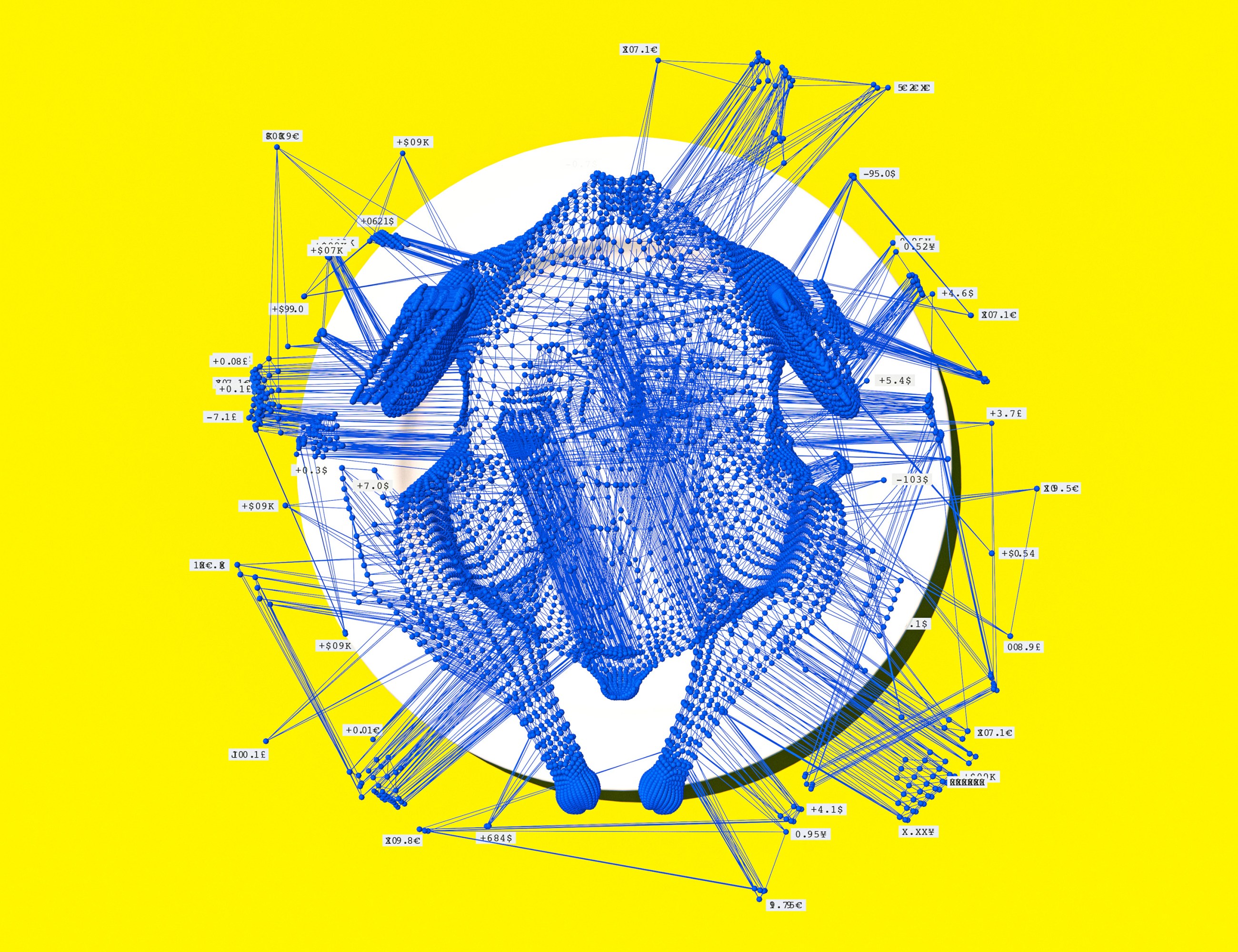
chicken network

PABLO DELCAN


Technology can help us feed the world, if we look beyond profit

The pandemic exposed the weak spots in our interconnected food system. They’re the result of decades’ worth of technological advances, from globe-spanning shipping to refrigeration networks. But technology is not inherently opposed to sustainable and resilient food systems.

Powerful technologies like genetic modification can create stronger local agriculture and a healthier food system—but they normally aren’t. The challenge is ensuring they serve food security and human well-being, rather than simply maximizing profits.

Deep Dive

The Download

Stay connected

Illustration by Rose Wong

Get the latest updates from
MIT Technology Review

Discover special offers, top stories, upcoming events, and more.