



惯性聚合 高效追踪和阅读你感兴趣的博客、新闻、科技资讯
阅读原文 在惯性聚合中打开

推荐订阅源

C
Check Point Blog
Exploit-DB.com RSS Feed
W
WeLiveSecurity
T
Troy Hunt's Blog
Project Zero
Project Zero
Security Archives - TechRepublic
Attack and Defense Labs
Google DeepMind News
T
Threat Research - Cisco Blogs
T
Tenable Blog
Jina AI
Jina AI
Recorded Future
Recorded Future
T
The Exploit Database - CXSecurity.com
N
News | PayPal Newsroom
P
Palo Alto Networks Blog
D
Darknet – Hacking Tools, Hacker News & Cyber Security
G
GRAHAM CLULEY
A
Arctic Wolf
OSCHINA 社区最新新闻
OSCHINA 社区最新新闻
The Register - Security
Last Week in AI
Last Week in AI
P
Privacy & Cybersecurity Law Blog
Microsoft Azure Blog
www.infosecurity-magazine.com
SecWiki News
SecWiki News
S
Schneier on Security
有赞技术团队
有赞技术团队
IT之家
IT之家
美团技术团队
Cisco Talos Blog
Cisco Talos Blog
NISL@THU
NISL@THU
P
Proofpoint News Feed
C
CERT Recently Published Vulnerability Notes
Hacker News: Ask HN
Hacker News: Ask HN
罗磊的独立博客
博客园_首页
Cyberwarzone
Cyberwarzone
Forbes - Security
Forbes - Security
H
Hacker News: Front Page
爱范儿
爱范儿
云风的 BLOG
云风的 BLOG
H
Hackread – Cybersecurity News, Data Breaches, AI and More
Webroot Blog
Webroot Blog
Latest news
Latest news
D
DataBreaches.Net
Know Your Adversary
Know Your Adversary
P
Privacy International News Feed
宝玉的分享
宝玉的分享
Simon Willison's Weblog
N
News and Events Feed by Topic

MIT Technology Review

Why do South Koreans love AI so much? This man with ALS is “the first power user” of a brain implant that lets him speak The Download: cutting AC emissions, and nature’s drug designer These new solid-state ACs promise a cool future. Scientists aren’t so sure. The Download: “reprogramming” aging, and the hidden sense of interoception You do your own time Why “reprogramming” is the buzziest approach to reversing aging right now Inside interoception: The hidden sense of how you feel inside The Download: soccer’s data renaissance and China’s big nuclear plans Google DeepMind is worried about what happens when millions of agents start to interact Job titles of the future: Nature’s drug designer Inside soccer’s data renaissance Why China is betting on big nuclear reactors The Download: the “steroid olympics” and a safer Mythos The “steroid olympics” were a circus—and a window into our culture The Download: whole-body rejuvenation drugs and five things to know about AI Learning to lead in a hybrid human-AI enterprise David Sinclair plans to test whole-body rejuvenation drugs in the XPrize competition Five things you need to know about AI The Download: how the World Cup ball will fly and OpenAI’s “super app” Why this year’s World Cup ball may not fly as far The Download: AI hacking beyond Mythos, and chatbots’ impact on our brains Are AI chatbots making us lose control of our brains? The Meta hack shows there’s more to AI security than Mythos The Download: AI-generated lawsuits and virtual power plants for data centers How courts are coping with a flood of AI-generated lawsuits How virtual power plants could provide energy for data centers The Download: Trump’s new AI order, and smart glasses for warfare The Download: AI can run your admin department now Rehumanizing global health care with agentic AI How small businesses can leverage AI The Download: China’s brain implant ambitions China has approved the world’s first invasive brain-computer chip—here’s what’s next The Download: unlocking lithium and controlling Ebola The deadly Ebola outbreak is proving difficult to control How the Pope’s Magnifica Humanitas offers a template for individuals to meet the AI moment How a new extraction process could unlock the world’s lithium The Download: climate tech goes public and the AI Hype Index returns Climate tech companies are going public. What’s next? The AI Hype Index: AI gets booed in graduation season The Download: keeping up with AI, and the future of IVF Green steel startup Boston Metal is doubling down on critical metals How Chinese short dramas became AI content machines The shock of seeing your body used in deepfake porn Three things in AI to watch, according to a Nobel-winning economist The Download: seafloor science and military chatbots The Download: inside the Musk v. Altman trial, and AI for democracy A blueprint for using AI to strengthen democracy Week one of the Musk v. Altman trial: What it was like in the room Trump’s mass firing just dealt another blow to American science A new US phone network for Christians aims to block porn and gender-related content This startup’s new mechanistic interpretability tool lets you debug LLMs Rebuilding the data stack for AI The Download: DeepSeek’s latest AI breakthrough, and the race to build world models The Download: introducing the 10 Things That Matter in AI Right Now Roundtables: Unveiling The 10 Things That Matter in AI Right Now The new word in home construction could be “plastics” A natural protein may protect the GI tract from infection This tool could show how consciousness works Early life may have breathed oxygen earlier than believed Analog computing from waste heat Get ready for hotter, muggier, stormier summers Recent books from the MIT community AI at MIT Inventor recalls eye imaging breakthrough Pie Day 2026 The Download: bad news for inner Neanderthals, and AI warfare’s human illusion The case for fixing everything How robots learn: A brief, contemporary history Making AI operational in constrained public sector environments Treating enterprise AI as an operating layer The Download: cyberscammers’ banking bypasses, and carbon removal troubles Why having “humans in the loop” in an AI war is an illusion The noise we make is hurting animals. Can we learn to shut up? The quest to measure our relationship with nature Is carbon removal in trouble? The Download: NASA’s nuclear spacecraft and unveiling our AI 10 Cyberscammers are bypassing banks’ security with illicit tools sold on Telegram No one’s sure if synthetic mirror life will kill us all Building trust in the AI era with privacy-led UX Redefining the future of software engineering The Download: the state of AI, and protecting bears with drones NASA is building the first nuclear reactor-powered interplanetary spacecraft. How will it work? Coming soon: 10 Things That Matter in AI Right Now The problem with thinking you’re part Neanderthal Why opinion on AI is so divided Want to understand the current state of AI? Check out these charts. The Download: how humans make decisions, and Moderna’s “vaccine” word games Job titles of the future: Wildlife first responder You have no choice in reading this article—maybe What’s in a name? Moderna’s “vaccine” vs. “therapy” dilemma The Download: an exclusive Jeff VanderMeer story and AI models too scary to release Constellations The Download: AstroTurf wars and exponential AI growth Desalination technology, by the numbers Is fake grass a bad idea? The AstroTurf wars are far from over. Mustafa Suleyman: AI development won’t hit a wall anytime soon—here’s why The Download: water threats in Iran and AI’s impact on what entrepreneurs make Desalination plants in the Middle East are increasingly vulnerable Enabling agent-first process redesign
The Download: record-breaking subsea tunnels and flexible data centers
Thomas Macaulay · 2026-06-22 · via MIT Technology Review

Plus: SK Hynix has overtaken Samsung as South Korea's most valuable company.

This is today's edition of The Download, our weekday newsletter that provides a daily dose of what's going on in the world of technology.

Inside the world’s deepest and longest subsea road tunnel

—Niall Firth

I’m currently around 1,000 feet beneath the North Sea, in a dark, dank cave. It smells weird. And I’m increasingly aware of the pressure from millions of tons of seawater just above my head.

I’m under the iconic fjords of Norway to visit what will soon become the world’s longest and deepest subsea road tunnel—an exceptional engineering feat that will carry drivers deep beneath the North Sea.

I’m here to understand how you make a 16.6-mile highway that sits 1,280 feet below the sea at its deepest point. And also—at a time when it can feel hard to get anything done—to reassure myself that ambitious engineering is still possible. That we can still make things. 

Step inside Norway’s Rogfast tunnel and see how engineers are making it happen.

This story is from the next edition of our magazine, which is all about engineering. Subscribe now to get a copy when it lands on Wednesday!

Want to get a data center online quickly? Give it some flex.

The AI boom is putting unprecedented pressure on the electric grid. But rather than rushing to build new power plants, companies could find part of the solution right under our noses—or, more precisely, in the transmission lines under our feet and above our heads.

If data centers can limit the power they draw during high-demand stretches, they won’t need to wait for big infrastructure upgrades or build their own off-grid generation.

The idea of flexibility isn’t entirely foreign to grid operators. But a new generation of software could make the process faster, smarter, and more precise for the AI era.

Find out how the challenge of powering AI could lead to a smarter, more flexible grid.

—Amos Zeeberg

The must-reads

I’ve combed the internet to find you today’s most fun/important/scary/fascinating stories about technology.

1 SK Hynix has overtaken Samsung as South Korea's most valuable company
It’s also now the world’s most valuable memory chipmaker. (Reuters $)
+  And one of the biggest beneficiaries of the global AI boom. (BBC)
+ AI’s need for memory chips is set to skyrocket device prices. (WSJ $)

2 Trump says he no longer views Anthropic as a national security threat
"Well, not now, but a week ago, maybe," he told The Axios Show. (Axios)
+ He praised the response of Anthropic CEO Dario Amodei. (Reuters $)
+ Anthropic’s IPO outcome could depend on the midterms. (WSJ $)
+ A culture war tactic against Anthropic has backfired. (MIT Technology Review)

3 SpaceX has received the lowest possible ESG rating
Index provider MSCI gave the company a triple C. (Financial Times $)
+ Russia got the same score after invading Ukraine. (Business Times)
+ Elon Musk previously called ESG metrics the “Devil Incarnate.” (CNBC)

4 A Tesla on Autopilot allegedly crashed into a Texas home and killed a woman
The driver said his Tesla Model 3 was in self-driving mode. (NYT $)
+ Tesla’s AI trainers don’t trust its self-driving tech. (Reuters $)

5 Polymarket reportedly paid creators to post fake betting videos
Clips showed them winning big on bets they would have really lost. (WSJ $)
+ Polymarket bets on an Iran deal are fueling insider-trading fears. (Bloomberg $)

6 Physicists have proposed that black holes don’t exist
They may be something much stranger: “gravastars.” (404 Media)
+ This is the first ever photo of a black hole. (MIT Technology Review)

7 A daring space rescue mission is set to launch this week
A spacecraft will try to lift an observatory into a safer orbit. (Space)
+ We’re putting more stuff into space than ever. (MIT Technology Review)

8 Nothing’s next budget phone has been cancelled due to “RAMageddon”
The company said memory prices pushed costs too high. (The Verge $)
+ Buying a used phone makes more sense than ever. (Wired $)

9 A viral doomsday scenario aims to pierce Europe’s AI complacency
It envisions the US and China tearing Europe into pieces. (Guardian)

10 Scientists have invented a way to brew espresso with ultrasonic waves
No hot water required. (Wired $)

Quote of the day

“Even before we start reaping the benefits of AI in our devices, we are already paying the bill.” 

—Francisco Jeronimo, an analyst at IDC, tells CNBC that consumers are covering the costs of the ongoing memory shortage.

One More Thing
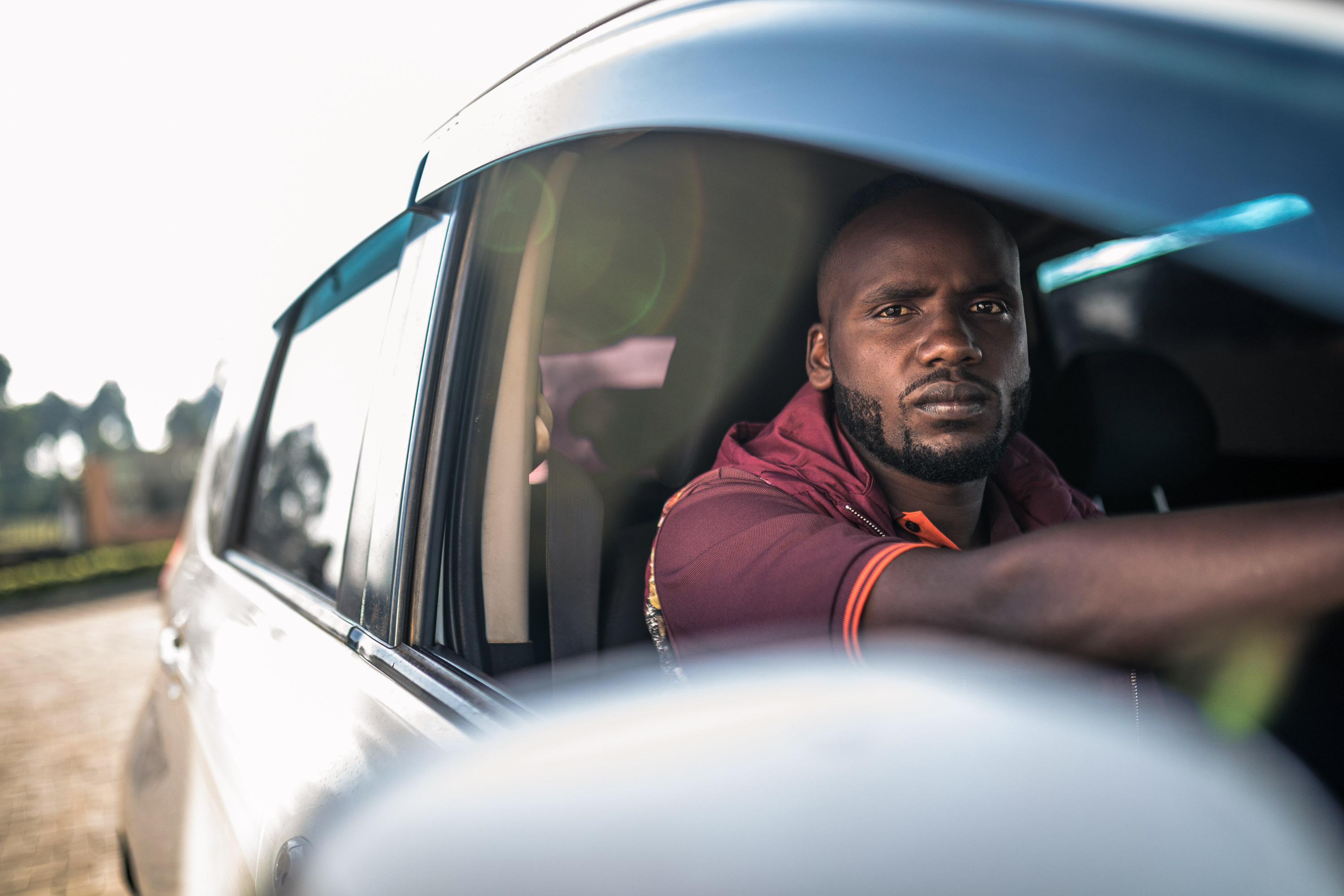
Bill Kirwa drives for Wasili, an Uber-style ridesharing company

BRIAN OTIENO


How mobile money supercharged Kenya’s sports betting addiction
As the lorry he’d flagged down lurched through Kenya’s western highlands, Bill Kirwa’s Infinix smartphone dinged with a notification. The bet of 3,500 shillings he’d placed with mobile money—then worth approximately $35—had just turned into nearly $8,500.

Kirwa, now 26, put the windfall to good use, purchasing a car that enabled him to drive for Wasili, an Uber-style ride-hailing service. But he continued gambling, and over time, his losses mounted. In just a few years, he’s effectively erased his big win.  

Kirwa’s experience is hardly unique. Across Africa, the rapid spread of smartphones and mobile money has fueled an explosion in online gambling. But nowhere is the craze as acute as it is in Kenya. Find out why.

—Jonathan W. Rosen

We can still have nice things

A place for comfort, fun, and distraction to brighten up your day. (Got any ideas? Drop me a line.)

+ A clever Bengal cat has seemingly learned to understand English—and talk back.
+ This list of the 100 greatest bird names lovingly captures the quirks of avian taxonomy.
+ Darth Vader’s weird chestplate transforms into a cassette player in these reworked Star Wars clips.
+ Trace the history and evolution of heavy metal music through the interactive genres and playlists of Map of Metal.

Deep Dive

The Download

Stay connected

Illustration by Rose Wong

Get the latest updates from
MIT Technology Review

Discover special offers, top stories, upcoming events, and more.