



惯性聚合 高效追踪和阅读你感兴趣的博客、新闻、科技资讯
阅读原文 在惯性聚合中打开

推荐订阅源

B
Blog RSS Feed
Spread Privacy
Spread Privacy
T
Threatpost
C
Cisco Blogs
P
Palo Alto Networks Blog
AI
AI
Cyberwarzone
Cyberwarzone
NISL@THU
NISL@THU
P
Privacy & Cybersecurity Law Blog
G
GRAHAM CLULEY
Simon Willison's Weblog
T
Tor Project blog
Latest news
Latest news
AWS News Blog
AWS News Blog
D
Docker
S
SegmentFault 最新的问题
博客园 - 聂微东
WordPress大学
WordPress大学
Vercel News
Vercel News
S
Securelist
爱范儿
爱范儿
J
Java Code Geeks
Know Your Adversary
Know Your Adversary
S
Schneier on Security
Hugging Face - Blog
Hugging Face - Blog
F
Fortinet All Blogs
Last Week in AI
Last Week in AI
D
DataBreaches.Net
宝玉的分享
宝玉的分享
D
Darknet – Hacking Tools, Hacker News & Cyber Security
MongoDB | Blog
MongoDB | Blog
Engineering at Meta
Engineering at Meta
K
Kaspersky official blog
美团技术团队
博客园 - 叶小钗
阮一峰的网络日志
阮一峰的网络日志
量子位
博客园_首页
Attack and Defense Labs
S
Secure Thoughts
Google Online Security Blog
Application and Cybersecurity Blog
Threat Intelligence Blog | Flashpoint
腾讯CDC
T
Threat Research - Cisco Blogs
雷峰网
雷峰网
有赞技术团队
有赞技术团队
www.infosecurity-magazine.com
P
Privacy International News Feed
S
Security Affairs

MIT Technology Review

Want to get a data center online quickly? Give it some flex. Why do South Koreans love AI so much? This man with ALS is “the first power user” of a brain implant that lets him speak The Download: cutting AC emissions, and nature’s drug designer These new solid-state ACs promise a cool future. Scientists aren’t so sure. The Download: “reprogramming” aging, and the hidden sense of interoception You do your own time Why “reprogramming” is the buzziest approach to reversing aging right now Inside interoception: The hidden sense of how you feel inside The Download: soccer’s data renaissance and China’s big nuclear plans Google DeepMind is worried about what happens when millions of agents start to interact Job titles of the future: Nature’s drug designer Inside soccer’s data renaissance Why China is betting on big nuclear reactors The Download: the “steroid olympics” and a safer Mythos The “steroid olympics” were a circus—and a window into our culture The Download: whole-body rejuvenation drugs and five things to know about AI Learning to lead in a hybrid human-AI enterprise David Sinclair plans to test whole-body rejuvenation drugs in the XPrize competition Five things you need to know about AI The Download: how the World Cup ball will fly and OpenAI’s “super app” Why this year’s World Cup ball may not fly as far The Download: AI hacking beyond Mythos, and chatbots’ impact on our brains Are AI chatbots making us lose control of our brains? The Meta hack shows there’s more to AI security than Mythos The Download: AI-generated lawsuits and virtual power plants for data centers How courts are coping with a flood of AI-generated lawsuits How virtual power plants could provide energy for data centers The Download: Trump’s new AI order, and smart glasses for warfare The Download: AI can run your admin department now Rehumanizing global health care with agentic AI How small businesses can leverage AI The Download: China’s brain implant ambitions China has approved the world’s first invasive brain-computer chip—here’s what’s next The Download: unlocking lithium and controlling Ebola The deadly Ebola outbreak is proving difficult to control How the Pope’s Magnifica Humanitas offers a template for individuals to meet the AI moment How a new extraction process could unlock the world’s lithium The Download: climate tech goes public and the AI Hype Index returns Climate tech companies are going public. What’s next? The AI Hype Index: AI gets booed in graduation season The Download: keeping up with AI, and the future of IVF Green steel startup Boston Metal is doubling down on critical metals How Chinese short dramas became AI content machines The shock of seeing your body used in deepfake porn Three things in AI to watch, according to a Nobel-winning economist The Download: seafloor science and military chatbots The Download: inside the Musk v. Altman trial, and AI for democracy A blueprint for using AI to strengthen democracy Week one of the Musk v. Altman trial: What it was like in the room Trump’s mass firing just dealt another blow to American science A new US phone network for Christians aims to block porn and gender-related content This startup’s new mechanistic interpretability tool lets you debug LLMs Rebuilding the data stack for AI The Download: DeepSeek’s latest AI breakthrough, and the race to build world models The Download: introducing the 10 Things That Matter in AI Right Now Roundtables: Unveiling The 10 Things That Matter in AI Right Now The new word in home construction could be “plastics” A natural protein may protect the GI tract from infection This tool could show how consciousness works Early life may have breathed oxygen earlier than believed Analog computing from waste heat Get ready for hotter, muggier, stormier summers Recent books from the MIT community AI at MIT Inventor recalls eye imaging breakthrough Pie Day 2026 The case for fixing everything How robots learn: A brief, contemporary history Making AI operational in constrained public sector environments Treating enterprise AI as an operating layer The Download: cyberscammers’ banking bypasses, and carbon removal troubles Why having “humans in the loop” in an AI war is an illusion The noise we make is hurting animals. Can we learn to shut up? The quest to measure our relationship with nature Is carbon removal in trouble? The Download: NASA’s nuclear spacecraft and unveiling our AI 10 Cyberscammers are bypassing banks’ security with illicit tools sold on Telegram No one’s sure if synthetic mirror life will kill us all Building trust in the AI era with privacy-led UX Redefining the future of software engineering The Download: the state of AI, and protecting bears with drones NASA is building the first nuclear reactor-powered interplanetary spacecraft. How will it work? Coming soon: 10 Things That Matter in AI Right Now The problem with thinking you’re part Neanderthal Why opinion on AI is so divided Want to understand the current state of AI? Check out these charts. The Download: how humans make decisions, and Moderna’s “vaccine” word games Job titles of the future: Wildlife first responder You have no choice in reading this article—maybe What’s in a name? Moderna’s “vaccine” vs. “therapy” dilemma The Download: an exclusive Jeff VanderMeer story and AI models too scary to release Constellations The Download: AstroTurf wars and exponential AI growth Desalination technology, by the numbers Is fake grass a bad idea? The AstroTurf wars are far from over. Mustafa Suleyman: AI development won’t hit a wall anytime soon—here’s why The Download: water threats in Iran and AI’s impact on what entrepreneurs make Desalination plants in the Middle East are increasingly vulnerable Enabling agent-first process redesign
The Download: bad news for inner Neanderthals, and AI warfare’s human illusion
Thomas Macau · 2026-04-17 · via MIT Technology Review

Plus: Despite blacklisting Anthropic, the White House wants its new model.

April 17, 2026

This is today's edition of The Download, our weekday newsletter that provides a daily dose of what's going on in the world of technology.

The problem with thinking you’re part Neanderthal

There’s a theory that many of us have an “inner Neanderthal.” The idea is that Homo sapiens and a cousin species once bred, leaving some people today with a trace of Neanderthal DNA. 

This DNA is arguably the 21st century’s most celebrated discovery in human evolution. But in 2024, a pair of French geneticists called into question the theory's very foundations. 

They proposed that what scientists interpret as interbreeding could instead be explained by population structure—the way genes concentrate in smaller, isolated groups.

Find out what it all means for human evolution.

—Ben Crair

This story is from the next issue of our print magazine, which is all about nature. Subscribe now to read it when it lands on Wednesday, April 22.

Why having “humans in the loop” in an AI war is an illusion

—Uri Maoz

AI is starting to shape real wars. It’s at the center of a legal battle between Anthropic and the Pentagon, playing a growing role in the conflict with Iran, and raising questions about how much humans should remain “in the loop.”

Under Pentagon guidelines, human oversight is meant to provide accountability, context, and security. But the idea of “humans in the loop” is a comforting distraction.

The real danger isn’t that machines will act without oversight; it’s that human overseers have no idea what the machines are actually “thinking.” Thankfully, science may offer a way forward.

Read the full op-ed on the urgent need for new safeguards around AI warfare.

The must-reads

I’ve combed the internet to find you today’s most fun/important/scary/fascinating stories about technology.

1 Despite blacklisting Anthropic, the White House wants its new model
Trump officials are negotiating access to Mythos. (Axios)
+ Anthropic said it was too dangerous for a public release. (Bloomberg $)
+ Finance ministers are alarmed about the security risks. (BBC)
+ Anthropic just rolled out a model that’s less risky than Mythos. (CNBC)
+ The Pentagon has pursued a culture war against the company. (MIT Technology Review)

2 Sam Altman’s side hustles have raised conflict-of-interest concerns
His opaque investments could influence decisions at OpenAI. (WSJ $)
+ A jury will soon decide if OpenAI abandoned its founding mission. (Wired $)
+ The company is making a big play for science. (MIT Technology Review)

3 A Starlink outage during drone tests exposed the Pentagon’s SpaceX reliance
It was one of several Navy test disruptions linked to Starlink. (Reuters $)
+ The DoD is also tapping Ford and GM for military innovations.(NYT $)

4 Data center delays threaten to choke AI expansion


40% of this year’s projects are at risk of falling behind schedule. (FT $)
+ Partly because no one wants a data center in their backyard. (MIT Technology Review)

5 Alibaba just released its own version of a world model


Happy Oyster is the latest attempt to extend AI’s ability to comprehend physical reality. (SCMP)
+ But they still need to understand cause and effect. (FT $)

6 Google's Gemini is now generating AI images tailored to personal data


By analyzing users’ Google services and data. (Quartz)
+ Google says it will cut the need for detailed prompts. (TechCrunch)

7 OpenAI is beefing up its agentic coding and development system

Its Codex update is a direct shot at Claude Code. (The Verge)
+ But not everyone is convinced about AI coding. (MIT Technology Review)

8 Europe’s online age verification app is here
It’s available for free to any company that wants it. (Wired $) 

9 Smartglasses are giving Korean theaters hope of a K-Pop moment
Their AI-powered translations are taking the shows to the world. (NYT $)

10 Global voice actors are fighting Hollywood’s AI push
Their voices are training the models that are replacing them. (Rest of World)

Quote of the day

“There’s this dark period between now and some time in the future where the advantage is very much offensive AI.” 

—Rob Joyce, former director of cybersecurity at the National Security Agency, tells Bloomberg how AI is creating new hacking threats.

One More Thing
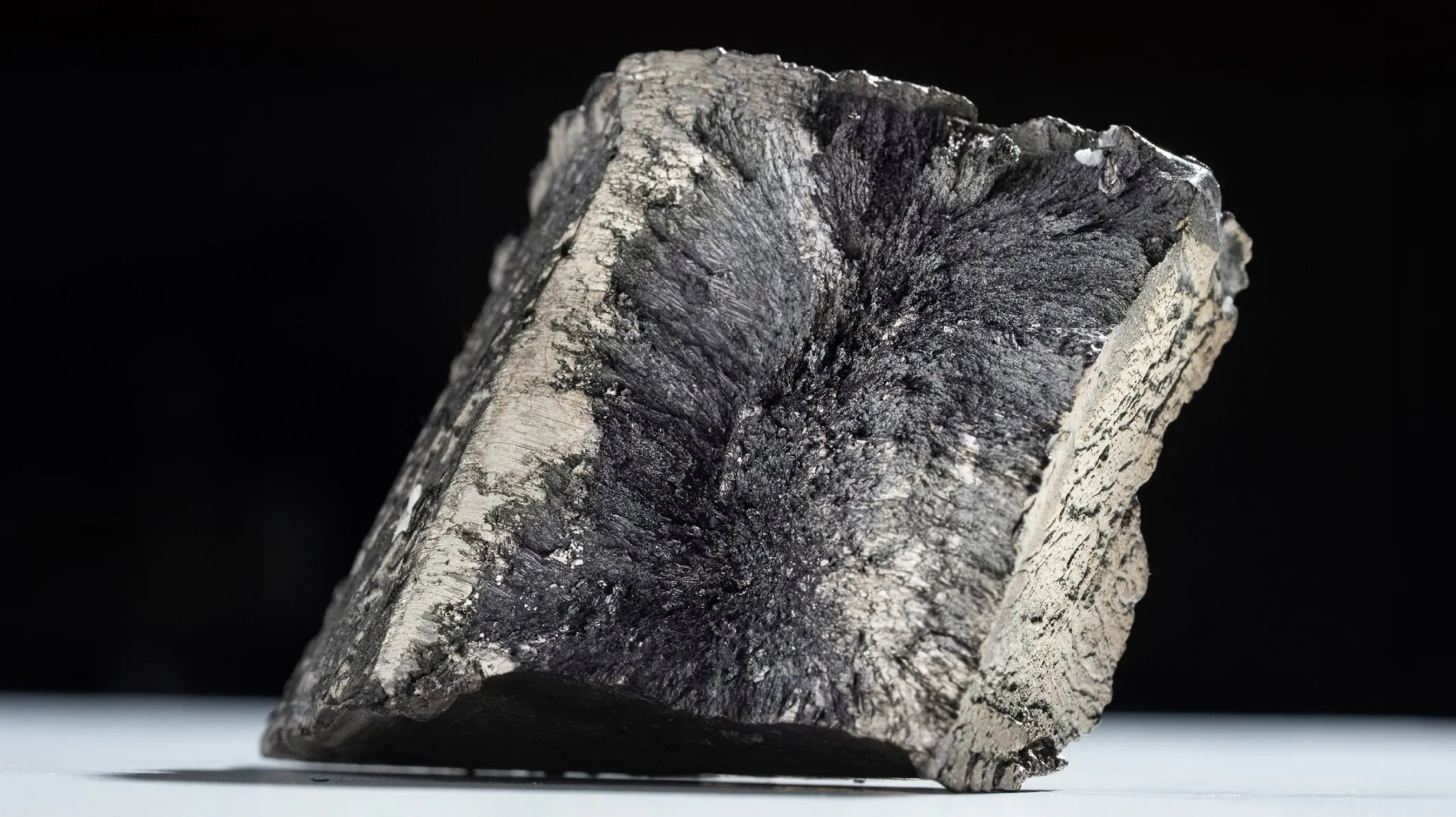
COURTESY OF NOVEON MAGNETICS


The race to produce rare earth elements

Access to rare earth elements will determine which countries meet their goals for lowering emissions or generating energy from non-fossil-fuel sources. But some nations, including the US, are worried about the supply of these elements. 

China dominates the market, while extraction in the US is limited. As a result, scientists and companies are exploring unconventional sources. Read the full story on their search for critical minerals.


—Mureji Fatunde

We can still have nice things

A place for comfort, fun and distraction to brighten up your day. (Got any ideas? Drop me a line.)

+ This ska cover of Rage Against the Machine is an upbeat way to start a revolution.
+ We finally know how far Stretch Armstrong can really stretch.
+ Customize these ambient sounds to wash away disruptive thoughts.
+ Here’s proof childhood dreams can come true: a girl guiding a seal to perform tricks. 

Deep Dive

Stay connected

Illustration by Rose Wong

Get the latest updates from
MIT Technology Review

Discover special offers, top stories, upcoming events, and more.