


This is my third time trying Obsidian this year, and I'm giving up again. I feel like I should write this down and share it. Maybe there are others like me out there.
I like Obsidian, but we keep missing each other
Let me start by saying Obsidian is a great product. I really like it. Otherwise I wouldn't keep downloading it every time they add something new, trying to convince myself to use it.
But every time, I get excited when I download it, and then I leave disappointed. Maybe I'm just not meant to be their user.
This time I came back because I saw they added a Notion sync feature. Pretty cool. At first you had to download your Notion zip and import it. Sure, technically you could do it, but honestly, most people weren't going to bother. Then I found out this feature came from a $5,000 community bounty, which made it even cooler. So I decided to try again.
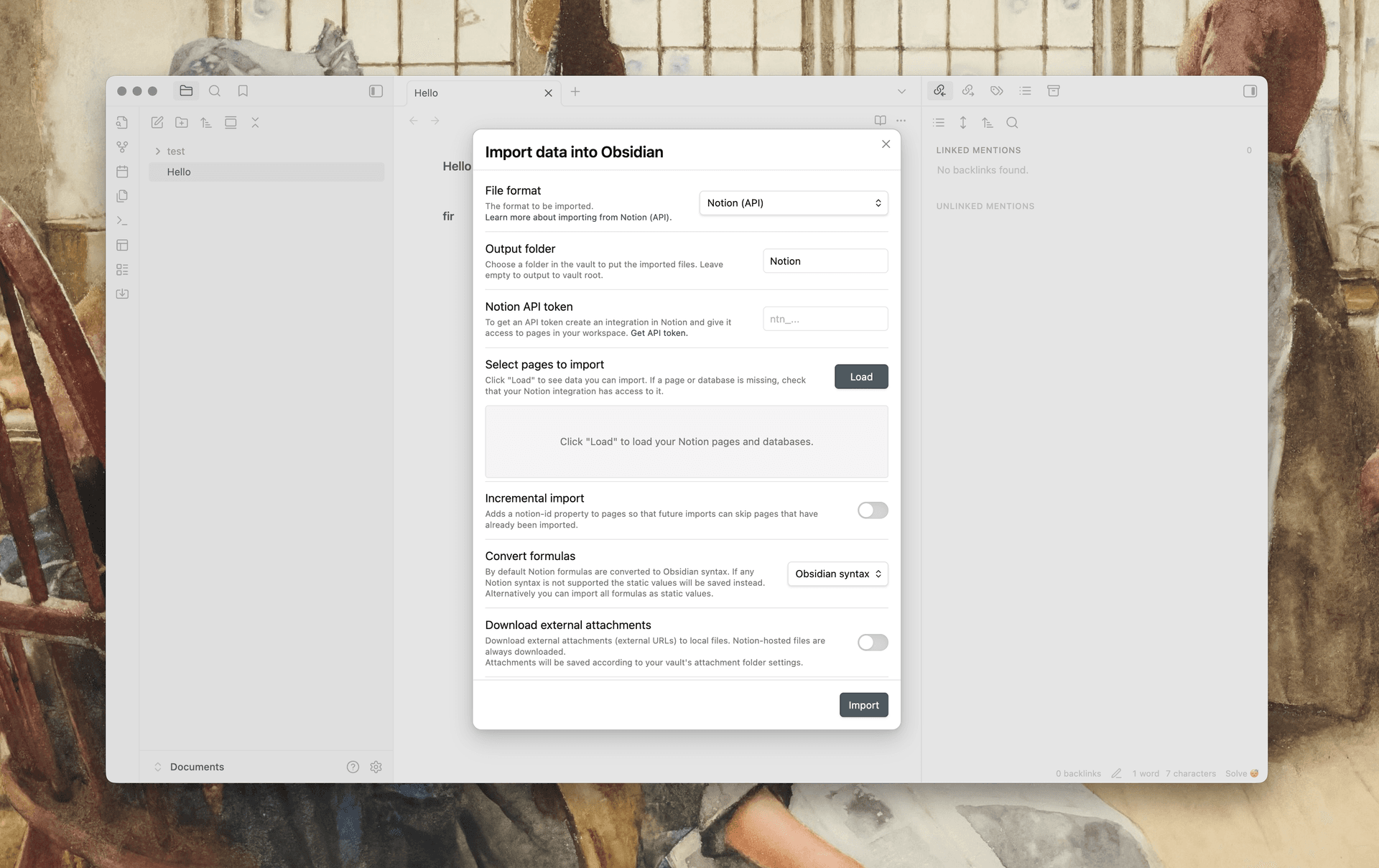
But after testing it, even though some stuff did sync over, I started to hesitate when I looked at how Obsidian thinks about things. Sometimes you just love something without thinking. But when you don't, it's usually something deeper. I realized this tool probably isn't for someone like me.
Losing the simple joy of writing
What first pulled me to Obsidian was how clean the writing felt. I love Markdown, and I love how that lets you write without thinking too much.
But when I actually tried to use Obsidian, I found that simplicity kept getting broken by configs and plugins. For me, Obsidian feels like empty land where I have to plant everything myself. I need to spend so much time tweaking things to get them how I want.
But after all that messing around, I realized I'd lost the joy that simple writing was supposed to give me. My notes hadn't gotten any better, just more test files.
It felt like I wasn't writing, but taking care of some really complicated system:
- Can I put an emoji in my file names?
- Where do I put attachments?
- The backlinks don't look good. Should I mess with the CSS?
- This plugin looks nice. Should I try it?
And when the system updates, I have to keep fixing my setup. I never get that feeling of just sitting down and writing.
Sure, people say it's just one time setup and then you're good. I get that. But what about new stuff? I can't keep going back to plant seeds, water them, wait for them to grow, and pick the fruit every time, right?
I'd rather have things ready for me, so I can just focus on writing my thoughts. When I need something, it should just be there.
Even Apple Notes does this pretty well with the basics. If you skip the fancy stuff, Notes is already pretty simple.
So I guess that's how Obsidian feels to me. It gives you freedom, but you also have to deal with what that freedom costs. Every time you want to change something, you have to stop and mess around, and then you don't feel like writing anymore.
Attachments that don't make sense
Besides the config stuff, there's another thing about Obsidian that bugs me: how it handles images and files.
The idea is to keep documents and attachments separate. Sounds technical, but it's just a pain to use. You add an image to a note, and it just dumps it in the root folder. When you have more notes and more images, your folder gets messy. Just a bunch of IMG_001.png, IMG_002.png files everywhere, and you can't tell which image goes with which note.
Obsidian does give you ways to handle this. But I'm thinking no matter which way, none of them feel right. I don't want to worry about where my files go. Put them somewhere I can't see. I just need to see them when I open my note.
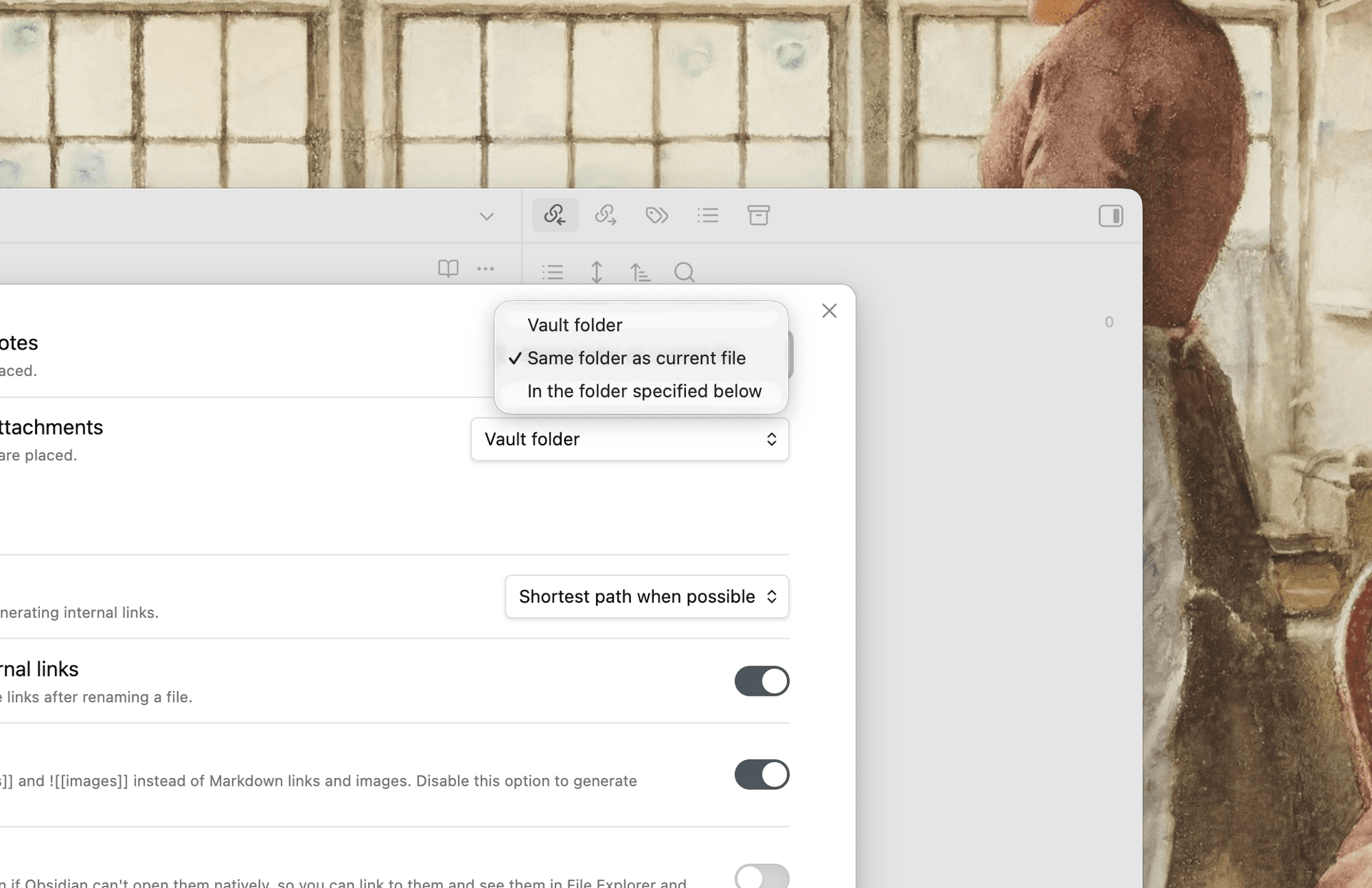
Sure, it gives you lots of options, and technically it works well, but for normal users like me, it just doesn't make sense. I think tools should work with how people think, not make people work with how the tool thinks.
Especially if I want to share something later. How do I deal with all these separate pieces?
Good engineering, not a good user experience
The last thing, and I think the biggest one, is that Obsidian is just built for technical people.
I'm not saying it's bad. The way it's designed just picks who it's for. It's more like a note tool for developers, not a knowledge tool for normal people.
You can feel this in the community. The forums are full of regex, YAML front matter, Git sync stuff. Ask a question, and people say "just write a plugin" or "change the CSS." For technical people, this is probably great. Everyone's sharing how to hack the system better. But for someone like me who just wants to write and organize stuff, I feel like I don't fit in here.

Geek culture is cool, but it does pick its users. When you need to be willing to tinker, like configs, and enjoy customizing just to use a tool, the product has already chosen. It picked power users and left normal users out.
Obsidian is really good from an engineering view. Local storage, plain text, plugins, speed. These are all smart technical choices. But they're smart from an engineer's view, not from how people actually use things. It cares more about what the system can do than whether people can just start using it.
So every time I open Obsidian, I feel like the tool is waiting for me to tame it, not ready to help me. I just want somewhere I can focus on writing without spending so much time on setup.
That's probably why Obsidian and I keep missing each other. It's not that it's bad. We just weren't looking for each other from the start.