








Ever been in a meeting where everyone’s tossing around numbers like they’re psychic? Yeah, me too. Let’s chat about why your gut might be better at estimating than you think.
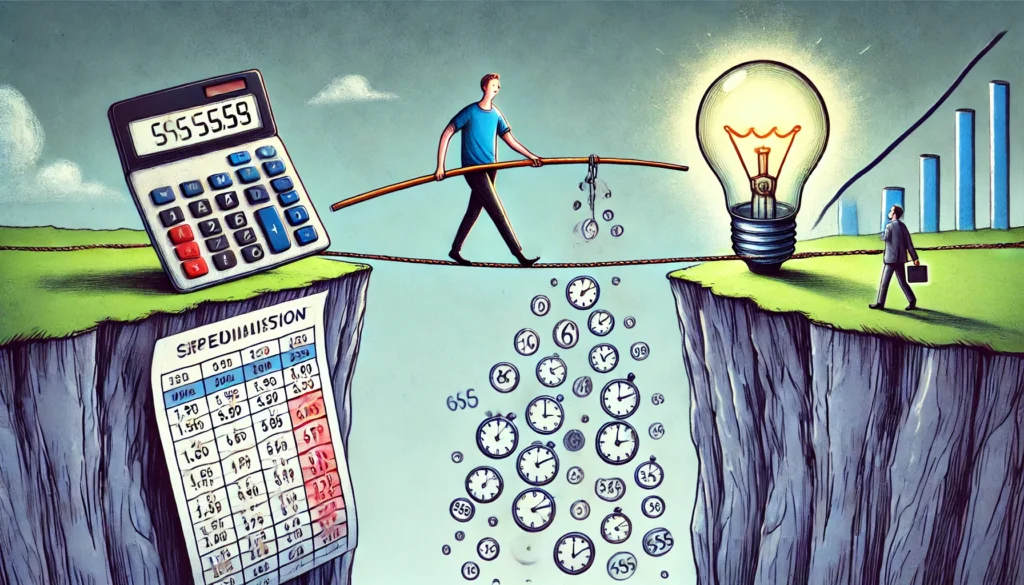
First off, let’s get real about what we’re trying to do here. We’re basically trying to predict the future. No pressure, right?
When we estimate a software project, we’re attempting to:
Sounds simple enough on paper, but we all know it’s about as straightforward as herding cats.

Here’s a fun fact: who does the estimating can impact the estimate itself. Weird, right? It’s like asking different people how long it takes to boil water, and getting answers ranging from “30 seconds” to “three days.”
A study by Magazinius et al. (2012) found that estimates can vary wildly depending on who’s doing the estimating. Project managers tend to be more optimistic, while developers often lean towards pessimism. It’s like they’re estimating for completely different projects!
But here’s the kicker: the amount of work doesn’t change based on who’s estimating. The code doesn’t care if it’s being estimated by the CEO or the intern. It’ll take as long as it takes.
We’ve all been there. You give an estimate, and the response is something like, “Yeah… but can you make it faster/cheaper/easier?”
It goes something like this:
And just like that, you’ve fallen into the trap. You’ve massaged the numbers until they fit what someone wanted to hear, not what’s actually possible.
Fast forward a few months, and surprise! The project’s running late, over budget, and everyone’s stressed. Who could have seen this coming? (Spoiler: You did, in your original estimate.)
A study by Flyvbjerg et al. (2002) found that 84% of software projects experience cost overruns. That’s a lot of stressed-out developers and unhappy stakeholders.

Here’s where it gets interesting. It turns out that your gut might be better at estimating than all those fancy spreadsheets.
A study by Jørgensen and Gruschke (2009) found that expert judgment (aka, your gut feeling based on experience) often outperforms formal estimation models.
Why? Because your gut takes into account all those intangible factors that models can’t quantify. Things like:
Here’s a mind-bender for you: being more precise in your estimates can actually make them less accurate.
Think about it like this:
A study by Yaniv and Foster (1995) found that people tend to prefer precise estimates, even if they’re less likely to be accurate. It’s like we’d rather be precisely wrong than vaguely right.
So, what’s the takeaway here?
In the end, estimating software projects is more art than science. It’s about balancing experience, gut feeling, and a healthy dose of realism.
So next time you’re asked for an estimate, take a deep breath, think about similar projects you’ve done, and trust your gut. It might just be smarter than you think.
Remember, the goal isn’t to be exactly right (that’s impossible). The goal is to be useful. And sometimes, a well-informed guess is the most useful thing you can offer.
Now, if you’ll excuse me, I need to go estimate how long it’ll take me to finish my coffee. I’m thinking somewhere between 5 minutes and 3 hours, depending on how many times I get distracted by shiny objects.
此内容由惯性聚合(RSS阅读器)自动聚合整理,仅供阅读参考。 原文来自 — 版权归原作者所有。