




惯性聚合 高效追踪和阅读你感兴趣的博客、新闻、科技资讯
阅读原文 在惯性聚合中打开

推荐订阅源

博客园_首页
Security Archives - TechRepublic
Application and Cybersecurity Blog
cs.CV updates on arXiv.org
C
CERT Recently Published Vulnerability Notes
S
Security @ Cisco Blogs
S
Security Affairs
D
Darknet – Hacking Tools, Hacker News & Cyber Security
L
Lohrmann on Cybersecurity
cs.AI updates on arXiv.org
Hacker News: Ask HN
Hacker News: Ask HN
Forbes - Security
Forbes - Security
H
Heimdal Security Blog
A
Arctic Wolf
NISL@THU
NISL@THU
P
Proofpoint News Feed
W
WeLiveSecurity
S
Schneier on Security
AI
AI
Schneier on Security
N
News and Events Feed by Topic
L
LINUX DO - 最新话题
Cisco Talos Blog
Cisco Talos Blog
AWS News Blog
AWS News Blog
Hacker News - Newest:
Hacker News - Newest: "LLM"
Know Your Adversary
Know Your Adversary
Scott Helme
Scott Helme
V
Vulnerabilities – Threatpost
Cyberwarzone
Cyberwarzone
I
Intezer
S
Securelist
Help Net Security
Help Net Security
Microsoft Security Blog
量子位
让小产品的独立变现更简单 - ezindie.com
小众软件
小众软件
Last Week in AI
Last Week in AI
Jina AI
Jina AI
OSCHINA 社区最新新闻
OSCHINA 社区最新新闻
WordPress大学
WordPress大学
罗磊的独立博客
月光博客
月光博客
雷峰网
雷峰网
A
About on SuperTechFans
The GitHub Blog
The GitHub Blog
T
The Blog of Author Tim Ferriss
MongoDB | Blog
MongoDB | Blog
大猫的无限游戏
大猫的无限游戏
博客园 - 司徒正美
CTFtime.org: upcoming CTF events

Devoriales - DevOps and Python Tutorials

Cloud & DevOps & AI Digest: The Week of Jun 28, 2026 Cloud & DevOps & AI Digest: The Week of Jun 20, 2026 Ansible for DevOps Engineers: Architecture, Core Concepts, and Hands-On Lab Login Must-Have Kubernetes CLI Tools Every Platform Engineer Should Know Login Login Login Why Your Best Engineers Are Quitting (And How to Stop It) Login ArgoCD Vulnerability: How the ServerSideDiff Feature Exposes Kubernetes Secrets Login How Kubernetes Controls What Your Containers Can Do Login Multi-AZ Is Not Disaster Recovery: What the AWS Bahrain Outage Finally Proved Trivy Supply Chain Attack: When Your Security Scanner Becomes the Threat Is Claude Opus 4.6 Fast Mode Really Worth 6× the Price? Login Unlocking Higher Pod Density in EKS with Prefix Delegation AWS Regional NAT Gateway: What It Is and Why You Should Care Kubernetes 1.35 Timbernetes Release AWS re:Invent 2025: The Future of Kubernetes on EKS Debate Series: How Do We Control Deployment Order in Kubernetes? Debate Series: Should We Eliminate Kubernetes Secrets Entirely? Kubernetes CRDs Explained: A Beginner-Friendly Guide to Extending the Kubernetes API Reduce Cloud Cross-Zone Data Transfer Costs with Kubernetes 1.33 trafficDistribution Building Custom Bitnami Images: A Guide for Self-Hosted Container Images New Features in Kubernetes 1.34: An Overview From Free to Fee: How Broadcom's Bitnami Monetization Disrupts DevOps Infrastructure Claude Code Cheat Sheet: The Reference Guide Kubernetes Loses Enterprise Slack Status: Discord Among Platforms Being Considered Understanding Container Security: A Guide to Docker and Pod Security Container Patterns in Kubernetes: Init Containers, Sidecars, and Co-located Containers Explained AWS Launches Serverless MCP Server: AI-Powered Development Gets a Serverless Boost Valve Responds to Alleged Steam Data Breach Reports: What Users Need to Know ArgoCD 3.0: The Evolution Toward Secure GitOps Redis Returns to Open Source: The AGPLv3 Licensing Decision New Features in Kubernetes 1.33: An Overview Prometheus: How We Slashed Memory Usage IngressNightmare: Critical Ingress-NGINX Vulnerabilities and How to Check Your Exposure New Features in Kubernetes 1.32: An Overview What to Consider If You're Not Signing Up for Bitnami Premium Certified Kubernetes Administrator (CKA) Exam Updates for 2025 Python Tops the Tiobe Index: The Most Popular Programming Languages - January 2025 2024 in Review: IT Trends, Startups, and What’s Next Inside Argo: The Open-Source Journey Captured in a CNCF Documentary Running Docker on macOS Without Docker Desktop - updated with Kubernetes installation HashiCorp Rolls Out Terraform 2.0 at HashiConf, Keeps IBM Acquisition in the Shadows Is the EU Falling Behind in the Global AI Race? Prometheus Essentials: Node Exporter And System Monitoring Prometheus Essentials: Install and Start Monitoring Your App Prometheus Essentials: Introduction To Metric Types Kubernetes Pod Scheduling Explained: Taints, Tolerations, and Node Affinity Retrieval Augmented Generation (RAG) Explained for Beginners Like Me Using Sealed Secrets with Your Kubernetes Applications
DeepSeek AI and the Question of the AI Bubble
Aleksandro Matejic · 2025-01-28 · via Devoriales - DevOps and Python Tutorials

deepseek ai

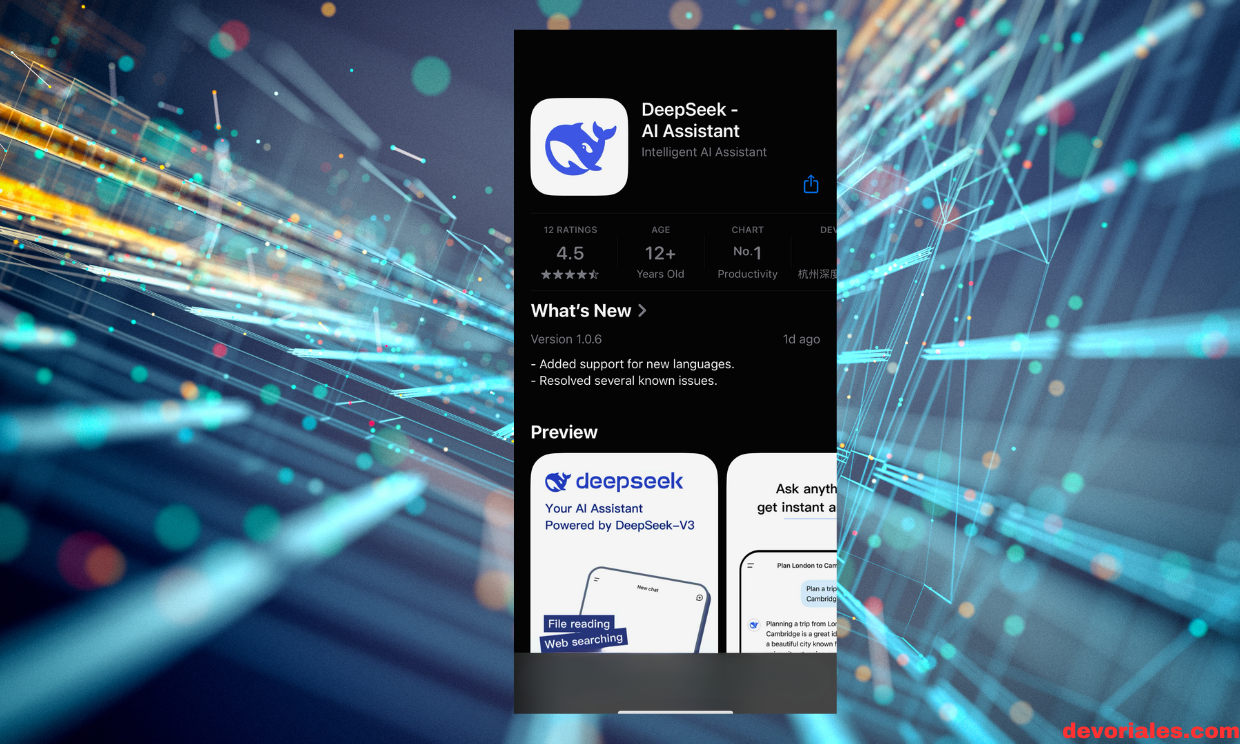
DeepSeek AI, a Chinese AI model, is making waves across the global tech industry. With its performance rivaling OpenAI’s ChatGPT, Google's Gemini and others but at a fraction of the cost, it’s causing a lot of concern, particularly in the investment heavy U.S. tech landscape. As DeepSeek reshapes the conversation around AI efficiency and investment, questions emerge: Is this another bubble waiting to burst?

DeepSeek’s success is evident in its rapid ascent to the top of the App Store, surpassing heavyweights like ChatGPT and Meta’s Threads. But this rise hasn’t come without consequences. U.S. tech stocks have taken a hit, with giants like Nvidia, Microsoft, Google, and Tesla experiencing significant market declines.

DeepSeek’s ability to deliver comparable performance at just 5–10% of the cost has led many to question whether these investments were strategic or reflective of industry overconfidence.

The Impact of DeepSeek AI on U.S. Tech Stocks

What we have seen this week is, the major players like Nvidia, Microsoft, Google, and Tesla have seen their stock values tumble. For instance, Nvidia’s shares dropped by 16.5% in a single day, prompting investors to reevaluate their faith in the sector.

This trend highlights the vulnerability of the U.S. tech ecosystem, which has poured hundreds of billions of dollars into technologies such as AI chips, quantum computing, and nuclear-powered infrastructure. Now, with DeepSeek AI offering similar capabilities at 5-10% of the cost, many are questioning whether these investments were necessary or simply a result of industry overconfidence.

The Cost of AI: Necessary Investment or Investor Exploitation?

The astronomical costs associated with AI development are increasingly questioned. For example, companies like Microsoft, Meta, and Google have collectively invested billions in acquiring high-performance chips. Microsoft alone purchased 450,000 H100 chips in 2024. This expenditure reflects a staggering level of capital allocation, which some critics argue is being “stranded” on technology that may not yield proportionate returns.

DeepSeek’s efficiency—achieved through open-sourced optimization techniques like key-value compression and multi-token prediction has amplified this debate. By making its advancements freely available, China may be strategically undermining U.S. tech companies, reducing their competitive edge and defunding their momentum. The question arises: Are these costs inflated to extract money from investors, or are they genuinely necessary for innovation?

The Open-Source Strategy: A Tactic of Economic Disruption?

One of the most compelling aspects of DeepSeek’s strategy is its open-source model. By democratizing access to its technology, DeepSeek has lowered the entry barriers for developers while simultaneously devaluing proprietary AI solutions from U.S. firms. This mirrors tactics previously seen when Facebook open-sourced its LLaMA language model to challenge OpenAI.

Had China kept DeepSeek’s technology closed, U.S. companies might have continued to secure massive funding, prolonging their dominance. Instead, this open approach has triggered a reallocation of capital, with many investors questioning the viability of further large-scale investments in proprietary AI models.

The Broader Implications for AI and Investment

The ripple effects of DeepSeek’s rise extend beyond AI. Meta’s internal panic, including the formation of a war room to address DeepSeek’s impact, underscores the industry’s anxiety. Reports suggest that the cost of training DeepSeek is less than the salaries of top executives in Meta’s AI division. This imbalance raises uncomfortable questions about the sustainability of AI spending and the future of tech leadership.

Even Apple, which has limited its AI exposure, has felt the effects of this shifting landscape. While its stock remains a defensive pick for some investors, its iPhone sales in China have dropped significantly, further illustrating the challenges of global competition.

Are We in an AI Bubble?

The emergence of DeepSeek AI challenges the narrative of ever-increasing AI costs and investments. Its success has exposed potential inefficiencies in the current approach to AI development, leaving many to wonder whether U.S. tech companies have overplayed their hand.

As the AI landscape evolves, investors must carefully weigh the costs and benefits of supporting proprietary systems versus embracing open-source alternatives. The question remains: Are these massive investments driving genuine innovation, or are they merely a way to capitalize on investor enthusiasm? Only time will tell if the AI bubble will burst or reshape the industry for the better.

What are your thoughts on DeepSeek AI and its implications for the tech sector?