






This post provides a quick overview of the most popular cloud-native certifications, updated for 2026. There are different reasons why one decides to get certified. I've heard from people that use certification as a forcing function to learn about different technologies.
Others use it to either advance their careers, command a higher salary or even switch careers. Regardless of your motivation, it's essential to understand the investment (both financial and time) required to get a certification.
Note
What's new in 2026: the CNCF certification family has grown well beyond the original Kubernetes trio. The KCSA (security associate), ICA (Istio), PCA (Prometheus), and a series of project-specific associate exams (Cilium, Argo, GitOps, OpenTelemetry, Backstage, Kyverno) are all available. If you earn all five Kubernetes certifications (KCNA, KCSA, CKA, CKAD, CKS), the CNCF recognizes you as a Kubestronaut — with perks like a jacket, a credly badge, and discounts on future exams. Prices listed below can change; always check the official registration page before you book.

In addition to the financial costs, it's crucial to take into account your own experience and knowledge. Don't blindly jump into any of these exams and expect to pass them on the first try, especially if it's an expert exam and you've only started learning about the technology. There's a purpose to different categories of certification - if you're a beginner, start with the certification that matches your experience and knowledge. However, even if you don't succeed on the first try, most offers include a free exam retake.
If you've decided to get certified, make sure you take the time and study the curriculum of the exam you want to tackle. Create your learning plan or follow an existing one if provided. Most certifications are performance-based (especially the Kubernetes ones), meaning you have hands-on knowledge of the technology. This brings me to another important point: practice is crucial! Don't expect to pass an exam after only reading a tutorial or watching a video - it will take more than that.

Some of the certifications also offer a free preview exam - this allows you to familiarize yourself with the exam environment and get a feel for what type of questions you can expect. Take the opportunity and take the free preview exam. I suggest you take the preview or practice exam once you understand the topics.
Good luck if you decide to take one or more of these certifications!
Docker skills are highly sought and almost a basis for any other certification you might pursue. The DCA is designed to validate that skill set with real-world questions designed by experienced Docker practitioners. As the first exam in a comprehensive multi-tiered professional certification program, the DCA is a foundational benchmark for real-world Docker skills across the container industry. The exam contains 13 multiple choice and 42 discrete option multiple chocie questiosn in 90 minutes.
Who is it for?
DCA is meant for individuals with at least six months to one year of experience with Docker.
What do you need to demonstrate?
The skills and knowledge certified by this examination represent a level of expertise where a certified Docker Associate can:
Exam type and price
Docker Certified Associate Learning resources
Preparing for Docker Certified Associate exam:
A Red Hat Certified Specialist in Containers and Kubernetes has demonstrated a basic understanding of Kubernetes, containers, and OpenShift and can use this knowledge to run, find, and manage containerized services, deploy single- and multiple-container applications, and create custom containers.
Who is it for?
The Red Hat Certified Specialist in Containers and Kubernetes is meant for:
What do you need to demonstrate?
A Red Hat Certified Specialist in Containers and Kubernetes has to demonstrate the following:
Exam type and price
Red Hat Certified Specialist in Containers and Kubernetes Learning resources
Preparing for Red Hat Certified Specialist in Containers and Kubernetes:
The Kubernetes and Cloud Native Associate (KCNA) exam demonstrates a user's foundational knowledge and skills in Kubernetes and the broader cloud native ecosystem.
Who is it for?
The KCNA is a pre-professional certification designed for candidates interested in advancing to the professional level through a demonstrated understanding of Kubernetes foundational knowledge and skills. This certification is ideal for anyone interested in working with cloud-native technologies.
What do you need to demonstrate?
As a certified KCNA, you'll be able to demonstrate basic knowledge of Kubernetes and cloud-native technologies, including the following:
Exam type and price
Kubernetes and Cloud-Native Associate Learning resources
Preparing for Kubernetes and Cloud-Native Associate (KCNA):
The Kubernetes and Cloud Native Security Associate (KCSA) is the newest pre-professional certification in the Kubernetes family. It demonstrates foundational knowledge of security technologies and best practices in the cloud-native ecosystem.
Who is it for?
The KCSA is designed for anyone interested in cloud-native security — whether you're starting a security-focused career or want to validate your understanding before attempting the CKS. There are no prerequisites.
What do you need to demonstrate?
As a certified KCSA, you'll be able to demonstrate an understanding of:
Exam type and price
Kubernetes and Cloud Native Security Associate Learning resources
Preparing for the KCSA:
Free Newsletter
Get hands-on Kubernetes, Istio, and cloud-native tutorials like this one in your inbox a couple of times a month. No spam, unsubscribe anytime.
The Certified Kubernetes Administrator (CKA) program assures that CKAs have the skills, knowledge, and competency to perform the responsibilities of Kubernetes administrators.
Who is it for?
CKA is for Kubernetes administrators, cloud administrators, and other IT professionals who manage Kubernetes instances.
What do you need to demonstrate?
A CKA knows how to do the basic installation and configure and manage production-grade Kubernetes clusters.
CKA's will have an understanding of critical concepts such as:
Additionally, as a CKA, you must have the ability to establish basic use-cases for end users.
Exam type and price
Certified Kubernetes Administrator Learning resources
Preparing for Certified Kubernetes Administrator (CKA):
The Certified Kubernetes Application Developer (CKAD) exam certifies that candidates can design, build and deploy cloud-native applications for Kubernetes.
Who is it for?
CKAD is for Kubernetes engineers, cloud engineers, and other IT professionals responsible for building, deploying, and configuring cloud-native applications with Kubernetes.
What do you need to demonstrate?
The CKAD can design, build and deploy cloud-native applications for Kubernetes. A CKAD can define application resources and use Kubernetes core primitives to create/migrate, configure, expose and observe scalable applications.
The exam assumes a working knowledge of container runtimes and microservice architecture. The successful candidate will be comfortable:
– working with (OCI-compliant) container images – applying Cloud Native application concepts and architectures – working with and validating Kubernetes resource definitions
Exam type and price
Certified Kubernetes Application Developer Learning resources
Preparing for Certified Kubernetes Application Developer (CKAD):
The Certified Kubernetes Security Specialist (CKS) program assures that a CKS has the skills, knowledge, and competence in a broad range of best practices for securing container-based applications and Kubernetes platforms during the build, deployment, and runtime. CKA certification is required to sit for this exam.
Who is it for?
CKS is an accomplished Kubernetes practitioner (must be CKA certified) who has demonstrated competence in a broad range of best practices for securing container-based applications and Kubernetes platforms during build, deployment, and runtime.
What do you need to demonstrate?
Obtaining a CKS demonstrates that a candidate possesses the requisite abilities to secure container-based applications and Kubernetes platforms during build, deployment, and runtime and is qualified to perform these tasks professionally.
Exam type and price
Certified Kubernetes Security Specialist Learning resources
Preparing for Certified Kubernetes Security Specialist (CKS):
The Prometheus Certified Associate (PCA) exam demonstrates an engineer's foundational knowledge of observability and skills using Prometheus, the open source systems monitoring and alerting toolkit.
Who is it for?
The PCA is a pre-professional certification designed for an engineer or application developer with special interests in observability and monitoring.
Ideal candidates may have achieved Kubernetes certifications such as KCNA, CKA, or CKAD or have completed Prometheus-specific training or Cloud Engineer boot camps.
What do you need to demonstrate?
The PCA demonstrates a candidate's understanding of best practices for monitoring cloud-native applications and infrastructure using Prometheus. A PCA digital credential ensures the candidate understands how to use observability data to improve application performance, troubleshoot system implementations, and feed that data into other systems.
Exam type and price
The Istio Certified Associate (ICA) exam demonstrates a solid understanding of Istio principles, terminology, and best practices in order to set up Istio.
Who is it for?
The ICA is a pre-professional certification designed for engineers, CI/CD practitioners or anyone with special interests in Istio.
What do you need to demonstrate?
The ICA demonstrates a candidate's solid understanding of Istio principles, terminology, and best practices to set up Istio.
Exam type and price
Istio Certified Associate Learning resources
Preparing for Istio Certified Associate (ICA):
The CNCF now offers associate-level, multiple-choice exams for several other projects, each priced at $250:
These are good options if your role centers on a specific project, or if you want to round out a Kubestronaut profile with specialized credentials.
Each cloud vendor also offers their own set of certifications. In addition to certifications, the learning paths offered by some of the cloud vendors are really good resources for learning, even though they might be specific to certain cloud.
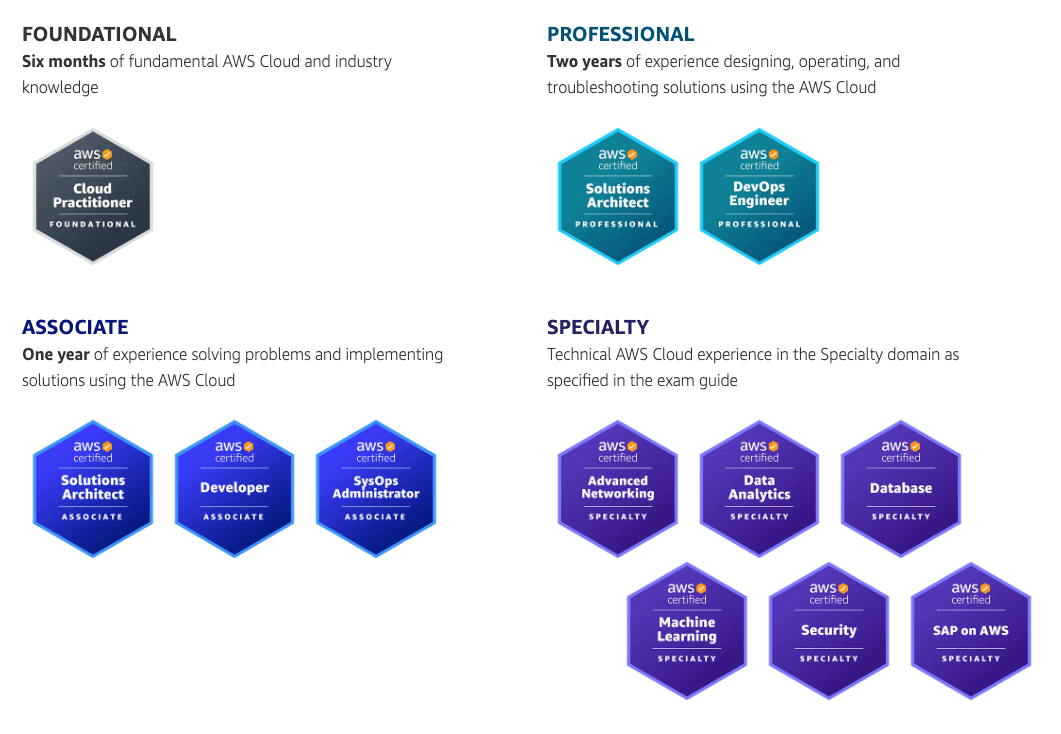
The AWS certifications feature various cloud-native certifications that validate a candidate's skills, knowledge, and ability to work on the AWS cloud.
The AWS certifications are divided into four categories, each with one or more certifications. The categories are listed in order of increasing difficulty.
The last category is the Specialty category, where specific domains, such as machine learning, database, advanced networking, and so on, are tested.
The prices range from $100 for foundational exams to $300 for professional and specialty exams. The exams are made up of multiple choice/multiple response questions and are timed.
Google offers a Google Cloud Platform Certification program that validates a candidate's skills, knowledge, and ability to work on the Google Cloud Platform. The program is divided into three categories, each with one or more certifications. The categories are listed in order of increasing difficulty.
The prices for exams range from $99 (Cloud Digital Leader) to $200 (professional certifications). All exams are online and proctored.
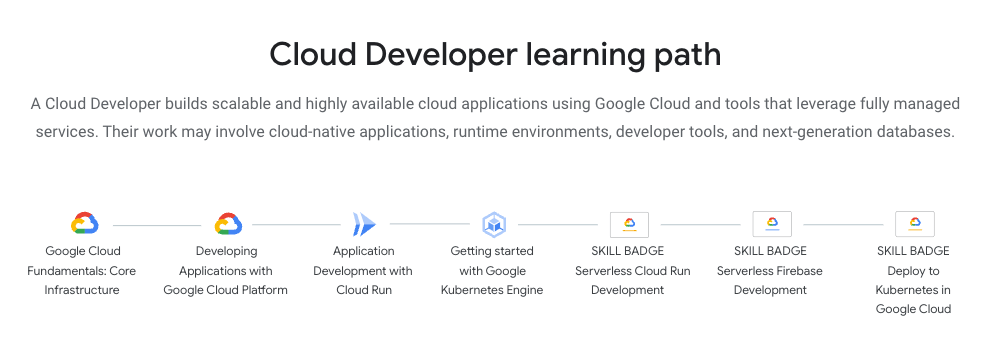
Google also offers learning plans for the certifications. Here's an example of a cloud developer learning path.
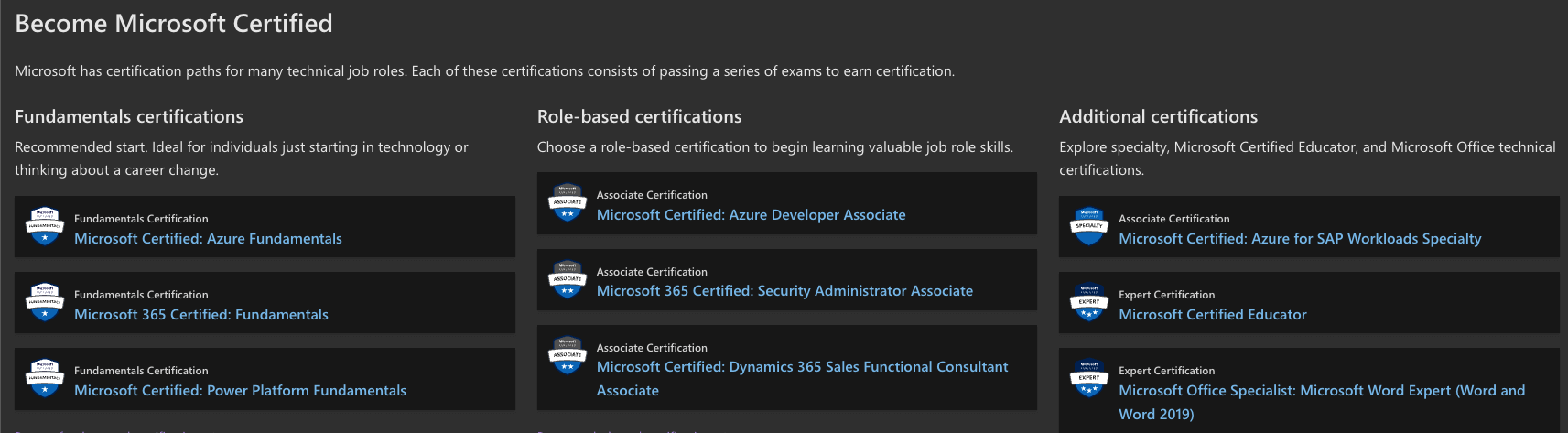
The certifications are divided into three categories, where each category has one or more certifications:
The majority of certifications have free and paid training options. Additionally, some certificates have prerequisites for other certifications. For example, to get a Cybersecurity Architect Expert certification, one must complete one of the four prerequisites AND the Microsoft Cybersecurity Architect certification.
The prices range from $99 to $165.
If you're unsure where to start, here's a simple decision path:
Whichever exam you pick, practice on a real cluster — spin up kind or minikube locally and work through scenarios until the kubectl commands are muscle memory.
Good luck — and if you want more cloud-native learning resources in your inbox a couple of times a month, subscribe to the newsletter.
此内容由惯性聚合(RSS阅读器)自动聚合整理,仅供阅读参考。 原文来自 — 版权归原作者所有。