
惯性聚合 高效追踪和阅读你感兴趣的博客、新闻、科技资讯
阅读原文 在惯性聚合中打开

推荐订阅源

P
Palo Alto Networks Blog
大猫的无限游戏
大猫的无限游戏
Martin Fowler
Martin Fowler
GbyAI
GbyAI
CTFtime.org: upcoming CTF events
量子位
T
The Blog of Author Tim Ferriss
Y
Y Combinator Blog
Microsoft Azure Blog
C
CERT Recently Published Vulnerability Notes
Recent Announcements
A
About on SuperTechFans
aimingoo的专栏
aimingoo的专栏
P
Privacy International News Feed
cs.CL updates on arXiv.org
博客园 - 叶小钗
L
Lohrmann on Cybersecurity
G
GRAHAM CLULEY
T
The Exploit Database - CXSecurity.com
Hugging Face - Blog
Hugging Face - Blog
P
Proofpoint News Feed
NISL@THU
NISL@THU
博客园 - Franky
C
Cybersecurity and Infrastructure Security Agency CISA
The Register - Security
M
MIT News - Artificial intelligence
Know Your Adversary
Know Your Adversary
A
Arctic Wolf
F
Full Disclosure
T
Threat Research - Cisco Blogs
P
Privacy & Cybersecurity Law Blog
The Hacker News
The Hacker News
博客园 - 【当耐特】
D
Docker
T
Tailwind CSS Blog
S
SegmentFault 最新的问题
Cyber Security Advisories - MS-ISAC
Jina AI
Jina AI
Help Net Security
Help Net Security
V
Visual Studio Blog
小众软件
小众软件
B
Blog
Vercel News
Vercel News
云风的 BLOG
云风的 BLOG
N
News and Events Feed by Topic
Forbes - Security
Forbes - Security
N
Netflix TechBlog - Medium
让小产品的独立变现更简单 - ezindie.com
C
Cisco Blogs
Security Archives - TechRepublic

Learn Cloud Native

Agentgateway rate limiting for agents | Learn Cloud Native Local development with coding agents on Kubernetes using Signadot | Learn Cloud Native cuenv: one typed file for your whole project | Learn Cloud Native Preflight: AI Code Review Before You Push Anatomy of AI Agents Accessing Google Drive from Next.js Deploying to Fly.io using Dagger and Github Top Cloud-Native & Kubernetes Certifications [2026 Guide] Rapid microservices development with Signadot How to prepare for Istio certified associate exam (ICA) Global Rate Limiting in Istio with Envoy Rate Limit Service Cilium Network Policy Tutorial: Secure Kubernetes Step by Step Kubernetes Networking: How kube-proxy and iptables Work Istio ServiceEntry: DNS vs. STATIC Resolution & Endpoints Explained Apply an Istio DestinationRule Globally (Mesh-Wide) Istio Rate Limiting: Configure a Local Rate Limiter in Envoy How to expose custom ports on Istio ingress gateway Portainer Tutorial: A Web UI for Kubernetes & Containers Traefik Proxy 2.x and TLS 101 Kubernetes CLI (kubectl) tips you didn't know about Setting up SSL certificates with Istio Gateway ArgoCD Best Practices You Should Know 在 OCI Ampere A1 计算实例上运行 AI Running AI On OCI Ampere A1 Instance How to Deploy Traefik Proxy Using Flux and GitOps Principles Firebase Emulators with Next.js: Local Setup Guide Running Hugo on free Ampere VM (Oracle Cloud Infrastructure) How to use kwatch to detect crashes in Kubernetes clusters Continuous profiling in Kubernetes using Pyroscope Monitoring containers with cAdvisor Creating a Kubernetes cluster in Google Cloud (LAB) Your first Kubernetes Pod and ReplicaSet (LABS) Container Lifecycle Hooks Maybe Convert Wasm Extension Config? GetIstio - CLI, training, and community Attach multiple VirtualServices to Istio Gateway Kubernetes Volumes Explained: Keep Data Beyond the Pod Send a Slack message when Docker images are updated Kubernetes Network Policy Ambassador Container Pattern Start Kubernetes Release Sidecar Container Pattern Kubernetes Init Containers Deploying multiple Istio Ingress Gateways Branch by Abstraction Pattern The Strangler Pattern Kubernetes Development Environment with Skaffold Securing Kubernetes Ingress with Ambassador and Let's Encrypt All About the Ingress Resource How to quarantine Kubernetes pods? Getting started with Kubernetes Horizontal partitioning in MongoDB Docker image tagging scheme Six things to keep in mind when working with Dockerfiles Beginners guide to Docker Beginners guide to gateways and proxies Deploy and Operate Multiple Istio Meshes in one Kubernetes Cluster Managing service meshes with Meshery Circuit Breaking in Istio Explained Build and push your Docker images using Github Actions Kubernetes and Istio service mesh workshop materials Build Netlify-like deployment for React app using Kubernetes pods Six exciting enhancements in Istio 1.4.0 Fallacies of Distributed Systems CAP Theorem Explained Master the Kubernetes CLI (kubectl) - Cheatsheet Minikube Basics and How to Get Started with Kubernetes 5 Tips to Be More Productive with Kubernetes What are sticky sessions and how to configure them with Istio? Debugging Kubernetes applications using Istio Kubernetes Ingress and Istio Gateway Resource Zero Downtime Releases using Kubernetes and Istio Traffic Mirroring with Istio Service Mesh Expose a Kubernetes service on your own custom domain
My Journey with Istio: From Incubation to Graduation
Peter Jausovec · 2023-07-12 · via Learn Cloud Native

Back in May 2019, I started working on what I think it was at the time, the first Istio service mesh course called "Learn Istio".

It started as a ~200-page book that guided the reader through the environment setup, deploying and observing services, and explaining different mesh features.
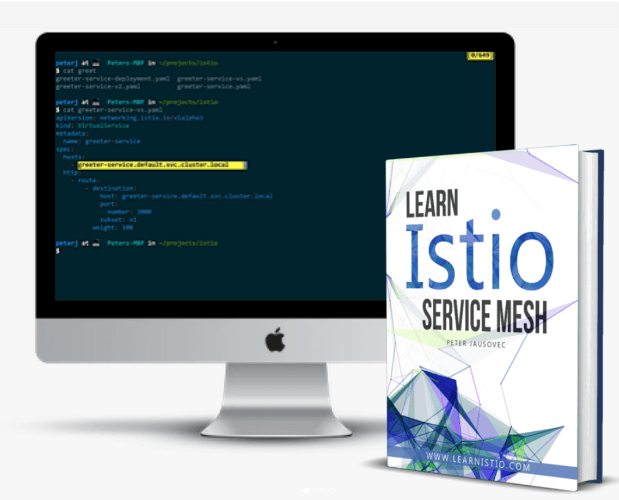
Learn Istio cover
Learn Istio cover

Later, I expanded the book to include cheat sheets and a full-blown video course with more than 2 hours of content.

Istio in 1.4 and 1.6

Anyone remembers Mixer? That component was removed in 1.4. How about consolidated control plane - istiod? Istio moved all functionality to a single component in 1.6.

Looking back at the features added in 1.4 and 1.6 - things like automatic mutual TLS - yeah, you had to configure a DestinationRule back then to enable mutual TLS! Also, the Authorization policy was moved to beta in the same release, and an experimental multi-cluster setup was added to Istio CLI! And then 1.6 brought the simplification with single control plane component - istiod and a better VM support with WorkloadEntries.

Istio today

Fast forward to today, almost exactly four years later, Istio 1.18 was released just a month ago. Automatic mutual TLS is a given, multi-cluster support evolved, we’ve had a single control plane for years, and a new sidecar-less mode called ambient mesh was introduced. Along the way, numerous bugs were fixed, and other features were added - even back in 2020, Istio was called out as one of the top five fastest-growing open-source projects.

  • Sandbox
  • Incubation
  • Graduation

Graduated projects signal to the industry a high level of maturity, strong community, and broad adoption. Graduated projects are well-established, have demonstrated production readiness, are stable, and (are expected) to have a sustainable future.

In the past couple of weeks and months, Istio received all required votes, and today Istio is moving to the Graduated stage and joining projects like Envoy, Kubernetes, SPIFFE, and others.

With more than 30000 merged PRs, almost 9000 contributions, and constant innovation with implementations such as ambient mesh, there’s no sign of the Istio project stopping anytime soon, and graduation will only help.

In these past four years, I’ve been constantly involved in the Istio project, fixing a typo or two in the documentation and logging a couple of issues, but mostly talking about Istio and service mesh at conferences worldwide and creating different technical content that always tied back to Istio.

Note

I roughly counted, and there were more than 20 occasions in 2019 I either spoke about Istio or delivered a workshop. I guess I can call myself an "international speaker", right? 🙂

If I was writing and talking about automatic mutual TLS back in 2019, today, while still staying in the same ecosystem, I am talking about Istio ambient mesh and diving deeper into things like eBPF and Cilium.
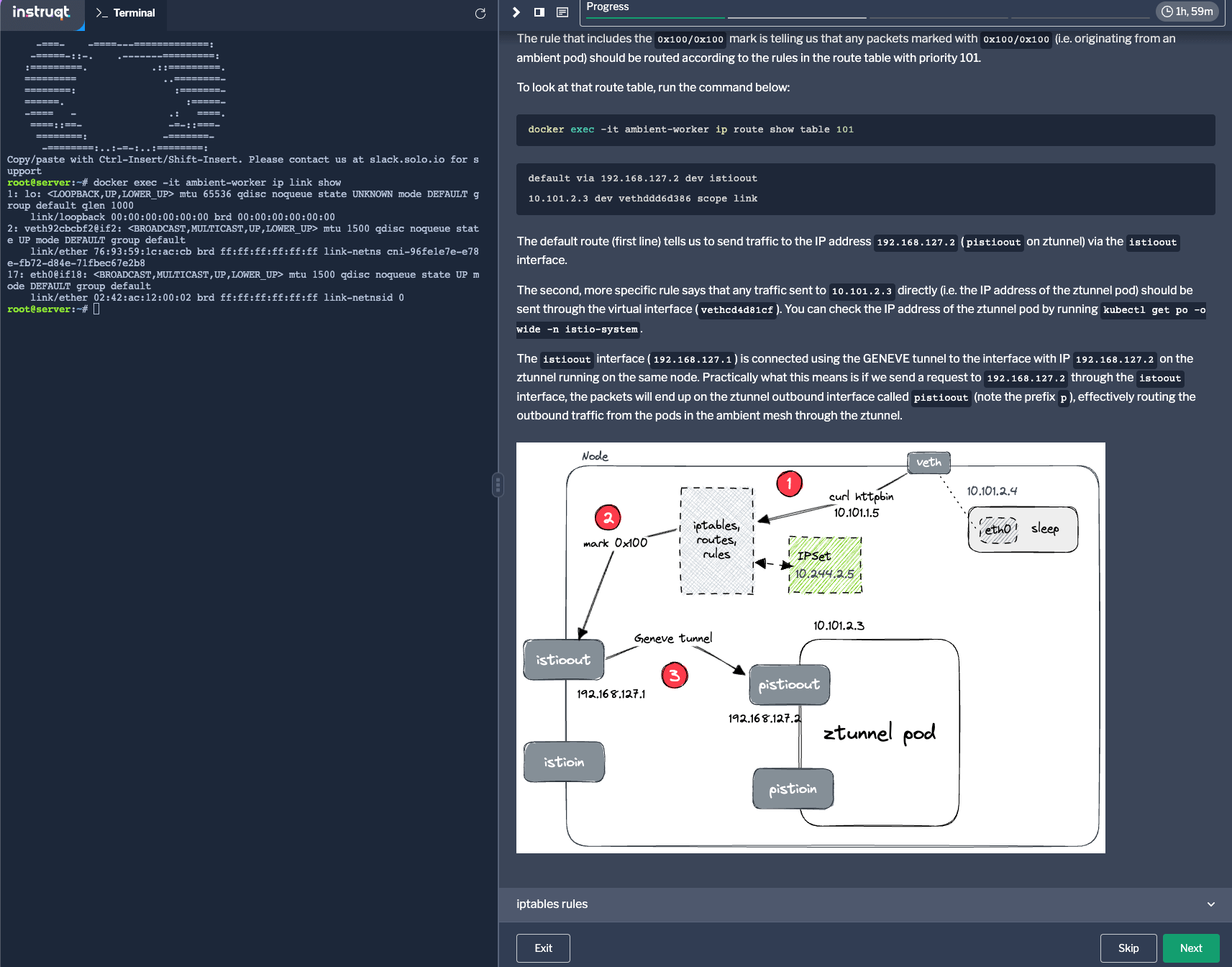
Istio Ambient mesh workshop

Istio going forward

As I look ahead, the future of Istio is undeniably promising. Just as the past four years have seen Istio evolve from an incubating project to a mature, stable, and CNCF graduate status, the coming years are expected to hold even more advancements.

With Istio's graduation, the project is stepping into a phase of industry recognition and broader adoption, further technological innovation, and potentially transformative impact on the industry. Another testament to Istio projects' maturity is the enterprise offerings that feature Istio that are making a splash in the industry.

My journey with Istio has been incredibly rewarding, and I can't help but feel excitement and anticipation for what lies ahead. It also adds to my excitement that I’ve been fortunate to work with people like Christian Posta, Lin Sun, Louis Ryan, and others who’ve been instrumental in the Istio project.

I look forward to seeing Istio continue to grow and evolve, and I am excited to be a part of it.