I'm , maker of PromptHero, Hustl, Jobician, and other products that are used by millions of people across the globe. My work has been featured in The Washington Post, The Wall Street Journal, Vox, Fast Company and others.
I unexpectedly won a green card in the green card lottery. As a consequence, I need to scratch my current life plans and move to the US on short notice. I’ve always had this vague desire to pursue the American dream, but now that it’s really happening I can’t stop thinking: why am I doing this again?
Don’t get me wrong, I’ve wanted to live in the US for as long as I can remember. That’s why I applied for the green card lottery in the first place. But by the time I actually got it, I was already disenchanted with the whole idea, and I’m no longer so sure about it – the US doesn’t seem that good of a place anymore.
For those of you unfamiliar, a green card is a residence permit that allows someone to live and work in the US permanently. It’s incredibly difficult to get for most immigrants, which makes it a wildly sought-after item, and to alleviate the problem the US government holds once a year a lottery where they give away a small number of green cards to applicants chosen at random.

With a green card you become a US resident: for most practical purposes, you get the same residency rights as any other American, you’re just not a citizen yet (you don’t get an American passport, you’re not able to vote, you can’t do government jobs, etc.) What it gets you is rights to get in and out the country when you like, work high-paying US jobs, and live an otherwise normal American life.
There’s a caveat, though – you can lose your green card if you don’t use it. If you don’t actually move to the US and live there, or if you leave the country for many months, they’ll take it away from you and you’ll lose all residency rights (they won’t let you enter the country, you won’t be able to work US jobs, etc.) That’s why in a few weeks I’ll be packing things up and taking a plane – I’m moving to the US permanently.
I’m going to pursue my American dream. So I wanted to explore this one question that I can’t get out of my head: does the American dream still make sense in 2023?
Take a look at the map below:
It highlights the countries that get (and keep) the most immigrants in the world. Which one particular country, out of the almost 200 represented on that map, immediately got your attention?
USA has consistently been the #1 choice by immigrants of all nationalities. It hosts some 50 million immigrants – far from the #2 on the list, Germany, with only 15 million. Think about it: the US attracts not 10% more, not 50% more, not even twice as many, but more than three times more immigrants than the second most attractive country in the world. To put it in perspective: it’s as if you win the NYC Marathon in 2 hours, and the next best participant takes 6 hours to complete it.
The amount of immigrants a country receives can be thought of as a good proxy to measure country attractiveness. The more immigrants a country receives (and keeps), the more attractive it is, because everyone wants to live there. On the other hand, the more migrants a country sends, the less attractive it is, because everyone wants to leave.
I think it’s fair to say that the US is the most attractive country there is. It’s so popular that people either risk their lives or go to great lengths to get a residency permit for themselves. Entire shows like 90 Day Fiancé are based on the single premise that some people will do pretty much anything to get a green card.
But what does the US have that attracts so many people, from so many different backgrounds – and how is it different to what other countries have to offer? The answer might be The American Dream.
The American dream is this idea that with hard work and dedication, everyone can build a better life for themselves in the US. The interesting bit is that subconsciously, everyone knows what it is. We’ve been taught the concept through years and years of exposure to imported American culture.
The average American is probably not aware of how much culture their own country exports to the rest of the world.
«It’s crazy to me that that concept, the American dream, you hear about that all the way in Germany»
– An American Youtuber named Ryan Wuzer, in one of his videos
Movies, books, youtubers, food chains, influencers, streamers… most of the culture we consume in the West is made in the US. Most music we listen to in clubs is made in the US. Most Netflix shows we watch are made in the US. It’s everywhere. It’s become –in some way– part of our own foreign cultures, too. So much so that for an American-born person living abroad it’s often difficult to differentiate which parts of their own culture are US-only (like Walgreens), and which are known internationally (like Dunkin’ Donuts).
US culture permeates everyone, everywhere, in all age cohorts: my Spanish parents included. They know what the American dream is, even if they’ve never been told explicitly, and even if they’ve never set a foot in America or speak a word of the language.
When I told them I was moving to the US, their reaction was nothing like when I told them I was traveling to Thailand, for example. Thailand provoked frowning and confusion, USA smiles and hope. They don’t know Thailand, but they do know USA. And they know it’s a place where one can find success and prosperity – and they were happy I was going there, almost no questions asked.
They get the American dream. They get that notion that if you go to the US and put in the work, you can get a better life. Which is a beautiful concept in theory, but it’s way too dreamy and abstract to tackle it properly.
There’s this YouTube channel I’ve started watching recently. The algorithm has been feeding it to me nonstop lately, probably as a result of me doing one or two searches about US immigration.
It’s about this Guatemalan guy called Jorge, he’s now living in the US and makes videos with tips and tricks for new immigrants (in Spanish). I don’t think I’m his target audience, because he aims the message mainly at Latin-American immigrants looking for (mostly) unskilled jobs, but I’ve been watching him because it heps me understand the actualities of the American dream for the average immigrant.
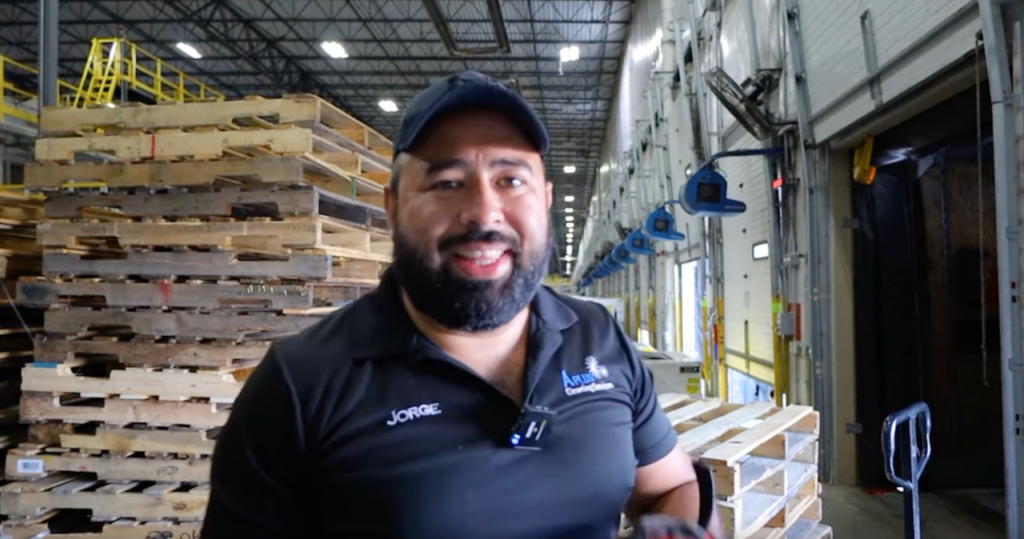
What does the American dream actually mean for actual people arriving to the US today? Based off his videos, here are some verbatim things he recommends that caught my attention:
His messages always come with the promise of improvement over time and a better future:
In my country, I was a bartender, and here in the US, I came to shovel, pick, hoe, dig trenches, plant flowers, and mow lawns. That’s what I came to do. (…) I had a debt to pay. Like me, many of you also came this way. There’s no time, you have to grab whatever comes your way. With time and money in your pocket, you can do whatever you want, but for now, go with the flow and take what comes your way.
«call me jorge» Youtube channel
Now, of course, if you’re reading this blogpost his words won’t probably resonate with you. If I had to guess, you’re probably a software developer like me, or some sort of information worker. I get it. But the reason why I included his story is because this is what the American dream looks like for millions of immigrants. Jorge’s is probably the most common version of the American dream there is.
What this means is the average immigrant likely arrives to the US with nothing, grabs the worst jobs and survives how he or she can until things get better. Their end goal is to be able to afford a life similar to the one you and I likely already have in the West: a decent home, food in the table, and some degree of comfort. They don’t dream of getting rich (although with time and effort they may), they initially just fight to get the life you already live.
I think those who enjoy the American dream the most are those who need it the most. If –like many Latin American immigrants– you come from a country devastated by communist tyrants where supermarkets are literally empty and buying meat is considered a luxury, then yeah, as long as you have good work ethic, you’ll see the US as pretty much paradise on Earth. And that’s the ideal you’ll project onto others when you talk about the American dream.

For us westerns, the American dream may not be as nice as it is for an immigrant like Jorge. We may want to own a home in the US and ride a big American car (fun fact: the US government issues a guide for new immigrants on how to pursue the American dream, which covers some of these topics) – but those are things we can already do in our home countries, one way or the other. It’s not something fundamentally new for us. The expected outcome of the average westerner pursuing the American dream might be a bit dissappointing, if we take the whole immigration context into consideration. We often forget how well off we are, especially in Europe.
In fact, many Americans are now living their “European dream” here in the old continent. Americans that, having a first row seat at how their empire is falling apart in real time, decided to cross the pond and try the Mediterranean wonders and the laid-back lifestyle they’ve been hearing so much about. Again, the YouTube algorithm doing its magic, but lately I’ve also been watching this Texan youtuber called Rachel Anne that moved to my hometown Madrid some 5 years ago and swears by our lifestyle.
Listening to her makes me realize how well we’ve integrated work into an already healthy lifestyle. As some people put it: we work to live – we don’t live to work.
We like having a “third place” to hang out with friends after work on a regular basis, which not surprisingly keeps us mentally sane and fairly happy. Plus, as I said, we’re a farly healthy society: we eat well (for starters, we eat actual food and not processed junk), we keep our bodies in a good shape (we exercise, we don’t have a morbidly obese population, and here you don’t suddenly die if you happen not to have enough money to pay for hospital bills). And our healthcare systems don’t have perverse incentives and lobby groups of dubious intentions to keep us addicted to opioids.
There are plenty of Americans that, like Rachel, are sharing on YouTube their journey of immigrating to Europe, and I suggest listening to some of them because it really puts things in perspective. No one like them to talk about America with an international perspective.
Our notion of the American dream might be extremely idealized, biased by a handful of extreme success stories coming from the top 0.0001% of immigrants, like Arnold Schwarzenegger or Elon Musk. We, the average immigrant, may never enjoy it to the extent people like Jorge have enjoyed it, nor to the extent we might be imagining in our heads.
I guess the main point I’m trying to make is: when you hear about the American dream, be skeptical. The American dream means very different things for different people. It’s not a concept with a consistent meaning across demographics, and since most immigrants are like Jorge, the most generalized perception of it will be biased towards Jorge’s version of the story. While for us westerns it may mean going to the US to “make it” (become wealthy, own expensive things, live a high status lifestyle) for most people it just means getting to square one and making ends meet – and our dreamy expectations might be just statistical anomalies rather than the average outcome.
One thing I know for sure, though: my idea of the American dream has always been very different to Jorge’s.
I’ve always loved computers, and since I was a kid I’ve always dreamed of studying in the best tech universities, move to Silicon Valley, and work in the best tech companies of my time. I’ve always wanted to follow the steps of notable US immigrants like Nikola Tesla or Albert Einstein.
Why?
Well, open up your phone and go to your home screen. For every app icon you see, try guessing where the app was made. Apart from a few exceptions like Spotify and TikTok, I’d guess most of the apps in your phone come from the US.
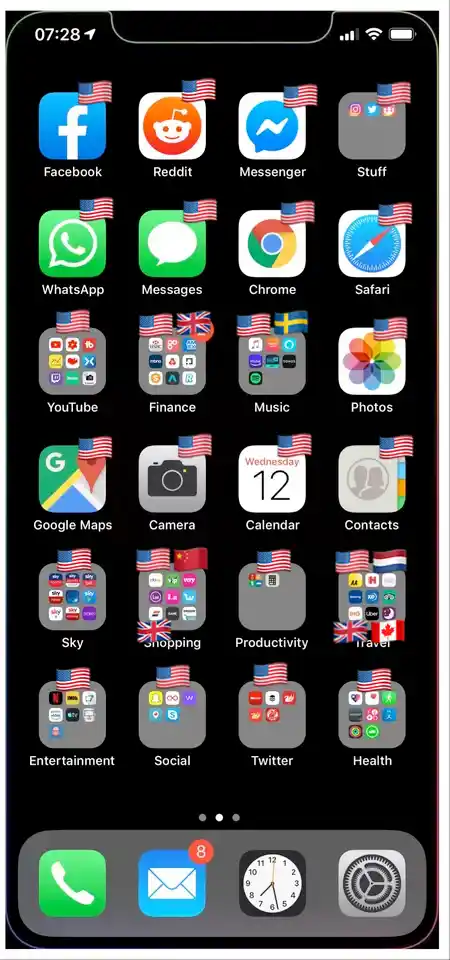
The US has always meant “the tech center of the world” for me. More specifically: Silicon Valley. The place we all reference, on a daily basis, when we talk about technology. The undisputed number one. Where the best of the best is made, and where the best of the best go do their best work. The place to be if you aim high, and more so if you’re technically inclined. Where else would it be?
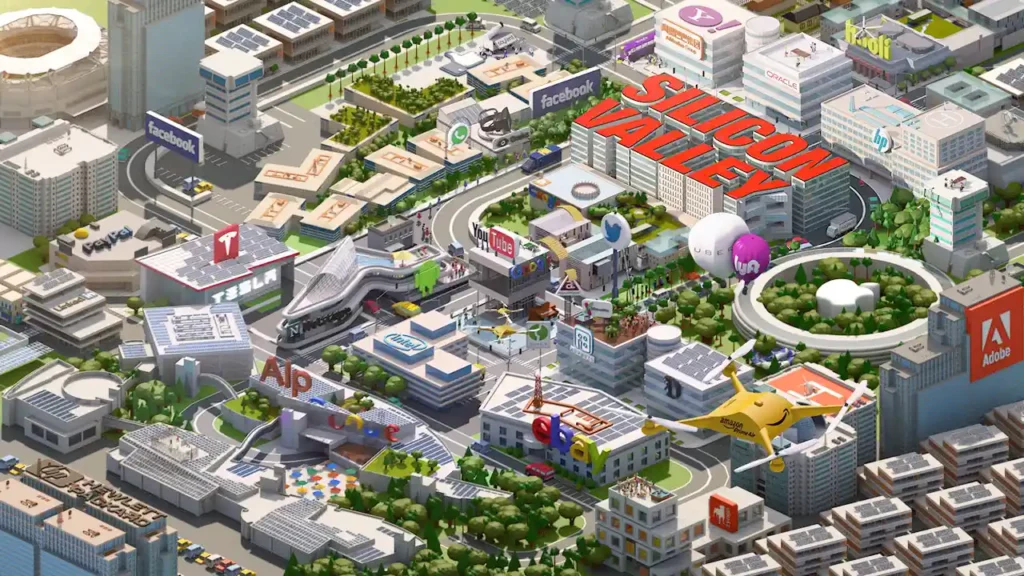
For years, talking to peers and friends did nothing for me but reaffirm this notion. The US –and Silicon Valley in particular– were seen as very high status in Spain. If someone introduced themselves as “Hi, I’m X and I work for Apple in San Francisco”, everyone dropped their jaws. “Wow, you’ve made it” would probably be the most common thought going through everyone’s mind. They were not only earning several times the average tech salary in Spain (where ~$20-$30k/yr is still considered a very reasonable salary), but they also managed to escape mediocrity and play amongst the best. An irrefutable triumph.
Where is the most exciting artificial intelligence being created? Where is the one place in the world where humans are pushing technology to its limits to make life interplanetary? Where can someone work on connecting actual human brains with computers? Silicon Valley.

I wanted that. I wanted to be there. I wanted to live in the bleeding edge of tech. I wanted to pursue that American dream.
Then everything went downhill, and sentences like this became commonplace:
Please don’t let hating SF stop you from applying to OpenAI! I don’t like the open air fentanyl markets either.
– Sam Altman, CEO of OpenAI, the hottest AI company in the world right now

Silicon Valley went from technology mecca to unlivable shithole in the past 10 years or so. The quote above is from just a couple of months ago: the CEO of the arguably most important AI company of our time trying to keep the spirits up by downplaying the state the city is in. He’s referring to this:
The home of most US billionaires now looks like straight out of a post-apocalyptic zombie movie. The city became full of homeless people abusing substances. Full of crime and insecurity. And contrary to what most non-US people I’ve talked to seem to believe, it’s not happening in some isolated marginal neighborhood in the outskirts of the city. This takes place everywhere, especially downtown, on a daily basis. A couple of streets away –for example– from Twitter HQ.
It’s complete nonsense. Fentanyl is not the only ugly thing going on in the Valley: you can’t leave your car parked on the streets without getting the passenger window smashed, and if you try to fix it you’ll come across a glass shortage in repair shops. All across the board you’ll find the place as lawless as it can get, where shoplifting is not only legal but breaking all-time highs.
If you ask the average San Franciscan living in this city today: “Is crime in the uptake?”, he’s going to look at you and think you’re crazy. It’s gone wild, to the point where the average person is now afraid to go downtown. So yeah, crime is out of control. This isn’t the Tenderloin or the ghetto anymore. You could be downtown in Union Square, some of the most wealthy districts, and get mugged. You can be accosted by people on the street that are either on drugs, on alcohol, or mentally unbalanced. It’s just too commonplace. All you have to do is drive downtown and look at the storefronts that are boarded up. It’s astonishing. It’s alarming. If we don’t turn things around we’re going to become another Detroit. And had you ever mentioned that to a San Francisco 20 years ago, they’d say it’s impossible – but we’re on our way. We’re on our way to becoming a ghost city unless the policy makers start waking up and doing what needs to be done.
– San Francisco resident, March 2023. Source: YouTube
According to every single input I’ve gotten in the past few years, San Francisco is not a safe nor a desirable city to work and live in anymore. California is a failed state. Even Paul Graham, founder of Y Combinator and one of the fathers of modern Silicon Valley, moved to Europe to raise his kids. Actions talk louder than words. My American dream as I had it pictured in my head is no longer possible. It’s simply not a thing anymore.
Went to SF to have dinner with friends. A few blocks away a car containing 6 masked men (presumably car robbers) was stopped by a security guard, and 3 of them got out holding guns. They fired 2 shots into the air and drove away. No police came.
— Paul Graham (@paulg) August 16, 2023
In addition, my interests shifted over the last few years. I once wanted to work for big tech companies like Apple or Google, and moving to SF made sense within that mental frame, but that’s no longer the case. I now own and run my own startups, and I’m happy doing that. This version of the American dream relied heavily on the assumption I’d need a company to sponsor my H1B visa so I could work and live in the US. But now that I got a green card, and since I’m self employed (and happy doing so)… there’s no longer a why.
I can run my startups from anywhere in the world. I make money, and I have no employees, no offices and no schedule. Nothing ties me up to any place in particular.
If it’s not Silicon Valley, then where?
If you could live anywhere in the US, where would you live and why?
To even start considering the question, let’s see what’s on the menu.
According to immigration law, aside from the continental US, green card holders can live and work from Alaska, Hawaii, Puerto Rico, Guam, the Virgin Islands of the United States, and the Commonwealth of the Northern Mariana Islands.

Although I’ve entertained the idea of living on an American tropical island, and although from what I’ve seen in a few videos, islands like Guam look beautiful like the rest of Southeast Asia minus the shabby infrastructure characteristic of developing countries, I think I already had my fair share of the tropics after spending almost a year in Koh Samui, Thailand and even making a week-long trip to the ER in a hospital in the middle of nowhere. I also learned these places tend to become pleasure islands in the long term, and all in all I just don’t think it’s my cup of tea.
Which leaves us back with the continental US. Every person will have their own different reasons to choose where to live, but me personally I’m just looking for:
To address the first point, the US has this concept of the “Sun Belt” – a loosely defined region comprising all states south of parallel 36. It’s somewhat correlated with the sunshine duration in hours per year: places in orange are similar to Spain, what I’m already familiar with.

Tax-wise, there are states that are simply too expensive, like California or New York:

As for interesting people, you would expect to find them where interesting stuff is happening on a regular basis. That used to be California, but the situation is now so bad residents are literally fleeing the Bay Area in what the press calls the Silicon Valley exodus. Where are those people moving? Two cities always come up when searching for that answer: Austin, Texas and Miami, Florida.

After considering the above, and after asking a few friends, I shortlisted some cities that kept repeating conversation after conversation: Austin, TX; Miami, FL and Denver, CO.
Denver gets way too cold in winter, and most tech companies seem to be migrating to Austin instead of Miami, so that’d be my best bet right now. Time to find housing.
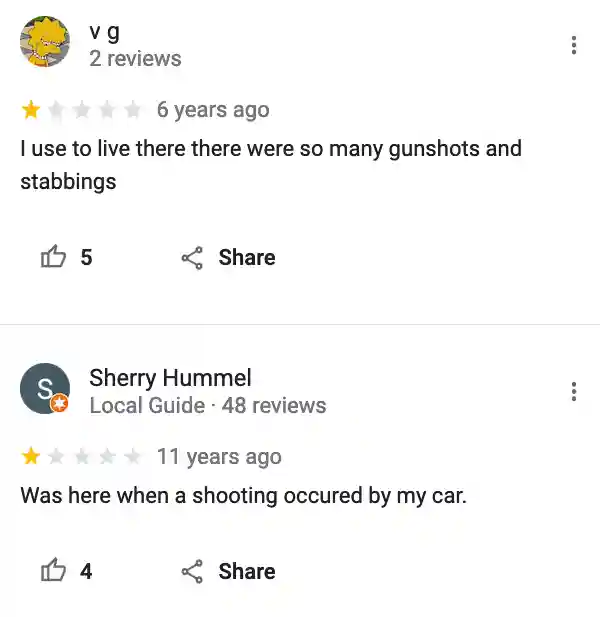
Picture this: you’re looking for apartments to rent in a city everyone says is where the cool kids hang. Entire companies like Oracle and big names like Elon Musk have already moved here. Everyone mentions it, both in conversations and in the press. It’s trendy and desirable. A city full of life and opportunities. Everyone talks wonders about it. You start checking out nice apartments to live in, and start reading the reviews:
“You just looked into a bad part of town” – some would say. Okay, fair enough. I don’t know the city and I might have inadvertently searched in the worst of areas. Let’s look elsewhere:

“You’re cherrypicking reviews” would be an argument most people would throw now. Right. Let’s read reviews from a few more apartments scattered all around the city, in no particular neighborhood:
What. The. Actual. Fuck.
All of the above are reviews from very different apartments, in wildly different parts of the city – literally all over the map, almost in every neighborhood. And it’s not like I had to dig through hundreds of properties and reviews to find them: they were literally among the first things I encountered minutes after starting my search.
“Yeah, but Austin is a big city. Insecurity is expected. This is what you get when you move to a big city.”
No. This is absolutely not true.
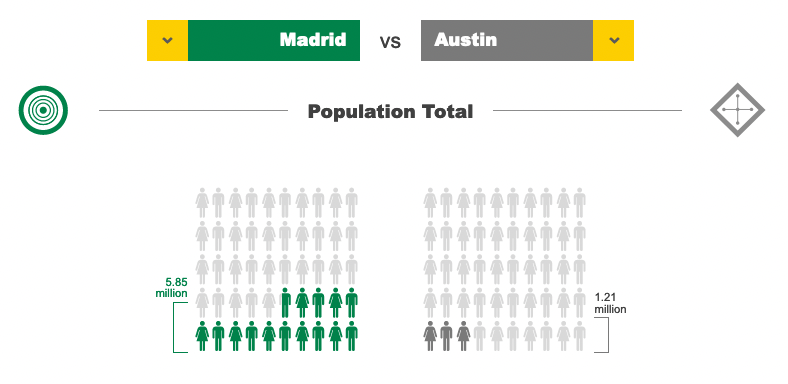
I’ve lived most of my life in Madrid, Spain – a city that’s 3x-5x the population of Austin or San Francisco. Gunshots are literally unheard of. If they happen, they’d be all over the news – national news. “Occasional shootings” is something that no one, not in a million years, would casually say when talking about any neighborhood in the city.
I’ve also lived in Bangkok, Thailand – a city more than 10 times the size of Austin or SF, larger even than NYC. And I didn’t live in a fancy part of town precisely, I lived in the heart of the infamous Nana, the sex district (that was the best I could afford at the time) Streets full of bars, drunk foreigners and prostitutes. Never, not even once, did I feel unsafe walking down the street even after midnight. People would leave their motorbikes parked on the street and would rest their helmet on the seat or hang it from the handlebar. No locks, no chains, no nothing. Never did I see a single helmet or bike stolen, including mine. In addition, I got plenty of packages delivered to my apartment, including a new Macbook, and the mere thought that my package could get stolen before reaching my apartment never even crossed my mind. Not to mention someone breaking into my apartment.
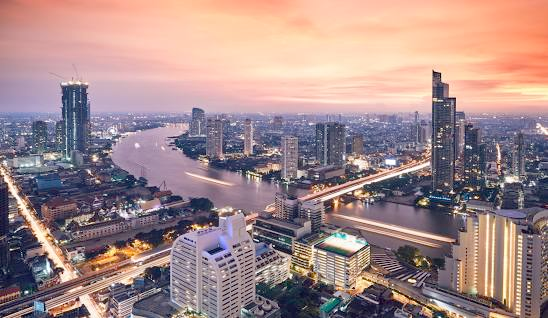
So, no – this is not a problem that comes with big cities. This is a problem that comes with the US.
Plus, Austin was supposed to be a nice city to live in. The city everyone talks about. Where every clue has been pointing us to. Insecurity is the very reason we discarded San Francisco earlier on – and the very reason people started fleeing SF for Austin. This was supposed to be a law-abiding state, not lawless California.
This is probably the worst place to live I’ve ever had to look into. I’ve never seen so many bad reviews containing such life-threatening dangers in such a consistent manner – and they’re present in apartments scattered ALL over the city, no matter the overall apartment rating.
Other mindblowingly consistent reviews, by the way, are roaches infestations and poor to inexistent garbage management.
Plus – rents have gone through the roof. $1.500+ for single rooms or tiny studios. Places that don’t even look good, or that could be handed in literally full of bugs and trash.
For reference, here’s a comparison of housing in Austin vs housing in Thailand:
Cities like NYC are not much better off, anyways. In New York, people live in apartments that are literally smaller than my bathroom – and you can tell how difficult life there gets by the way they romanticize paying way too much for places that are literally unlivable unless you’re delusional. Safety-wise, they’re also starting to get their fair deal of apocalypse:
But let’s suppose you’re crazy enough to ignore the reviews and the obvious red flags that pop up literally everywhere you look. Let’s try to rent one of these apartments in Austin. You go on the apartment’s website and see this:

This is just the start of a 11-step application process for them to even start considering you as a possible tenant. Right out of the start they ask you for a non-refundable $50 application fee. Fifty bucks you need to pay them to not even start doing business together. Given the many safety concerns and the quality of the average apartment we’ve seen, this fee feels like getting spat in the face.
This is apparently pretty standard, because I’ve been seeing a version of this form in almost every apartment complex I check out. For comparison, for the last 3 years I’ve been living off either Airbnbs, hotels, or apartments that just took my money and let me live there. Here’s money, give me apartment – what’s so difficult?
The rest of the application is not better. The whole process includes things like providing a detailed history of where you’ve lived in the last 3 years including landlords’ contact details and reasons for leaving, connecting the application’s website to your bank account, stating if you’ve ever filed a suit against a previous landlord, or providing your Social Security Number (SSN) so they can run credit and background checks on you.
Let’s focus on that last part for a minute: providing your SSN so they can run a credit check on you. This is something that I learned recently, because even though it’s apparently a common practice in USA, it’s absolutely not a thing outside of the States:
First – providing your SSN. In the US, your Social Security Number is one of the most valuable and private pieces of personal information you have. Leaking it is a big risk – someone who knows your full legal name and SSN could potentially impersonate you, open bank accounts in your name, open credit lines to your name (therefore getting you in debt) and commit a long list of fraudulent activities. Giving one’s SSN over the internet to a random company that –by the way– seems to offer roach-infested apartments with blatant security flaws does not seem like the most intelligent of decisions. It’s a privacy concern at the very least, and a security risk and vector attack if someone were to hack and steal their database of applicants.
Second – running credit checks on you. In the US, you need to have a credit score. You get a credit score by opening a credit line to your name (even if you don’t need it) – and you need to build your credit score by spending and getting into credit debt every month (again, even if you absolutely don’t have any need for it whatsoever) and paying it off later. If you pay your debt on time, they give you credit points. It’s like a little debt game they have going on there. The more points you have, the better you are seen by banks at managing your money. Random companies can (and often do) run credit scores on you, meaning they ask banks about your credit score, and they decide whether you’re trustworthy or not based on that number. This system, by the way, is a major privacy threat and a very concerning vector attack for malicious actors. This is standard when applying for apartments, and they can (and absolutely will) deny your application if you have a low credit score.
I, as a new immigrant, don’t even have a credit score. It’s not that I have a low credit score, it’s that I literally have no credit score. Zero, zilch, zip, nada. I don’t even have a US bank account – how am I supposed to pass a credit check? Building a good credit score from scratch could take me months to years – Americans often start building their credit score early, in their late teens, and some do it even earlier by becoming an authorized user on a parent’s credit card. Am I prevented from renting apartments until I spend money that I don’t need to spend and go into debt I don’t need to have in order to make a random number go up?
This is probably my biggest culture shock so far – you’re literally forced to get into debt to even live in the US. It’s an absolutely idiotic behavior. Why would you go into debt when you don’t need to?
There’s a very dangerous debt culture going on in the whole country. People are unwillingly pushed into massive debt from a really early age. The aftermath of this debt culture is heartbreaking: 29 year olds with ~1 million dollars in debt on the brink of filing for bankruptcy, just as a natural consequence of living life like the system forced them to.
And it’s not only the apartment I would need the credit score for.
See, American cities tend to be big in size. Things are not usually within walking distance, and public transport tends to be either unsafe, unconvenient or straight nonexistent if you’re outside cities like NYC, Boston and the like. The point is: you need a car. Us Europeans think we can keep our healthy, lively, walk-everywhere lifestyle in the US, and American cities are just not built for that. This is a country where there are even drive-thru ATMs so you can withdraw money without stepping out of your car. American cities are designed for cars. You can’t even go grocery shopping without a car – the closest supermarket might be a whole hour walk away, especially if you’re in the suburbs. And you don’t want to end up like this guy:
So I’d need a vehicle to move around. And how would I purchase it? Exactly – with debt. And I wouldn’t get approved for a car loan without a good credit score. I wouldn’t even be able to lease a car without credit score, or if I do, I’ll get higher monthly payments. See where I’m going?
I don’t even like cars, to begin with. I don’t want to drive a car, I don’t want to buy a car, I don’t want a car loan, I don’t want to get into debt to build my credit score to get a car loan, I don’t want any of that. It’s bullshit. I like walking everywhere, taking the public transport or a bike if the distance is too long. Why does the US seem to force everyone into things that just seem… not good for you?
This is the reality of living in the US, apparently. A constant cognitive dissonance and counterintuitiveness. Spending the most I’ve ever spent in rent in exchange for the worst quality of life I’ve ever experienced, where my home, my property and even my own life will be threatened on a daily basis with rampant crime. Being forced to open a credit line and take on debt when I absolutely don’t want or need to, in order to fit the profile for an application for an apartment that if I get will likely be infested with roaches and where I’ll hear gunshots on a regular basis.
Is this really the American dream? For real?
The short answer is: I need to go to the US anyways to activate my green card and get it mailed in. Might as well try living there for few months and see how I actually like it. One can always renounce to it later.
I get the feeling, though, that there’s something I’m missing in my analysis. This can’t be the full picture of the American dream. The US is home to most of the world’s billionaires – so it has to be attractive enough for them to live there. There’s something I’m not seeing. Maybe I’m just missing a couple billion dollars in the bank, maybe all these problems are solvable if you throw money at them. Or maybe Austin just happens to have very bad neighborhoods, and a remote and unknown city in the Midwest is orders of magnitude safer and more livable than any trendy city. Or maybe the reality is more nuanced than what one gets to see on the internet, and cities are actually not that bad. In any case, I’ll need to travel there and experience it in first person to discover it.
To be 100% fair, I’ve already lived in the US before. I stayed in Boston for a few months, and loved it. But that was almost 10 years ago, and in a completely different part of the country than the one we’ve been discussing so far. Things have changed, and Boston feels more like Europe than the US.
It’s not all negatives, though: there are still good objective reasons to live in the US.
The first one would be to build wealth. Salaries are ~3x higher in the US than in Europe. Doing the exact same job, a software engineer in the US would be making $150k whereas in Europe the salary would be closer to $40k.
— Gergely Orosz (@GergelyOrosz) July 25, 2023An interesting find: @Wise publicizes the compensation ranges for all of their engineering levels on their career site. Here is how they add up:
(Cont'd) pic.twitter.com/t8TxE7fDp3
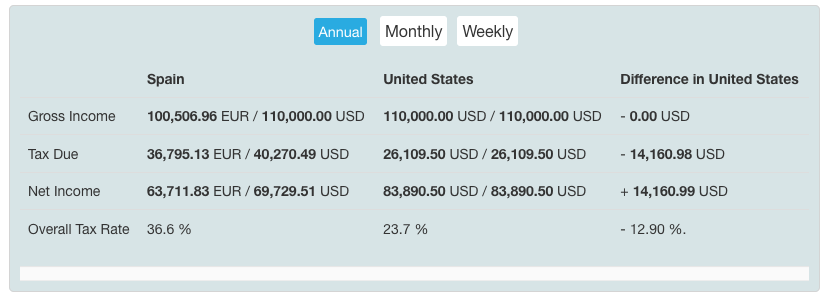
Building wealth in the US is just much easier than in Europe. Not only because you would be making 3x as much money as back in Europe, but because the government wouldn’t be taking ~half of what you’re making. Honestly, I don’t know how people become rich in Europe (do they?) – it looks like European states are way too greedy with taxes:
Another way of thinking about it is to have a safety net if things go wrong. I’m now living off my companies, but if that suddently stops working I might have to get a job – and I’d rather get a high-paying job in the US where I get to keep most of my money after taxes, than to get a low-paying job in Europe where on top of that the government will take away half of what I make.
The second good reason to move to the US would be to have easier access to better business opportunities and to renowned venture capital funds. Again, this is something that I’m not needing right now (after all, I like running my companies the indie way and have decided not to raise any money for now), but just as earlier, being in the US vs anywhere else in the world would be an advantage in case I needed it at some point. Another safety net.
A third reason would be to create serendipity: who knows what could happen if I manage to put myself in the right place, surrounded by the right people and opportunities. Artists often get discovered and reach success after moving to LA, and similar stuff has been happening in tech within the Bay Area for decades. I don’t like this line of reasoning that much, because it feels like magical thinking and relies heavily on luck, but I’m open to the possibility that such things can happen under the right circumstances.
The last reason would be to get an US passport: the US allows dual citizenship. It may make sense to spend the necessary 5 years in the country in order to get naturalized and obtain a second passport. Not because American passports are better than European passports (they aren’t), just to diversify country risk. If Spain as a country fails, like Argentina, Venezuela or Cuba (which I see increasingly likely with every passing day) I would always have a second passport to live and travel on. Same goes for the US – if the country collapses and US passports become worthless, I’d always have an European passport to keep going on. The American passport comes with a few nuances (like worldwide taxation), but could overall work as part of a risk allocation strategy. Any kids born on American soil would also get both passports: the American one, by jus soli; and the parents’ one(s), by jus sanguinis.
Is the American dream still a valuable thing to pursue in 2023, or are there better uses of one’s time and resources?
I think it made clear sense until some 10-15 years ago. Back then there would have been no decision process on my part, just an automatic “hell yeah”. It was a radically different country then. Now the American empire is hitting a turning point, and there are much more things to weigh in.
I think pursuing the American dream may still make sense under the right mindset. For example – it makes sense if you want to go 100% in your career for 5-10 years to make a lot of money and then retire early. Something like moving to SF or NYC to play the corporate game as hard as you can for a while, and then retire with a big fat bag of cash under the arm. Or take a high-paying US-based remote job and save even more by living somewhere cheap in the Midwest. Make enough to live the rest of your life without worrying too much about money – that would justify pursuing the American dream, I think.
It may also make sense if your home country is not doing particularly good. If you live in Somalia, then yeah, there’s not much of a decision to make: living in the US will likely be better in almost every aspect. But I’d argue it could even be a good idea if you’re living in a country like Spain and the life that awaits you doesn’t match your level of ambition. If you live in a place where the economy is fragile, unemployment is too high, opportunities are mediocre, jobs pay pennies, the government’s fiscal policy strangles you, there’s political instability, and at best you’re just getting by – then moving abroad is probably your best option, and the US is a solid candidate.
As for whether the US is a good country to settle down and build a long-term life in, I’m not so sure.
For one, I wouldn’t send my kids (if I had them) to school in the US. I think I’d be fine with it until age 5-10, but schools are not a safe place for kids in the US (no kid should ever have to learn how to protect themselves against an AK-47), and the quality of the education is far from good anyways. One can see on the internet the end product of the American education system, and it’s concerning: grown adults that are clueless about practically everything. Citizens unable to name a single country other than USA. People that spent years “studying Spanish” in high school not being able to utter a single sentence in the language. In my opinion, Europe (Switzerland, maybe?) or Singapore would be much better options for schooling.
Also, the American way of life is broken. Not only for kids, but also for us adults. Americans are (on average) chronically unhealthy: they don’t know how to eat, and they don’t walk places or have exercise naturally integrated into their daily lives. If you’re surrounded by people that spend their days eating trans fats and sugar, and sitting on a car to go from place to place, you’ll eventually start gravitating towards that. You become the average of the people you’re surrounded with. Everyone I know put on some weight after traveling to the US, me included. It requires an extra effort to go against the culture of a whole country on a daily basis, with every decision you make.
What many people do, and it’s also allowed while on a green card, is to spend half the year in the US, and the other half in a place with a lifestyle you like. Which would bring the best of both worlds, and sounds more doable, provided your works allows you to do it.
All in all, I think if the American dream still makes sense, is only if it’s limited in time and with a clear goal in mind. Either getting to a certain level of wealth, or spending enough time in the country to obtain a new passport, or something like that. And once you’ve achieved your goals, I think there are better places in the world to settle and live in, like Spain or Portugal. Places where you’re not constantly worrying about getting killed in a shooting, places where the food is real and healthy, and where life is enjoyable. They’re just, unfortunately, not the best places in the world to seek opportunities or build wealth from scratch.
P.S.: Follow me on X! You can also read other stories I've written, and subscribe below to get an alert when I publish a new post:
No spam ever, unsubscribe with one single click.
此内容由惯性聚合(RSS阅读器)自动聚合整理,仅供阅读参考。 原文来自 — 版权归原作者所有。